Artwork
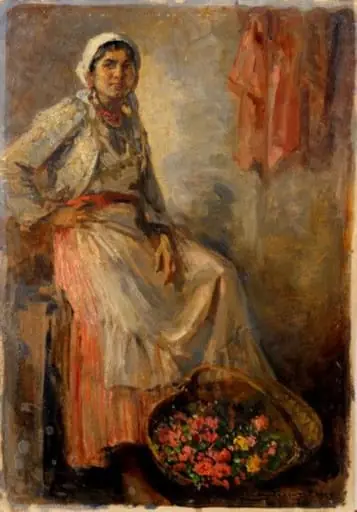
Țigănci florărese
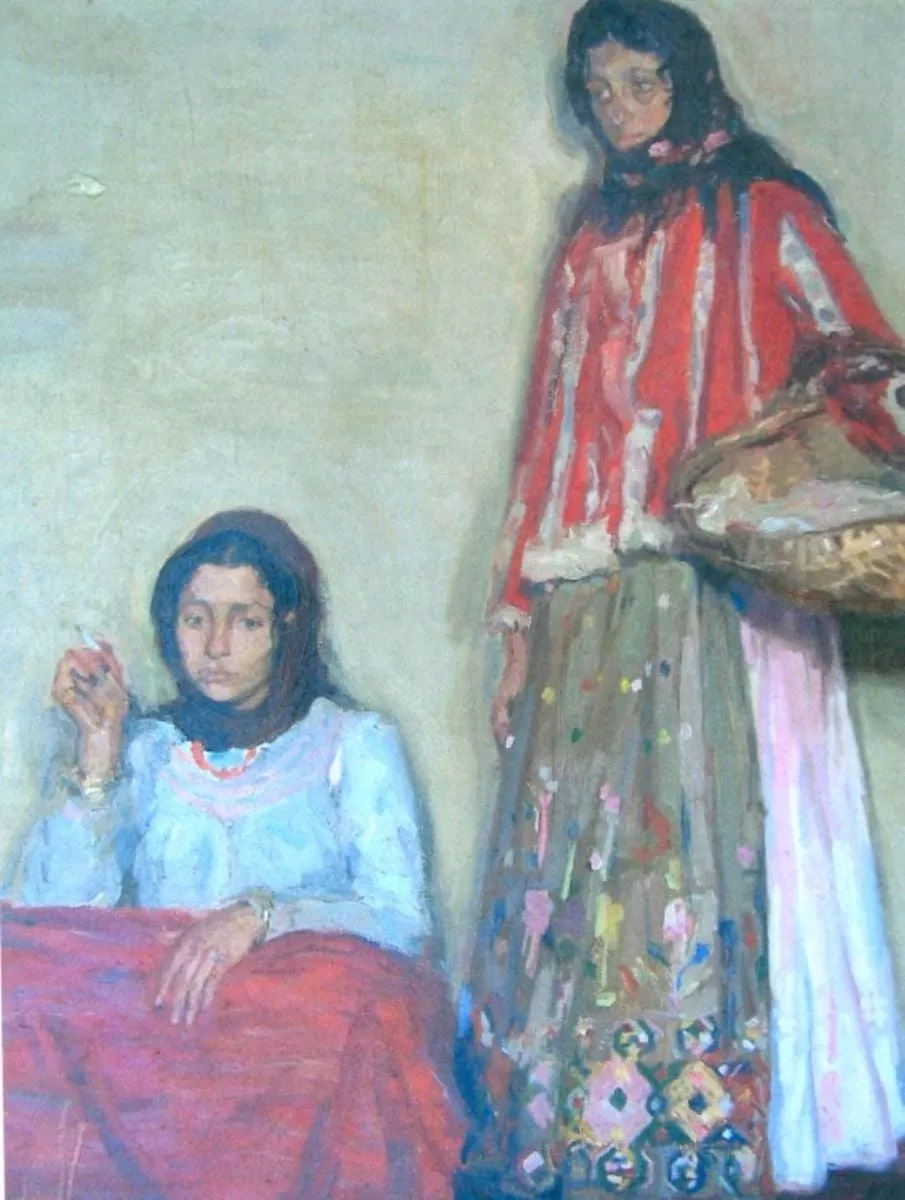
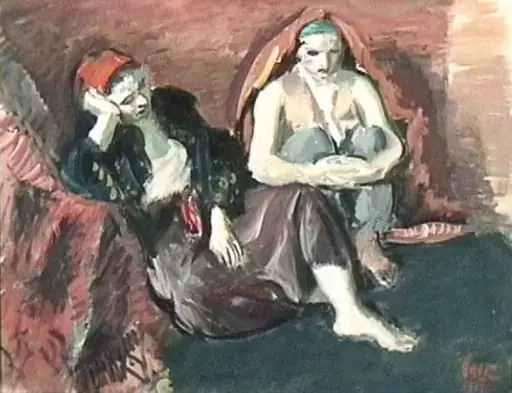
Țigănci florărese is an unspecified painting by Jean Alexandru Steriadi. It dates from 1904 and is held in the collection of the Octavian Moșescu Râmnicu Sărat Municipal Museum.
About this work
Overview
The work is part of the collection at the Museum of Ethnography and reflects Steriadi’s interest in documenting everyday life among marginalized communities.
Painted in 1904 by Romanian artist Jean Alexandru Steriadi, Țigănci florărese depicts two women in an interior setting. The work is part of the collection at the Museum of Ethnography and reflects Steriadi’s interest in documenting everyday life among marginalized communities. Its focus on domestic presence and material detail aligns with broader ethnographic tendencies in early 20th-century Romanian art.
Subject & Meaning
The painting portrays two women, likely Romani, engaged in quiet, private moments. One sits with a small object in her hand, suggesting contemplation or craft; the other stands, holding a woven basket, possibly linked to trade or domestic labor. Their attire and posture convey dignity within routine, avoiding romanticization while honoring the specificity of their daily existence.
Technique & Style
Steriadi employs thick, textured brushwork, particularly on the standing woman’s embroidered skirt, creating a tactile surface that emphasizes fabric and pattern. The lighting is subdued yet directional, highlighting textures and colors without dramatic contrast. This impasto technique draws attention to materiality, grounding the figures in physical reality rather than idealized form.
History & Provenance
Created in 1904, the painting entered the collection of the Museum of Ethnography early in its history, reflecting institutional interest in vernacular culture. Its preservation there underscores its role as a document of social life rather than a purely aesthetic object. No significant changes in ownership are recorded, suggesting consistent recognition of its ethnographic value.
Context
In early 20th-century Romania, artists increasingly turned to rural and minority communities as subjects, seeking to define national identity through local traditions. Steriadi’s work aligns with this trend, capturing Romani women not as exotic figures but as individuals within their domestic environment, contributing to a more nuanced cultural record.
Legacy
Țigănci florărese remains a quiet but significant example of Romanian ethnographic painting. Its emphasis on material detail and unidealized representation influenced later artists interested in social realism. The work continues to serve as a reference for studies of Romani life and the intersection of art and anthropology in Eastern Europe.
Artist & collection
Artist
Romanian painter Jean Alexandru Steriadi left scenes of everyday life and ports in the early 1900s.
Museum
Octavian Moșescu Râmnicu Sărat Municipal Museum
Continue through works from the same source collection.