Artwork
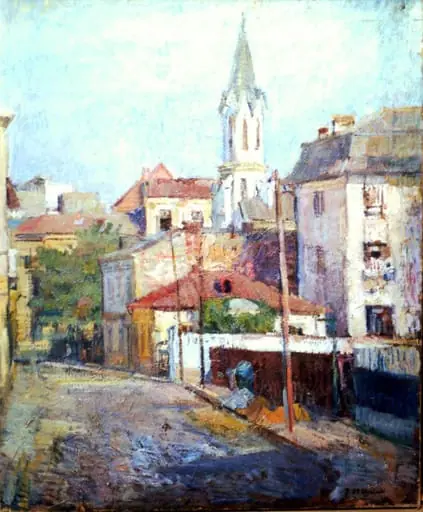
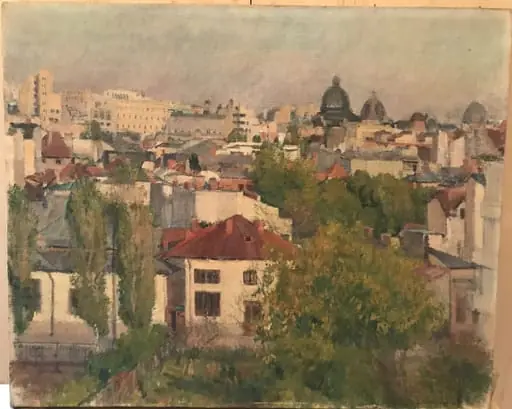
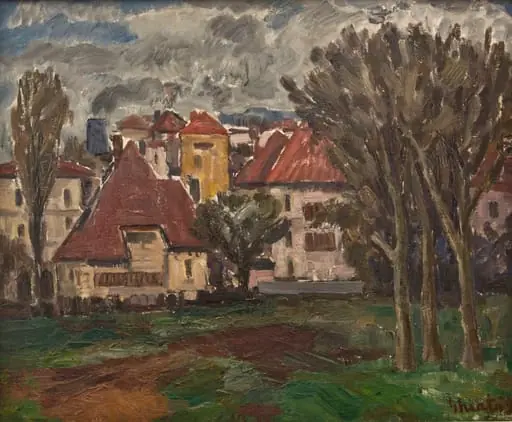
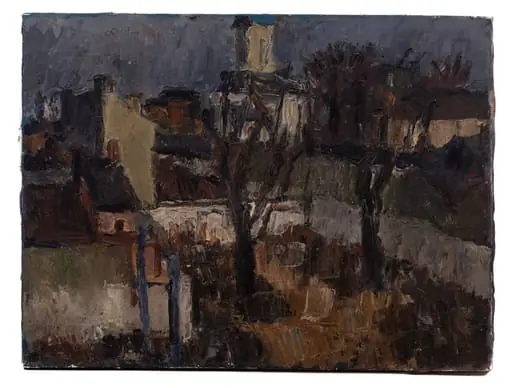
Peisaj din Cișmigiu
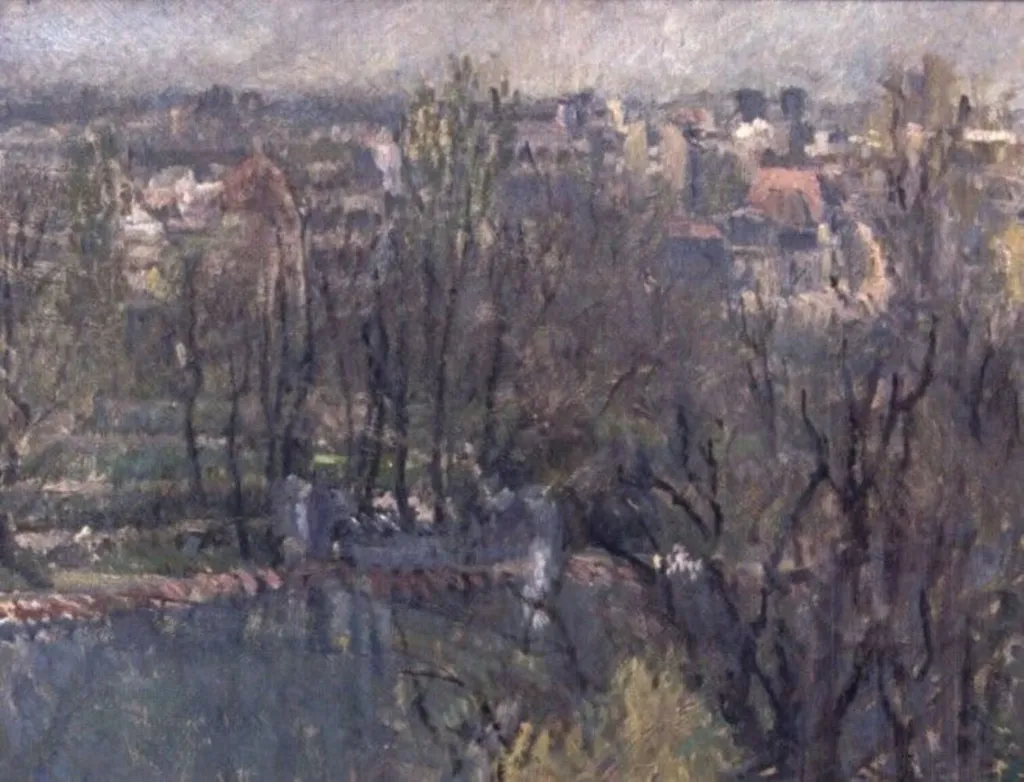
Peisaj din Cișmigiu is an unspecified painting by Jean Alexandru Steriadi. It dates from 1941 and is held in the collection of the National Museum of Art of Romania.
About this work
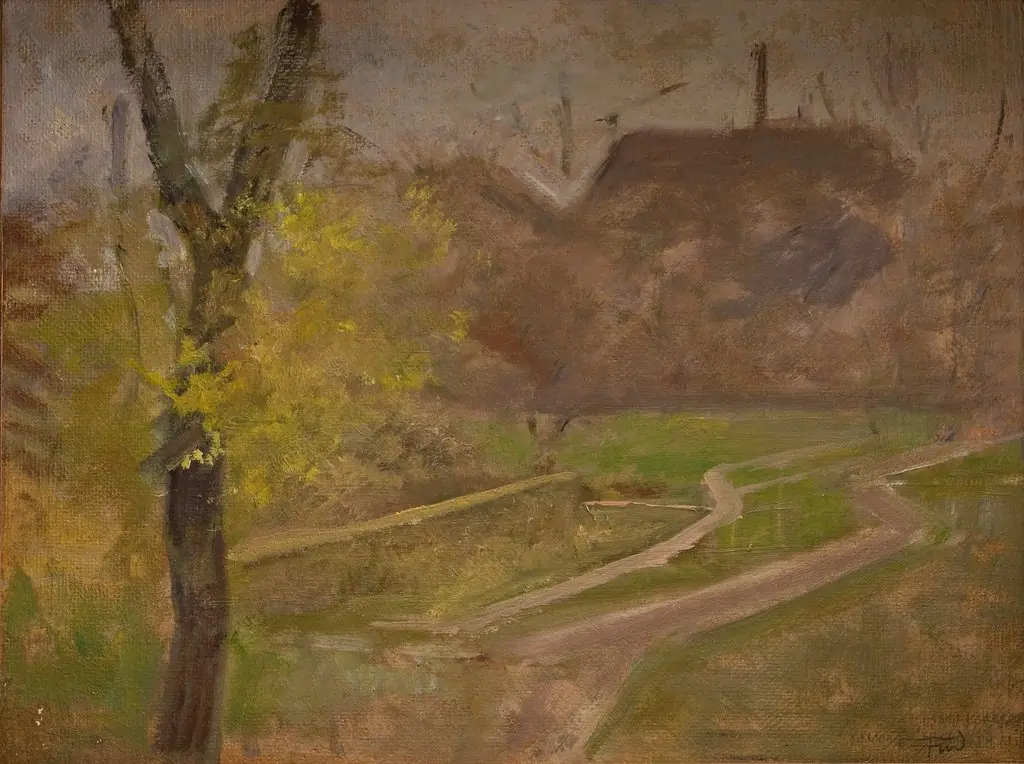
You see a quiet park scene in winter. Bare trees stand over a frozen lake. A few people walk on a snow-covered path.
This painting shows everyday life in 1941 Bucharest. The artist used soft colors to capture the cold, still air. It feels real, like you could step into the scene.
Check out another artist from the same museum. Museum of Ethnography
Overview
Peisaj din Cișmigiu is a 1941 painting by Romanian artist Jean Alexandru Steriadi. The work depicts a winter scene in Bucharest’s Cișmigiu Park, presenting a frozen lake bordered by leafless trees and a snow‑covered walkway traversed by a few figures.
Subject & Meaning
The composition captures a moment of everyday urban life during the cold season, emphasizing the quietude of the park. The sparse human presence suggests a contemplative atmosphere, inviting viewers to consider the interplay between nature’s stillness and the subtle activity of city dwellers.
Technique & Style
Steriadi employs a restrained palette of muted blues, grays, and whites, rendering the cold air and icy surface with soft, blended brushwork. The handling of light on the snow and water conveys a delicate atmospheric effect, while the simplified forms of the trees and figures reflect a modest realism characteristic of his work in the early 1940s.
History & Provenance
Created in 1941, the painting remains part of the collection of the Museum of Ethnography. It has been displayed alongside other Romanian artworks from the same period, illustrating the visual culture of Bucharest during the wartime era.
Artist & collection
Artist
Romanian painter Jean Alexandru Steriadi left scenes of everyday life and ports in the early 1900s.