Artwork
Biserica din Băneasa
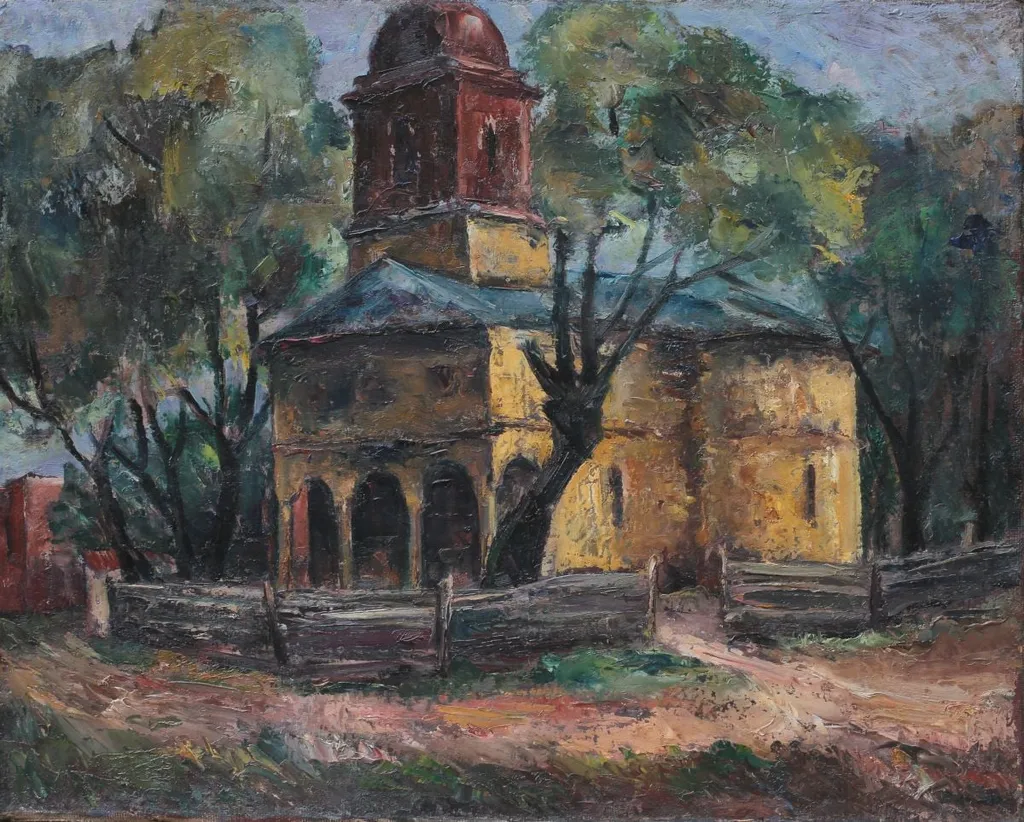
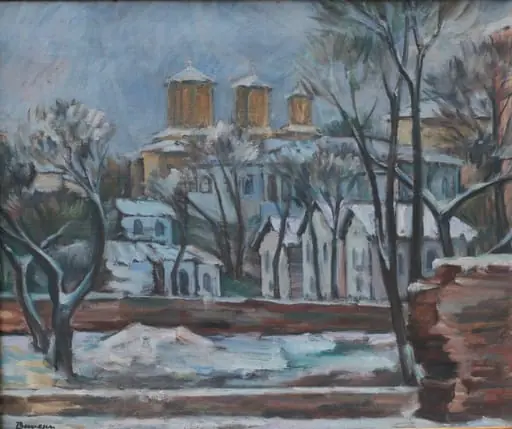
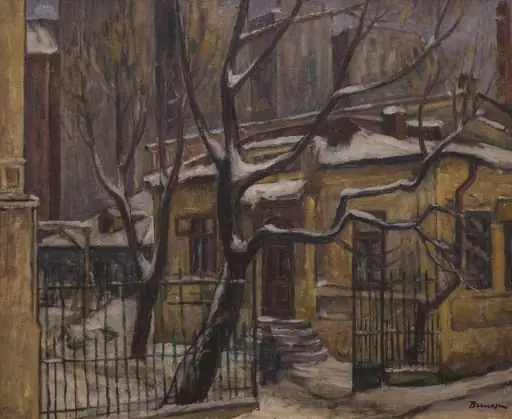
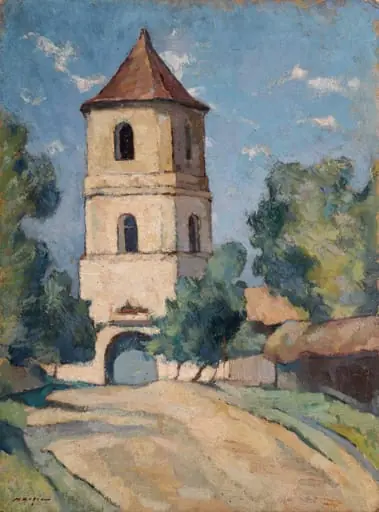
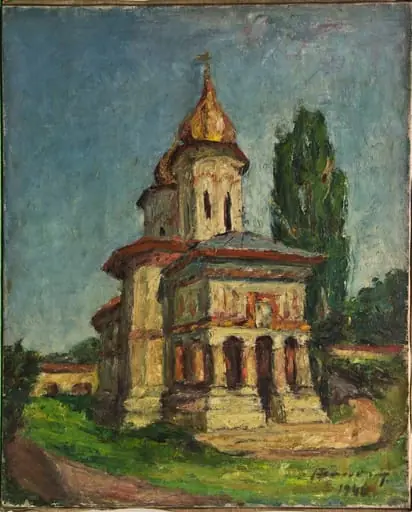
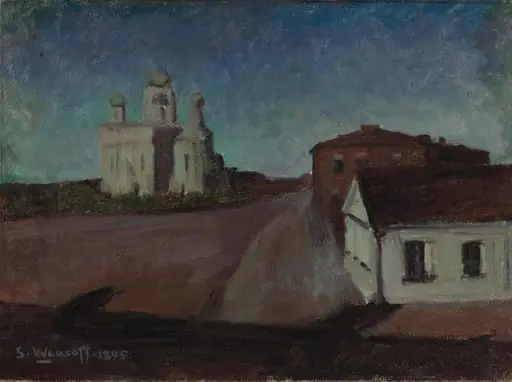
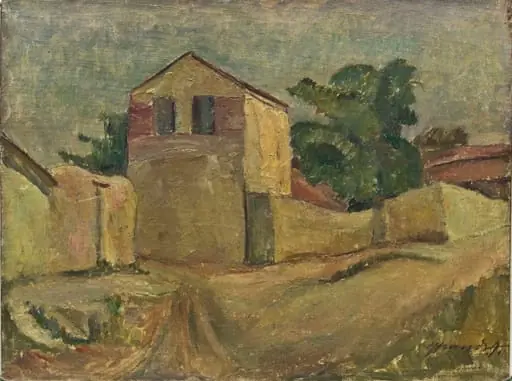
Biserica din Băneasa is an unspecified painting by Marius Bunescu. It is held in the collection of the Museum of Art Cluj-Napoca. This image depicts a modest wooden church in the Romanian village of Băneasa, rendered in a quiet, observational style.
About this work
Overview
Its dark roof and pale walls contrast gently with the white landscape, while a single lamp near the entrance suggests quiet, enduring ritual.
This image depicts a modest wooden church in the Romanian village of Băneasa, rendered in a quiet, observational style. Surrounded by snow-laden bare trees, the structure appears isolated and timeless. Its dark roof and pale walls contrast gently with the white landscape, while a single lamp near the entrance suggests quiet, enduring ritual. The scene conveys stillness and solitude, characteristic of rural religious architecture in winter.
Subject & Meaning
The church represents a focal point of spiritual life in a remote community. Its simplicity and isolation emphasize humility and devotion, free from ornamentation. The lone lamp may symbolize guidance or continuity of faith through harsh seasons. The snow-covered steps and quiet surroundings reinforce themes of solitude, reflection, and the intimate relationship between faith and the natural world.
Technique & Style
The image employs muted tones and soft lighting to evoke a winter afternoon’s diffuse glow. Forms are rendered with restrained detail, favoring atmosphere over precision. The composition centers the church against a neutral, snowy expanse, enhancing its solitude. Brushwork or digital handling is subtle, avoiding dramatic contrast to preserve the scene’s quiet dignity.
History & Provenance
The work originates from the collection of the Museum of Ethnography in Romania, where it is preserved as a record of vernacular religious architecture. It likely documents a real structure in Băneasa, reflecting early 20th-century rural life. Its status as an image rather than a painting suggests it may be a photograph or reproduction, used for cultural documentation rather than artistic display.
Context
In early 20th-century Romania, wooden churches like this one were common in rural areas, built with local materials and traditional methods. They served as both spiritual and communal centers. Their isolation reflected the dispersed nature of village life. This image captures a vanishing architectural type, preserved as part of national heritage amid modernization.
Legacy
The image contributes to the preservation of Romania’s rural ecclesiastical heritage. As wooden churches decline due to neglect or replacement, such records help maintain awareness of their cultural significance. It remains a quiet testament to the endurance of simple, community-centered faith in the face of change.
Artist & collection
Artist
A Romanian painter who captured the city’s quiet corners, Marius Bunescu’s brush brought old streets and half-collapsed theaters to life.