Artwork
Peisaj de la Sulina
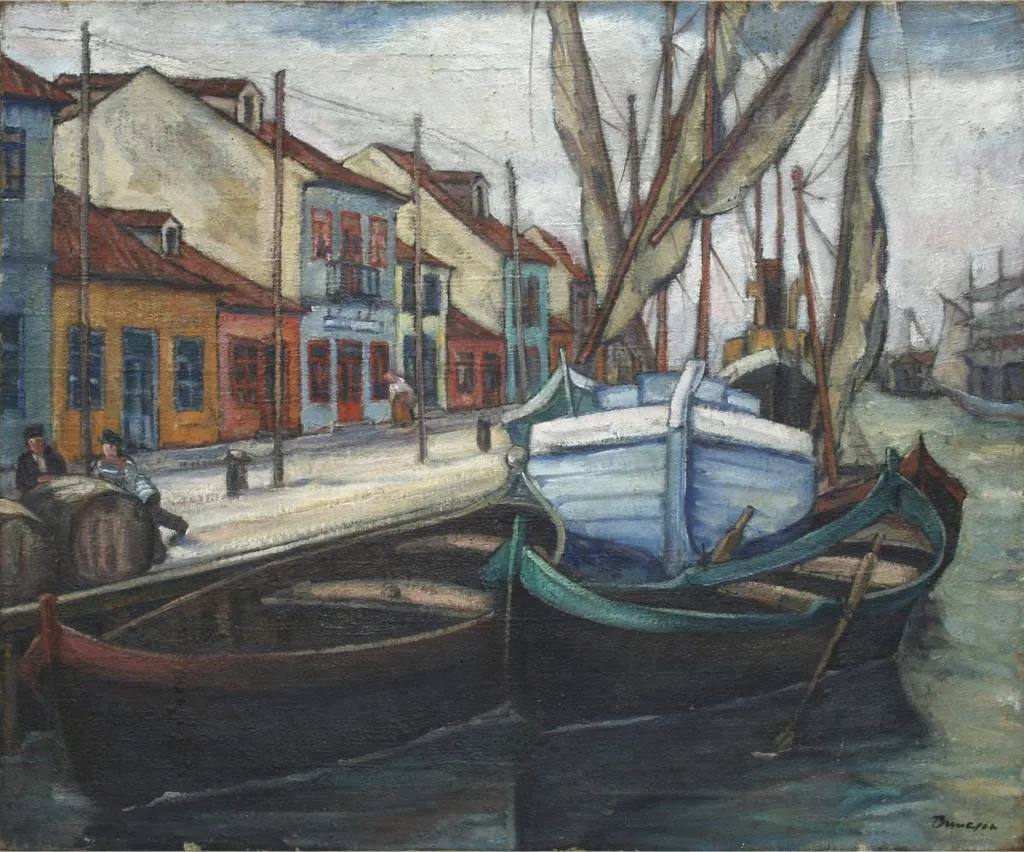
Peisaj de la Sulina is an unspecified painting by Marius Bunescu. It dates from 1949 and is held in the collection of the Gavrilă Simion Eco-Museum Research Institute Tulcea - Art Museum.
About this work
Overview
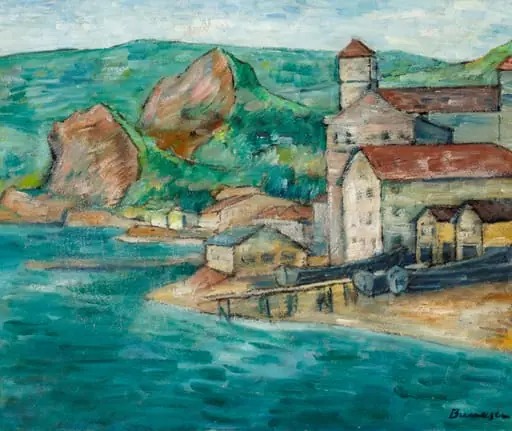
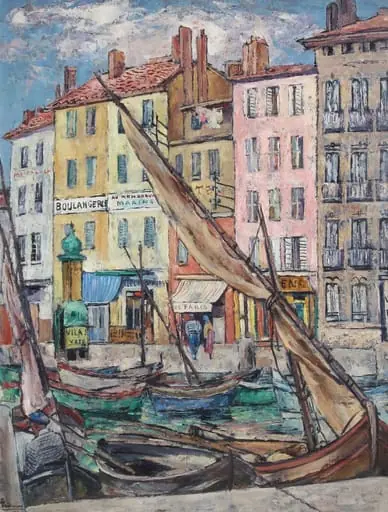
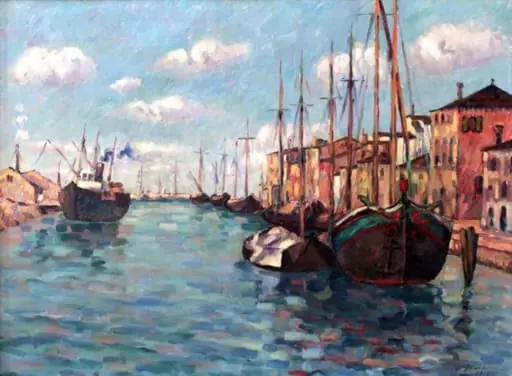
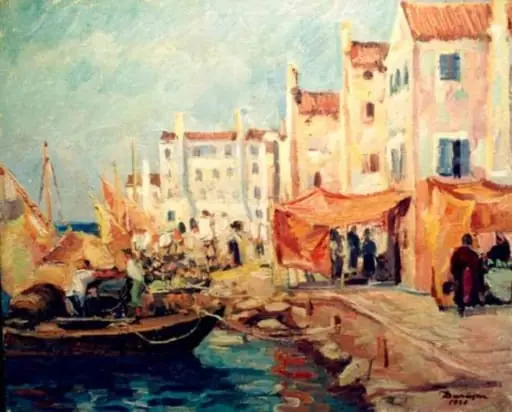
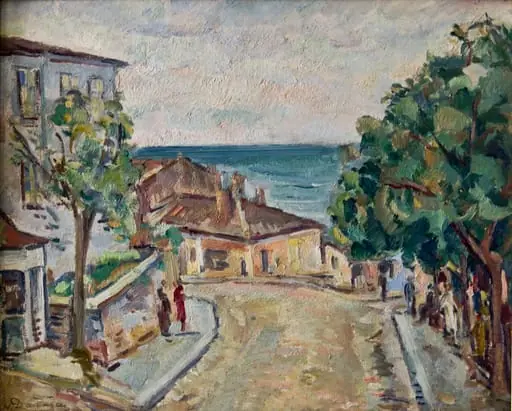
Created around 1949 by Romanian artist Marius Bunescu, this landscape painting depicts a tranquil riverside setting in Sulina.
Created around 1949 by Romanian artist Marius Bunescu, this landscape painting depicts a tranquil riverside setting in Sulina. The work is part of the collection at the Museum of Ethnography. It captures a modest urban waterfront with minimal human activity, emphasizing quiet daily life rather than dramatic events. The composition balances natural and built elements, grounding the scene in a specific place and time.
Subject & Meaning
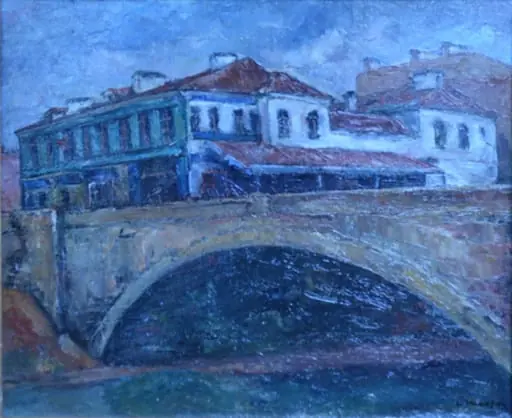
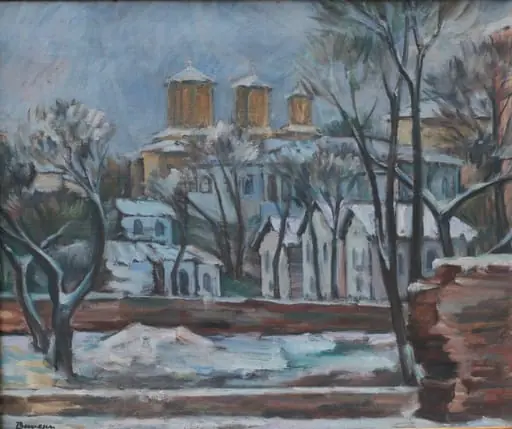
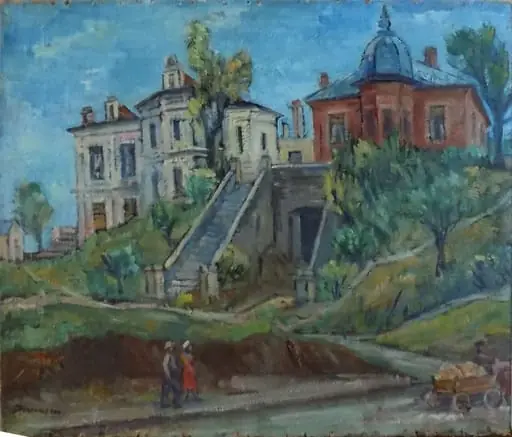
The painting portrays a quiet moment along the Danube Delta’s edge, where two small boats rest at the water’s edge, tethered to wooden posts. Figures—seated, walking, standing—appear without narrative urgency, suggesting routine rather than spectacle. The absence of grandeur or motion implies a contemplative view of ordinary life, reflecting the rhythms of a provincial port community in postwar Romania.
Technique & Style
Bunescu employs thick, textured brushwork, particularly on the water’s surface and the hulls of the boats, creating a tactile quality through impasto. Colors are muted yet distinct: yellow and blue facades contrast with red-tiled roofs, while the palette remains restrained overall. The brushstrokes define form without fine detail, favoring atmospheric suggestion over precision, aligning with early 20th-century Romanian modernist tendencies.
History & Provenance
The painting was completed around 1949, during a period of cultural reorientation in Romania under early communist rule. It entered the collection of the Museum of Ethnography, an institution focused on documenting regional life. Its preservation there suggests an interest in capturing vernacular scenes as cultural records, even as state priorities shifted toward ideological art.
Context
Sulina, a port town at the Danube’s mouth, was historically significant for trade and navigation. By 1949, its role had diminished under centralized economic planning. Bunescu’s depiction avoids political overtones, instead focusing on the town’s physical and social texture. The work reflects a broader trend among Romanian artists who turned to local landscapes as a quiet form of cultural continuity amid political change.
Legacy
Though not widely exhibited beyond institutional circles, the painting contributes to the understanding of postwar Romanian landscape painting. It exemplifies how artists maintained a connection to place and everyday life despite shifting state mandates. Its presence in the Museum of Ethnography underscores its value as a visual document of regional identity during a period of national transformation.
Artist & collection
Artist
A Romanian painter who captured the city’s quiet corners, Marius Bunescu’s brush brought old streets and half-collapsed theaters to life.
Museum
Gavrilă Simion Eco-Museum Research Institute Tulcea - Art Museum
Continue through works from the same source collection.