Artwork
Aurora-seura, luonnos
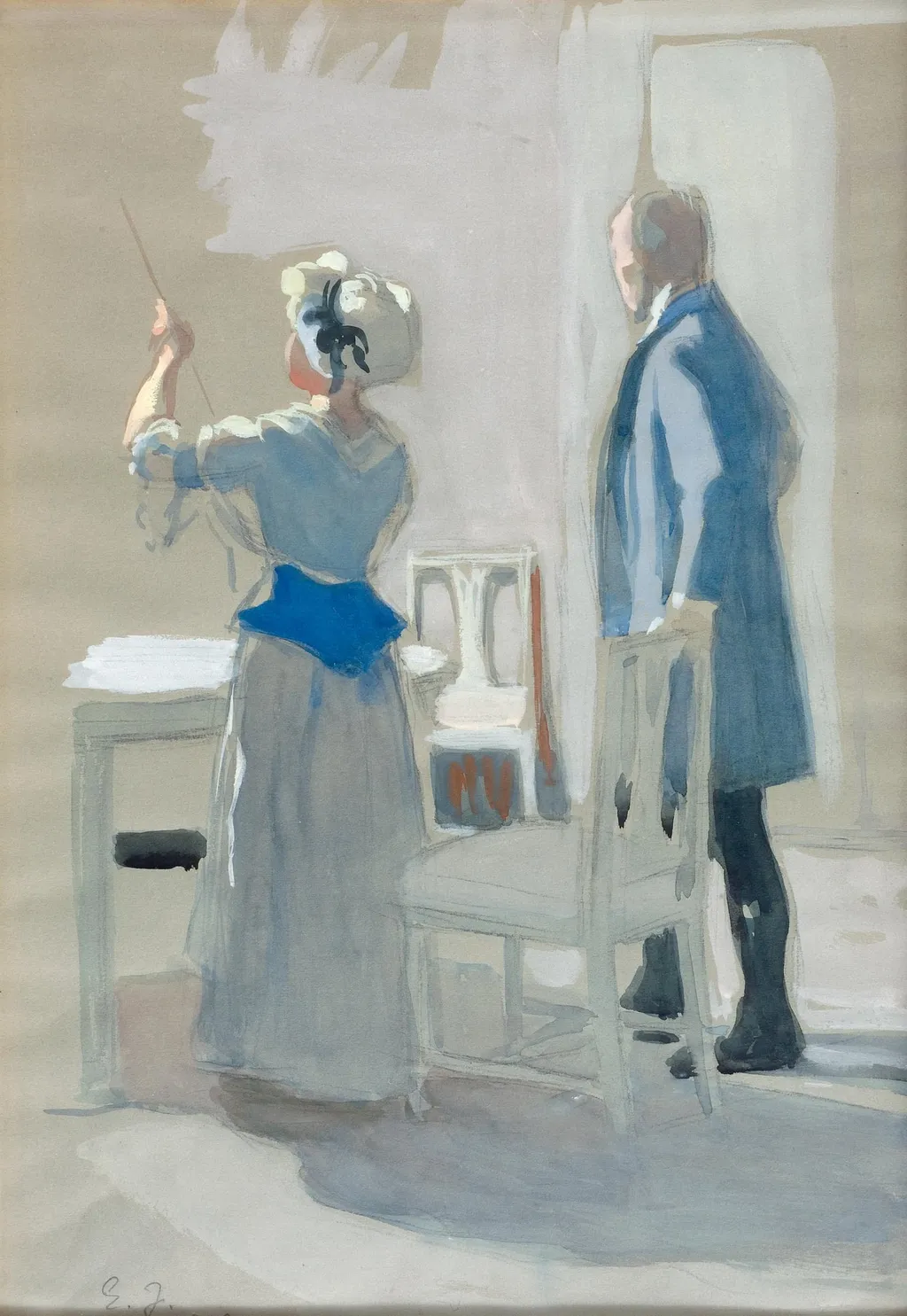
Aurora-seura, luonnos is a photography by Eero Järnefelt. It is held in the collection of the Järvenpää Art Museum. This work is a preparatory sketch executed in a rapid, summary manner.
About this work
Overview
This work is a preparatory sketch executed in a rapid, summary manner. Two figures occupy a sparsely furnished interior, rendered with minimal descriptive detail. The artist’s emphasis rests on capturing the immediate impression rather than refining anatomical precision or spatial illusion, resulting in a composition that remains deliberately unresolved.
Subject & Meaning
The absence of narrative clarity suggests the drawing’s primary purpose was observational rather than symbolic or allegorical.
The scene depicts an informal moment between two individuals, their identities and relationship left ambiguous. The standing figure in blue, viewed from behind, engages with an unidentified object or implement, while the second figure, also turned away, occupies a secondary position. The absence of narrative clarity suggests the drawing’s primary purpose was observational rather than symbolic or allegorical.
Technique & Style
Executed with loose, energetic brushwork, the sketch prioritizes spontaneity over finish. Forms are suggested rather than defined, with broad strokes delineating contours and shadows. This approach aligns with methods employed in preliminary studies, where the artist records visual notes rather than finalized details, favoring immediacy and gesture.
History & Provenance
Details regarding the sketch’s creation, early ownership, and subsequent circulation remain unrecorded. As a preparatory work, it likely originated in the artist’s studio before entering private or institutional collections. Its current status as an independent object reflects later recognition of such studies as autonomous works rather than mere ancillary materials.
Context
Sketches of this kind were typically produced as part of a larger artistic process, serving as references for more developed compositions. The informal treatment of figures and setting reflects a practice common among artists who valued direct observation and quick notation. Such works often remained outside public view until later periods, when their aesthetic qualities gained appreciation.
Artist & collection
Artist

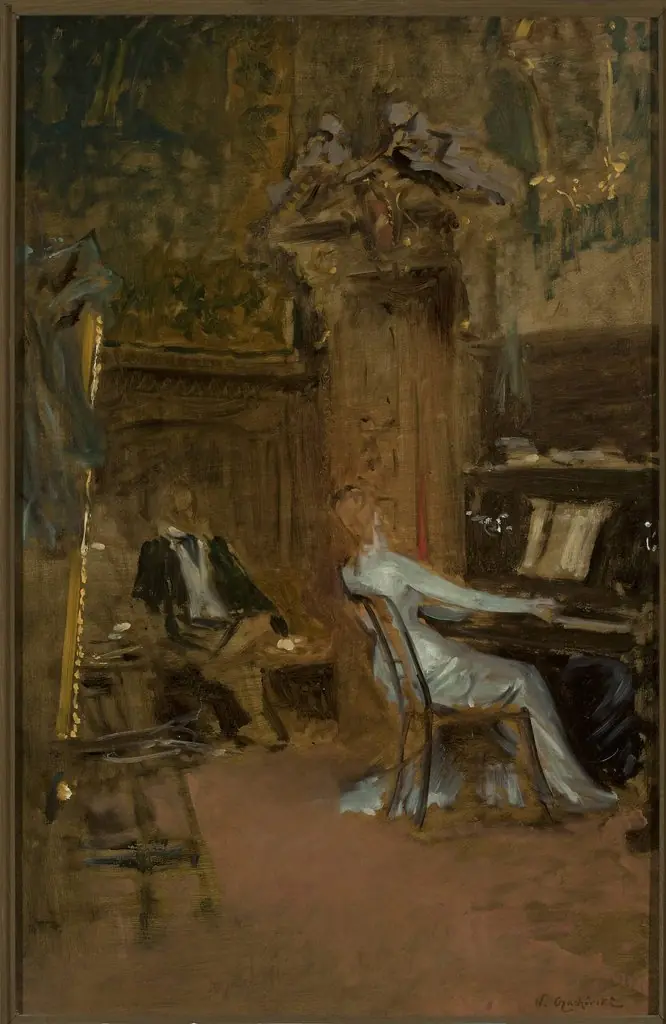 Concert in the living-room, sketch
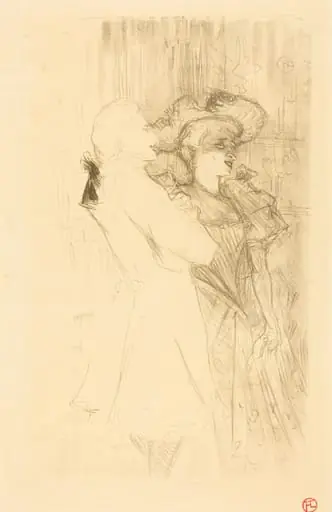 Lender and Auguez in "La chanson de fortunio" (Lender et Auguez dans "La chanson de fortunio")
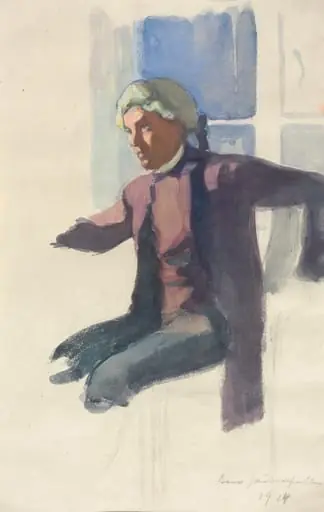 F. E. Sillanpää kustavilaisena
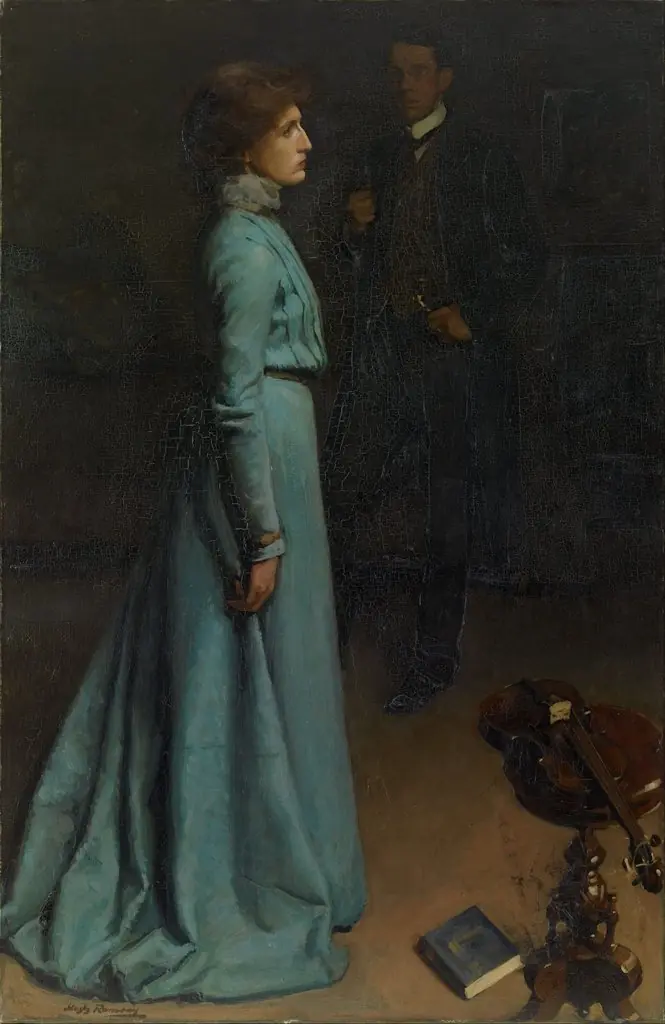 The lady in blue (Mr and Mrs J ...
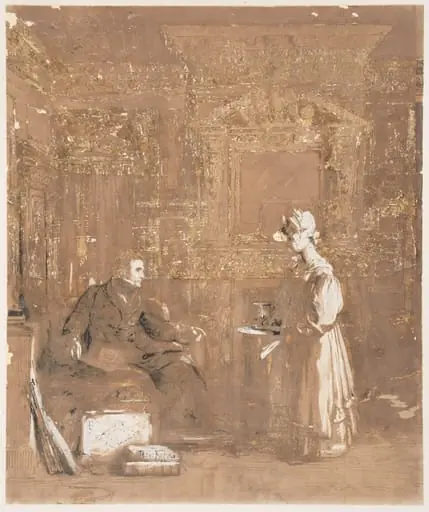 Portrait of Mr. Sheepshanks
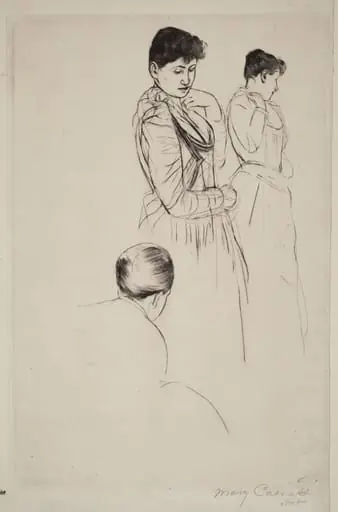 The Fitting
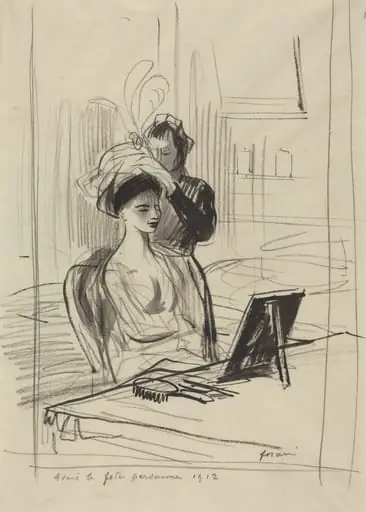 Avant la fête persanne
 Female Students at the Royal Academy Schools
 Ruth Sibelius
 A Concert: Laura Devéria Singing