Artwork
Naisen muotokuva
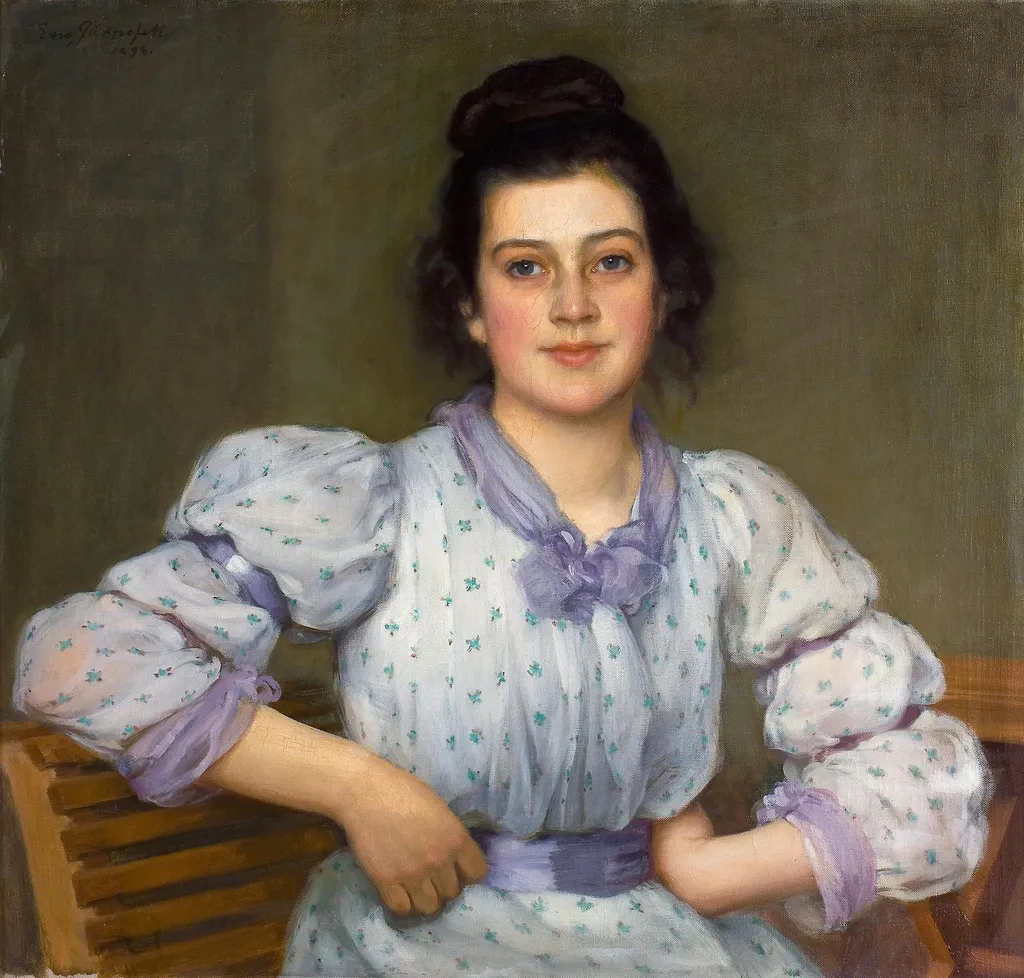
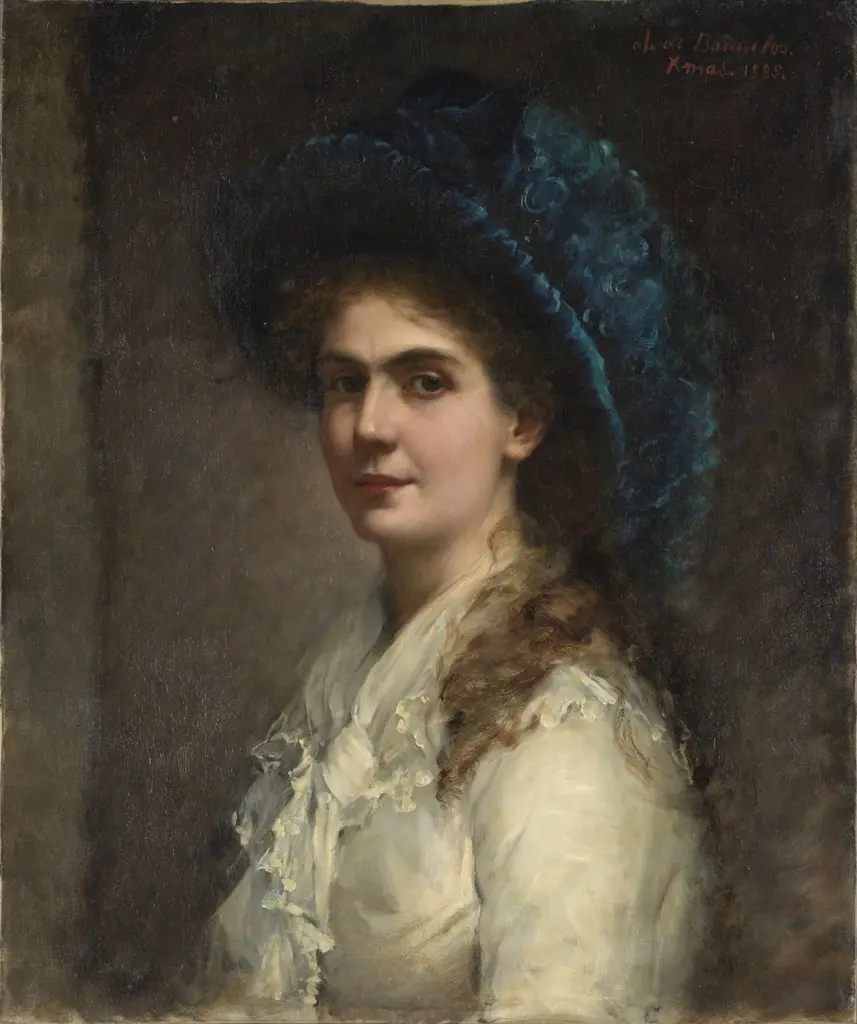
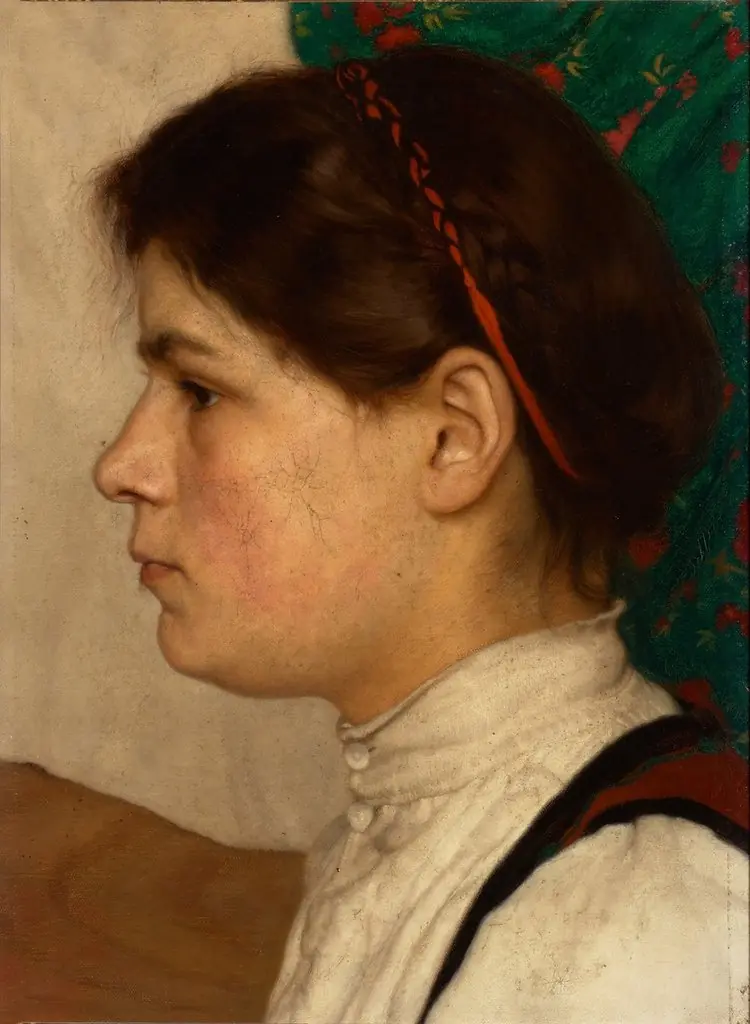
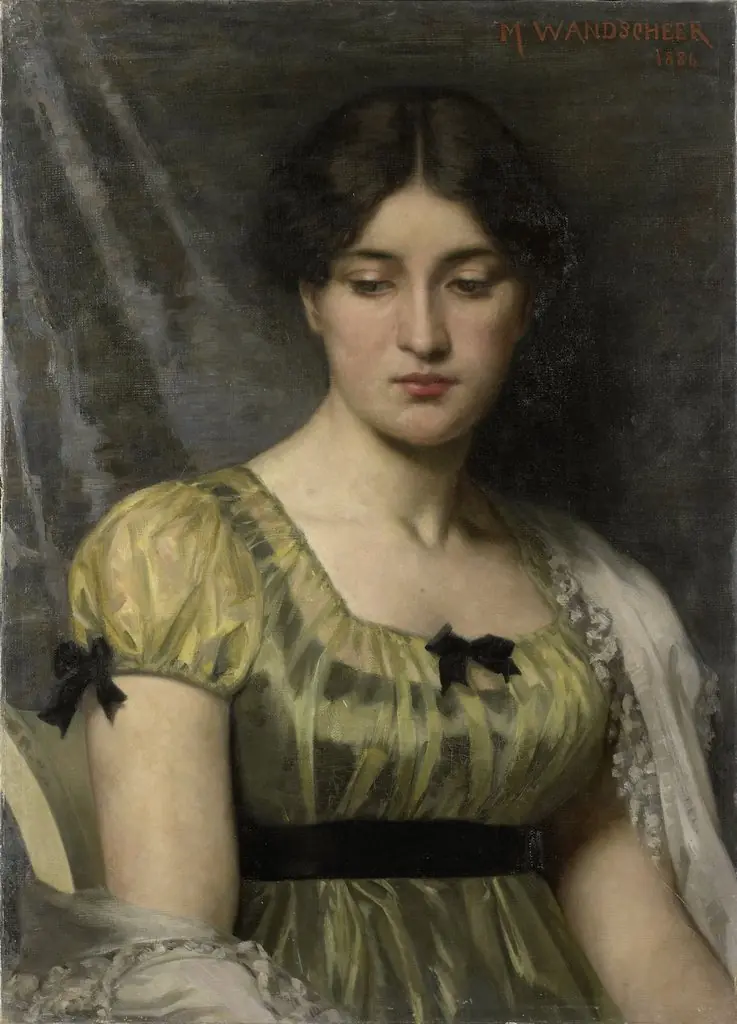
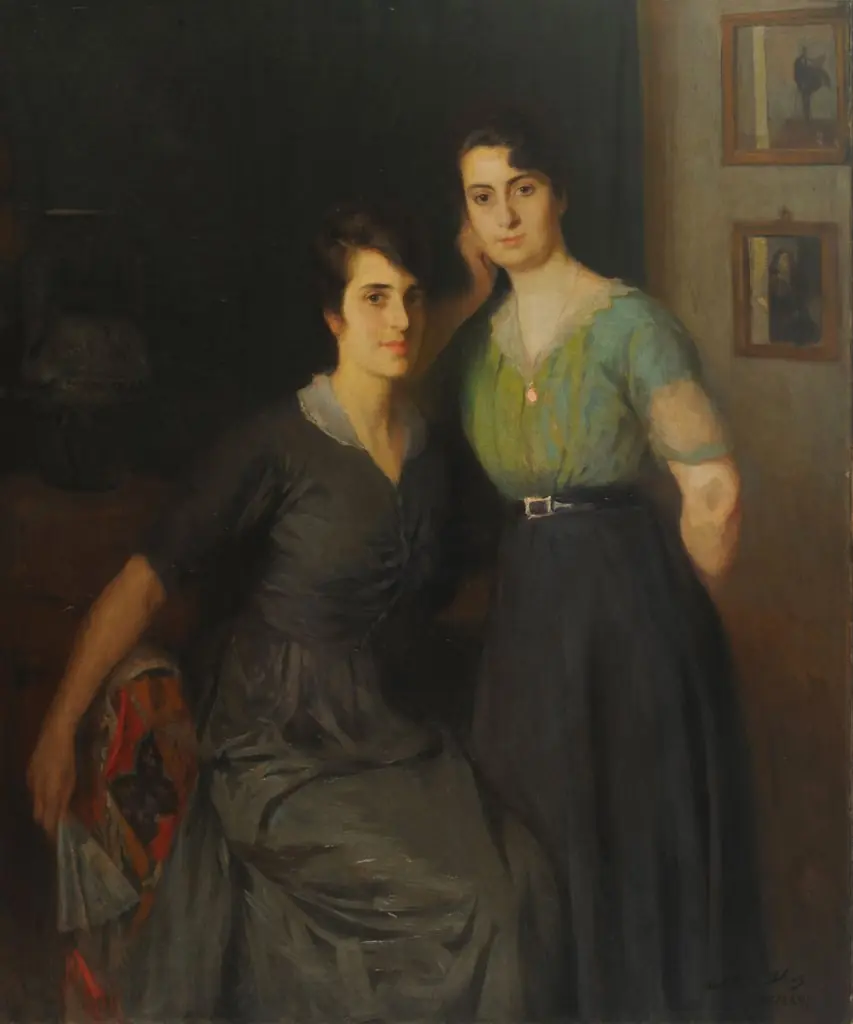
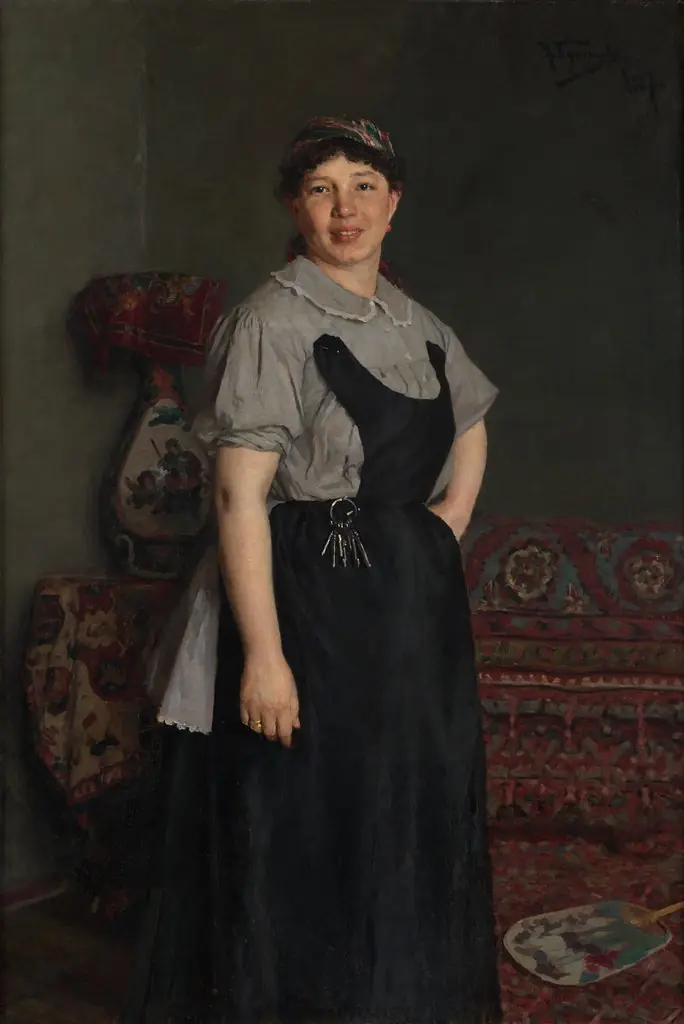
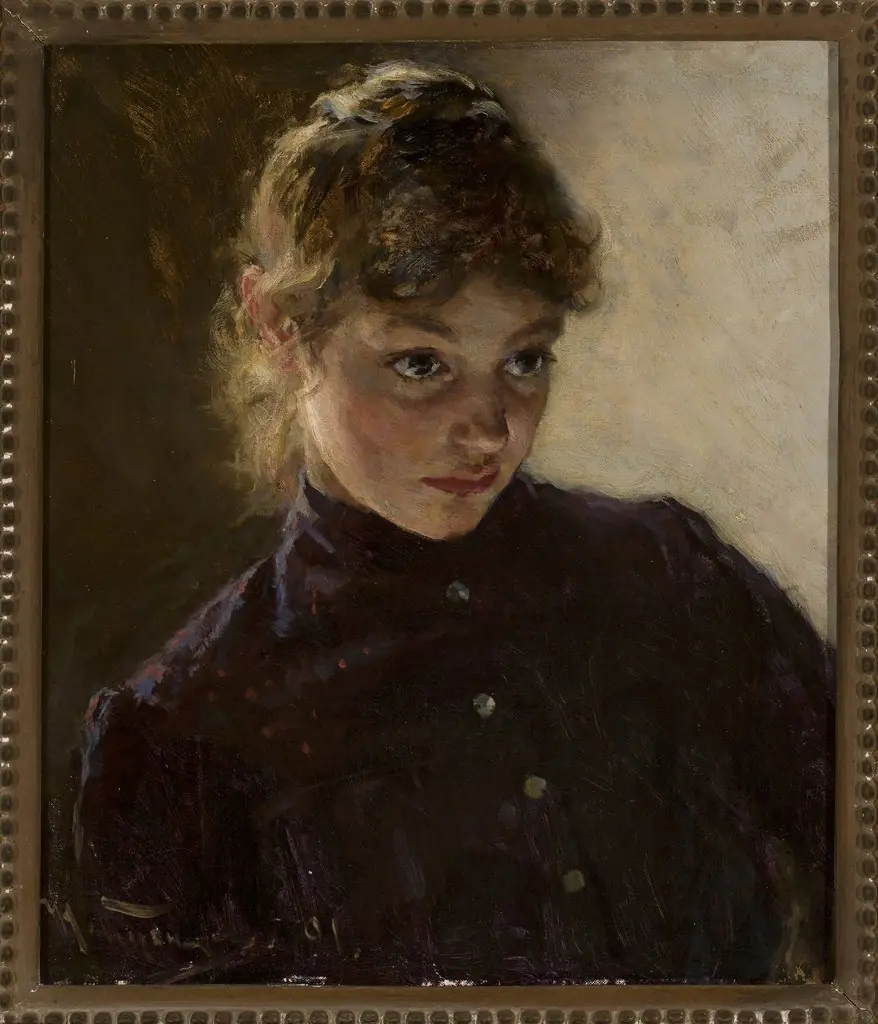
Naisen muotokuva is a photography by Eero Järnefelt. It is held in the collection of the Järvenpää Art Museum. This portrait depicts a woman seated in quiet repose, her hands resting on folded fabric in her lap.
About this work
Overview
Rendered with subtle tonal transitions and minimal contrast, the painting emphasizes stillness and introspection.
This portrait depicts a woman seated in quiet repose, her hands resting on folded fabric in her lap. Rendered with subtle tonal transitions and minimal contrast, the painting emphasizes stillness and introspection. The background recedes into muted darkness, drawing focus to the figure’s composed posture and softly modeled features, suggesting an intimate, private moment rather than a formal commission.
Subject & Meaning
The woman’s calm expression and restrained gesture convey a sense of inner tranquility. Her attire—a light blue dress with fine dark dots and a purple collar—hints at modest elegance, while the folded fabric may imply domestic activity or quiet labor. There is no overt symbolism; the work’s power lies in its understated humanity, capturing a moment of ordinary contemplation without narrative embellishment.
Technique & Style
The artist employs a delicate sfumato technique, blending hues seamlessly across the face and fabric to avoid harsh lines. Soft gradations of light model the skin and dress, creating a luminous effect against the dark background. Brushwork is unobtrusive, prioritizing atmospheric harmony over detail, resulting in a hushed, almost ethereal presence that emphasizes mood over physical precision.
History & Provenance
The painting’s origin and early ownership are undocumented. It lacks a signature or dated inscription, and no archival records link it to a known artist or collection prior to its modern identification. Its survival suggests it was preserved within a private household, possibly as a personal keepsake rather than a publicly displayed work.
Context
Created during a period when portraiture increasingly favored naturalism over grandeur, this image aligns with quieter, domestic-focused depictions emerging in regional studios. Unlike aristocratic commissions, it reflects a middle-class aesthetic—subtle, unadorned, and centered on personal dignity. The absence of props or setting reinforces its focus on the individual’s presence rather than social status.
Legacy
Though not widely exhibited or reproduced, the painting contributes to a broader understanding of non-elite portraiture in its era. Its emphasis on quiet realism and emotional restraint offers insight into how personal identity was visually articulated outside formal traditions. It remains a quiet example of how everyday subjects could be rendered with sensitivity and technical nuance.
Artist & collection
Artist