Artwork
Puut ristissä
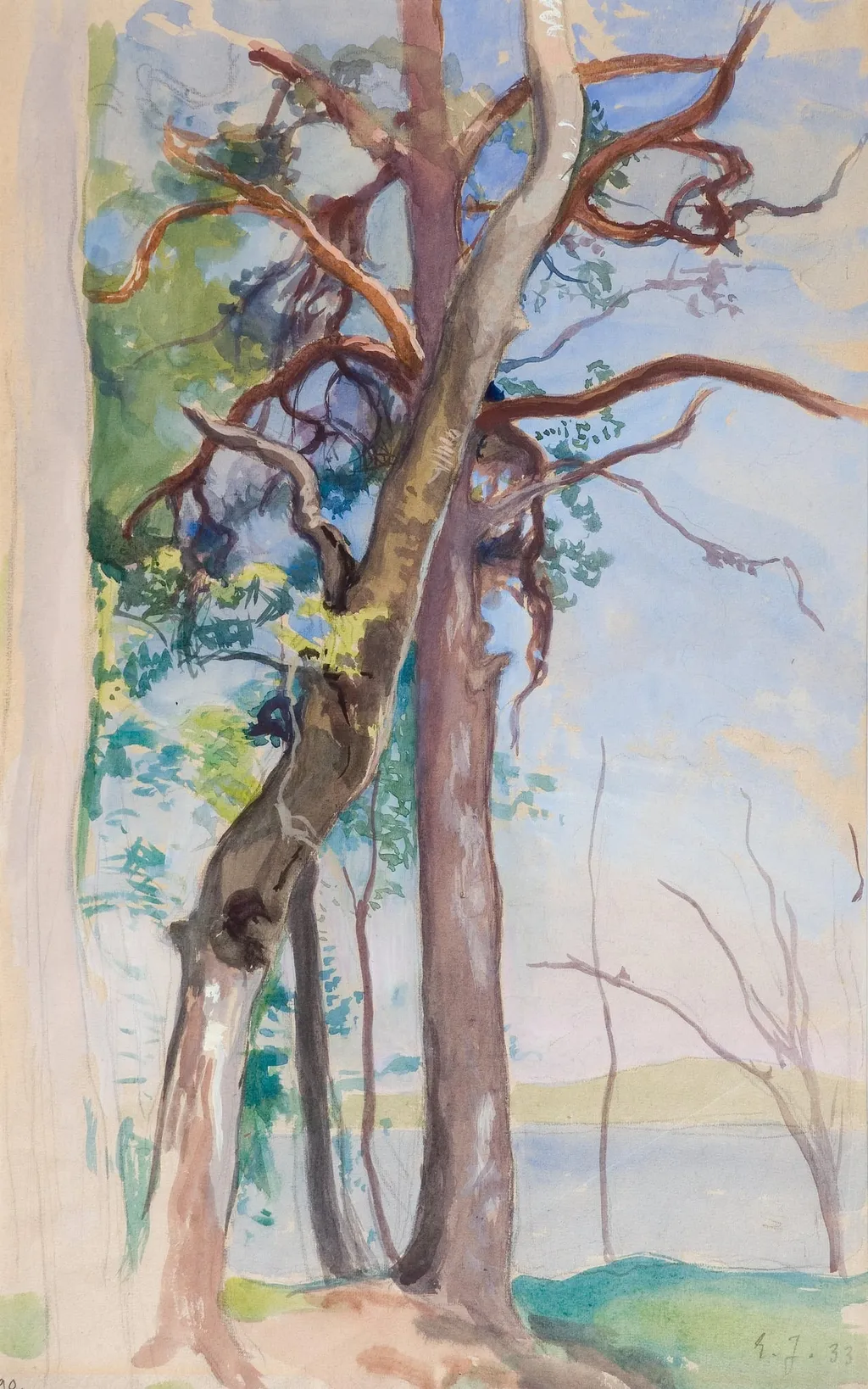
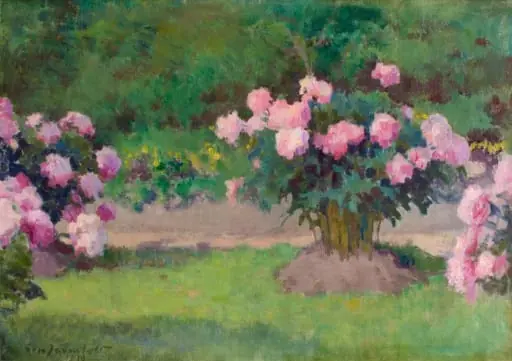
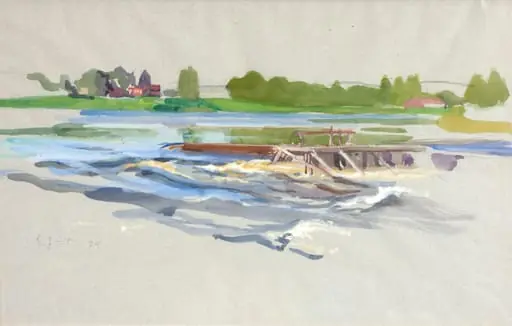
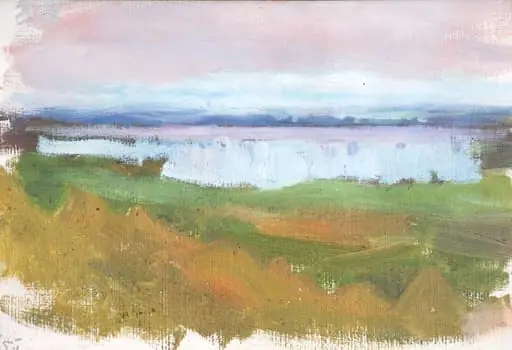
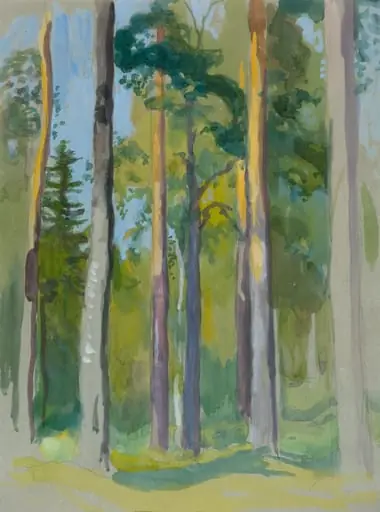
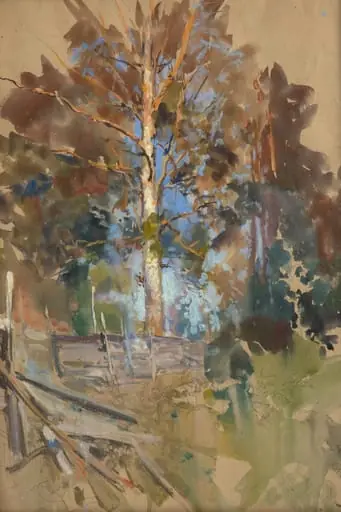
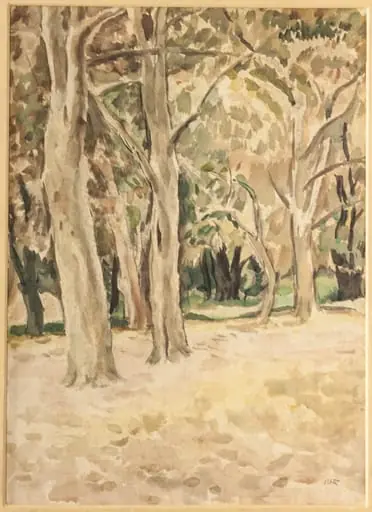
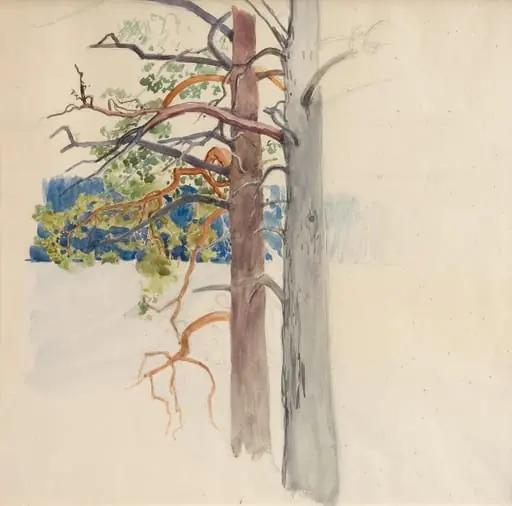
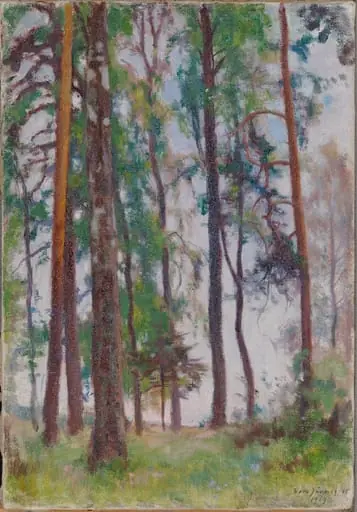
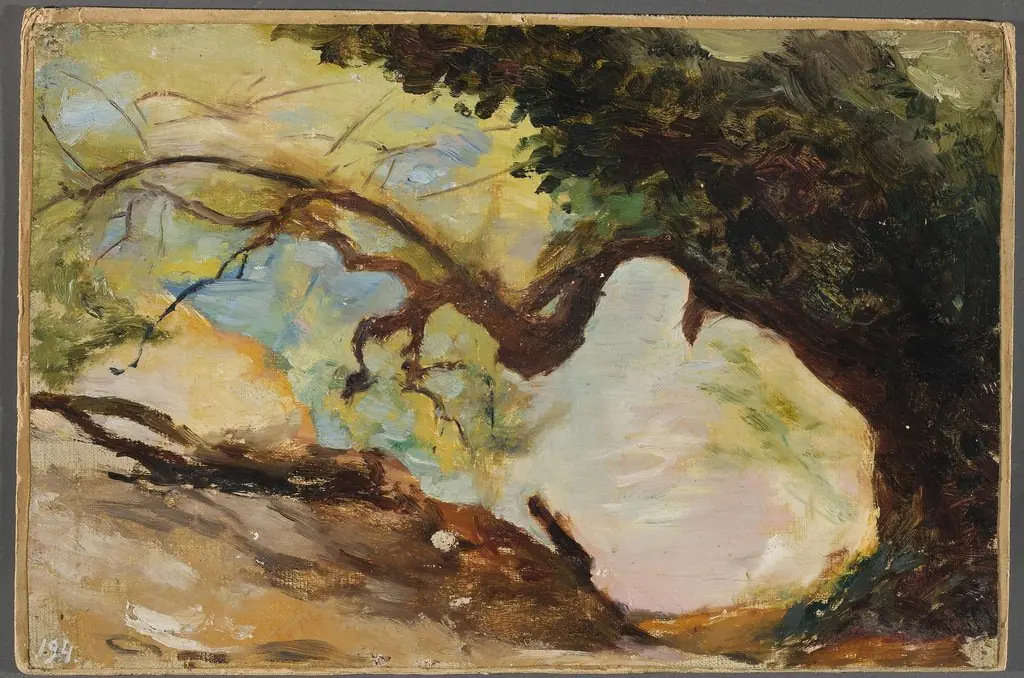
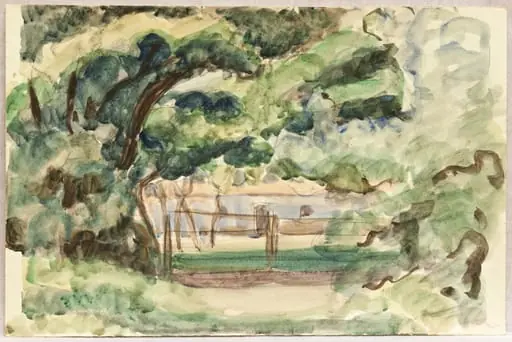
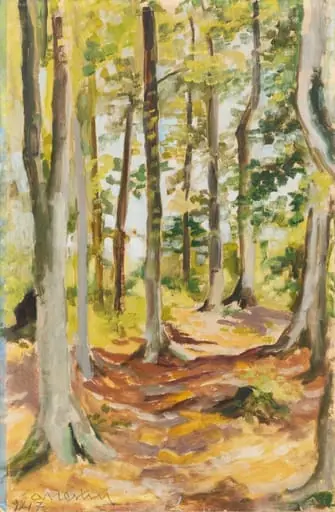
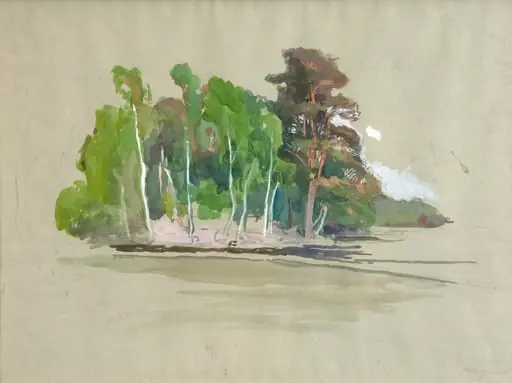
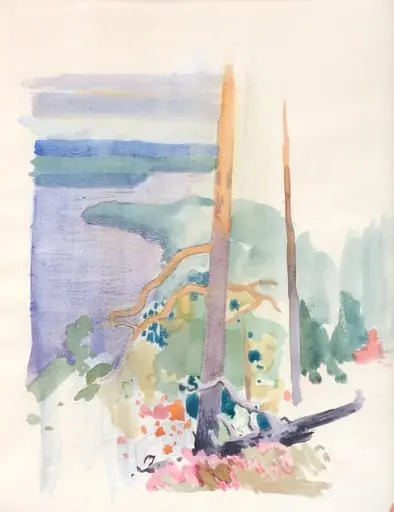
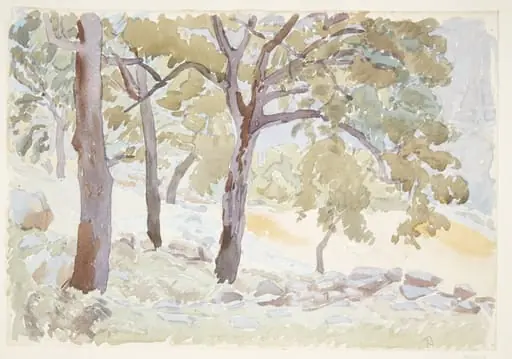
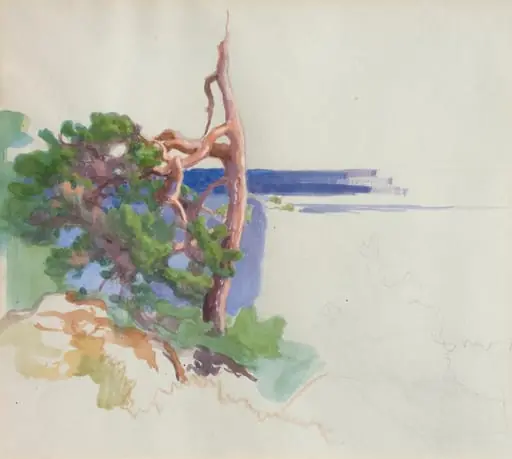
Puut ristissä is a photography by Eero Järnefelt. It is held in the collection of the Järvenpää Art Museum. This landscape painting presents a quiet forest scene with gnarled trees in the foreground and a reflective body of water in the distance.
About this work
Overview
This landscape painting presents a quiet forest scene with gnarled trees in the foreground and a reflective body of water in the distance.
This landscape painting presents a quiet forest scene with gnarled trees in the foreground and a reflective body of water in the distance. The composition emphasizes stillness and natural form, using subtle shifts in tone to suggest depth. Earthy hues dominate the palette, with soft greens and browns blending into a muted sky reflected on the water’s surface. The absence of human figures reinforces a sense of solitude within the natural world.
Subject & Meaning
The subject is a tranquil woodland, rendered without narrative or symbolic figures. The twisted trunks and calm waters suggest an enduring, unaltered nature, evoking contemplation rather than drama. The scene invites quiet observation, aligning with 19th-century Nordic traditions that valued nature as a space for introspection. The stillness of the composition implies harmony between earth, water, and sky.
Technique & Style
The artist employs a restrained palette and delicate gradations of light to model form. Brushwork is subtle, with layered pigments creating texture in the tree bark and smooth transitions in the water’s reflection. Shadows are soft, avoiding harsh contrasts, which contributes to the scene’s serene mood. The technique prioritizes atmospheric cohesion over detailed realism, favoring emotional resonance.
History & Provenance
The work’s origins are undocumented in public records, and no exhibition history or collector lineage is established. While its style recalls Finnish landscape painters like Eero Järnefelt, there is no confirmed attribution or documentation linking it to a specific artist or period. It remains an anonymous example of late 19th-century Nordic-inspired naturalism.
Context
This image emerges from a broader Nordic artistic movement that turned to forests and lakes as subjects of quiet reverence. During the late 1800s, artists across Finland and Scandinavia sought to capture the mood of their native landscapes, often as part of emerging national identities. The emphasis on solitude and natural detail reflects both aesthetic preference and cultural introspection during a time of political change.
Legacy
Though unattributed and undocumented, the painting contributes to a visual language of Nordic landscape painting that valued emotional restraint and natural authenticity. Its quiet composition continues to resonate with viewers drawn to understated depictions of wilderness. It stands as a representative, if anonymous, voice within a regional tradition that prioritized atmosphere over spectacle.
Artist & collection
Artist