Artwork
Peisaj
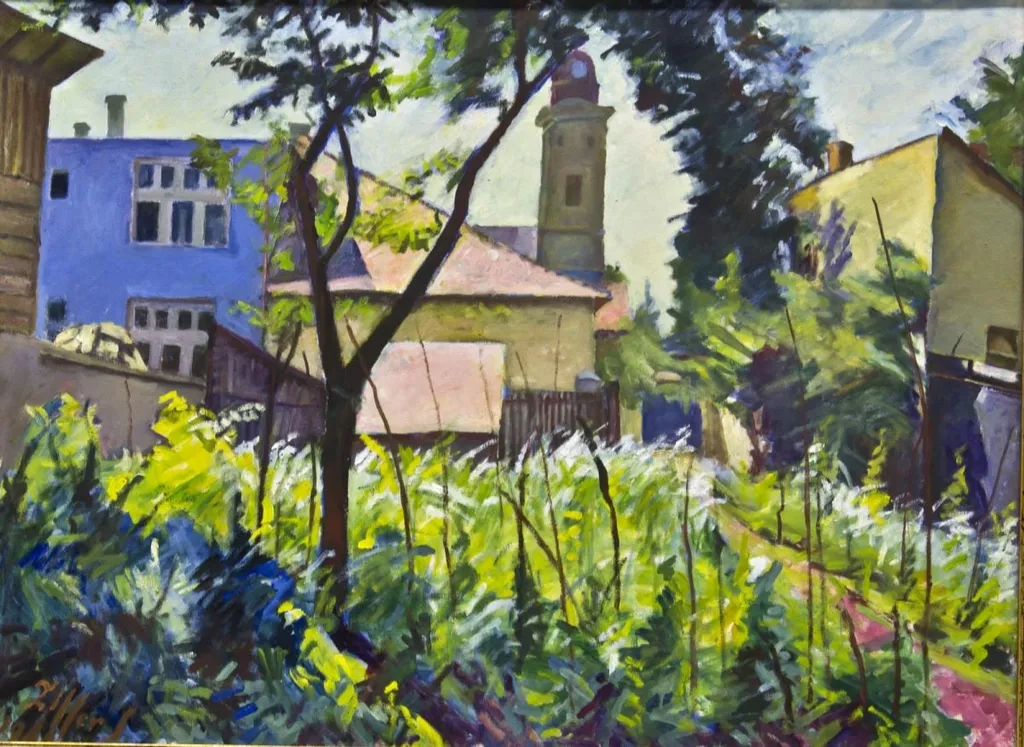
Peisaj is an unspecified painting by Sándor Ziffer. It dates from 1960 and is held in the collection of the National Museum of Art of Romania.
About this work
Overview
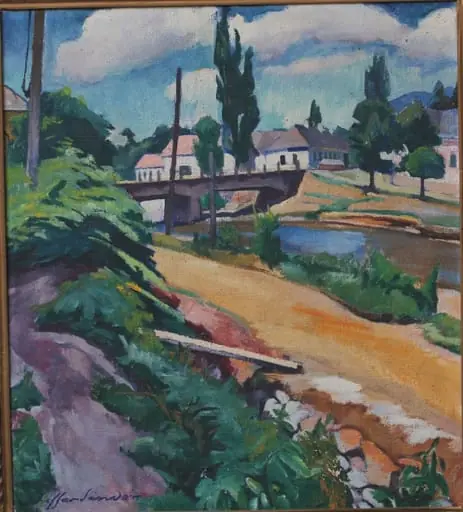
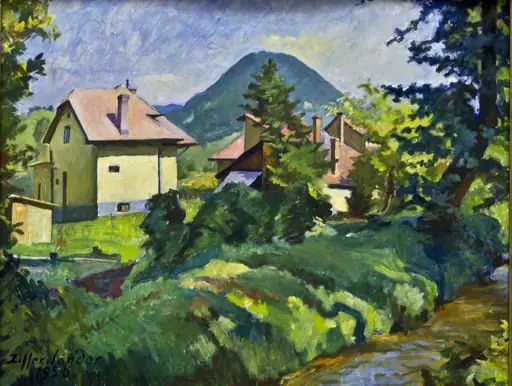
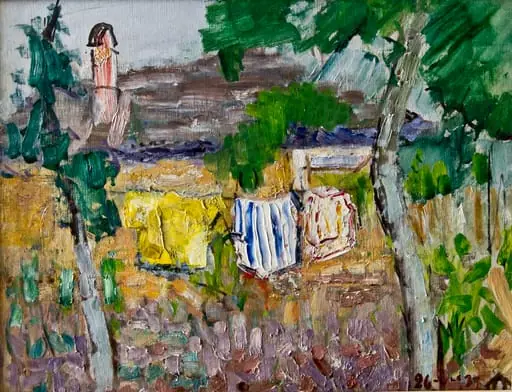
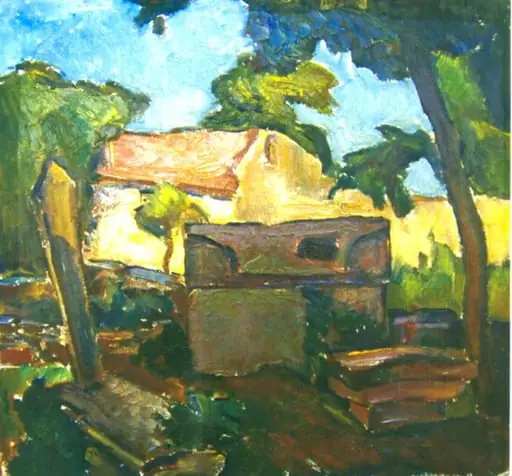
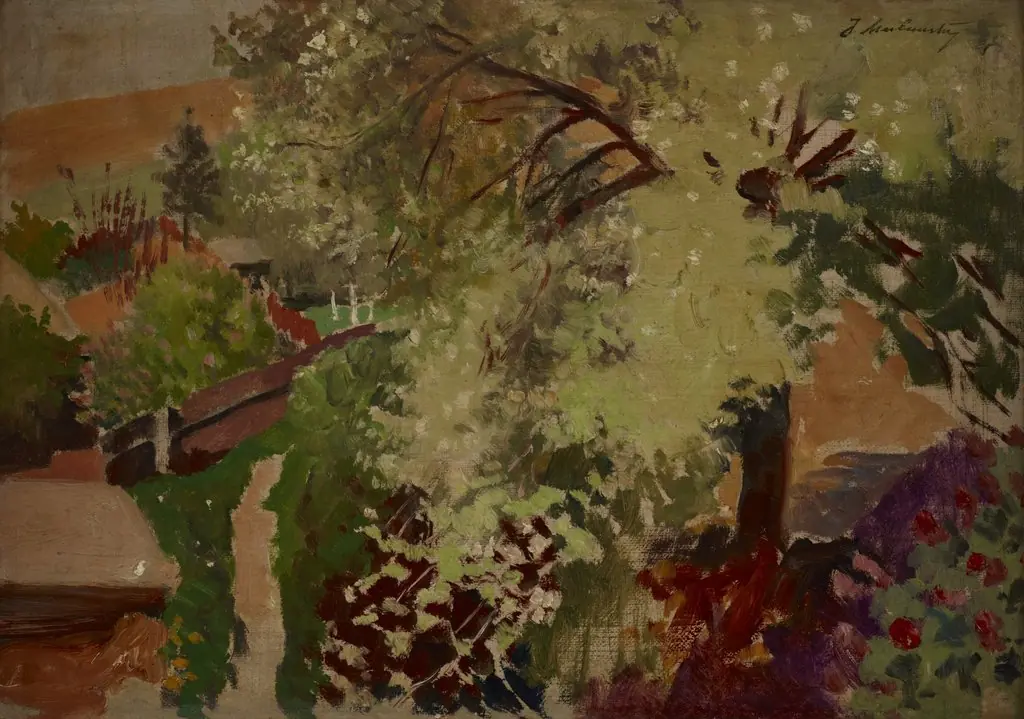
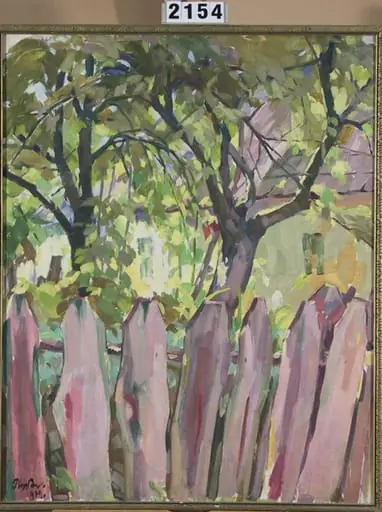
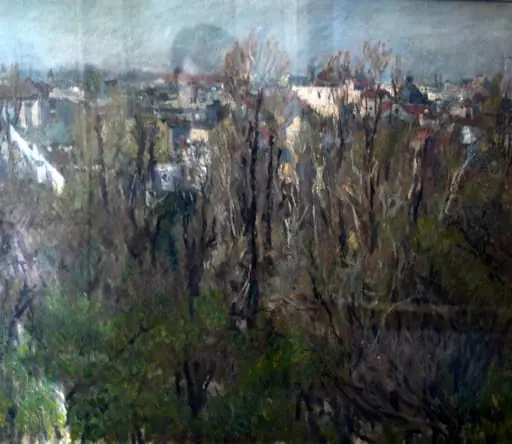
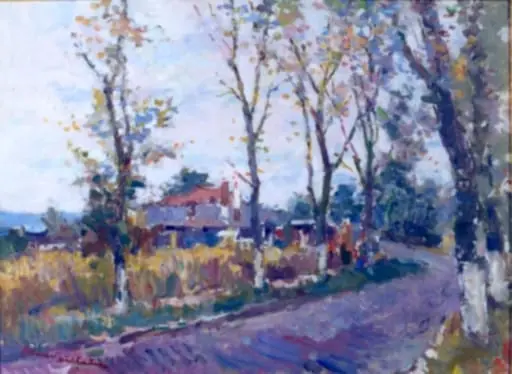
Created in 1960 by Hungarian artist Sándor Ziffer, this landscape painting captures a quiet, sun-drenched garden scene. The composition balances natural elements with modest architecture, suggesting a harmonious coexistence between the cultivated land and human habitation. The work is rendered in oil, with deliberate emphasis on texture and light to evoke a sense of calm, everyday beauty.
Subject & Meaning
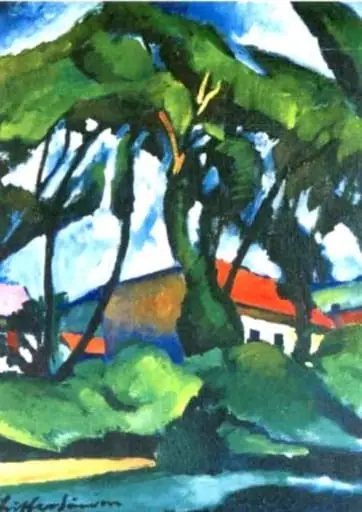
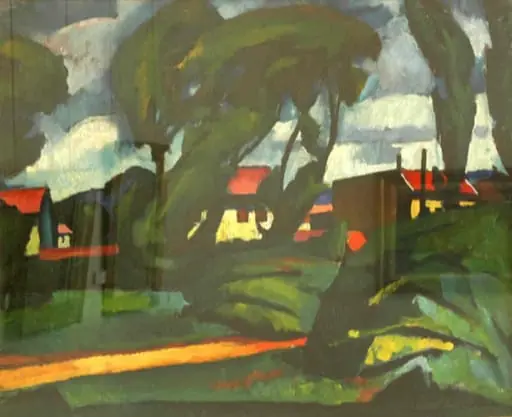
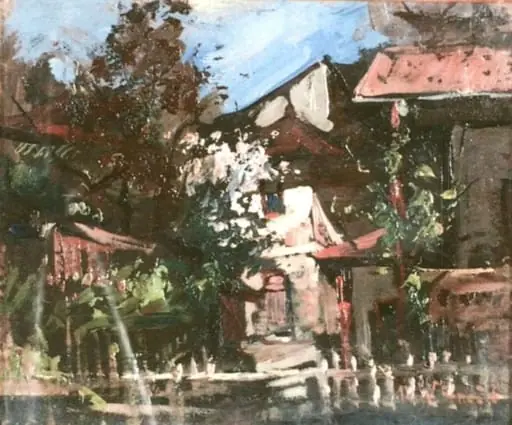
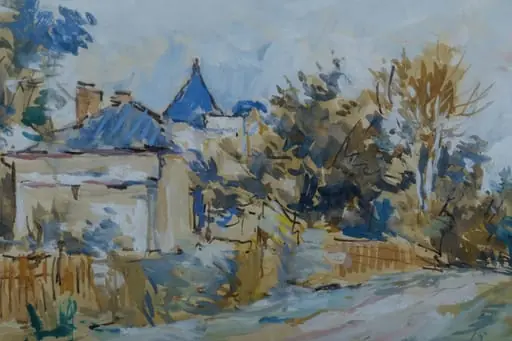
The scene depicts a private garden dominated by lush greenery—bushes, a tall tree, and scattered foliage—framing distant buildings with blue and yellow walls. A small red-roofed tower rises above the canopy, hinting at a nearby village or estate. The absence of figures and the gentle lighting convey stillness and solitude, inviting contemplation rather than narrative.
Technique & Style
Ziffer employs impasto to build texture in the foliage, applying paint thickly to suggest the density of leaves and branches. The brushwork is tactile and deliberate, contrasting with smoother, flatter areas used for walls and sky. This technique enhances the sensory presence of the natural forms, grounding the scene in physicality rather than idealized representation.
History & Provenance
The painting was completed during Ziffer’s mature period, when he focused on domestic landscapes of Hungary’s rural outskirts. It remained in private collections in Budapest until the late 20th century, after which it entered a public institutional holding. Its provenance reflects its status as a representative work of mid-century Hungarian regionalist painting.
Context
This painting aligns with a broader trend of artists using nature to express personal and national identity without overt political messaging.
In the 1960s, Hungarian artists often turned to intimate landscapes as a subtle form of cultural affirmation amid political constraints. Ziffer’s work diverged from state-sanctioned socialist realism, instead embracing quiet observation of everyday environments. This painting aligns with a broader trend of artists using nature to express personal and national identity without overt political messaging.
Legacy
Though not widely exhibited internationally, the painting is recognized in Hungarian art circles for its sensitive handling of light and texture. It exemplifies a quiet, postwar shift toward lyrical realism, influencing later generations of Hungarian painters who sought to reconcile modern technique with traditional subject matter.
Artist & collection
Artist
Sándor Ziffer made quiet, earth-toned landscapes and portraits in the early-to-mid 1900s.