Artwork
Bivolii
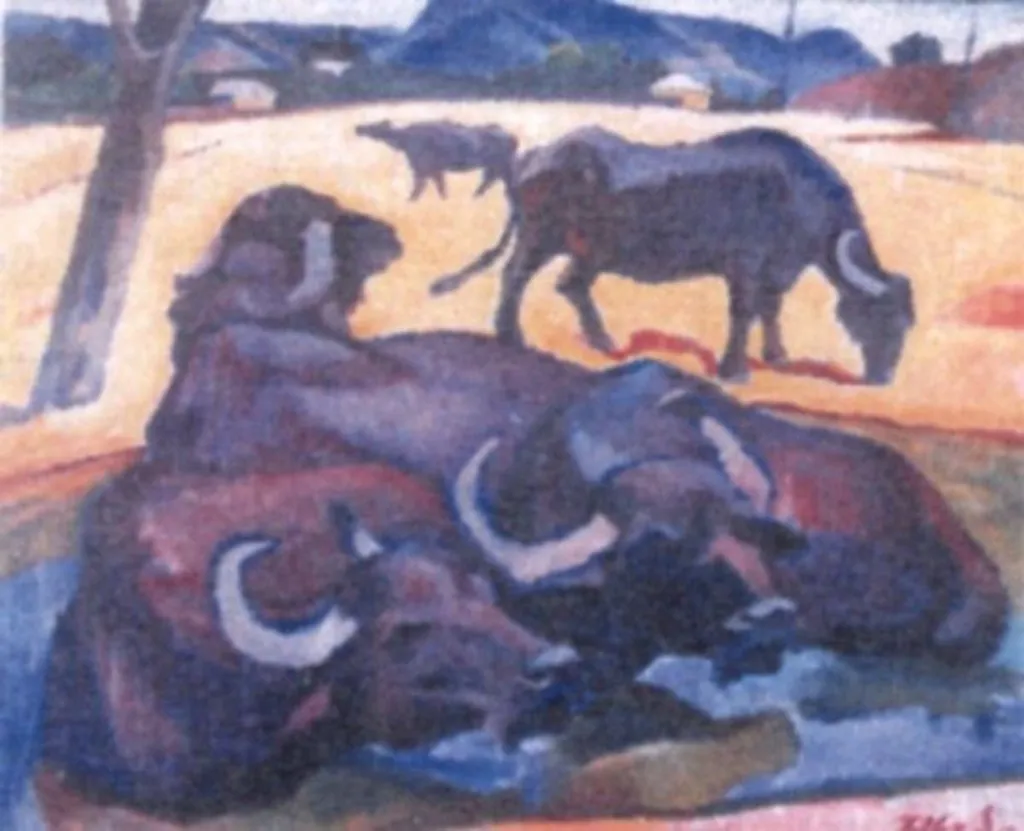
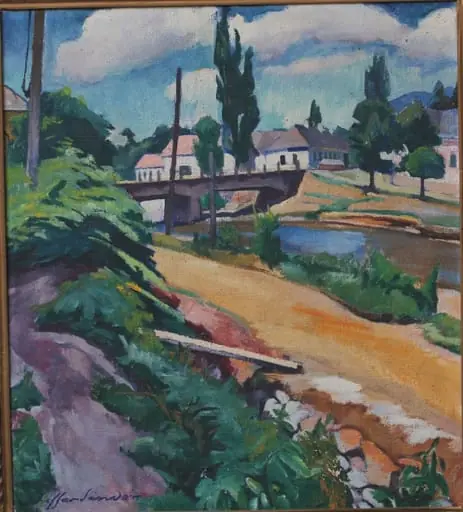
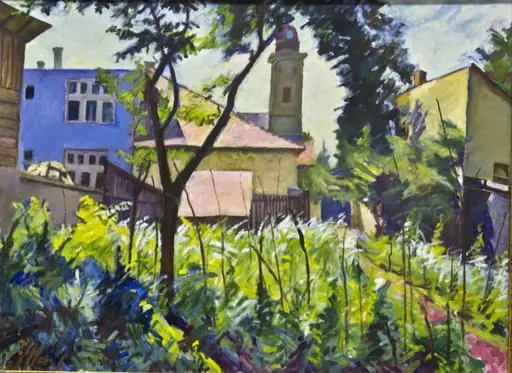
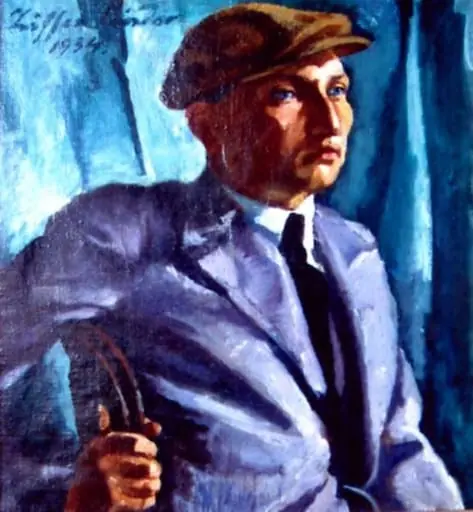
Bivolii is an unspecified painting by Sándor Ziffer. It dates from 1931 and is held in the collection of the Museum of Art Cluj-Napoca.
About this work
Overview
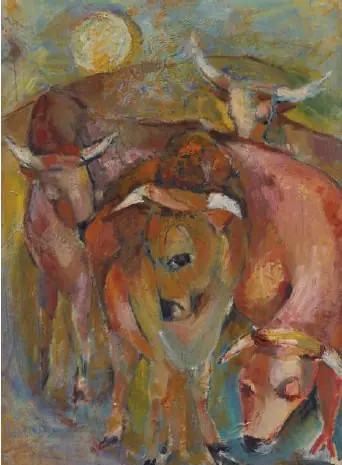
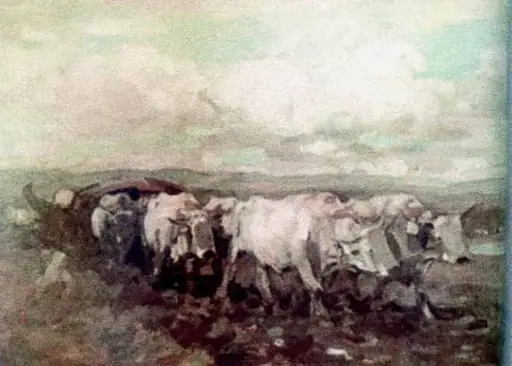
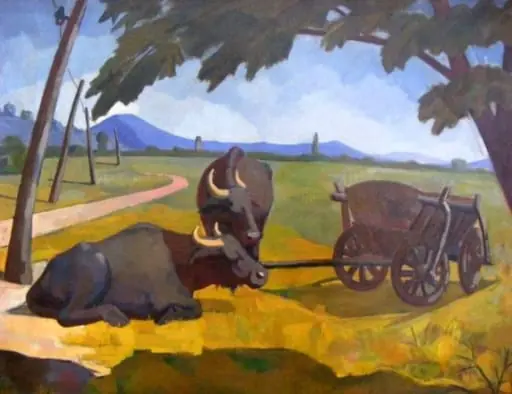
Bivolii, painted by Sándor Ziffer in 1931, is an oil on canvas work currently held by the Museum of Ethnography. It depicts two cattle figures in a rural landscape, rendered with deliberate physicality and minimal environmental detail. The composition focuses on the weight and presence of the animals, set against a sparse, earth-toned setting that suggests a quiet, unidealized countryside.
Subject & Meaning
The two cows are portrayed not as idealized livestock but as grounded, almost sculptural forms, emphasizing their material existence. Their solidity and the barren landscape imply a connection to labor, endurance, and rural life in early 20th-century Hungary. The absence of human figures or narrative cues invites contemplation of the animals’ quiet, enduring role in agrarian society.
Technique & Style
The heavy shadows and angular contours reinforce the sense of mass, while the rough handling of paint rejects smooth realism in favor of expressive structure.
Ziffer employed thick, textured brushwork to build the cows’ forms, using impasto to create a tactile surface that contrasts with the flatter, more muted background. Colors are applied with minimal blending, resulting in bold, unmodulated planes. The heavy shadows and angular contours reinforce the sense of mass, while the rough handling of paint rejects smooth realism in favor of expressive structure.
History & Provenance
Created in 1931, Bivolii entered the collection of the Museum of Ethnography in Budapest, where it remains today. Its acquisition reflects the institution’s interest in documenting Hungarian rural life through visual art. There is no record of public exhibition prior to its inclusion in the museum’s holdings, suggesting it was likely acquired directly from the artist or a private collector.
Context
Painted during a period of heightened national interest in Hungarian folk traditions, Bivolii aligns with broader cultural efforts to preserve and represent rural identity. While not overtly political, its unembellished depiction of livestock and land resonates with contemporaneous movements that sought authenticity over romanticism in depictions of peasant life.
Legacy
Bivolii stands as a quiet example of interwar Hungarian modernism that prioritized form and material presence over narrative. Though not widely reproduced, its inclusion in a major ethnographic collection underscores its role as a document of visual culture tied to agrarian realities. It continues to be studied for its restrained aesthetic and its reflection of regional artistic priorities.
Artist & collection
Artist
Sándor Ziffer made quiet, earth-toned landscapes and portraits in the early-to-mid 1900s.