Artwork
Peisaj din Baia Mare
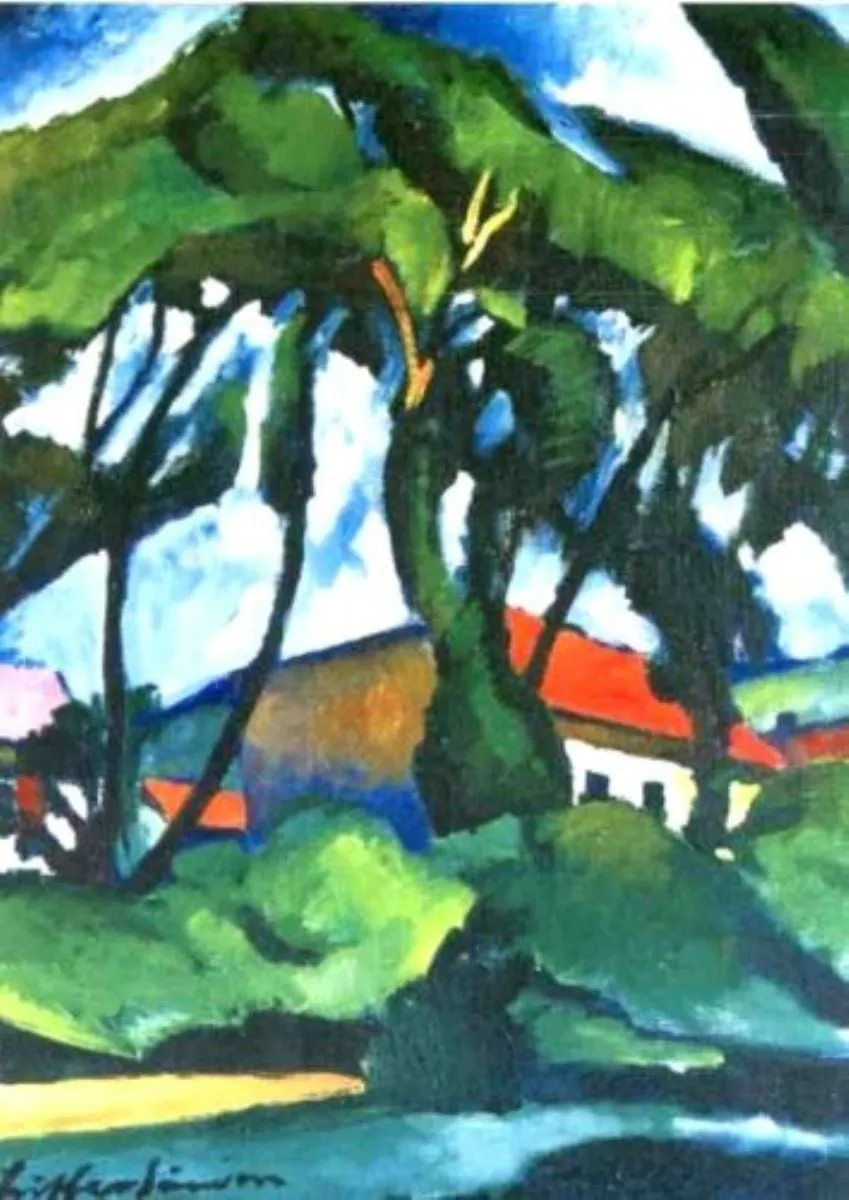
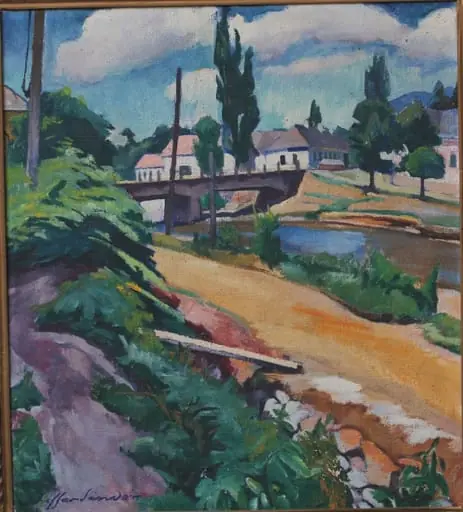
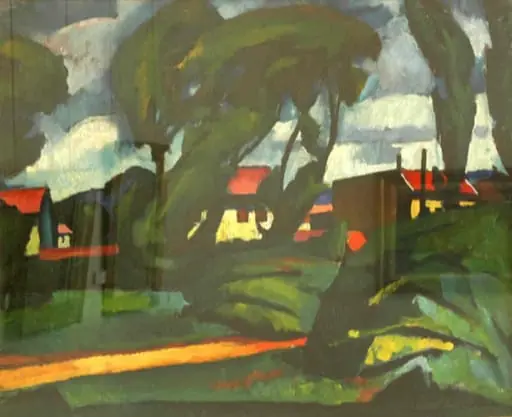
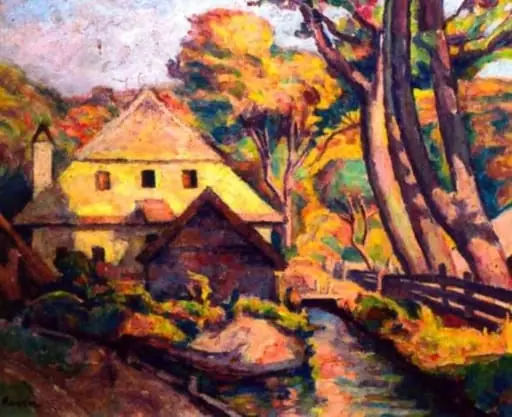
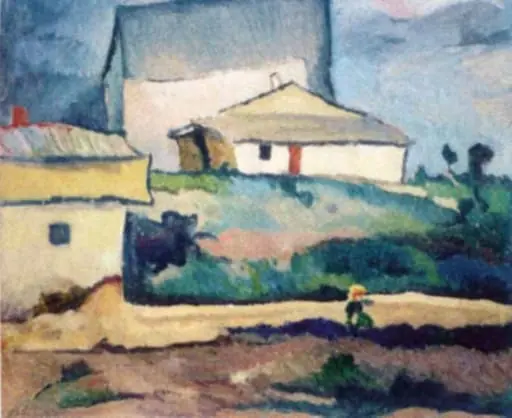
Peisaj din Baia Mare is an unspecified painting by Sándor Ziffer. It is held in the collection of the Székely National Museum. This landscape depicts the village of Baia Mare, rendered with energetic, textured brushwork.
About this work
Overview
The paint is applied thickly and rapidly, creating a tactile, almost tactile surface that emphasizes movement over detail.
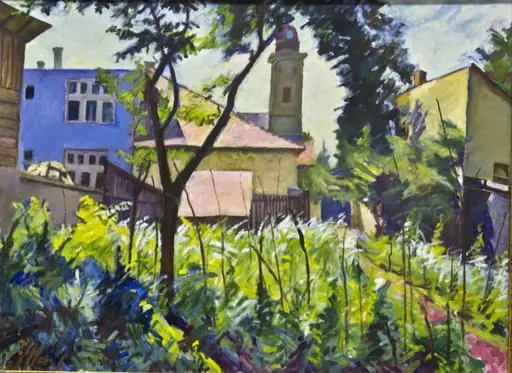
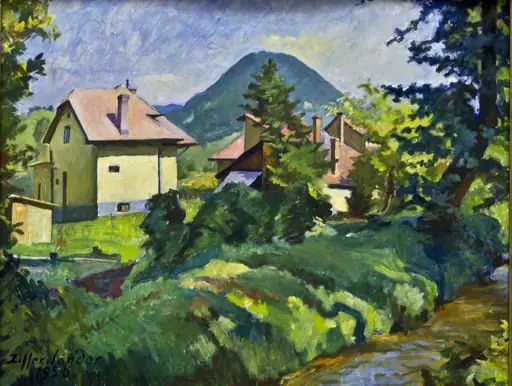
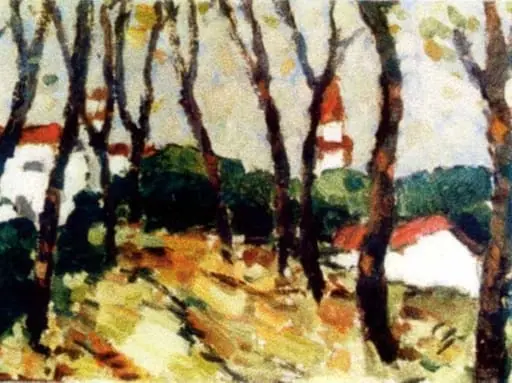
This landscape depicts the village of Baia Mare, rendered with energetic, textured brushwork. The composition centers on clustered buildings with red roofs and white walls, surrounded by dense, leafy trees. Bold hues of green, yellow, and red dominate, while patches of blue sky emerge between the foliage. The paint is applied thickly and rapidly, creating a tactile, almost tactile surface that emphasizes movement over detail.
Subject & Meaning
The scene captures a quiet rural settlement nestled in rolling hills, suggesting a connection between community and natural environment. The absence of human figures shifts focus to the architecture and landscape as enduring elements. The vigorous brushwork conveys a sense of immediacy, as if the artist responded directly to the vitality of the place rather than idealizing it.
Technique & Style
Short, directional strokes build form through layering rather than blending, a technique associated with impasto. Paint is applied with visible force, creating ridges and texture that catch light. Colors are applied unmixed and juxtaposed, enhancing vibrancy. The brushwork feels spontaneous, prioritizing emotional resonance over precise rendering, aligning with expressive tendencies in early 20th-century landscape painting.
History & Provenance
The work originates from Baia Mare, a town in northwestern Romania with a rich mining and cultural history. While the artist’s identity is not specified, the style reflects regional trends of the early 1900s, when local painters began documenting their surroundings with greater personal expression. The piece likely emerged from a period of growing interest in vernacular landscapes among Romanian artists.
Context
During the early 20th century, Romanian artists increasingly turned away from academic traditions to explore native landscapes with more direct, emotional approaches. Painters in Transylvania, including those near Baia Mare, drew inspiration from both local folk culture and contemporary European movements like Post-Impressionism. This work fits within that shift toward personal, tactile representations of everyday environments.
Legacy
Though not widely exhibited outside regional circles, the painting exemplifies a broader trend in Romanian art of the period: the elevation of ordinary places through expressive technique. Its raw, unpolished quality influenced later generations who valued authenticity over refinement, contributing to a distinct local modernism rooted in landscape and materiality.
Artist & collection
Artist
Sándor Ziffer made quiet, earth-toned landscapes and portraits in the early-to-mid 1900s.