Artwork
Lina
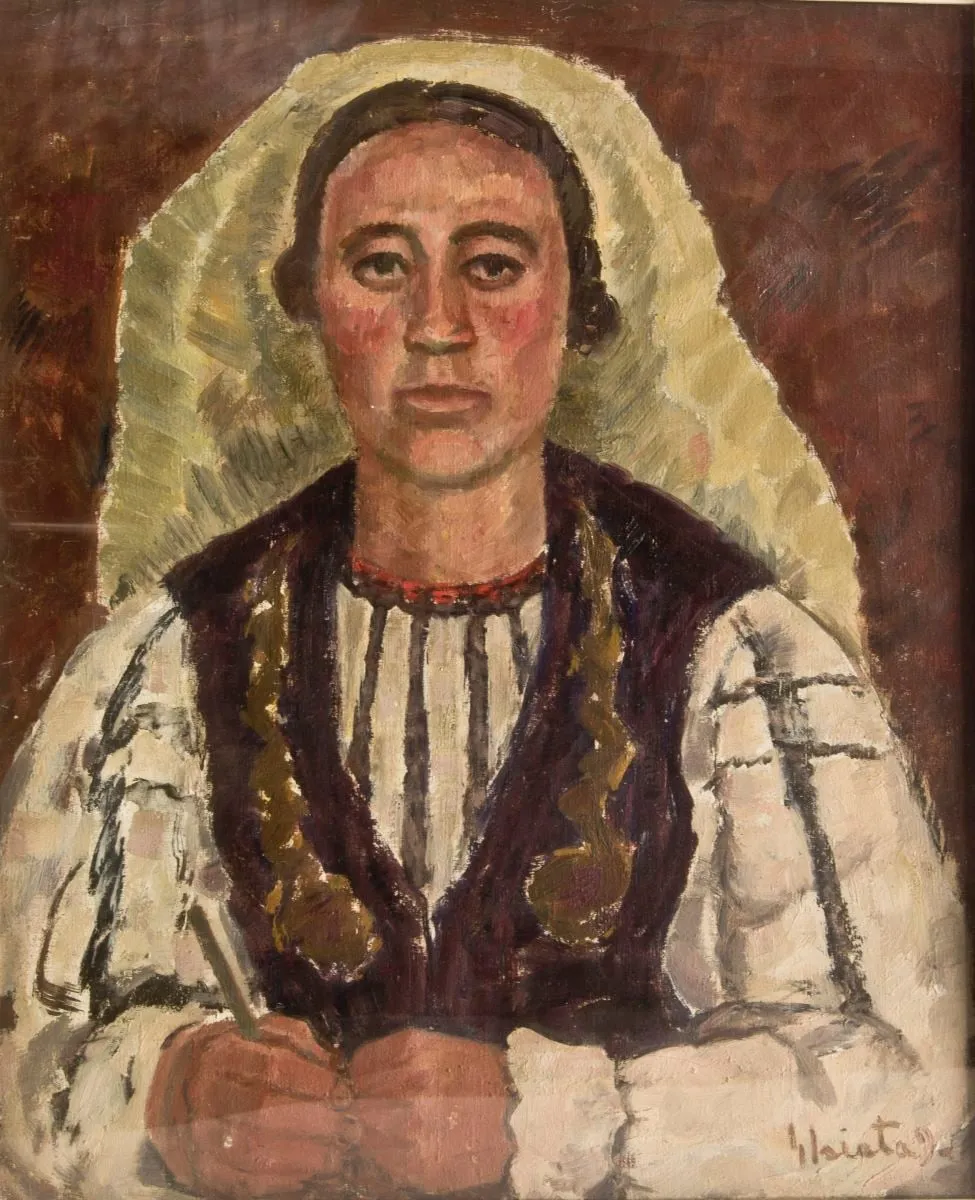
Lina is an unspecified painting by Dumitru Ghiață. It dates from 1948 and is held in the collection of the National Museum of Art of Romania.
About this work
Overview
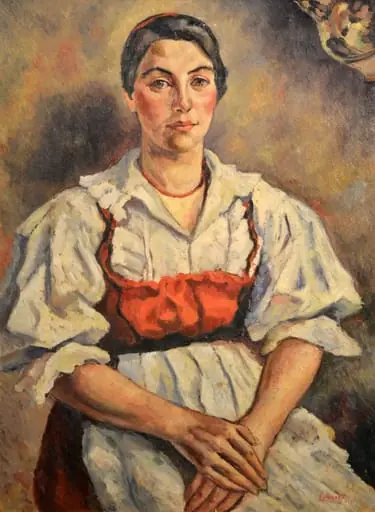
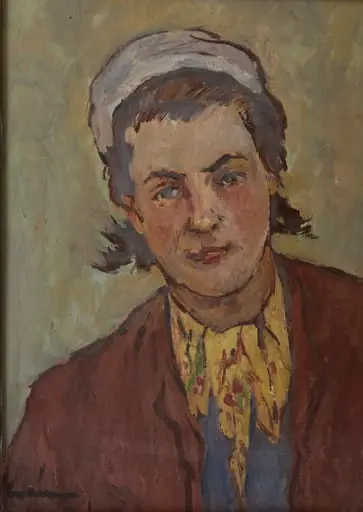
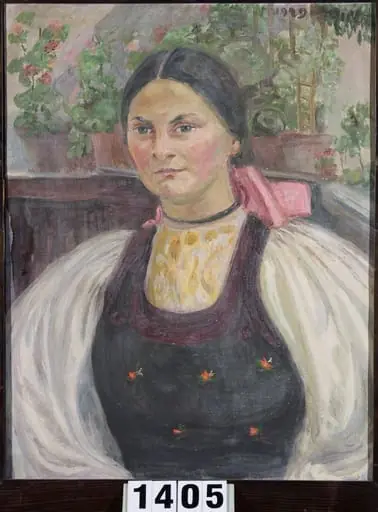
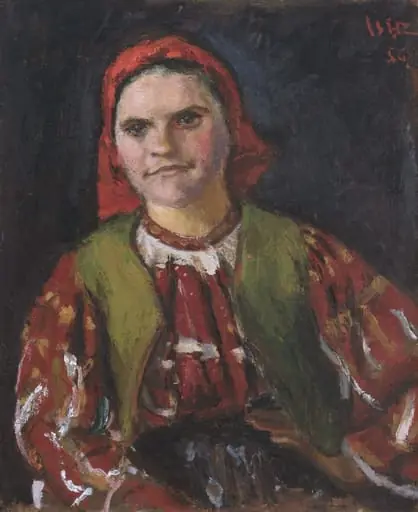
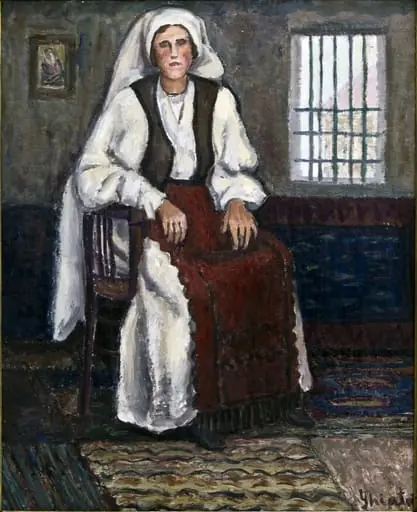
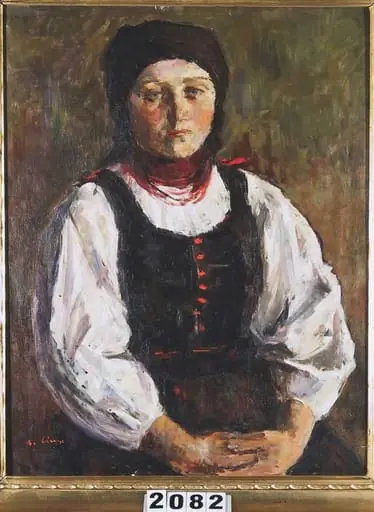
Lina, painted in 1948 by Romanian artist Dumitru Ghiață, is a portrait of a solitary figure seated against a dark, unadorned background.
Lina, painted in 1948 by Romanian artist Dumitru Ghiață, is a portrait of a solitary figure seated against a dark, unadorned background. Ghiață, known for his restrained approach to rural subjects, here shifts focus from landscape to individual presence. The work retains his signature simplicity, emphasizing form and texture over narrative detail, and reflects his broader interest in everyday life in rural Romania.
Subject & Meaning
The figure, identified as Lina, is depicted in quiet stillness, dressed in a dark shawl and a striped shirt, with a red necklace drawing attention to the neck. Her hands rest in her lap, clasping a small, indistinct object—possibly a tool or fruit—suggesting quiet labor or domestic routine. The absence of context invites contemplation of personal dignity within ordinary existence, a recurring theme in Ghiață’s work.
Technique & Style
Ghiață employed thick, textured brushwork, particularly in the shawl and sleeves, using impasto to create tactile surfaces that catch light unevenly. The background is muted and flat, heightening the figure’s presence. Colors are subdued, with the red necklace as the only vivid accent. The style is synthetic and deliberate, avoiding realism in favor of essential forms, aligning with folk-inspired simplification.
History & Provenance
Created in 1948, during the early years of communist rule in Romania, Lina was produced amid state pressure to promote socialist realism. Ghiață, however, maintained his personal aesthetic, focusing on individual dignity rather than ideological messaging. The painting’s provenance remains largely private, with no public exhibition history widely documented, suggesting it was retained within family or local collections.
Context
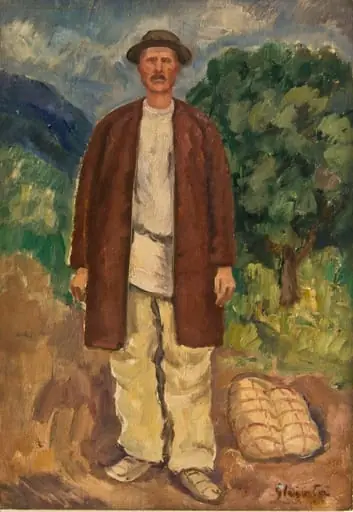
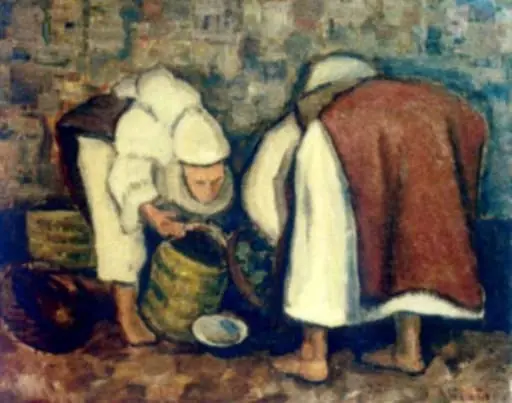
Ghiață’s work emerged from a tradition of Romanian artists who sought to capture rural life without romanticization. While contemporaries turned to political themes, he continued depicting peasants, seasonal cycles, and domestic moments with quiet intensity. Lina fits within this body of work, reflecting a cultural memory rooted in village customs, even as the nation underwent rapid modernization.
Legacy
Though not widely exhibited, Lina exemplifies Ghiață’s enduring contribution to Romanian art: a quiet, unembellished vision of rural identity. His use of texture and restraint influenced later generations seeking alternatives to state-mandated realism. The painting endures as a testament to the value of individual presence within a shifting social landscape.
Artist & collection
Artist
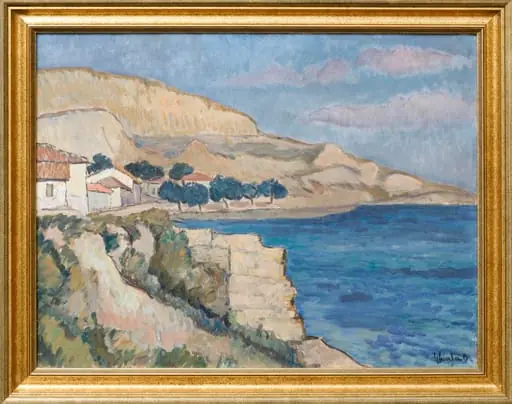
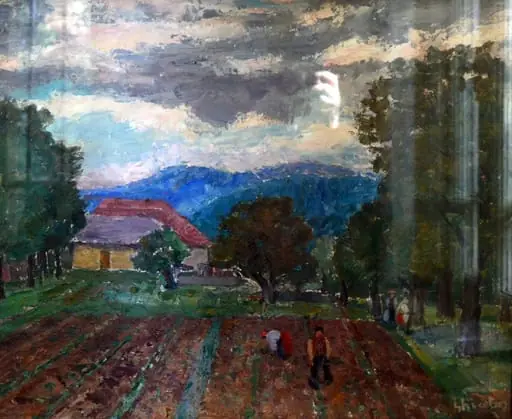
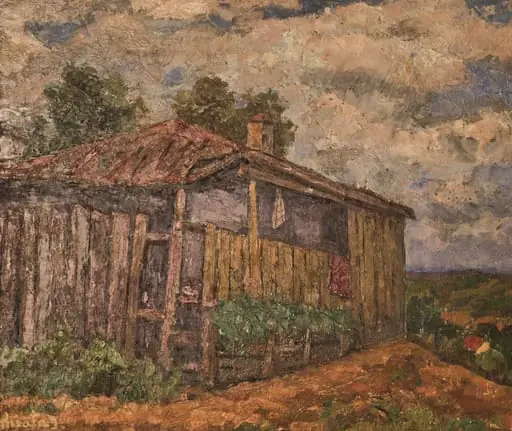
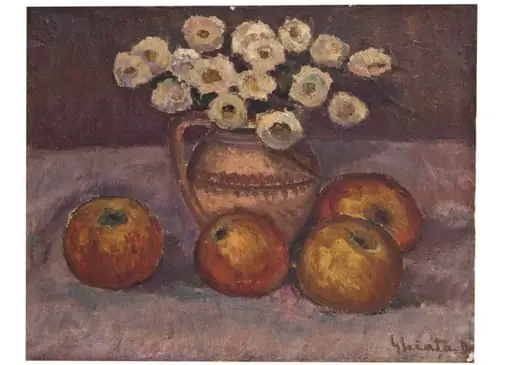
Dumitru Ghiață (22 September 1888 – 3 July 1972) was a Romanian landscape painter.