Artwork
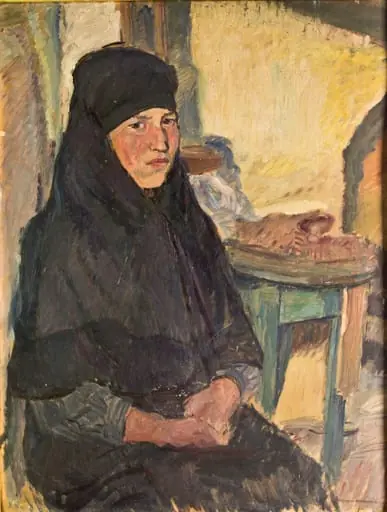
Țărancă pe laviță
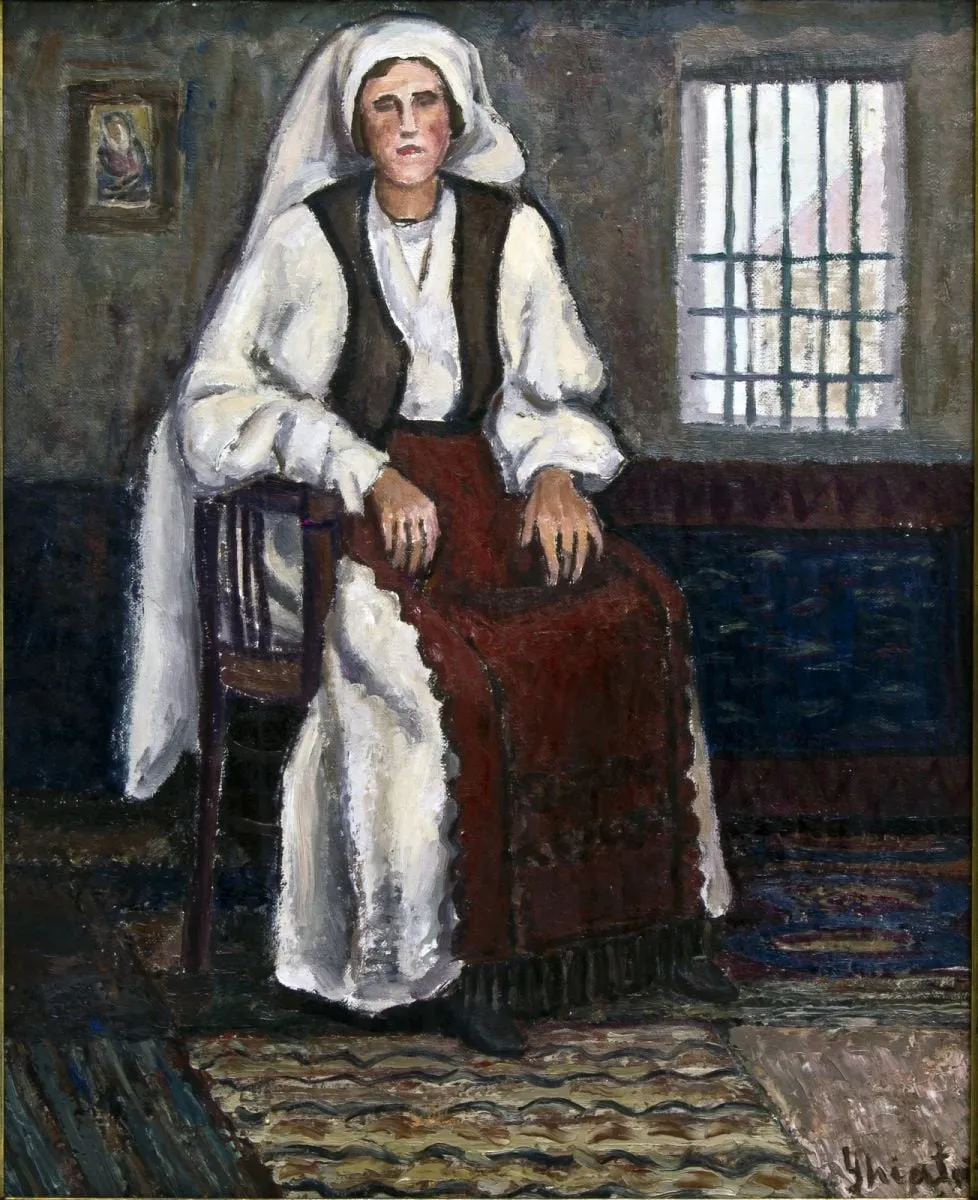
Țărancă pe laviță is an unspecified painting by Dumitru Ghiață. It dates from 1925 and is held in the collection of the National Museum of Art of Romania.
About this work
Overview
This work exemplifies his approach: unadorned subjects, minimal detail, and a focus on the dignity of everyday existence.
Dumitru Ghiață painted Țărancă pe laviță in 1925, capturing a quiet moment in rural Romanian life. As a painter known for genre scenes and still lifes, he favored simplicity and emotional restraint. This work exemplifies his approach: unadorned subjects, minimal detail, and a focus on the dignity of everyday existence. The composition avoids theatricality, instead grounding its presence in quiet observation.
Subject & Meaning
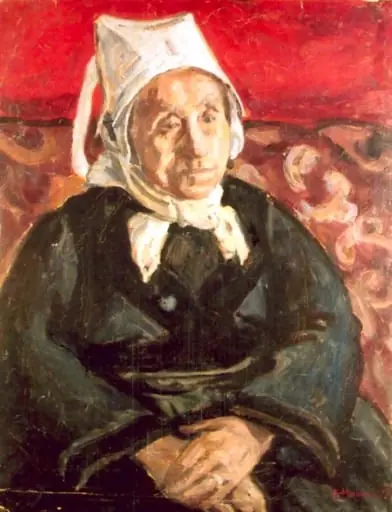
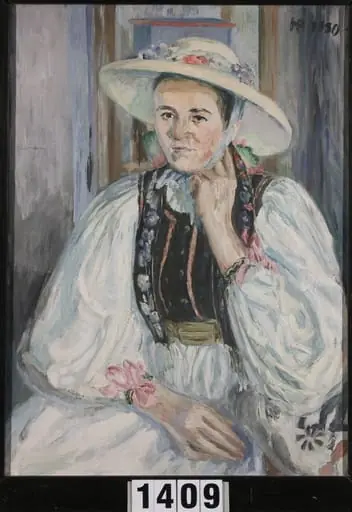
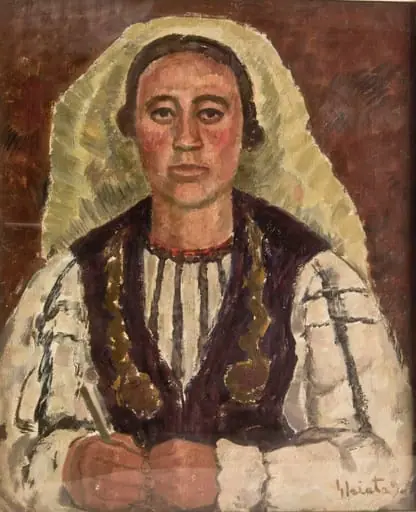
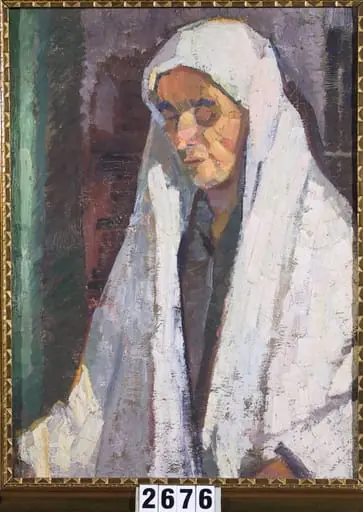
The painting depicts a peasant woman seated on a wooden bench, her posture still and composed. Her attire—a white headscarf, dark vest, and maroon skirt—signals regional dress and modest means. The absence of narrative action invites contemplation rather than storytelling. Her hands rest gently in her lap, suggesting introspection or exhaustion. The scene conveys endurance, not hardship, emphasizing quiet resilience over drama.
Technique & Style
Ghiață employed thick, deliberate brushwork, particularly on the woman’s clothing and the chair, giving texture without ornament. The palette is muted, dominated by earth tones and subdued contrasts. Strong chiaroscuro directs attention to her face, isolating it against a darkened interior. The barred window and small framed image on the wall are rendered with minimal detail, reinforcing the focus on the figure and the weight of stillness.
History & Provenance
Created in 1925, the painting emerged during a period when Romanian artists were redefining national identity through depictions of rural life. Ghiață, active in the interwar years, was part of a generation that rejected academic idealism in favor of authentic, unembellished portrayals. While its early ownership is undocumented, the work has remained within Romanian collections, reflecting its cultural resonance in the region.
Context
In 1920s Romania, rural communities remained central to national identity, even as urbanization accelerated. Artists like Ghiață turned to peasant life not as exoticism, but as a source of moral and aesthetic truth. The dim interior, plain walls, and lack of decorative elements reflect the material reality of village homes. This painting aligns with broader European trends toward realism but retains a distinctly local sensibility.
Legacy
Țărancă pe laviță endures as a representative example of Ghiață’s contribution to Romanian interwar art. It influenced later generations who sought to portray ordinary life with emotional honesty rather than romanticism. The work’s quiet power lies in its refusal to dramatize; its legacy is in its restraint, offering a sustained gaze at dignity found in stillness and simplicity.
Artist & collection
Artist
Dumitru Ghiață (22 September 1888 – 3 July 1972) was a Romanian landscape painter.