Artwork
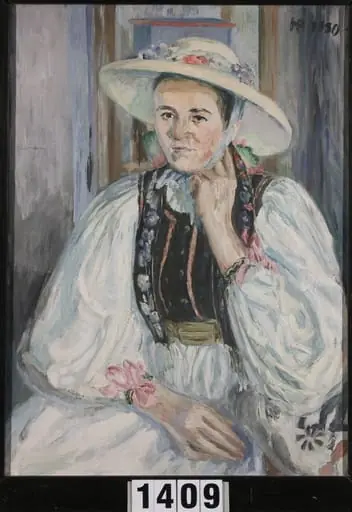
Fată de țăran sas
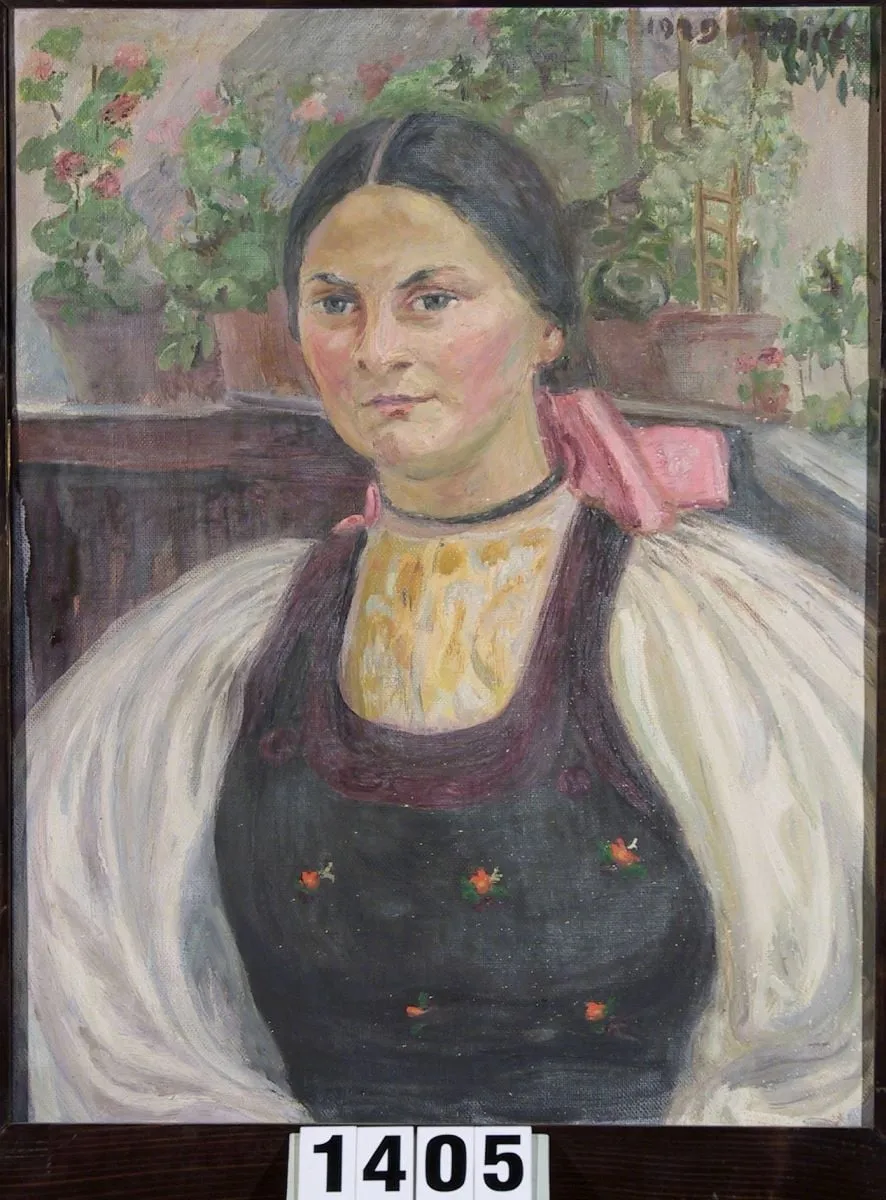
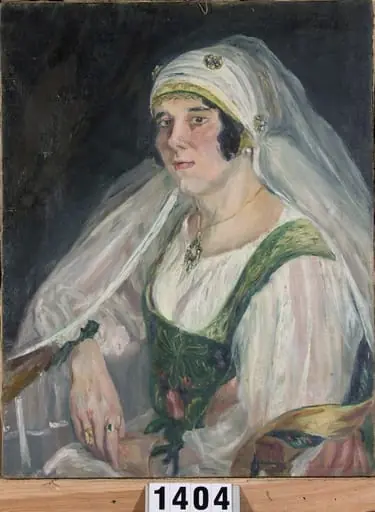
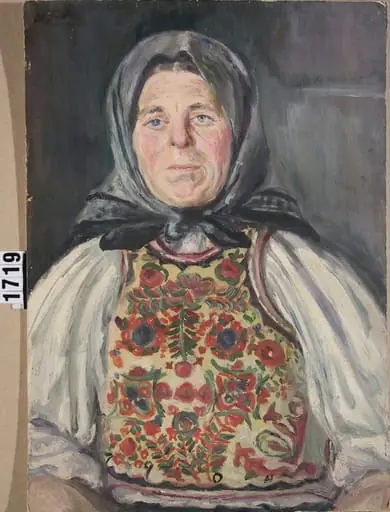
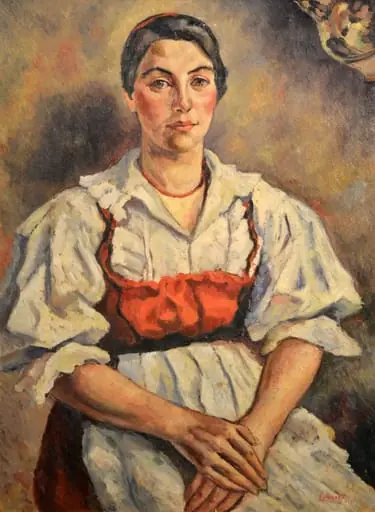
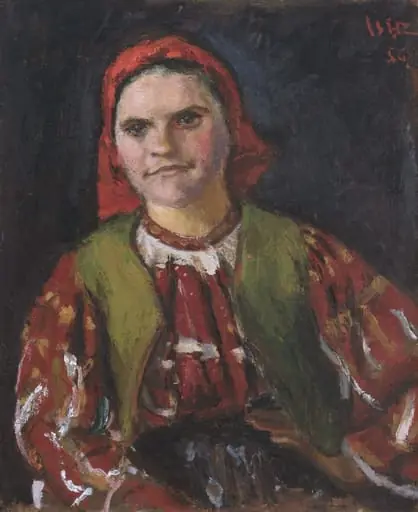
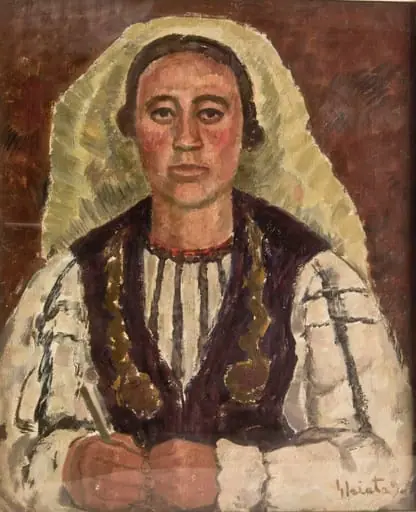
Fată de țăran sas is an unspecified painting by Henriette Bielz. It is held in the collection of the Brukenthal National Museum. This portrait depicts a Romanian peasant woman rendered in oil paint with visible impasto technique.
About this work
Overview
This portrait depicts a Romanian peasant woman rendered in oil paint with visible impasto technique. The composition centers on her solemn gaze and modest attire, set against a softly blurred rural background. Thick applications of paint create tactile surfaces, particularly in the shawl and collar, emphasizing materiality over idealized detail.
Subject & Meaning
The subject is a rural woman, identified by her traditional dress and unadorned expression. Her stillness and direct gaze suggest dignity and quiet resilience, common themes in 19th-century depictions of peasant life. The absence of narrative action focuses attention on her presence as an individual, not a stereotype.
Technique & Style
The artist employs impasto to build texture in the white shawl and bright yellow collar, contrasting with smoother areas of the dress and background. Loose brushwork in the backdrop suggests depth without detail, while the foreground remains sharply defined. This selective focus directs the viewer’s attention to the figure’s form and expression.
History & Provenance
The painting originates from late 19th-century Romanian art, likely created during a period of growing interest in national identity and rural life. It was probably produced by an artist associated with the Romanian Academy or a regional atelier, though specific attribution remains unconfirmed in available records.
Context
During the 1800s, Romanian artists increasingly turned to peasant subjects as symbols of cultural authenticity amid modernization. This portrait aligns with a broader movement to portray rural communities with empathy, moving away from romanticized or exoticized depictions common in earlier European art.
Legacy
The work contributes to a visual record of Romanian peasant life, valued for its restrained realism and technical honesty. While not widely exhibited internationally, it remains referenced in regional art histories for its embodiment of early modern Romanian portraiture and its use of material texture to convey presence.
Artist & collection
Artist
Henriette Bielz painted scenes of everyday life in late-19th-century Transylvania.