Artwork
Cișmea la Balcic
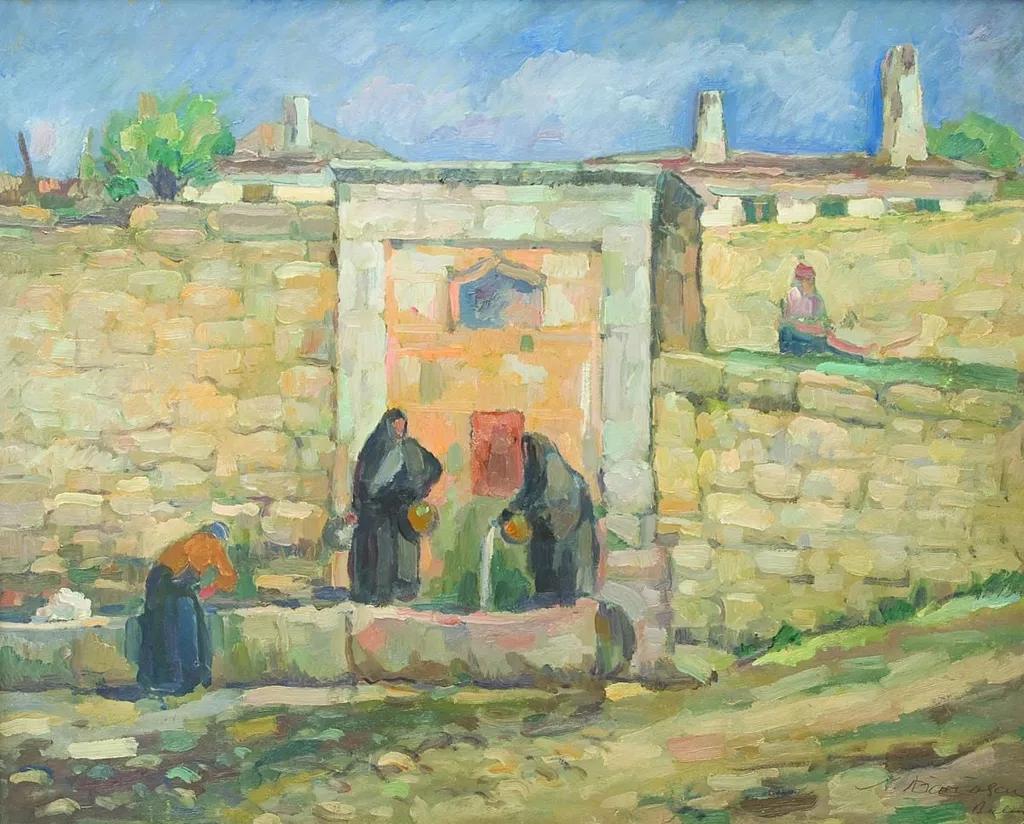
Cișmea la Balcic is an unspecified painting by Nicolae Dărăscu. It dates from 1923 and is held in the collection of the Bucharest Municipality Museum.
About this work
Overview
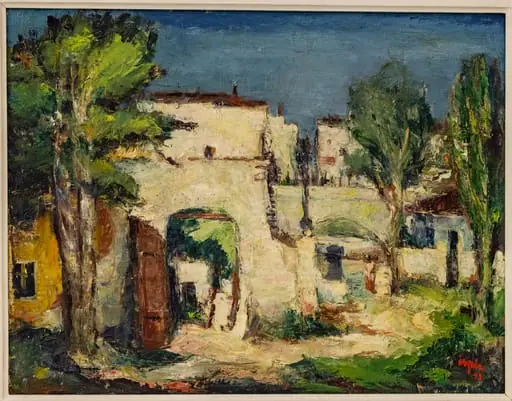
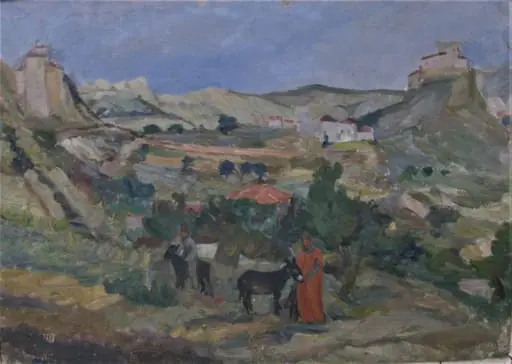
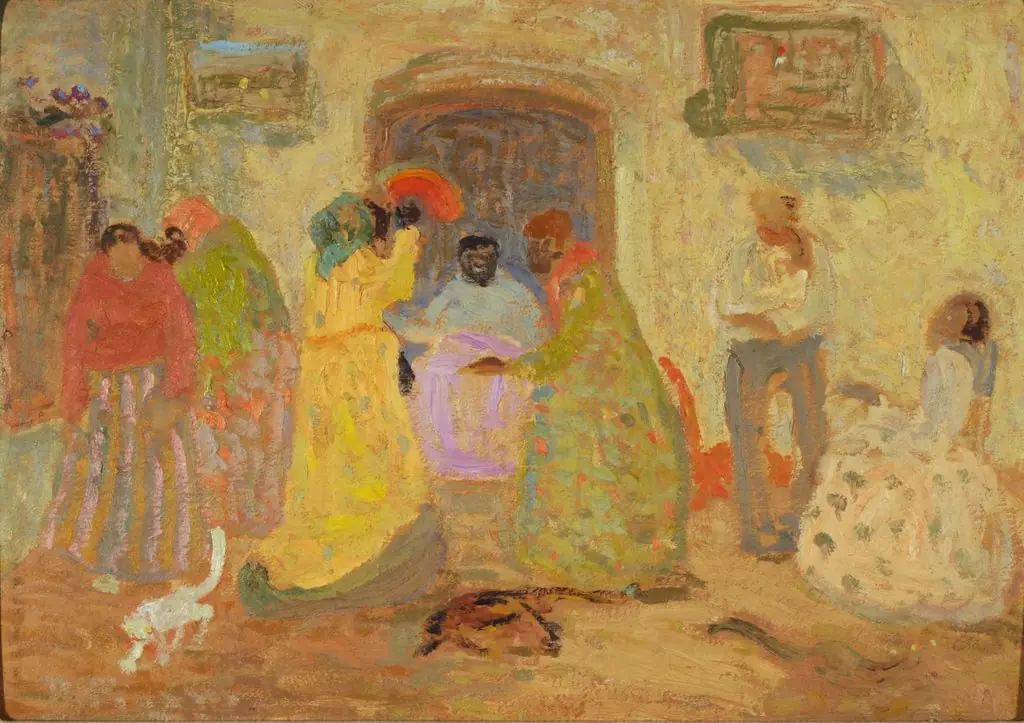
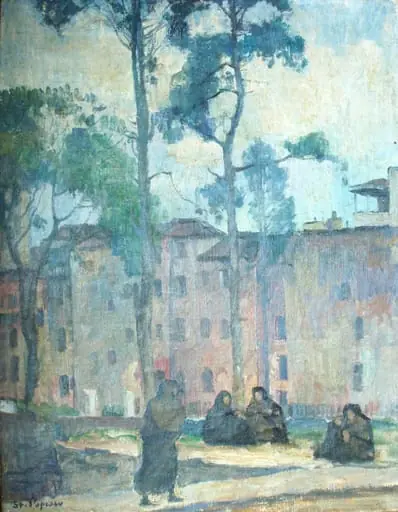
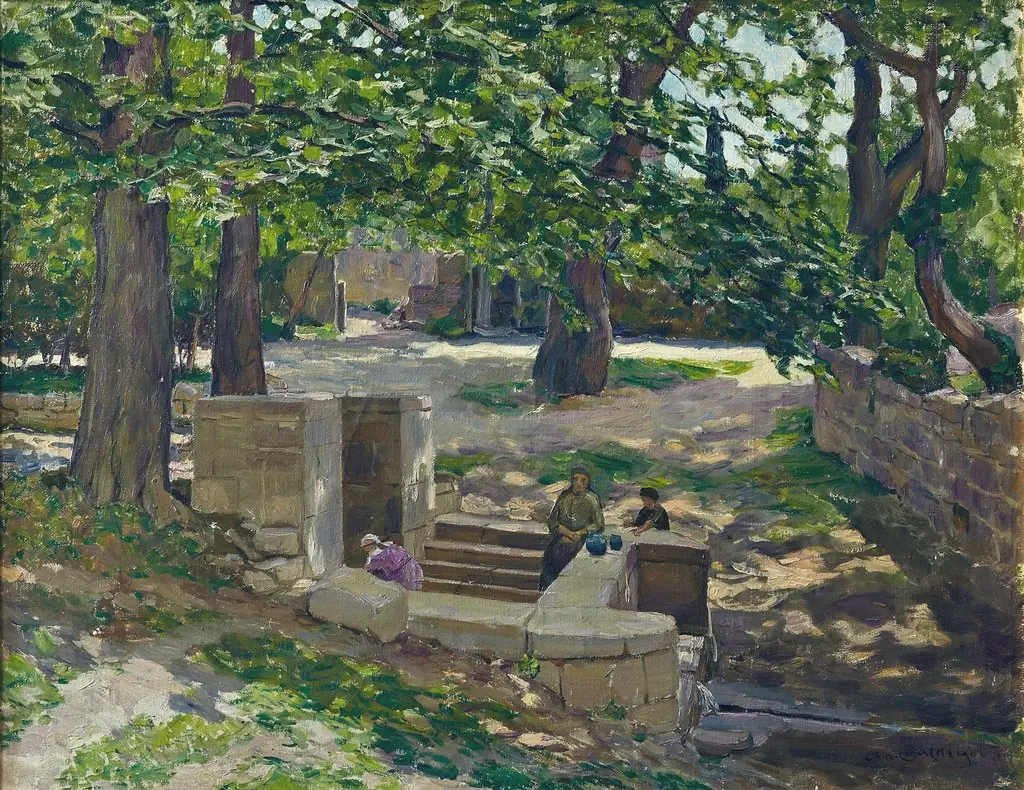
Created around 1923 by Romanian painter Nicolae Dărăscu, “Cișmea la Balcic” is an oil work now in the collection of the Museum of Ethnography. The composition captures a moment at a rural well, populated by three women engaged in the task of drawing water.
Subject & Meaning
The scene centers on a stone well where a bent figure lowers a bucket while two companions stand nearby, each holding a bucket of water. A weathered stone wall with a narrow window frames the background, and a solitary figure perched on a ledge adds a quiet, observational presence. The arrangement suggests daily labor and communal interaction in a countryside setting.
Technique & Style
Dărăscu employs a vigorous impasto approach, laying paint in thick, tactile strokes that remain visible across the canvas. A palette of earthy browns, muted greens and cool blues defines the forms, while the rapid, rough brushwork conveys immediacy and a sense of movement, emphasizing the physicality of the scene.
History & Provenance
The painting was produced in the early 1920s, a period when Dărăscu was traveling along the Black Sea coast, drawing inspiration from local landscapes and customs. After its creation, the work entered the holdings of the Museum of Ethnography, where it has been displayed as part of the institution’s representation of Romanian rural life.
Context
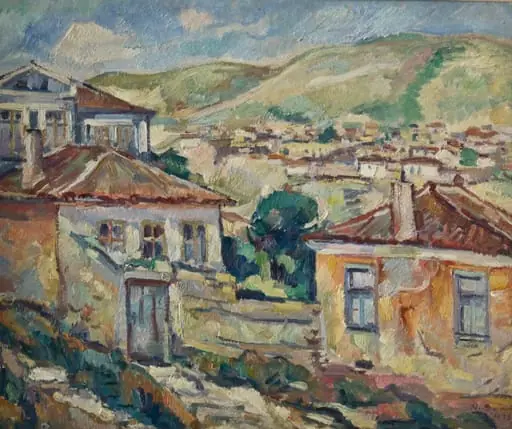
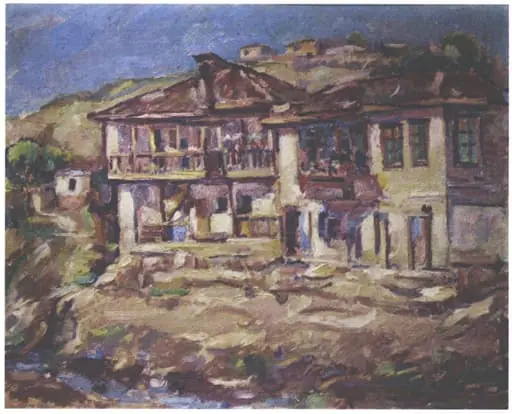
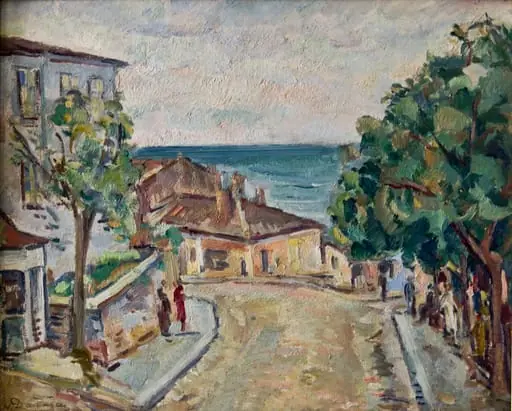
Balchik, a seaside town then part of Romania, was a favored retreat for artists seeking the region’s distinctive light and architecture. Dărăscu’s depiction reflects the broader interest among Romanian modernists in documenting everyday scenes and integrating folk motifs within contemporary painting practices.
Artist & collection
Artist
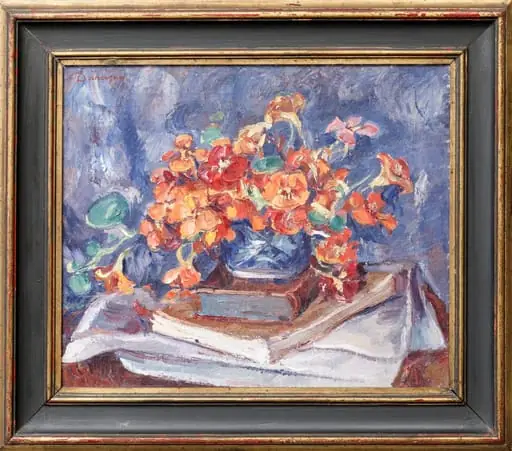
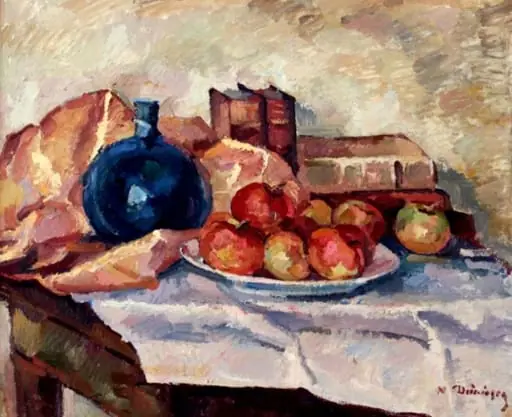
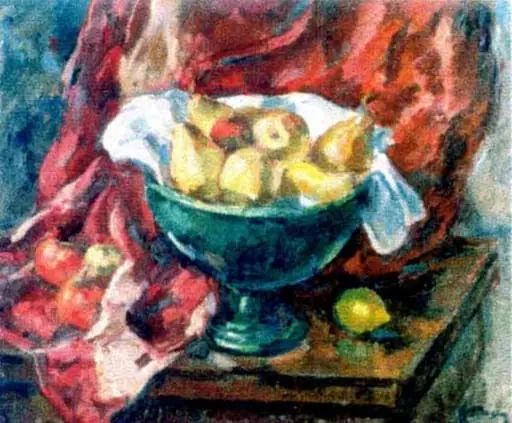
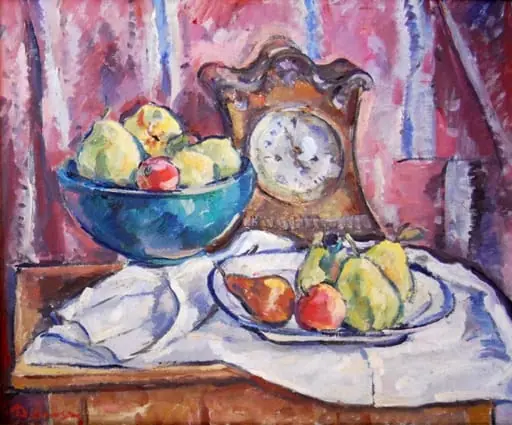
Romanian painter Nicolae Dărăscu built still lifes and cityscapes like Natură moartă and Palatul Ca'd'Oro, both calm arrangements of light and shadow.