Artwork
Vas verde cu fructe
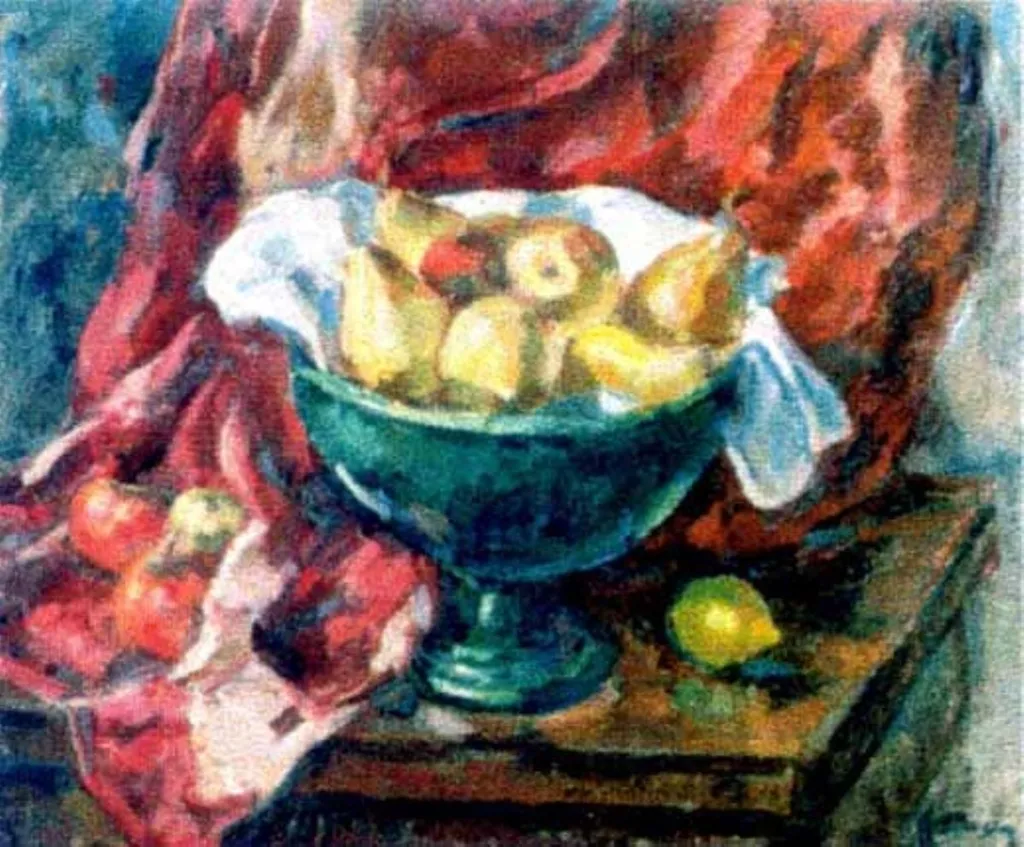
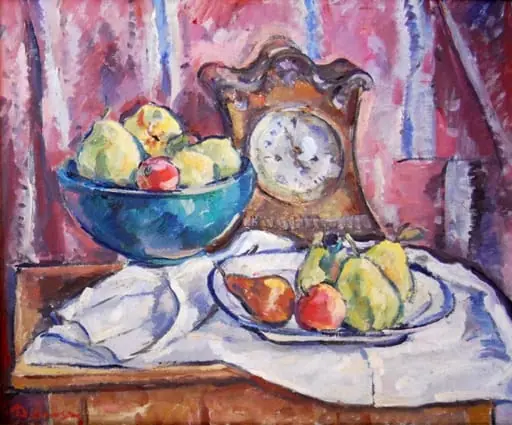
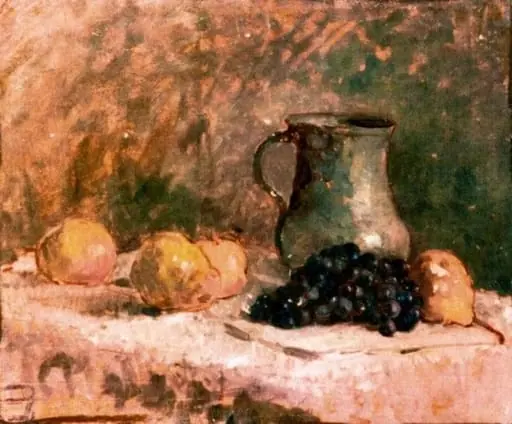
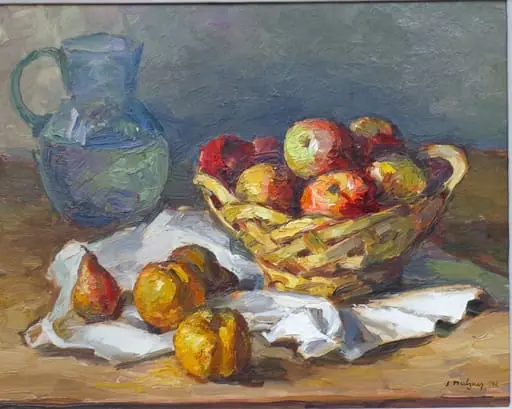
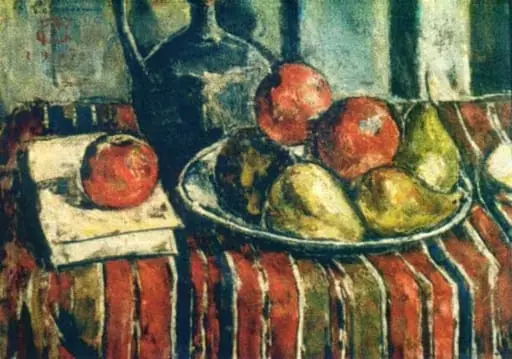
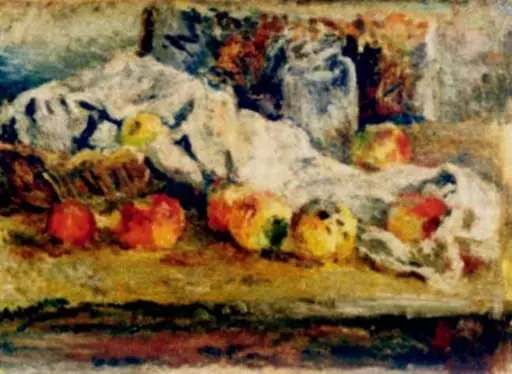
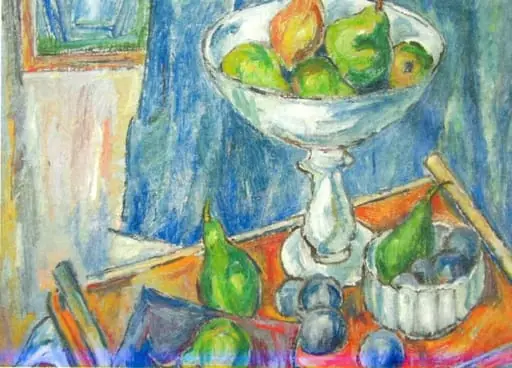
Vas verde cu fructe is an unspecified painting by Nicolae Dărăscu. It is held in the collection of the Art Museum of Constanta. This still life depicts a green ceramic bowl brimming with fruit, placed on a plain surface and framed by draped red and blue textiles.
About this work
Overview
This still life depicts a green ceramic bowl brimming with fruit, placed on a plain surface and framed by draped red and blue textiles.
This still life depicts a green ceramic bowl brimming with fruit, placed on a plain surface and framed by draped red and blue textiles. The composition is restrained, with no overt narrative or symbolic gesture. The arrangement emphasizes form and color harmony, guiding attention to the bowl as the central element. Subtle contrasts in hue and texture define the space without clutter or distraction.
Subject & Meaning
The subject is a modest collection of domestic fruit, rendered without idealization. The lemon, positioned to the right, introduces a sharp contrast in color but does not dominate. There is no indication of abundance or decay, nor religious or allegorical reference. The work invites quiet contemplation of ordinary things, valuing their presence and materiality over symbolic interpretation.
Technique & Style
The artist employs soft transitions between tones to model the bowl and fruit, suggesting volume through careful gradations of light. The fabrics behind are rendered with loose, flat planes of color, creating a shallow but distinct spatial layer. Brushwork is controlled yet unobtrusive, prioritizing clarity of form over decorative flourish. The palette is limited, reinforcing the composition’s calm restraint.
History & Provenance
The painting is attributed to Nicolae Dărăscu, a Romanian artist active in the early 20th century. It aligns with his broader interest in still life and interior scenes, often painted in his studio with natural light. While specific ownership history is not documented here, the work fits within a regional tradition of quiet, observational painting that emerged in Romania during the interwar period.
Context
In early 20th-century Romania, still life painting gained traction as artists turned from grand historical themes toward intimate, everyday subjects. Dărăscu’s work reflects this shift, influenced by French and Italian realism but filtered through a local sensibility. His compositions avoid theatricality, instead embracing simplicity as a form of visual honesty, resonating with broader European trends of the time.
Legacy
Dărăscu’s still lifes, including this one, contributed to a quiet but enduring tradition in Romanian art that valued observation over spectacle. His focus on humble objects helped legitimize domestic scenes as worthy of serious artistic attention. While not widely known internationally, his work remains part of the national canon, studied for its restraint and sensitivity to light and form.
Artist & collection
Artist
Romanian painter Nicolae Dărăscu built still lifes and cityscapes like Natură moartă and Palatul Ca'd'Oro, both calm arrangements of light and shadow.