Artwork
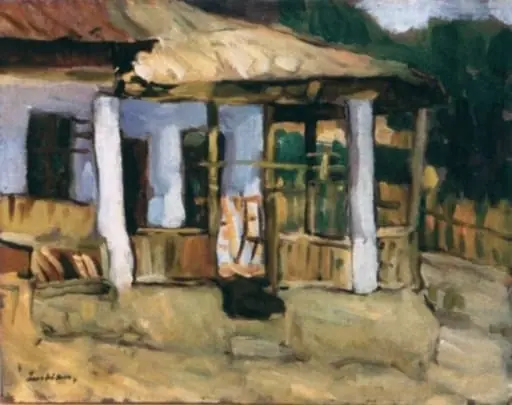
Pe prispă
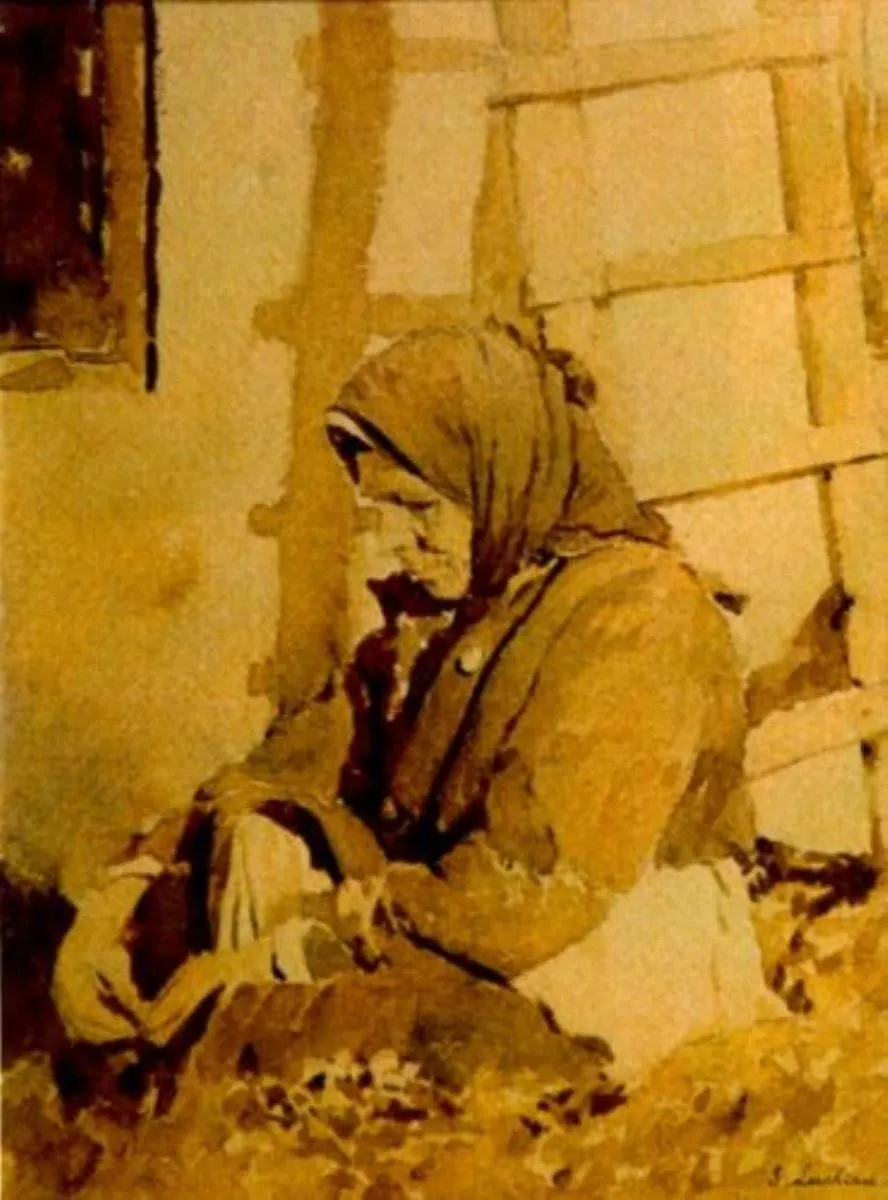
Pe prispă is an unspecified painting by Ștefan Luchian. It dates from 1908 and is held in the collection of the Moldova National Museum Complex.
About this work
Overview
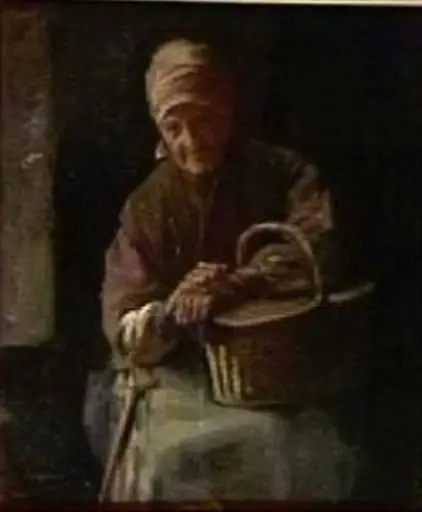
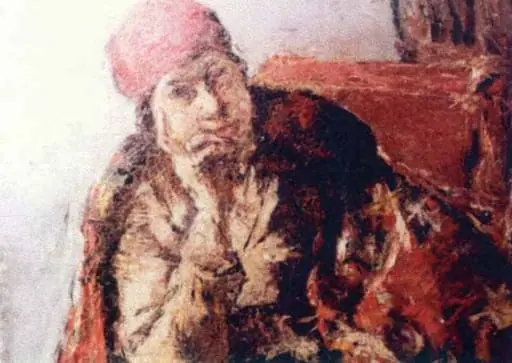
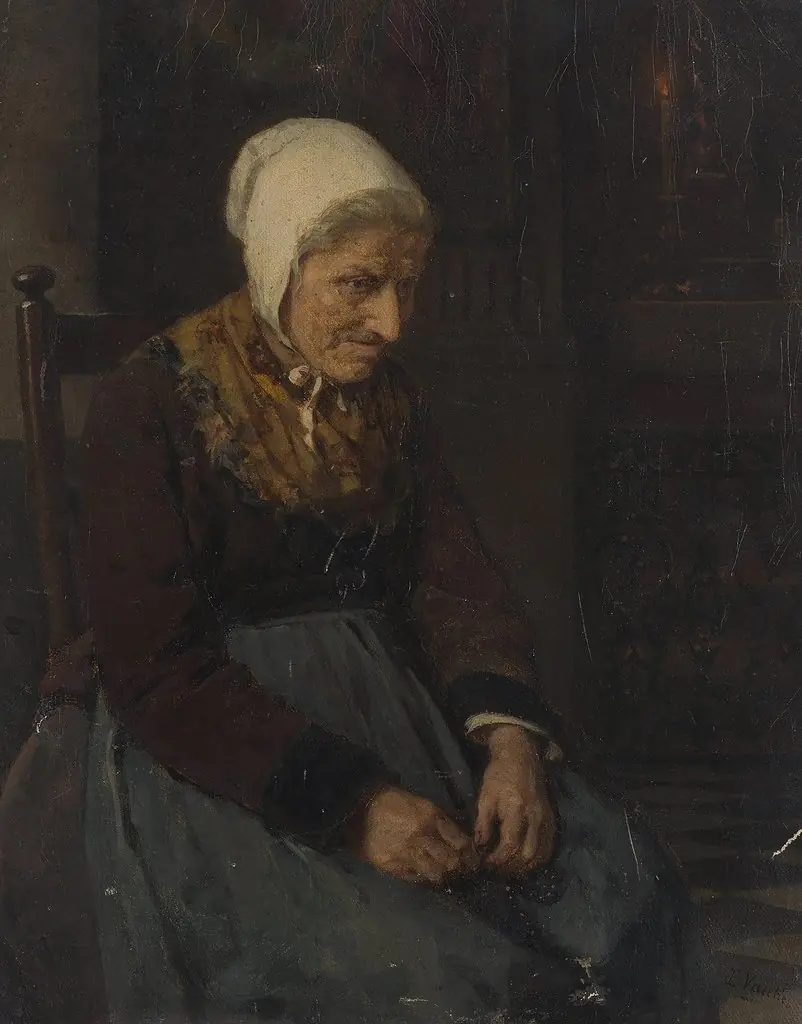
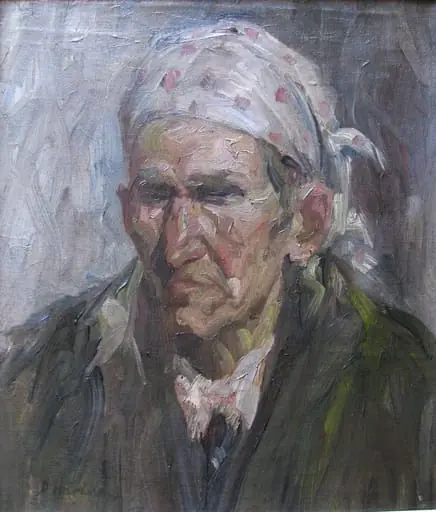
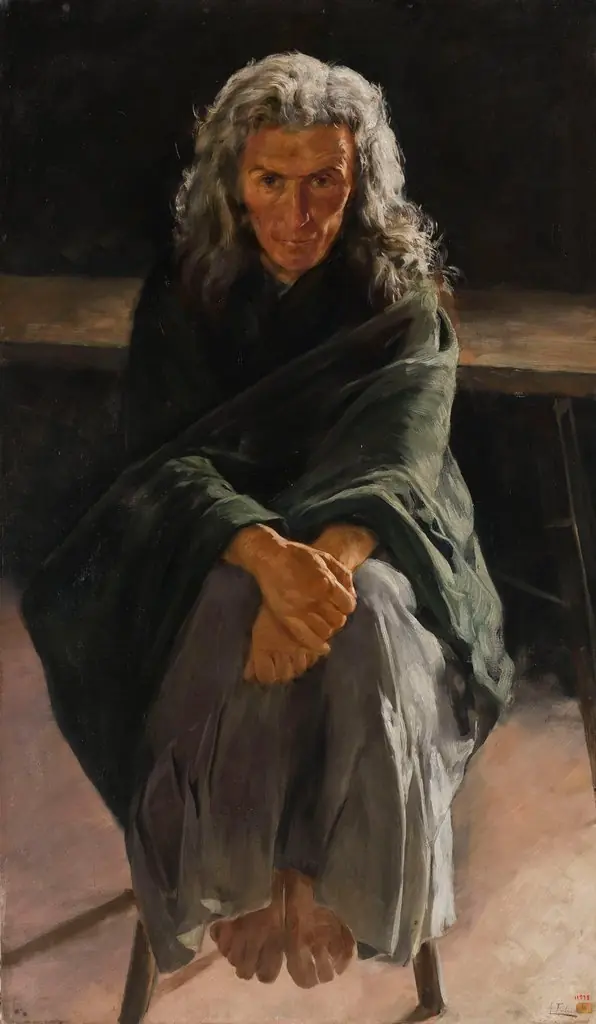
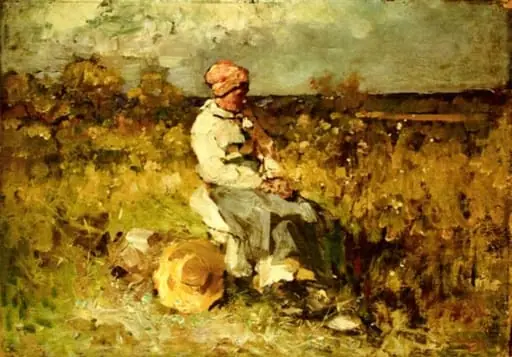
Pe prispă, created circa 1908 by Ștefan Luchian, is a painting depicting a solitary figure in a state of contemplation or activity, set against a humble, rustic backdrop.
Subject & Meaning
The subject, seated on the ground wrapped in thick, coarse attire, is engaged with a small, indeterminate object (possibly food or a tool), conveying a sense of quiet, everyday existence. The figure's obscured face and the overall somber atmosphere suggest a focus on the mundane and possibly the hardships of daily life.
Technique & Style
The work employs chiaroscuro, a strong contrast between light and dark, to create depth and emphasize the textures of the subject's clothing and the rough stone wall and wooden beam in the background. The uneven lighting adds to the sense of realism and introspection.
History & Provenance
Created around 1908, the painting's provenance and historical context beyond its creation date are not detailed here, highlighting a need for further research into its exhibition history and ownership timeline.
Context
Pe prispă reflects early 20th-century artistic interests in capturing the lives of common people and the use of chiaroscuro to evoke emotional depth, aligning with broader European art movements of the time that valued realism and the portrayal of everyday life.
Legacy
The legacy of Pe prispă is intertwined with Luchian's overall contribution to Romanian art, emphasizing the depiction of everyday life and the technical mastery of light and shadow, though its specific impact or influence on subsequent artists is not outlined in the provided information.
Artist & collection
Artist
Ștefan Luchian painted quiet scenes of daily life in late-1800s Romania: sunlit houses, country roads, and a single studio work called Atelierul from 1894.