Artwork
Vas cu garoafe
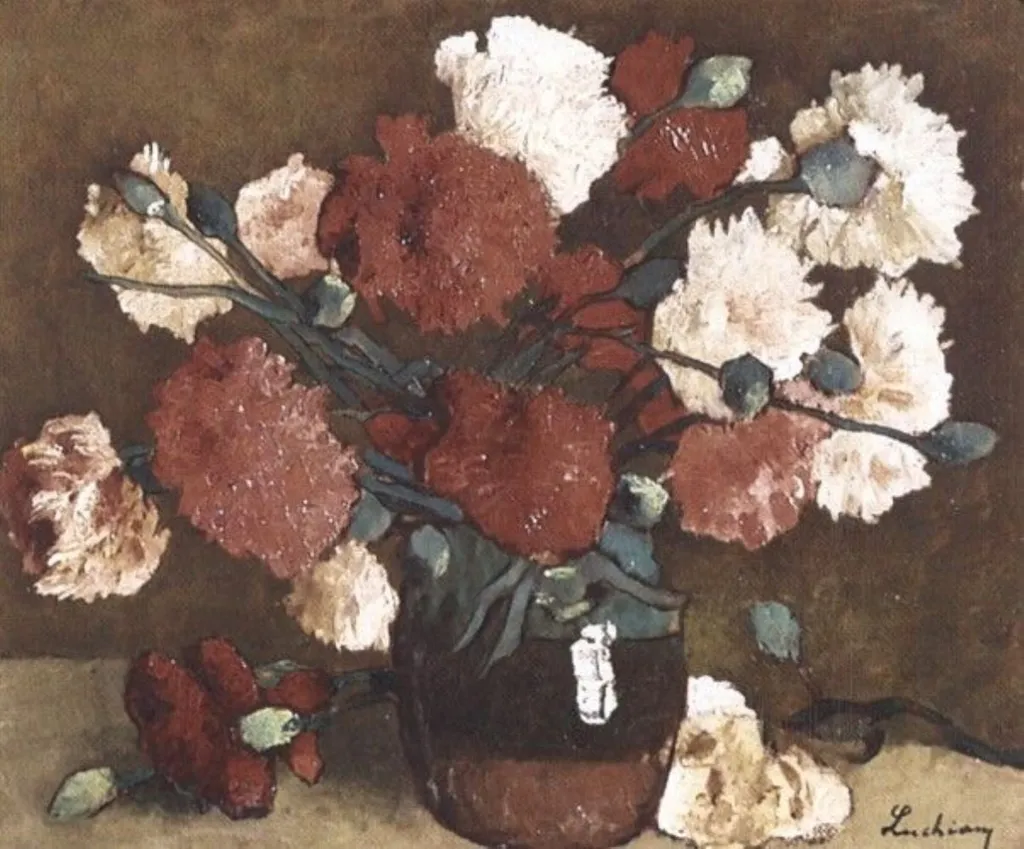
Vas cu garoafe is an unspecified painting by Ștefan Luchian. It dates from 1912 and is held in the collection of the National Museum of Art of Romania.
About this work
Overview
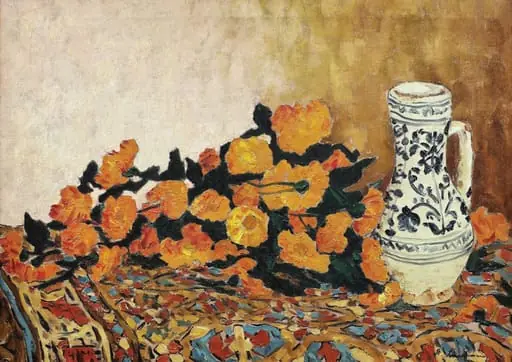
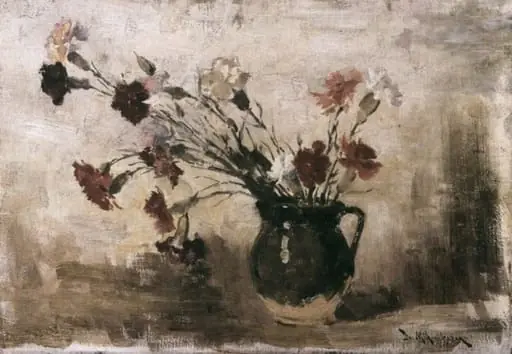
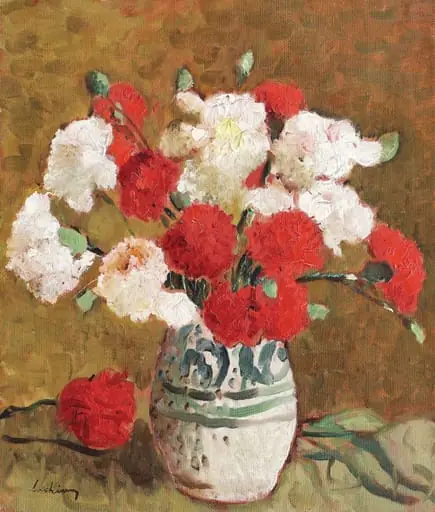
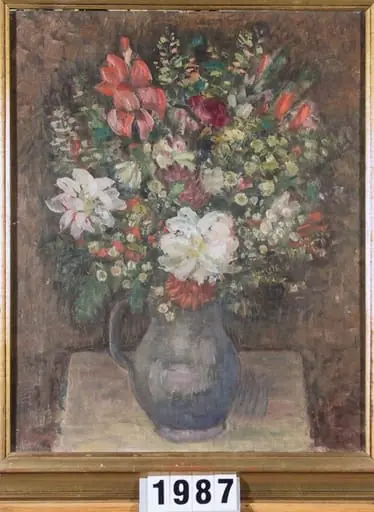
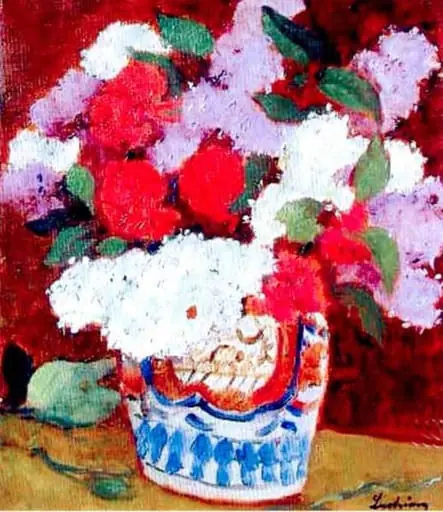
Ștefan Luchian’s oil painting Vas cu garoafe, executed around 1912, presents a solitary vase set against a muted, earthy backdrop. The composition centers on a dark container brimming with wilted blossoms, their colors dominated by deep reds and stark whites. The work’s somber tone and intimate scale invite close observation of the fleeting nature of the subject.
Subject & Meaning
The canvas captures a vase of flowers in the late stage of decay, with petals drooping, some half‑opened, and a few leaves scattered across the surface. This focus on withering flora reflects Luchian’s interest in transience and the quiet dignity of everyday objects, suggesting a meditation on impermanence.
Technique & Style
Luchian employs a heavy impasto, applying paint in thick, uneven strokes that give the surface a palpable texture. The rough, brownish ground and the tactile buildup of color enhance the sense of decay, while the bold brushwork emphasizes the physicality of the medium and reinforces the painting’s realistic yet expressive quality.
History & Provenance
Created circa 1912, Vas cu garoafe belongs to the later period of Luchian’s career, when his health was declining and his palette grew more subdued. The work has remained within Romanian collections, reflecting its significance in the national narrative of early 20th‑century art.
Artist & collection
Artist
Ștefan Luchian painted quiet scenes of daily life in late-1800s Romania: sunlit houses, country roads, and a single studio work called Atelierul from 1894.