Artwork
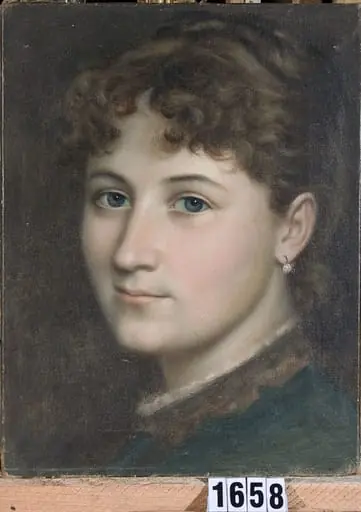
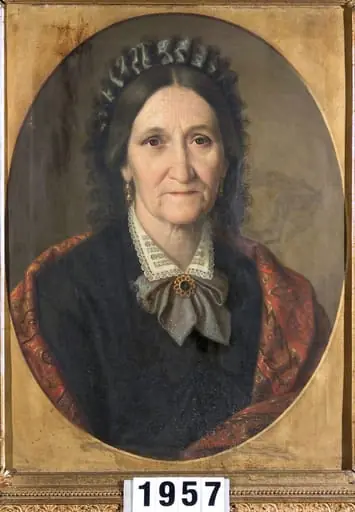
Portretul Zoei Pașcu (Zănescu)
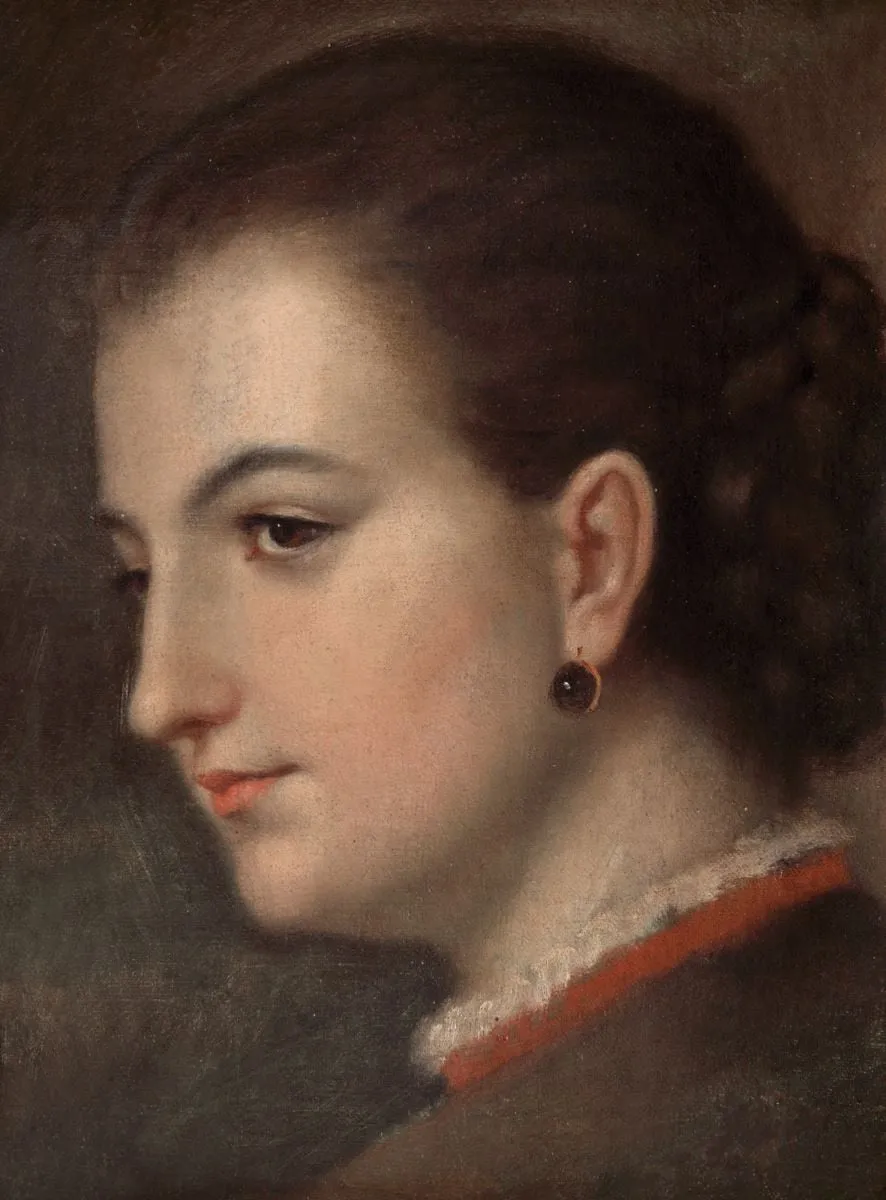
Portretul Zoei Pașcu (Zănescu) is an unspecified painting by Mișu Popp. It is held in the collection of the Colecție particulară - Iași.
About this work
Overview
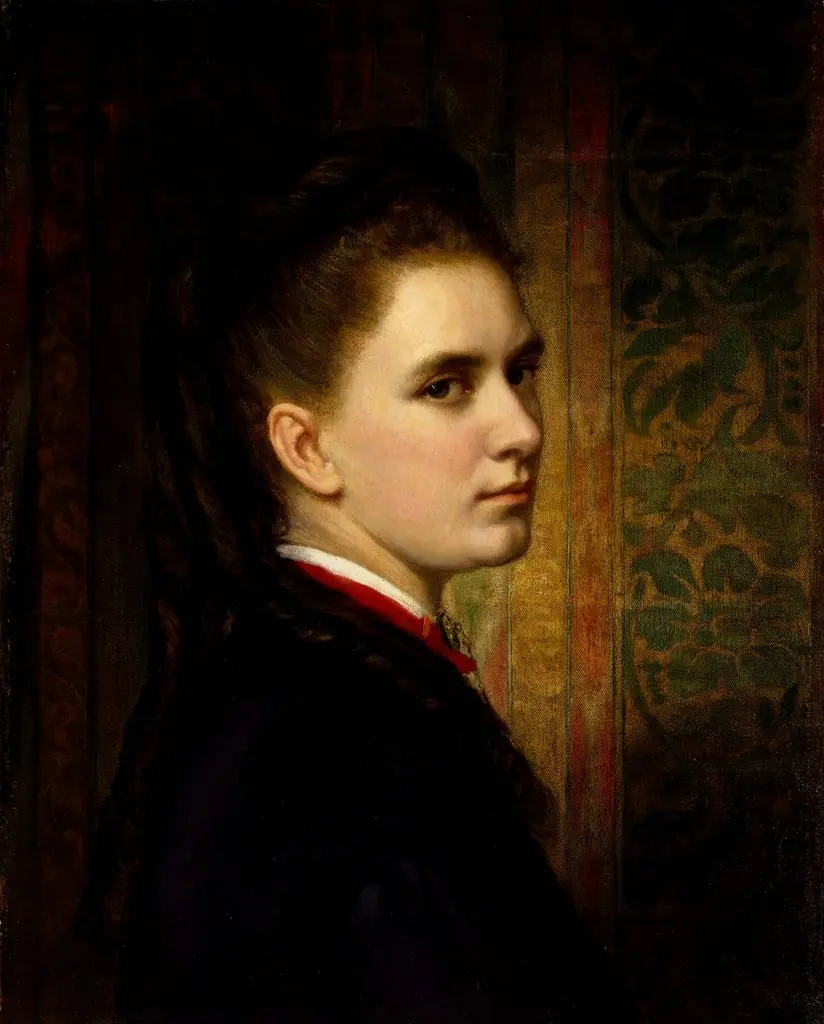
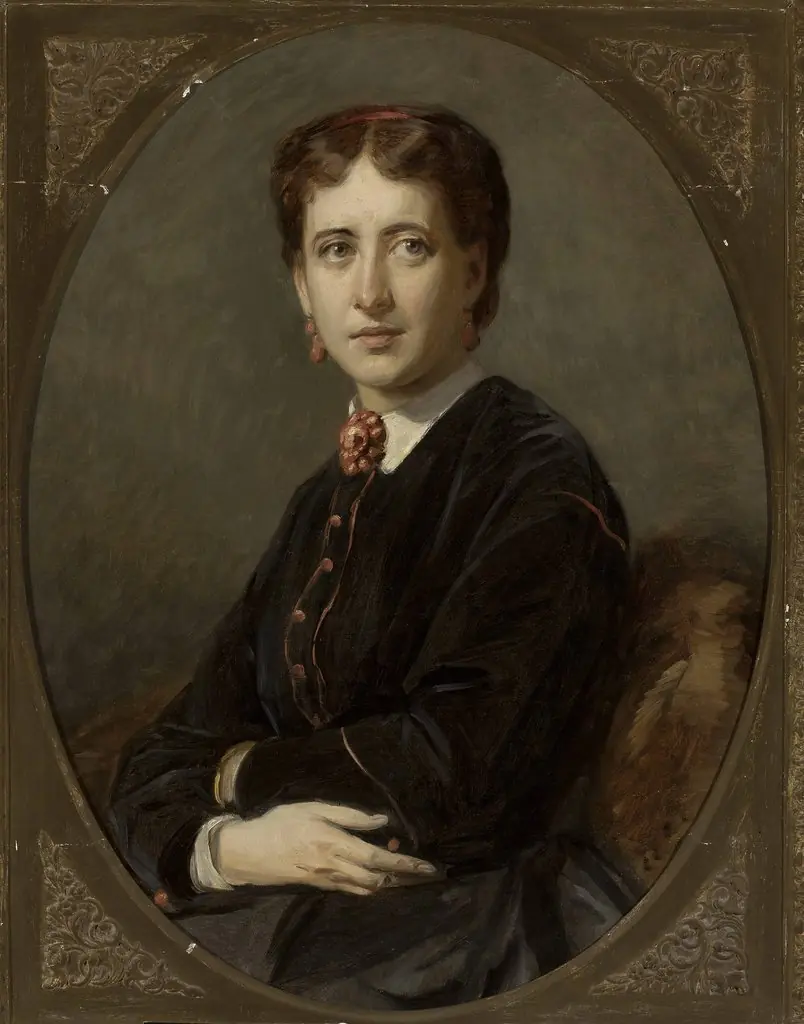
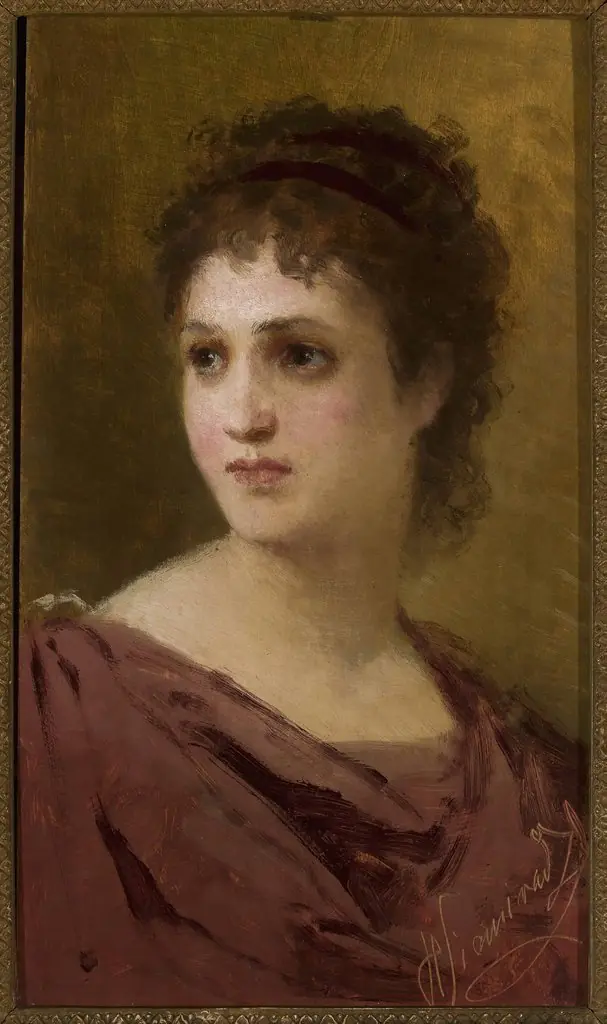
This portrait depicts a woman named Zoe Pașcu (Zănescu), rendered in a tightly framed composition that emphasizes her face and upper shoulders. Set against a dark, unmodulated background, the subject is illuminated with subtle gradations of light and shadow, drawing attention to the quiet intensity of her gaze and the delicate modeling of her features.
Subject & Meaning
The sitter, Zoe Pașcu, is portrayed with restrained dignity, her downward glance suggesting introspection rather than direct engagement. Her simple attire—black with minimal white and red trim—conveys modesty and formality, typical of portraiture in her social context. The absence of ornate jewelry or symbolic objects focuses attention on her presence rather than status or narrative.
Technique & Style
The artist employs chiaroscuro to model the face with soft transitions between light and shadow, creating a sense of volume and tactile realism. The skin appears smooth and lifelike, achieved through careful layering and subtle tonal shifts. The dark background enhances the three-dimensionality of the figure, isolating her form and intensifying the focus on facial expression and texture.
History & Provenance
The painting is attributed to a Romanian artist active in the late 19th or early 20th century, though the exact date and creator remain uncertain. It entered public collections through private acquisition, likely from the Zănescu family, and has been preserved as a representative example of regional portraiture during a period of cultural consolidation.
Context
In the context of Romanian visual culture, such intimate portraits reflected a growing middle-class interest in personal representation, distinct from grand historical or aristocratic themes. The restrained palette and focus on individual character align with broader European trends in academic realism, adapted to local sensibilities and domestic aesthetics.
Legacy
The portrait endures as a quiet testament to the dignity of everyday subjects in Romanian art. Its technical precision and emotional restraint have influenced later generations of artists seeking to capture psychological depth without theatricality. It remains a key reference for studies of domestic portraiture in Eastern Europe during the transition to modernity.
Artist & collection
Artist