Artwork
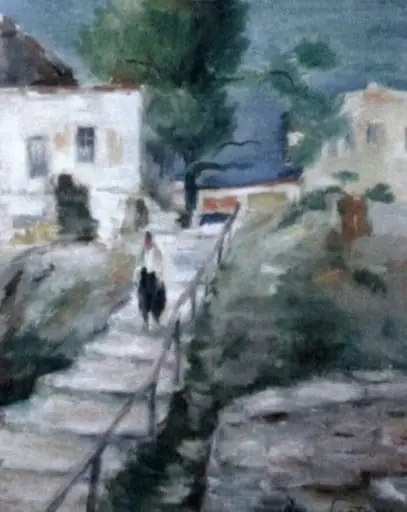
Scară la Caramitti
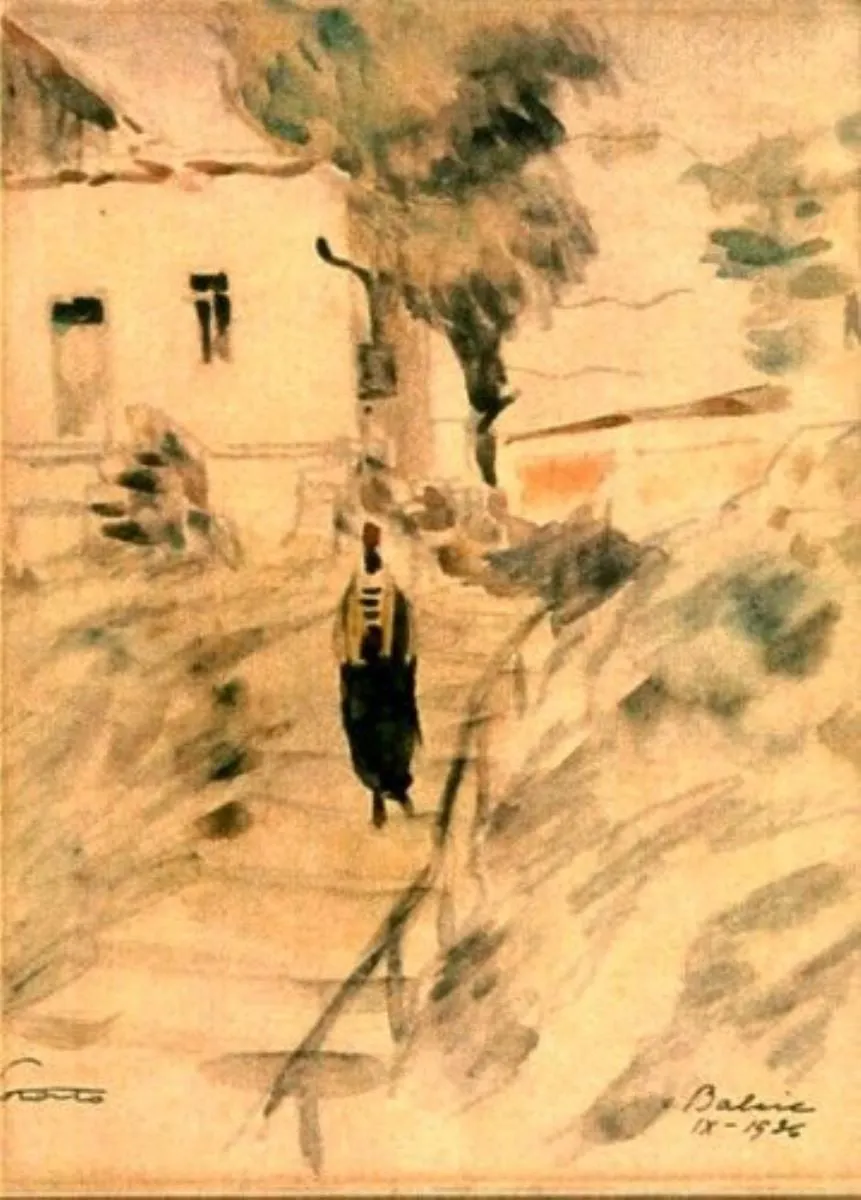
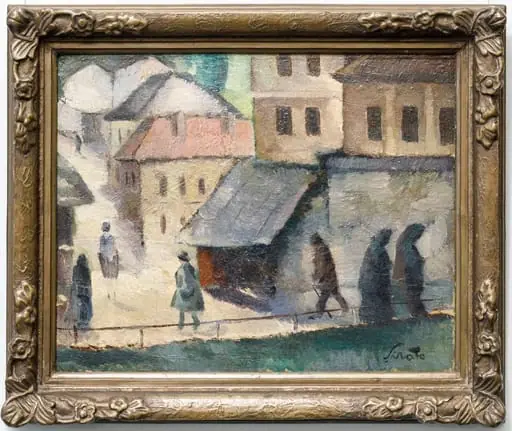
Scară la Caramitti is an unspecified painting by Francisc Șirato. It dates from 1936 and is held in the collection of the National Museum of Art of Romania.
About this work
Overview
The painting’s muted palette of browns, grays, and greens anchors it in a restrained realism, reflecting the everyday rhythms of interwar Romanian life.
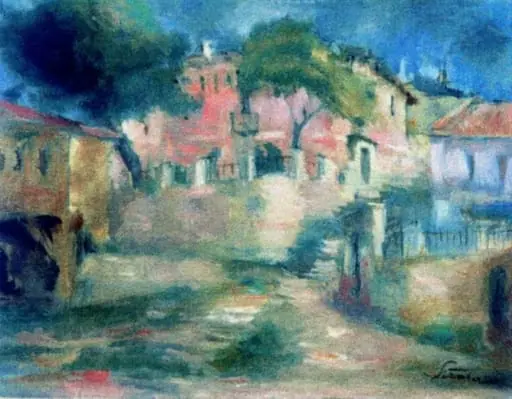
Created in 1936 by Francisc Șirato, Scară la Caramitti is a quiet urban scene rendered in subdued tones. The composition centers on a solitary figure descending a street, their form rendered with minimal detail, emphasizing atmosphere over narrative. The painting’s muted palette of browns, grays, and greens anchors it in a restrained realism, reflecting the everyday rhythms of interwar Romanian life.
Subject & Meaning
The lone figure, dressed in a dark garment with a white shirt marked by black stripes, walks away from the viewer, glancing slightly to the right. Their anonymity invites contemplation rather than identification. The staircase leading to a doorway suggests a threshold between public and private space, hinting at routines of movement and domestic life without explicit symbolism.
Technique & Style
Șirato employs a restrained brushwork and limited color range to evoke a sense of stillness. Forms are simplified, with soft edges blending figures into the environment. The lack of sharp detail and the absence of strong contrasts contribute to a meditative tone, aligning the work with regional modernist tendencies that favored mood over dramatic effect.
History & Provenance
The painting has remained in the collection of the Museum of Ethnography since its creation. Its acquisition reflects an early 20th-century interest in documenting ordinary life as cultural record. Unlike grand historical or mythological subjects, this work was preserved for its representation of common urban experience in interwar Romania.
Context
Painted during a period of social transition in Romania, Scară la Caramitti reflects the quiet transformation of urban spaces. While cities modernized, many streets retained traditional layouts and rhythms. Șirato’s focus on a mundane moment aligns with broader artistic movements that sought dignity in the unremarkable, resisting idealized or romanticized depictions.
Legacy
The work endures as a quiet example of Romanian modernist painting that prioritizes atmosphere and observation. It contributes to a body of art that values everyday scenes as worthy of documentation, influencing later generations interested in the poetic potential of ordinary life rather than spectacle.
Artist & collection
Artist
Francisc Șirato painted quiet scenes of people and places, often with soft light and gentle colors.