Artwork
Chioggia
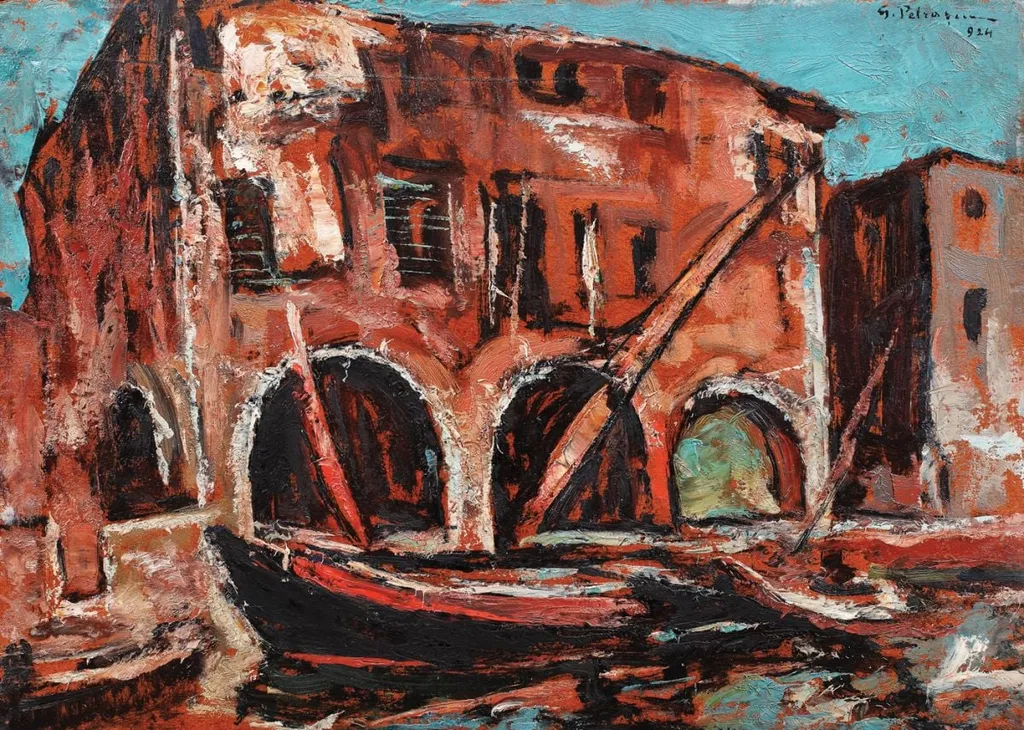
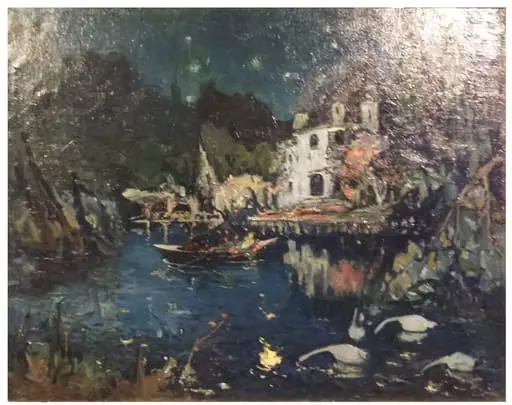
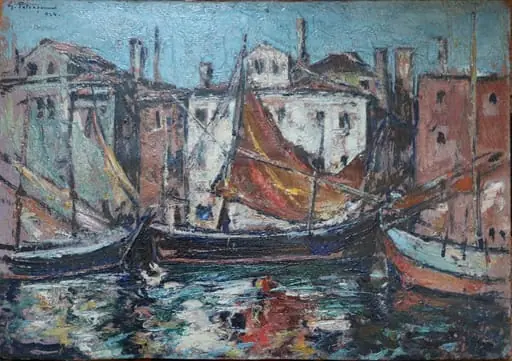
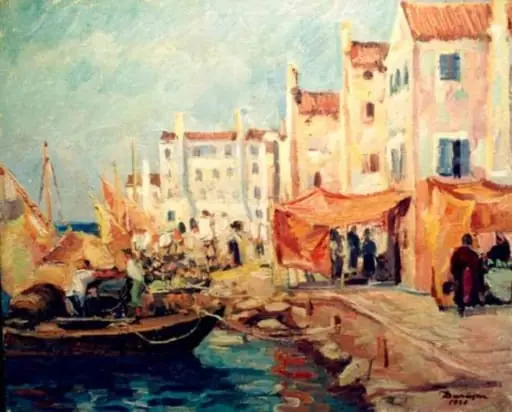
Chioggia is an unspecified painting by Gheorghe Petrașcu. It dates from 1924 and is held in the collection of the Colecție particulară - București.
About this work
Overview
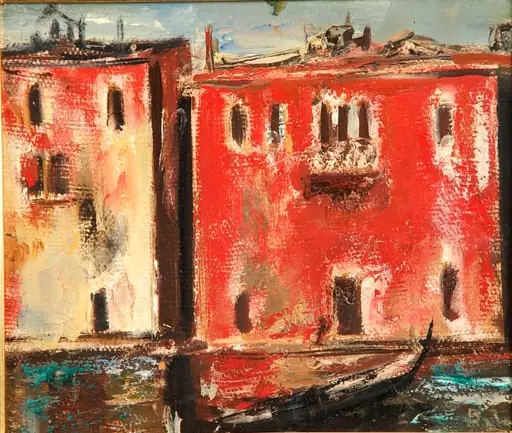
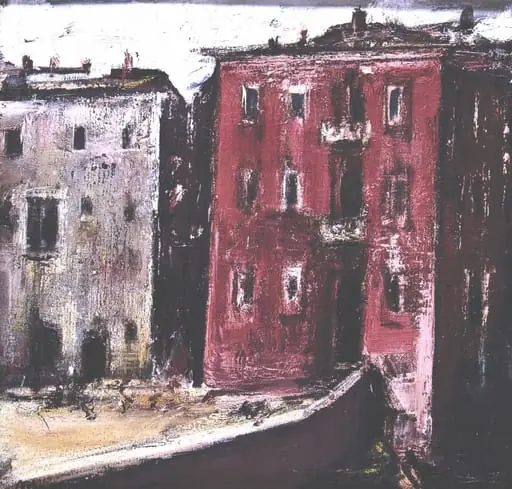
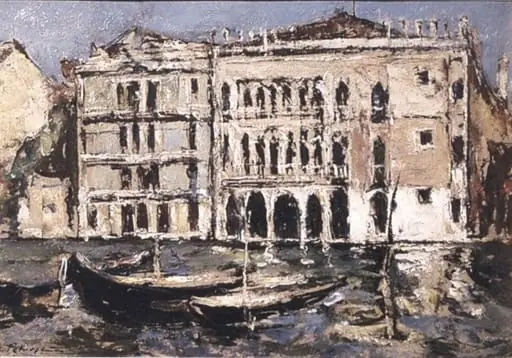
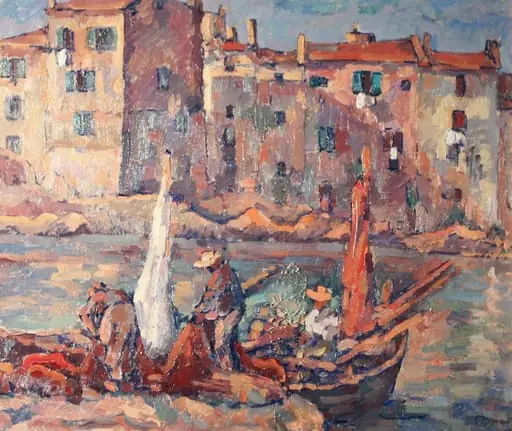
Created in 1924 by Romanian painter Gheorghe Petrașcu, the canvas titled Chioggia is part of the collection of the Museum of Ethnography. The work presents a compact architectural scene dominated by a low, brick structure with three pronounced arches, set against a plain blue sky and a restless water surface.
Subject & Meaning
The composition captures a modest waterfront building, its rough masonry rendered in earthy reds and browns. The three dark arches suggest an entrance or passage, while the choppy water below, indicated by swift strokes of black and white, conveys a sense of movement and the interplay between land and sea.
Technique & Style
Petrașcu employs a vigorous impasto technique, laying paint in thick, textured layers that stand out from the canvas. The heavy brushwork creates a tactile surface, especially evident in the uneven, plaster‑like treatment of the walls and the dynamic, almost scraped appearance of the water and sky.
History & Provenance
After its completion in the early 1920s, Chioggua entered the holdings of the Museum of Ethnography, where it remains on display. The work reflects Petrașcu’s mature period, during which he explored bold materiality and atmospheric effects in his landscapes and urban scenes.
Context
The painting belongs to a broader European tradition of early‑20th‑century artists who emphasized the physicality of paint. By focusing on a modest, everyday structure rather than grandiose subjects, Petrașcu aligns with contemporary interests in everyday life and the sensory qualities of the medium.
Artist & collection
Artist
Gheorghe Petrașcu painted quiet scenes of buildings, streets, and still lifes in the 1920s and ’30s Romania.