Artwork
Peisaj venețian
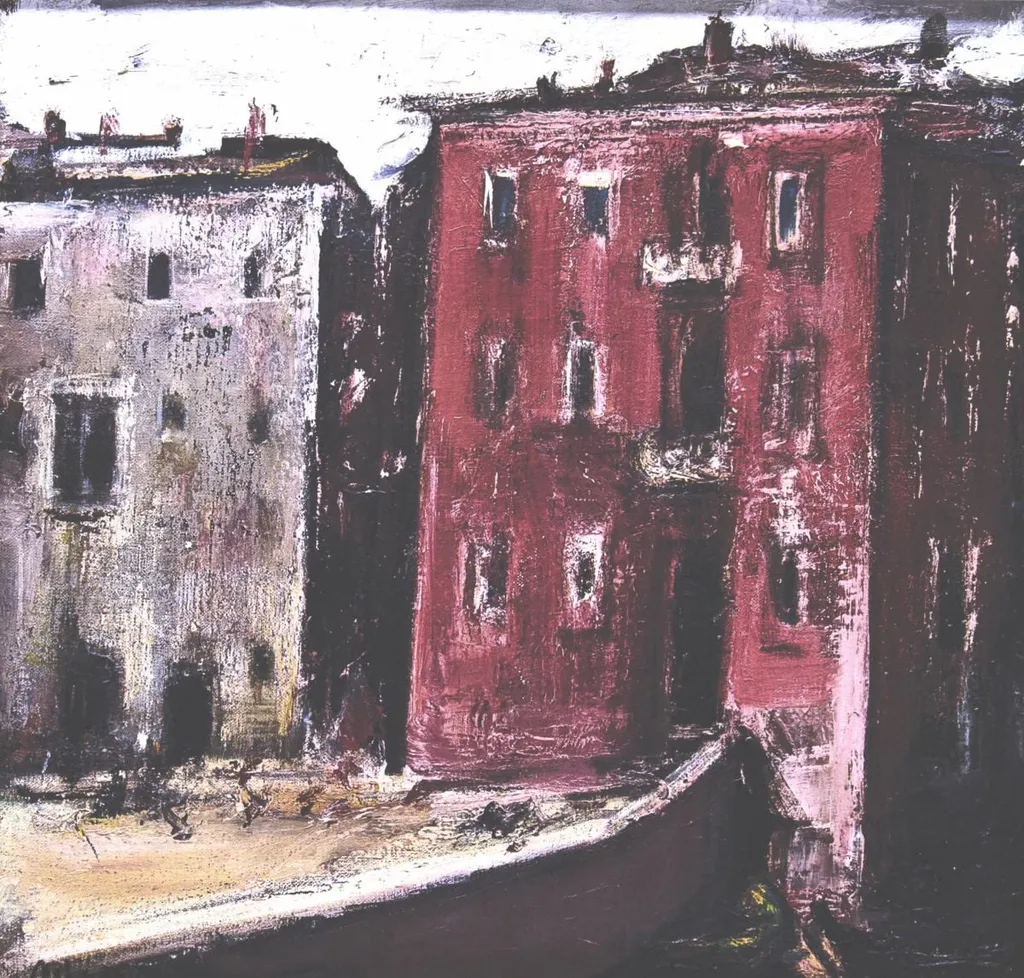
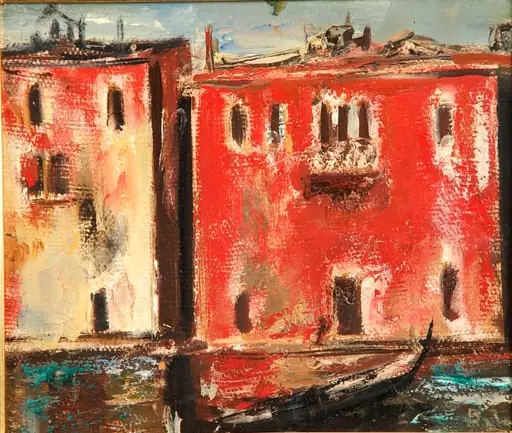
Peisaj venețian is an unspecified painting by Corneliu Baba. It dates from 1956 and is held in the collection of the National Museum of Art of Romania.
About this work
Overview
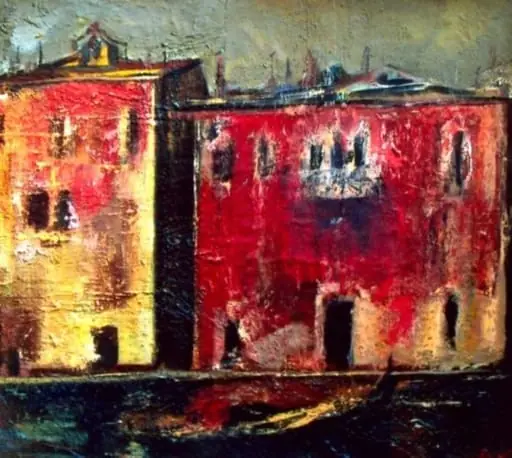
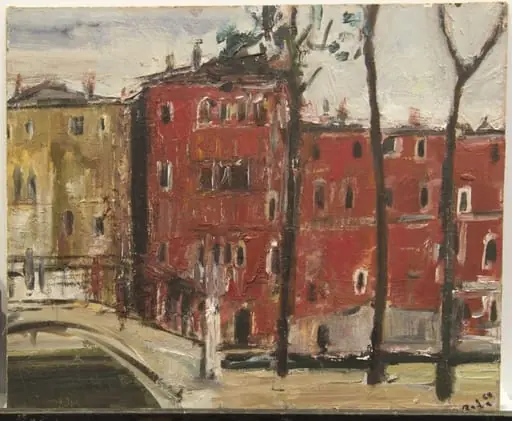
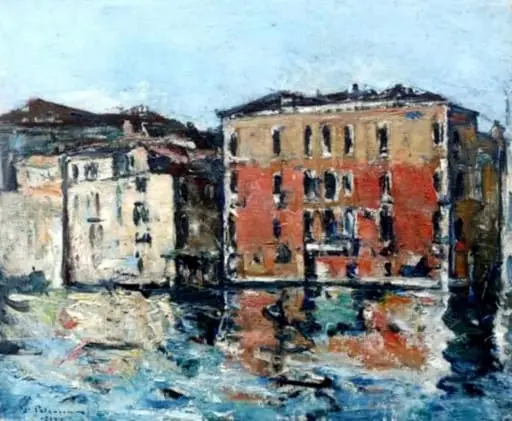
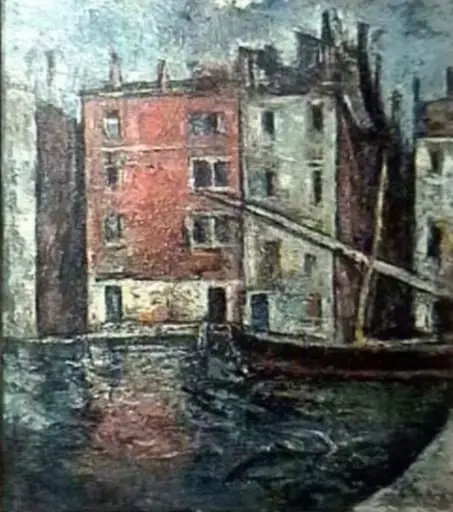
Corneliu Baba’s 1956 canvas entitled *Peisaj venețian* presents a compact urban scene composed of two adjacent structures. The composition is dominated by a stark contrast between a weathered, grey façade on the left and a vivid, red building on the right, set against a muted background that suggests a narrow Venetian street.
Subject & Meaning
The work captures a moment of everyday architecture, emphasizing the juxtaposition of decay and vitality. The subdued, almost anonymous left building conveys a sense of age and neglect, while the bright red edifice injects a burst of energy, hinting at the coexistence of history and renewal within the city’s fabric.
Technique & Style
Baba employs a vigorous impasto technique, applying paint in thick, tactile layers that give the surface a sculptural quality. Broad, hurried brushstrokes create a textured, almost three‑dimensional effect, especially on the red building where the paint builds up around the faint windows, enhancing the visual contrast between the two structures.
History & Provenance
Created in the mid‑1950s, the painting reflects Baba’s post‑war period output, a time when he explored urban motifs through expressive brushwork. While specific exhibition records are scarce, the piece remains part of the artist’s documented oeuvre and is referenced in catalogues of his work from that decade.
Context
The 1950s saw a resurgence of interest in texture and materiality among European painters, with many artists revisiting the tactile possibilities of oil paint. Baba’s *Peisaj venețian* aligns with this trend, using impasto not merely for decorative effect but to convey the physicality of the built environment.
Artist & collection
Artist
Corneliu Baba made prints and paintings that feel like quiet stories, often borrowing from older art.