Artwork
Moară
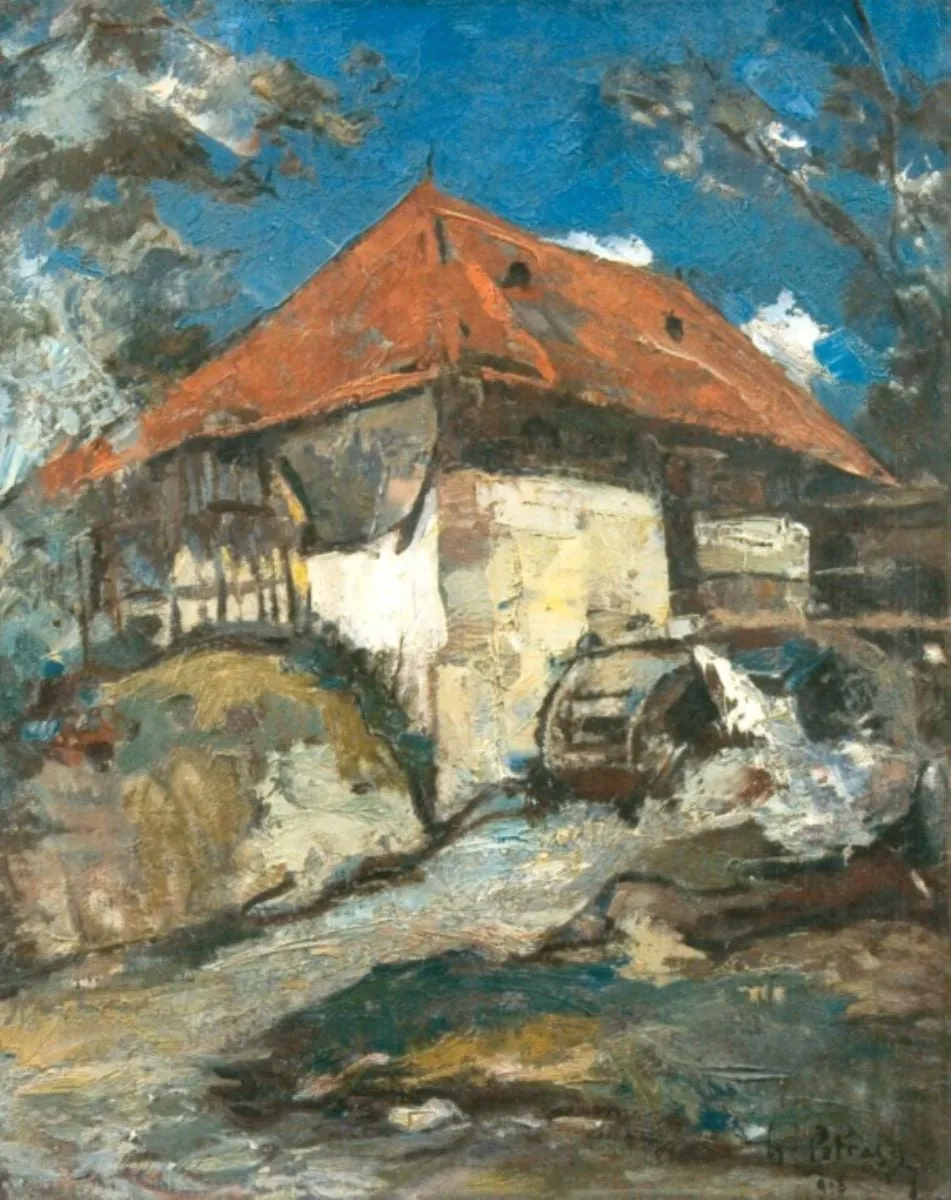
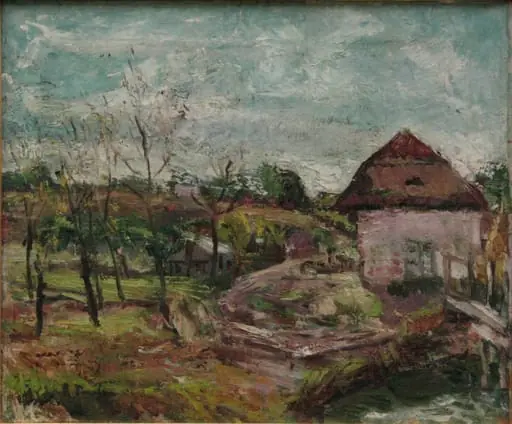
Moară is an unspecified painting by Gheorghe Petrașcu. It dates from 1918 and is held in the collection of the National Museum of Art of Romania.
About this work
Overview
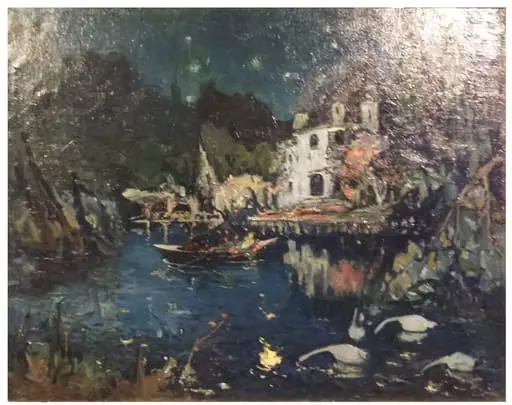
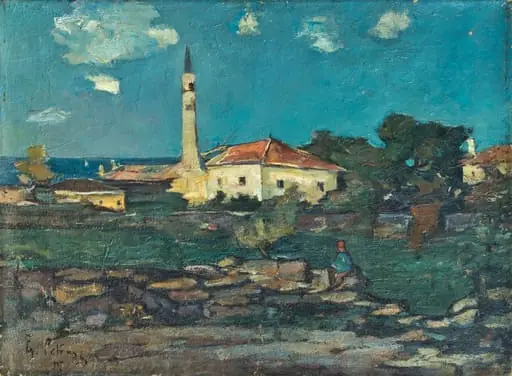
Created in 1918, “Moară” is a landscape by Romanian painter Gheorghe Petrașcu. The composition centers on a stone watermill capped with a red roof, set beside a gently flowing stream. Flanking the mill, trees frame the scene, while a muted palette of browns, greens, and grays conveys a tranquil, rural atmosphere.
Subject & Meaning
The work depicts a solitary mill without any human or animal presence, emphasizing the enduring relationship between architecture and nature. By isolating the structure within a quiet environment, Petrașcu invites contemplation of the mill’s functional role in the countryside and its integration into the surrounding landscape.
Technique & Style
Petrașcu employs a restrained chiaroscuro, allowing light to strike the mill’s stone walls and accentuate its three‑dimensional form. The handling of brushwork renders the texture of the roof and the rippling water, while the overall tonal harmony reinforces the earthy character of the scene.
History & Provenance
“Moară” was painted toward the end of World War I, a period when Petrașcu turned increasingly toward domestic subjects. The piece entered private collections shortly after its completion and has since been exhibited in several retrospectives of the artist’s oeuvre, illustrating his mature landscape approach.
Artist & collection
Artist
Gheorghe Petrașcu painted quiet scenes of buildings, streets, and still lifes in the 1920s and ’30s Romania.