Artwork
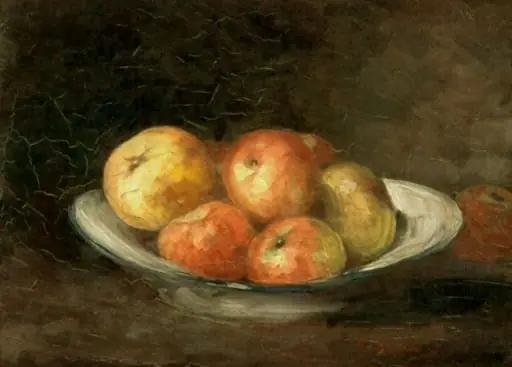
Natură statică cu mere
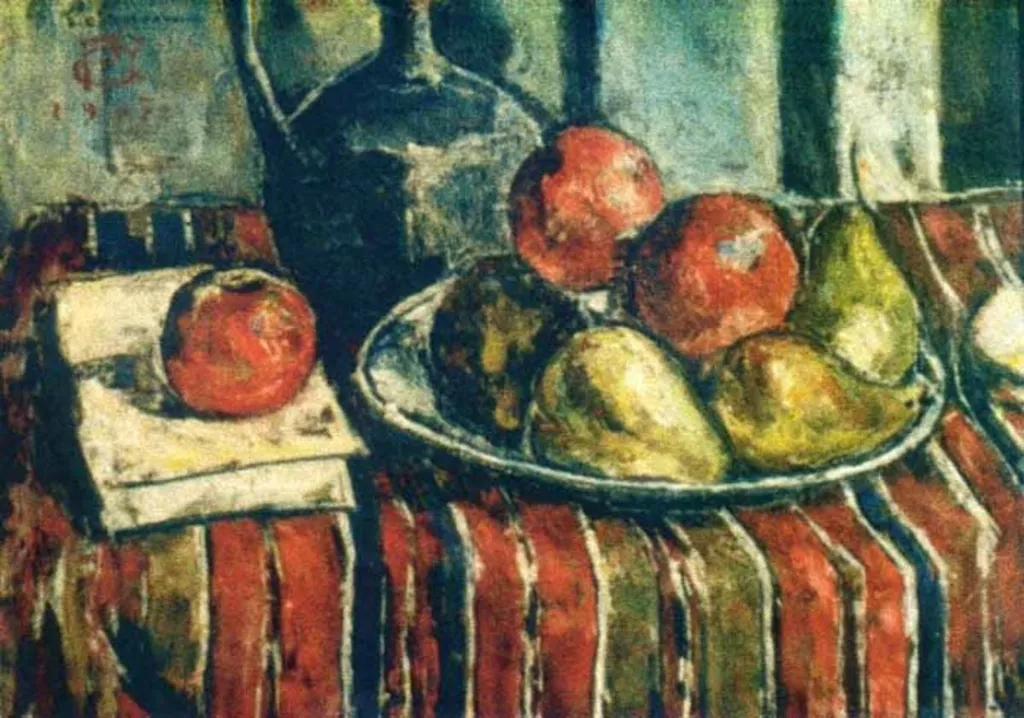
Natură statică cu mere is an unspecified painting by Gheorghe Petrașcu. It dates from 1937 and is held in the collection of the Art Museum of Constanta.
About this work
Overview
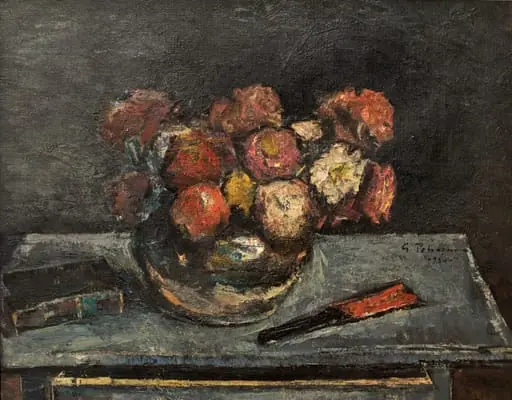
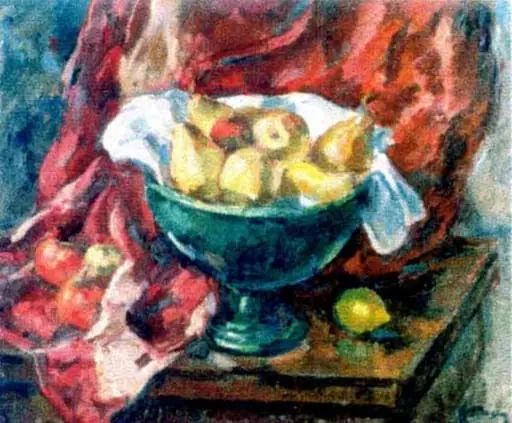
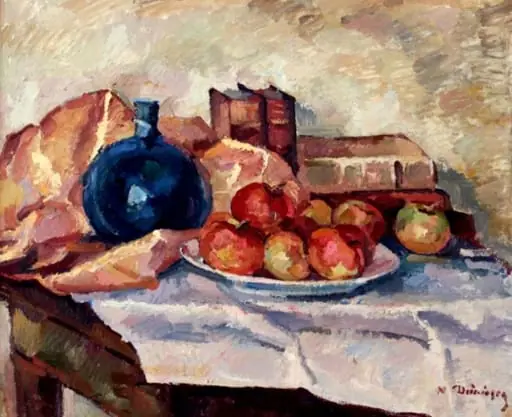
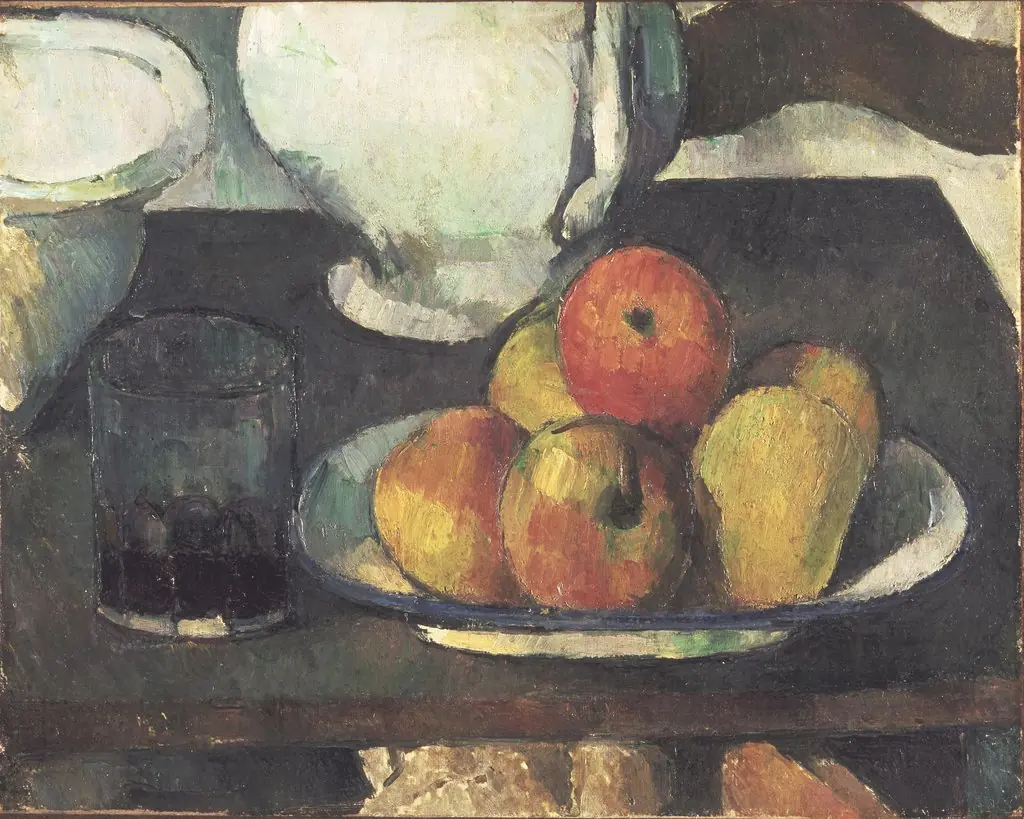
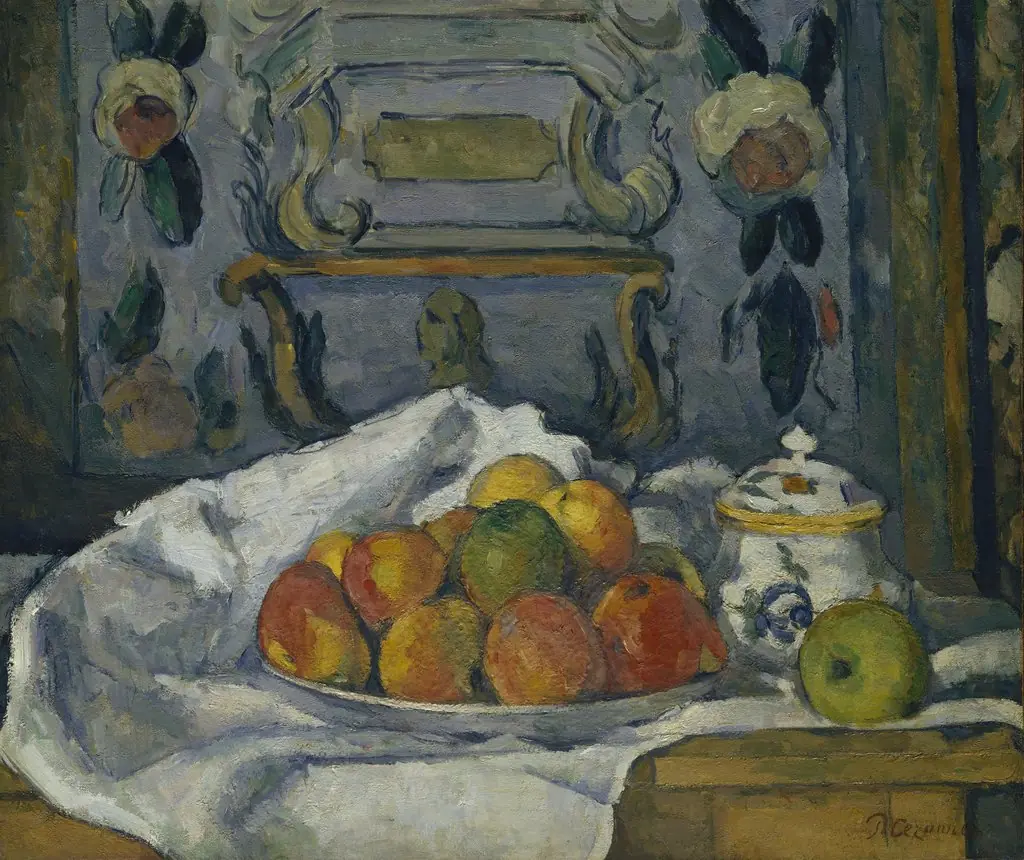
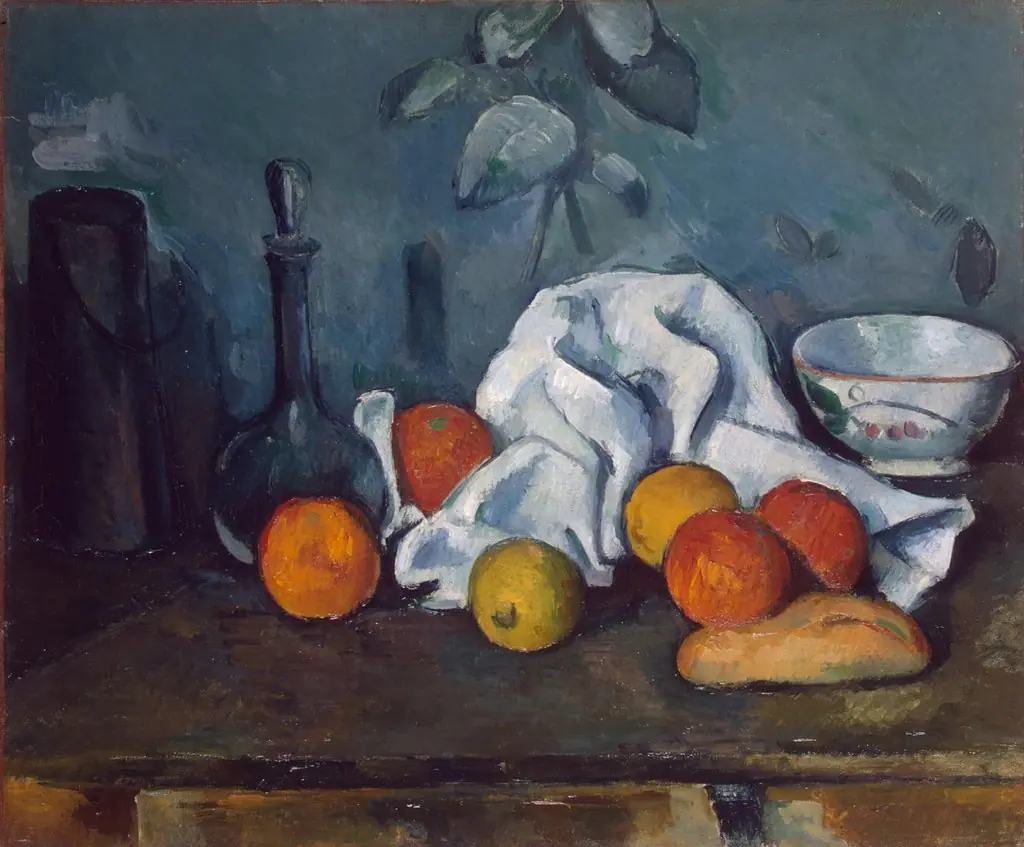
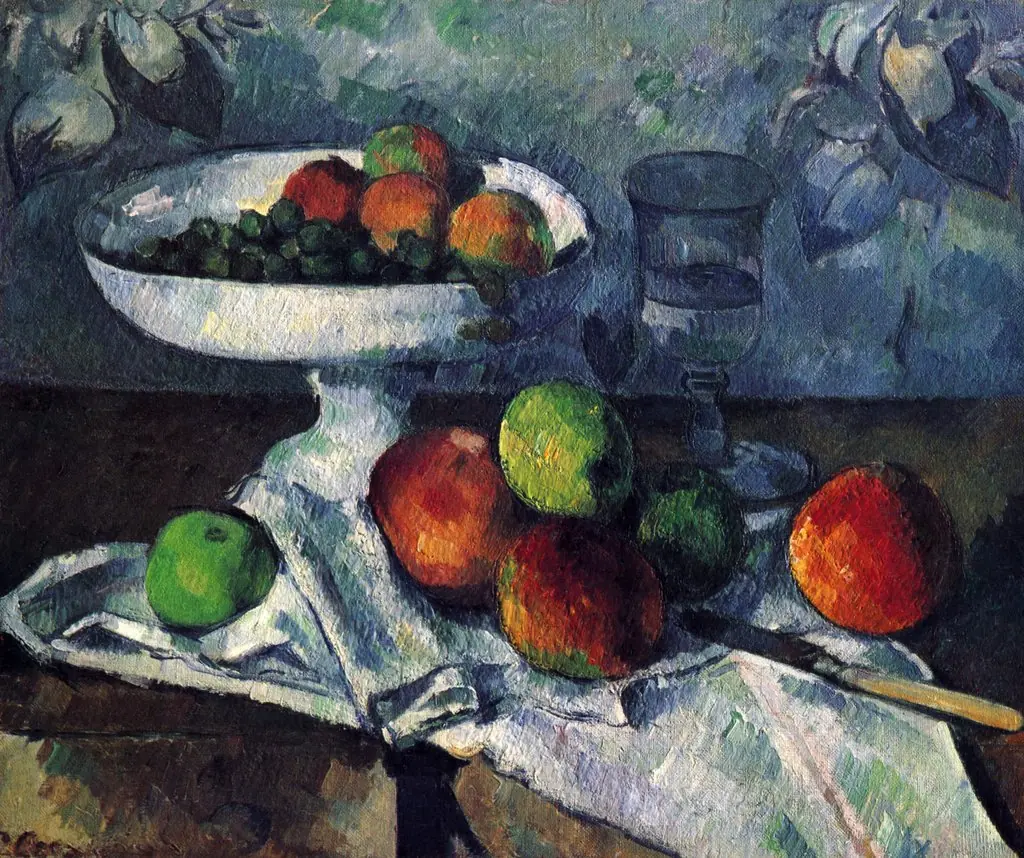
Painted in 1937 by Gheorghe Petrașcu, this still life depicts two bowls of fruit on a striped tablecloth against a dark, textured wall.
Painted in 1937 by Gheorghe Petrașcu, this still life depicts two bowls of fruit on a striped tablecloth against a dark, textured wall. The work is held in the collection of the Museum of Ethnography. Its composition is deliberately restrained, focusing on everyday objects rendered with a tactile, physical presence. The absence of decorative elements or narrative context emphasizes the quiet dignity of ordinary things.
Subject & Meaning
The painting presents two simple bowls—one filled with red apples, the other with greenish-yellow pears—arranged on a tablecloth of alternating red and white stripes. There is no symbolic or allegorical intent; the subject is the fruit itself, observed with quiet attention. The arrangement suggests a moment of stillness, inviting contemplation of form, color, and texture rather than storytelling.
Technique & Style
Petrașcu applied paint thickly, using a heavy impasto technique that gives the surface a sculptural quality. The brushwork appears deliberate and physical, as if the pigment was scraped or pressed onto the canvas. This method enhances the sense of weight and ripeness in the fruit, while the dark background intensifies the vibrancy of the colors, grounding the composition in material reality.
History & Provenance
Created in 1937, the painting entered the collection of the Museum of Ethnography shortly after its completion. Its presence in an institution focused on cultural artifacts rather than fine art suggests an interest in its representation of domestic life. There is no record of public exhibition prior to its acquisition, indicating it may have been a personal or studio work initially.
Context
In late 1930s Romania, many artists turned to intimate, non-ideological subjects amid rising political tensions. Petrașcu’s still life aligns with this trend, favoring quiet observation over grand themes. The work reflects a broader European interest in materiality and sensory experience, echoing post-impressionist and early modernist approaches without adopting their formal innovations.
Legacy
Though not widely reproduced or discussed in major art historical narratives, the painting remains a quiet example of Petrașcu’s commitment to tangible, sensory representation. Its preservation in an ethnographic context underscores its value as a document of everyday Romanian domestic life, offering insight into the artist’s personal aesthetic beyond his more public works.
Artist & collection
Artist
Gheorghe Petrașcu painted quiet scenes of buildings, streets, and still lifes in the 1920s and ’30s Romania.