Artwork
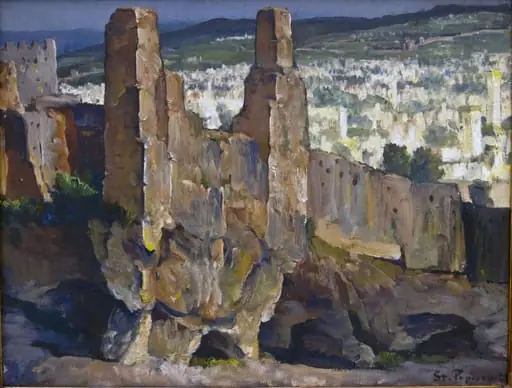
Ruinele Hârșovei
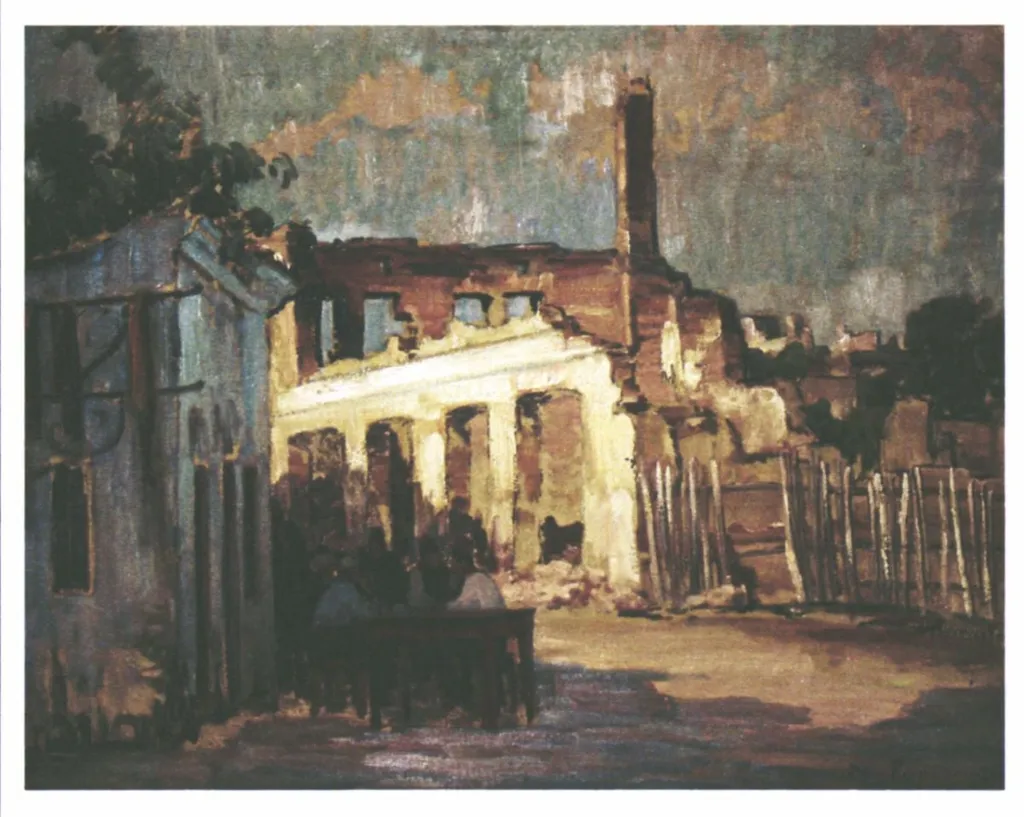
Ruinele Hârșovei is a print by Ștefan Popescu. It dates from 1921 and is held in the collection of the Visual Art Museum Galați.
About this work
Overview
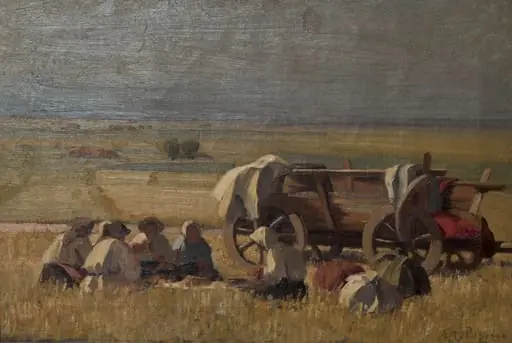
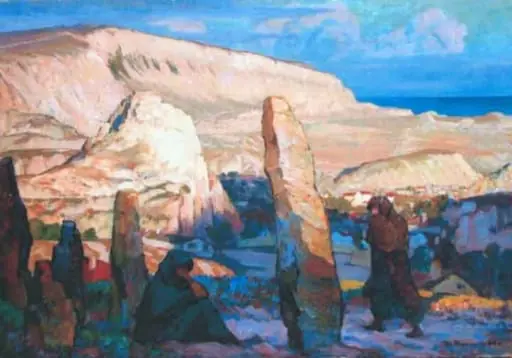
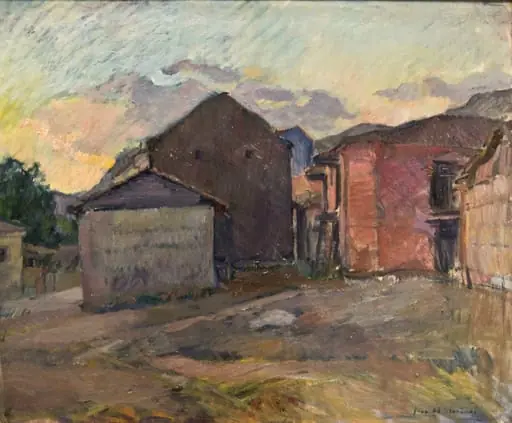
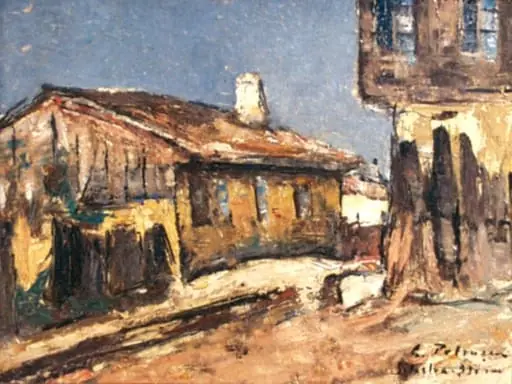
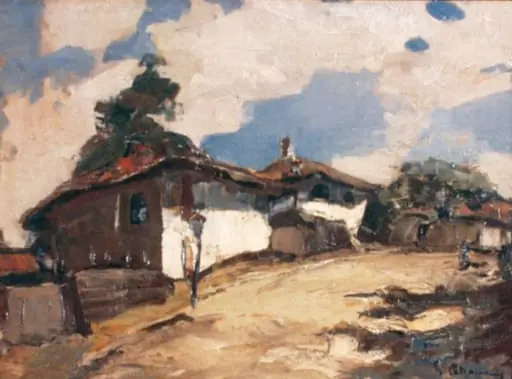
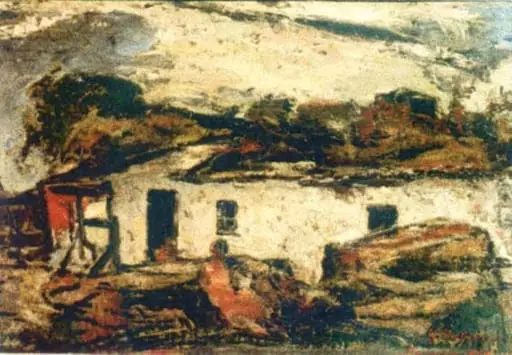
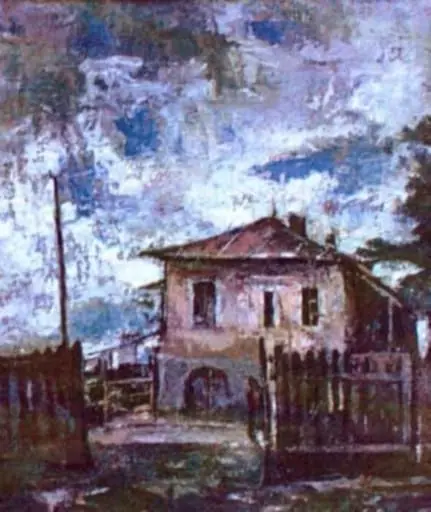
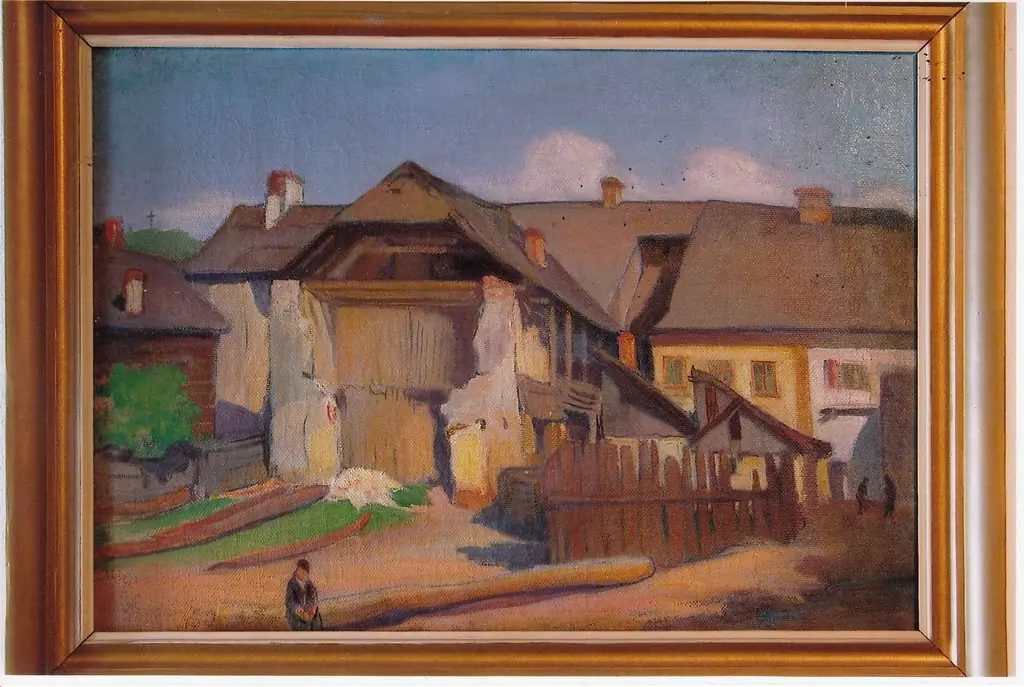
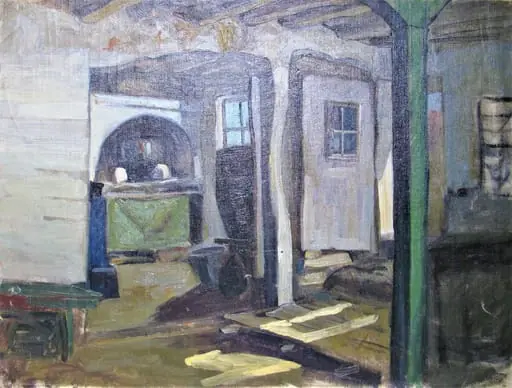
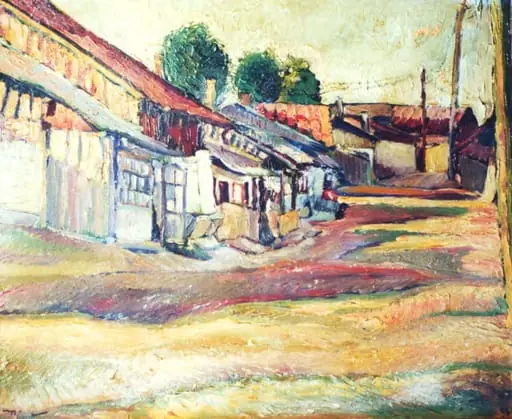
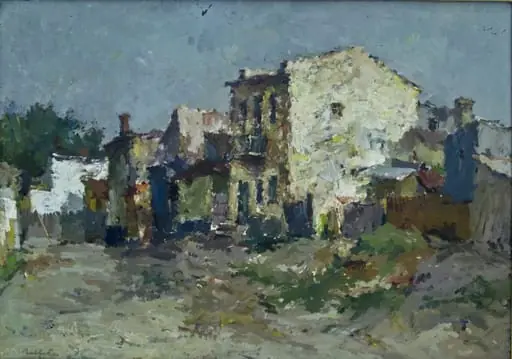
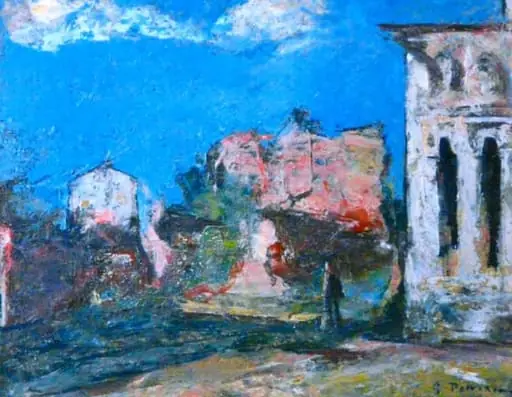
Ștefan Popescu’s 1921 canvas, titled Ruinele Hârșovei, is part of the collection at the Museum of Ethnography. The work depicts a dilapidated structure whose crumbling columns and weathered walls dominate the composition, while a modest group of figures occupies the foreground beneath a solitary tree.
Subject & Meaning
The painting juxtaposes the decay of an abandoned building with ordinary daily activity. A few people sit on a bench, suggesting a moment of pause amid ruin, while a fence and distant animals hint at a broader, lived environment. The scene invites contemplation of impermanence and the persistence of everyday life despite structural collapse.
Technique & Style
Popescu employs a heavy, textured application of paint, creating a tactile surface that emphasizes the roughness of the crumbling architecture. The palette is dominated by muted browns and grays, punctuated by occasional greens and a pale blue sky, reinforcing the somber mood while preserving a hint of natural light.
History & Provenance
Created in the early post‑World War I period, the work entered the Museum of Ethnography’s holdings sometime after its completion, where it has remained part of the institution’s permanent display. Its acquisition reflects the museum’s interest in documenting Romanian visual culture of the early twentieth century.
Context
Ruinele Hârșovei belongs to a broader tradition of Romanian artists portraying abandoned or decaying structures, a motif that often serves as a visual metaphor for social and historical change. Popescu’s focus on the ordinary figures within the ruin aligns with contemporary trends that favored realistic, unidealized scenes of everyday life.
Artist & collection
Artist
Ștefan Popescu painted quiet scenes from the 1920s, blending everyday places with soft light.