Artwork
Το σώμα του Πατριάρχη Κωνσταντινουπόλεως Γρηγορίου Ε΄ ρίπτεται στο Κεράτιο κόλπο
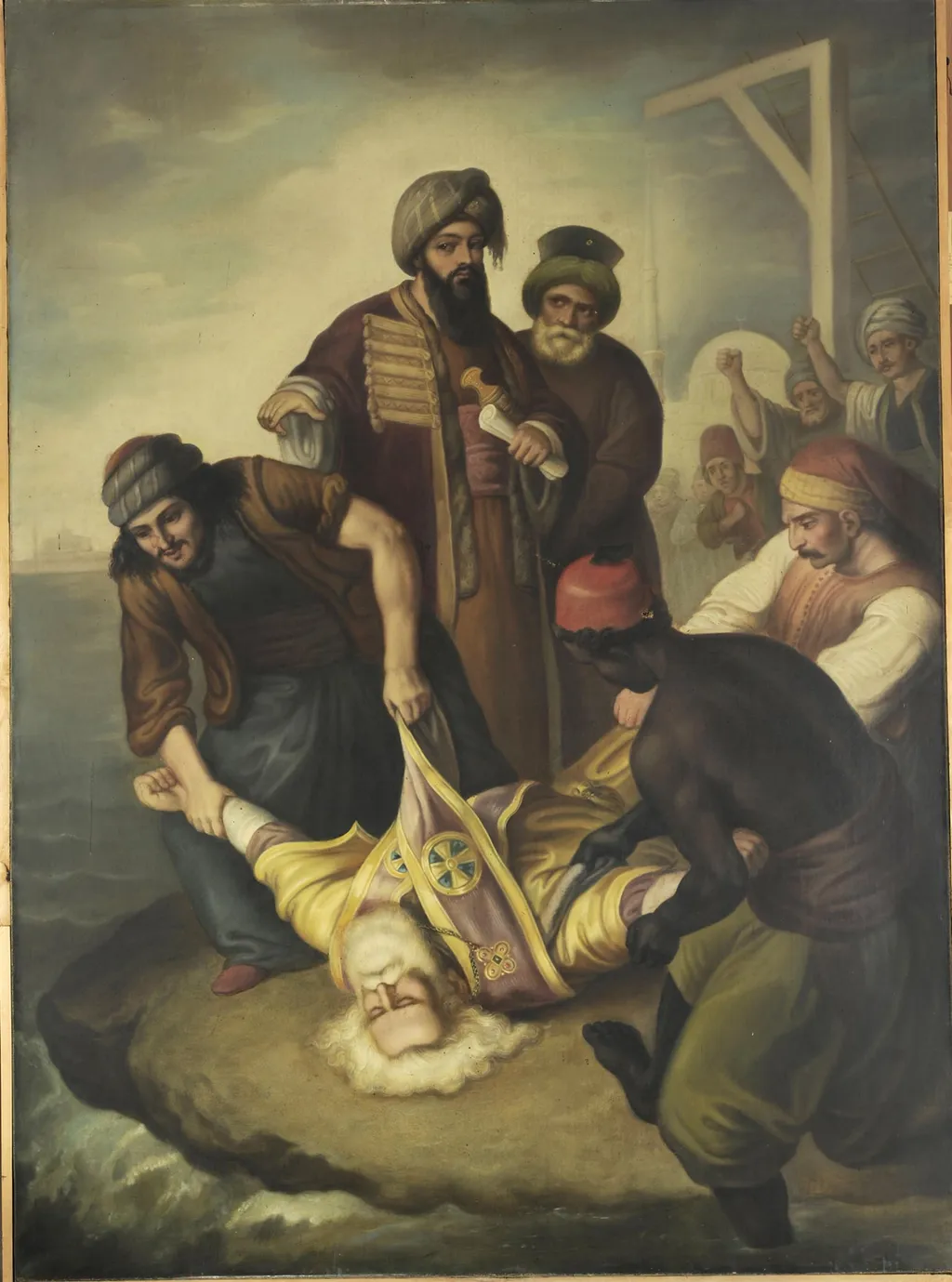
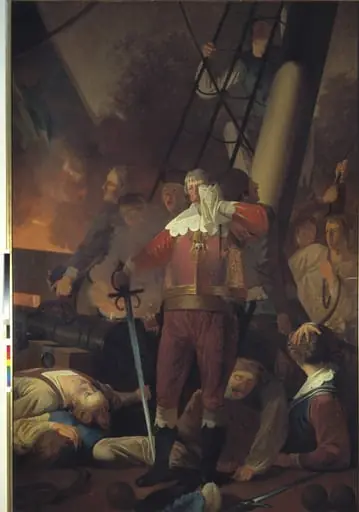
Το σώμα του Πατριάρχη Κωνσταντινουπόλεως Γρηγορίου Ε΄ ρίπτεται στο Κεράτιο κόλπο is an unspecified painting by Peter von Hess. It is held in the collection of the Historical & Ethnological Society of Greece. The work portrays a turbulent maritime episode in which a bearded, robed figure is being hauled across a ship’s deck toward the sea.
About this work
Overview
The work portrays a turbulent maritime episode in which a bearded, robed figure is being hauled across a ship’s deck toward the sea. The scene unfolds under a storm‑filled sky, with the vessel’s rigging and masts framing the action. The composition captures a moment of violent confrontation, emphasizing the figure’s vulnerability against the surrounding men.
Subject & Meaning
The central character, dressed in a golden garment bearing a cross and lacking a hat, suggests a high‑ranking religious or patriarchal identity, likely the Patriarch of Constantinople. His forced removal by a group of uniformly dressed men implies a narrative of exile, punishment, or martyrdom, reflecting themes of authority challenged and the precariousness of power.
Technique & Style
The painter employs strong chiaroscuro, contrasting illuminated areas—particularly the golden robe and the faces of the men—with deep shadows that envelop the sky and deck. This manipulation of light heightens the drama and directs the viewer’s eye toward the central figure, while the loose brushwork of the rigging conveys motion and tension.
History & Provenance
The image is catalogued under the Greek title “Το σώμα του Πατριάρχη Κωνσταντινουπόλεως Γρηγορίου Ε΄ ρίπτεται στο Κεράτιο κόλπο,” indicating a narrative linked to Patriarch Gregory V of Constantinople. No further details on the artist, date, or acquisition are provided in the source material.
Context
The depiction resonates with historical accounts of the 1821 Greek War of Independence, during which Patriarch Gregory V was executed by Ottoman authorities. The setting in the Kerati (Cerato) Bay suggests a maritime execution, aligning the visual narrative with documented episodes of political and religious persecution in the early nineteenth century.
Artist & collection
Artist
Museum
Historical & Ethnological Society of Greece
Continue through works from the same source collection.
 Naval Battle of Imbre in 1346
 Officier grec blessé
 Mihai Viteazul contemplând capul lui Andrei Bathory
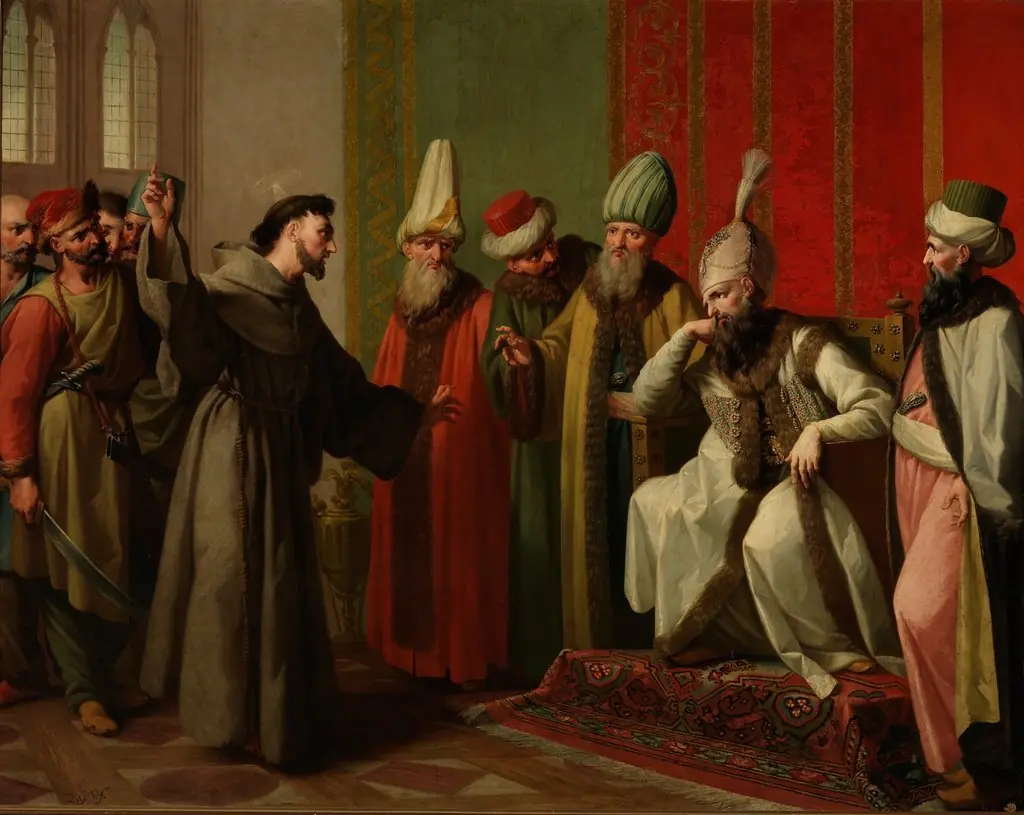 San Francisco ante el sultán de Egipto Malec-el-Kamal
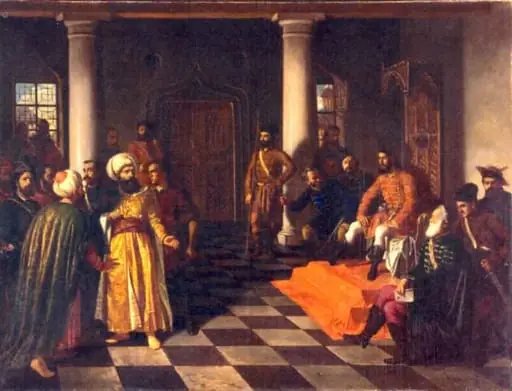 Vlad Țepeș și solii turci
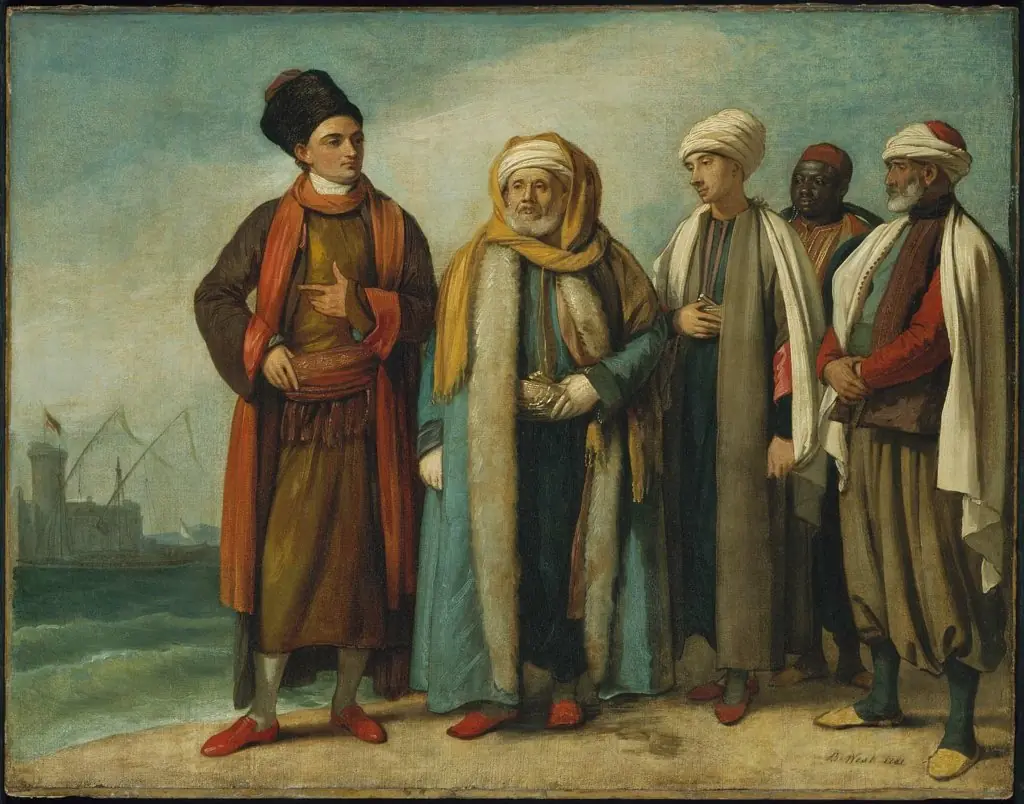 The Ambassador from Tunis with His Attendants as He Appeared in England in 1781
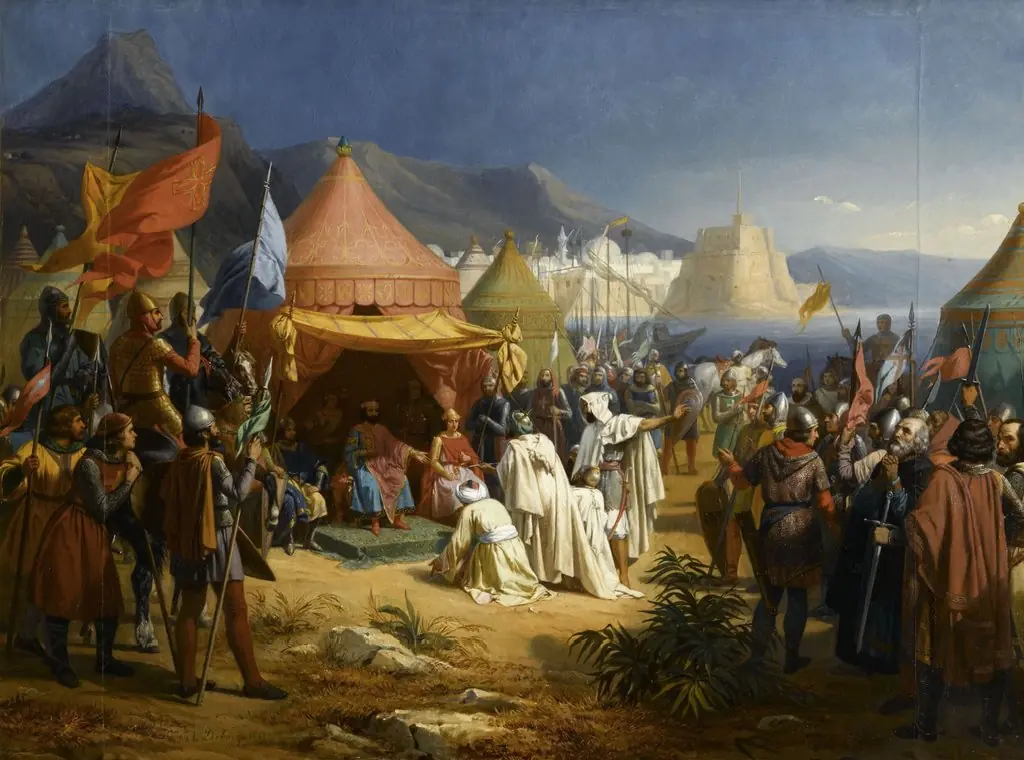 Conquest of Tripoli
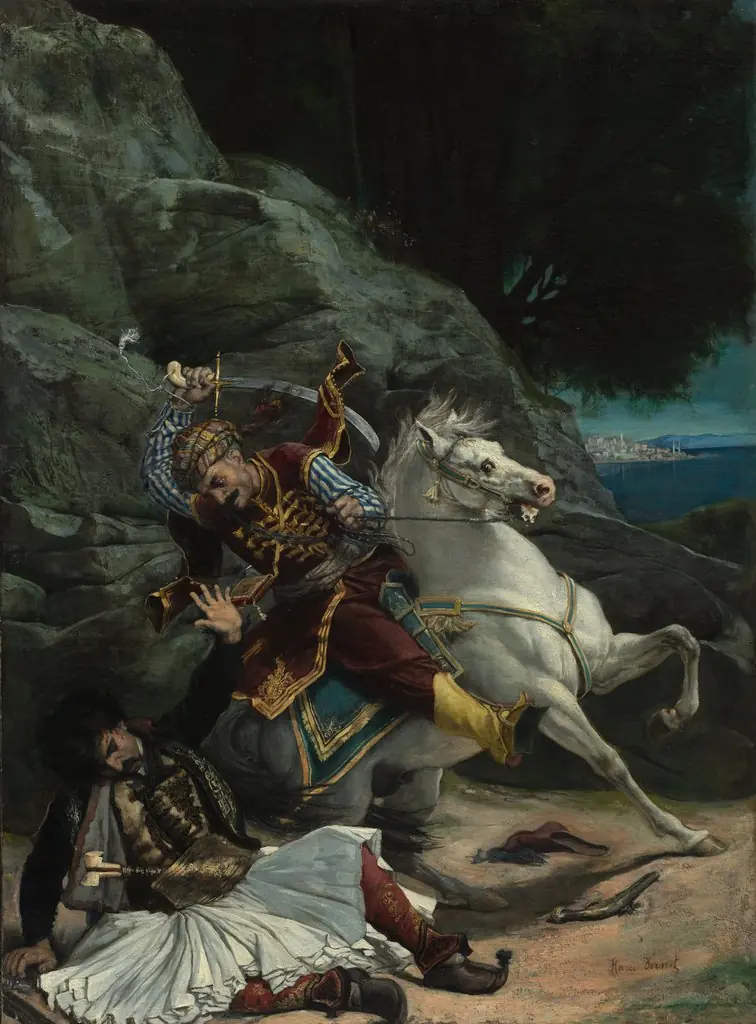 Combat of a Greek and a Turk
 Combat of a Greek and a Turk
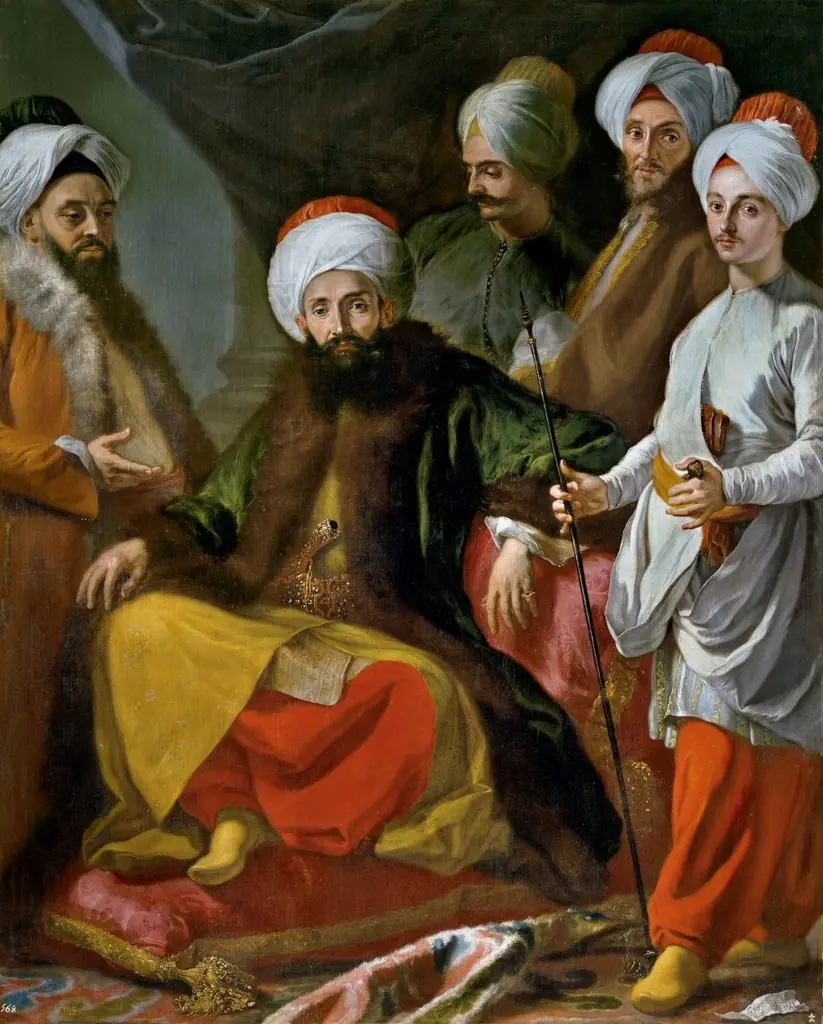 The Turkish Embassy in Naples
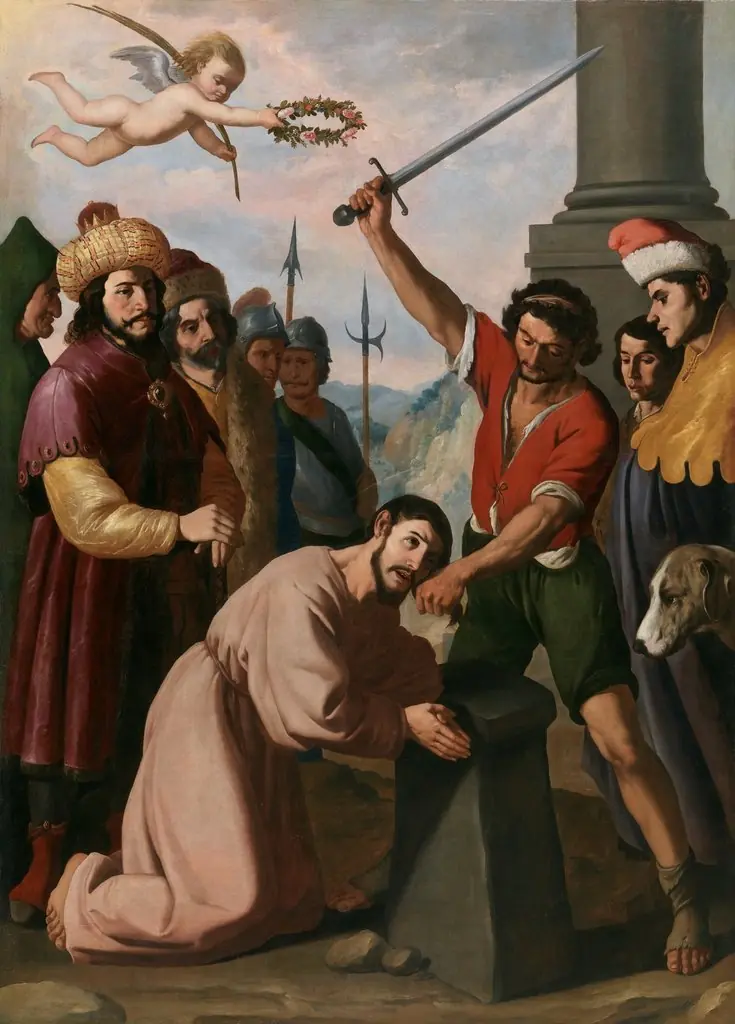 The Martyrdom of Saint James
 Christian IV på "Trefoldigheden" i slaget på Koldberger Heide 1644