Artwork
Arlechin
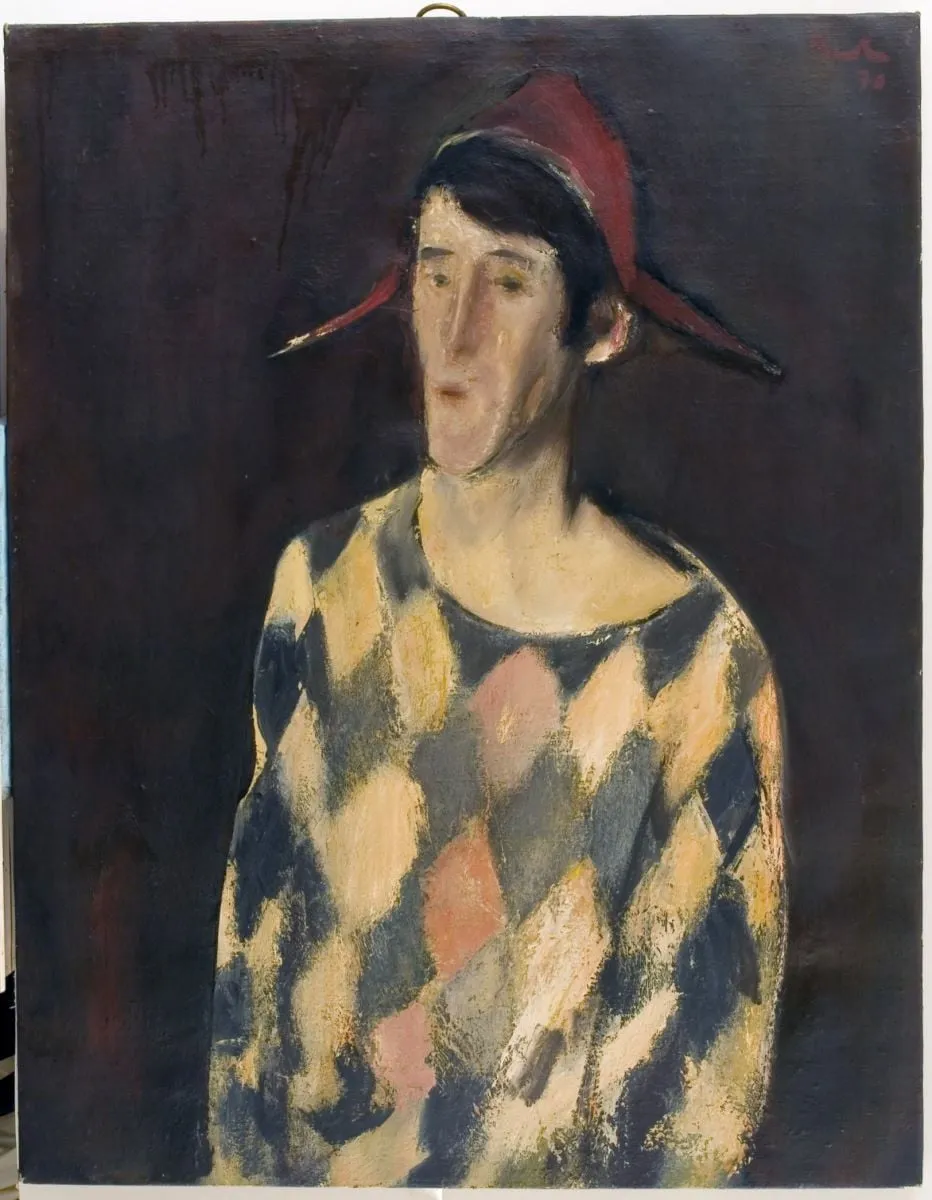
Arlechin is an unspecified painting by Corneliu Baba. It is held in the collection of the National Museum of Art of Romania.
About this work
Overview
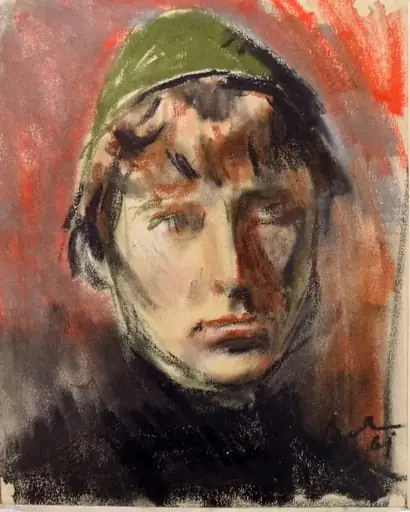
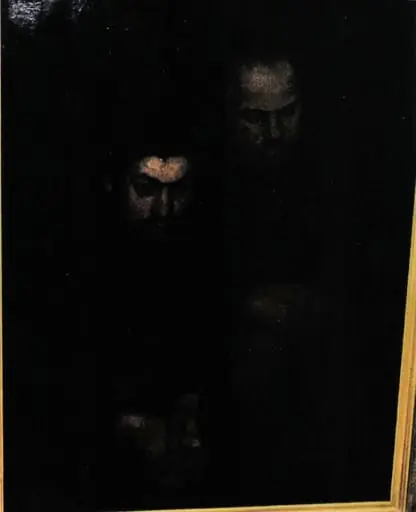
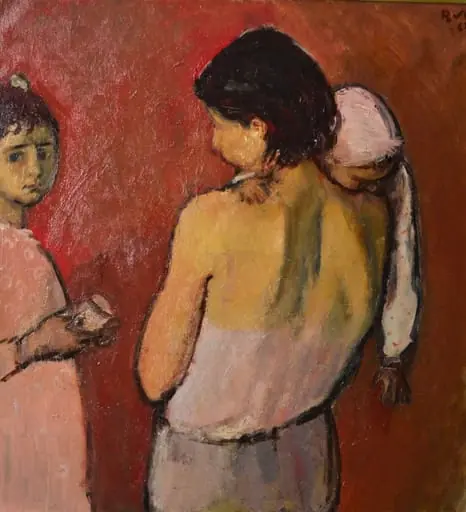
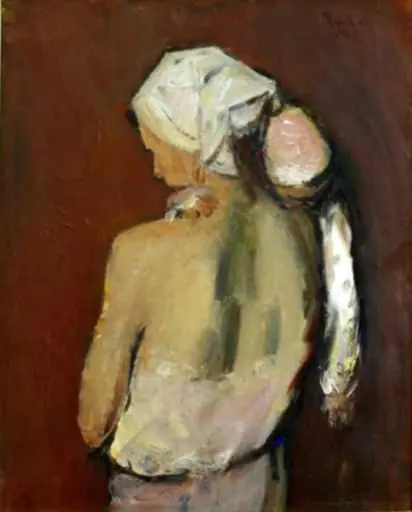
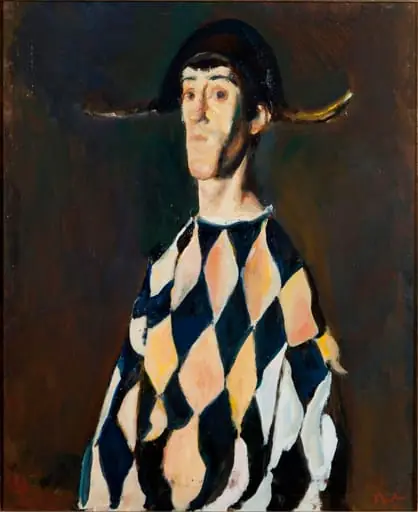
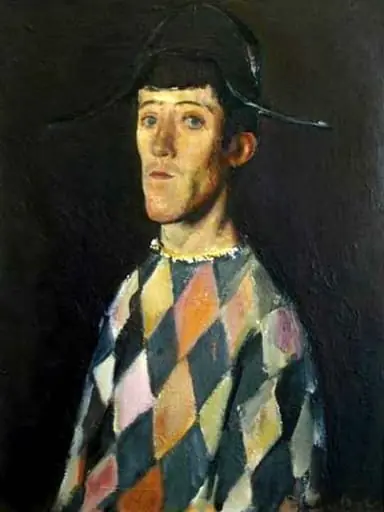
This portrait presents a solitary male figure dressed in a vivid harlequin-patterned shirt and a red hat, set against a deep, unmodulated background.
This portrait presents a solitary male figure dressed in a vivid harlequin-patterned shirt and a red hat, set against a deep, unmodulated background. The subject’s face is softened through blurred brushwork, obscuring emotional cues and reinforcing an enigmatic presence. The contrast between the bright costume and the shadowy surroundings draws focus to the figure’s attire, suggesting performance or theatrical identity without explicit narrative context.
Subject & Meaning
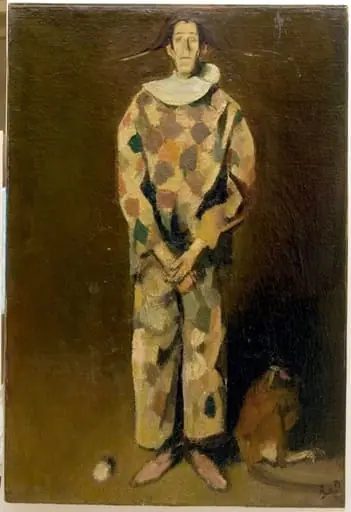
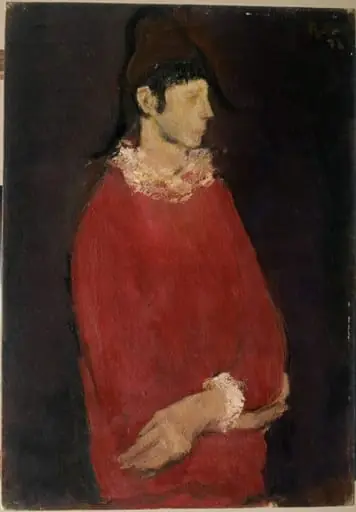
The figure’s attire aligns with traditional harlequin costume, historically associated with jesters and traveling performers. Yet the neutral expression and lack of contextual cues resist clear interpretation. Rather than conveying humor or spectacle, the image evokes solitude and ambiguity, inviting contemplation of identity, role-playing, or the quiet isolation behind public personas.
Technique & Style
Brushwork is loose and expressive, particularly in the rendering of the face and fabric, where edges dissolve into atmospheric tone. The dark background is applied with minimal detail, enhancing the figure’s luminous costume. The technique prioritizes mood over precision, favoring emotional resonance through texture and contrast rather than anatomical clarity or defined form.
History & Provenance
The work bears stylistic affinities with the figurative paintings of Romanian artist Corneliu Baba, particularly in its treatment of isolated figures and muted psychological depth. While no documented provenance is provided, its aesthetic aligns with Eastern European postwar portraiture that emphasized introspection over spectacle, often reflecting broader societal tensions through individual subjects.
Context
Emerging from a mid-20th-century Eastern European artistic milieu, the painting reflects a broader trend of figurative work that turned inward, away from state-sanctioned realism. The harlequin, a symbol with roots in commedia dell’arte, was reinterpreted by artists to explore themes of alienation and hidden identity under authoritarian regimes, where personal expression was often suppressed.
Legacy
The painting contributes to a lineage of modern figurative art that uses costume and ambiguity to interrogate the self. Its restrained palette and emotional opacity resonate with later 20th-century explorations of anonymity in portraiture, influencing artists who prioritize psychological weight over narrative clarity, and who find meaning in what is withheld.
Artist & collection
Artist
Corneliu Baba made prints and paintings that feel like quiet stories, often borrowing from older art.