Artwork
Doi călugări
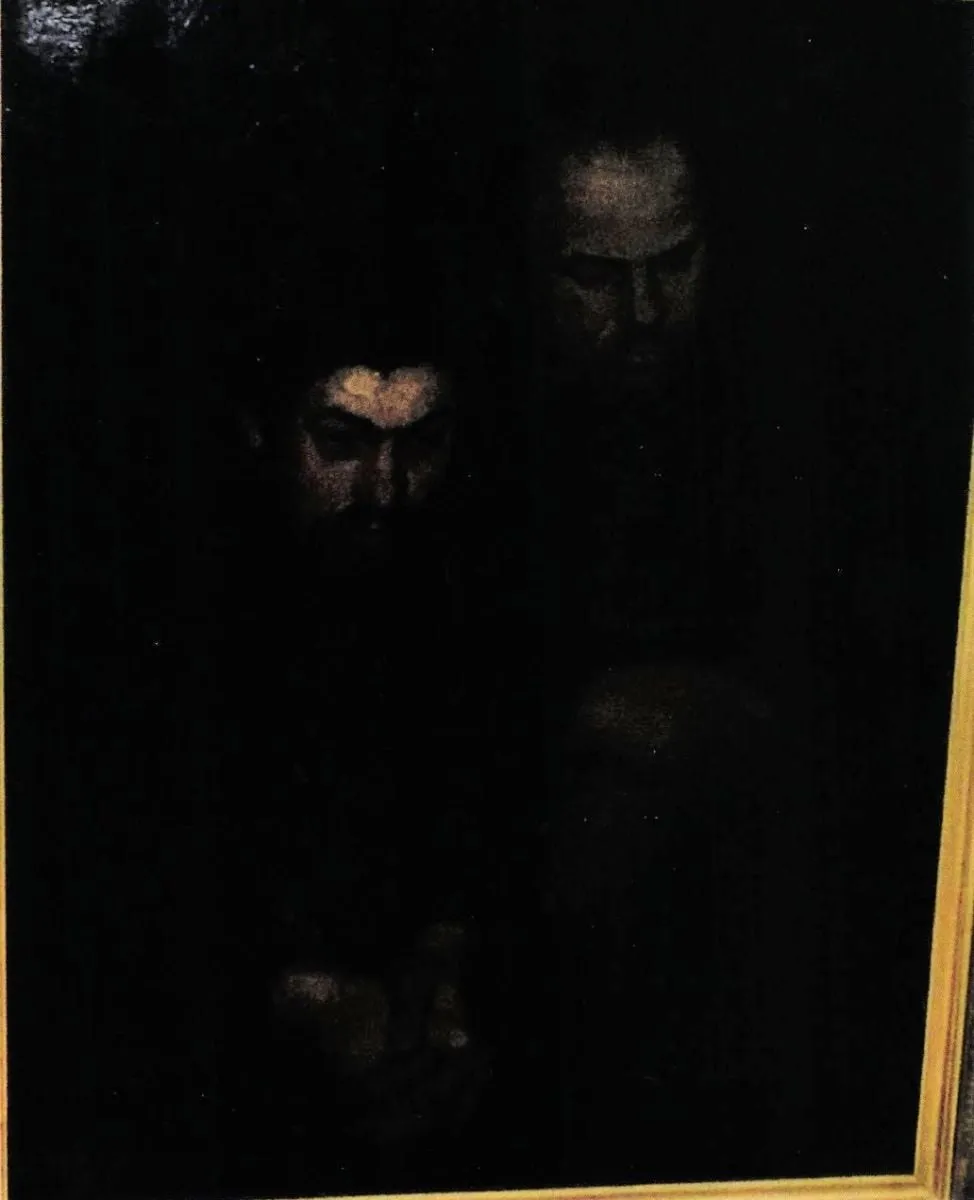
Doi călugări is an unspecified painting by Corneliu Baba. It dates from 1942 and is held in the collection of the Bucharest Municipality Museum.
About this work
Overview
Corneliu Baba’s 1942 painting Doi călugări presents a stark, nocturnal scene that is currently part of the Museum of Ethnography’s collection.
Corneliu Baba’s 1942 painting Doi călugări presents a stark, nocturnal scene that is currently part of the Museum of Ethnography’s collection. The work consists of an oil or mixed‑media image that measures roughly the size of a modest canvas, though exact dimensions are not recorded. Its title, translated as “Two Monks,” signals a focus on a pair of cloistered figures rendered in a somber palette.
Subject & Meaning
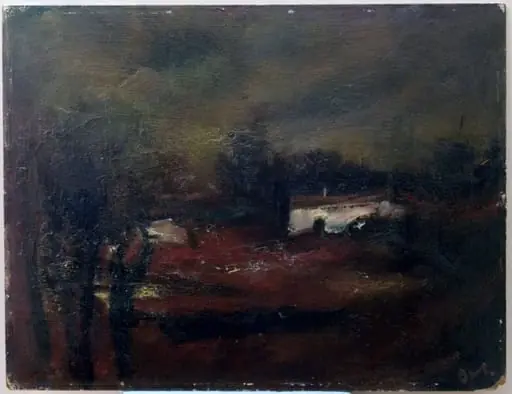
The composition features two indistinct, shadow‑filled silhouettes positioned close together against an almost black backdrop. Their faces and bodies are reduced to vague outlines, offering no narrative detail beyond the suggestion of a shared, perhaps contemplative, presence. The limited illumination on their heads hints at a subtle spiritual or introspective emphasis, inviting viewers to contemplate anonymity and the essence of monastic life.
Technique & Style
Baba employs a restrained chiaroscuro, allowing deep blacks and muted grays to dominate the picture plane while a faint light source catches only the uppermost parts of the figures. The brushwork is soft and diffused, avoiding sharp edges, which enhances the ethereal quality of the forms. This minimalistic handling of light and shadow creates a dramatic contrast that underscores the work’s solemn mood.
History & Provenance
Created during the turbulent years of World War II, Doi călugări entered the Museum of Ethnography’s holdings at an unspecified date, likely through donation or acquisition from a private collection. The painting has remained in the museum’s permanent display, where it contributes to the institution’s broader narrative of Romanian visual culture.
Context
The early 1940s marked a period of intense social and political upheaval in Romania, influencing many artists to explore themes of isolation and spirituality. Baba’s choice of monastic subjects aligns with a broader European tendency to reflect on religious identity amid conflict, while his austere visual language mirrors contemporary modernist experiments with form and light.
Artist & collection
Artist
Corneliu Baba made prints and paintings that feel like quiet stories, often borrowing from older art.
 Iisus Hristos
 Visions of the Hereafter: Fall of the Damned into Hell
 Micul cerșetor
 Untitled
 Păsări moarte cu cocoș de munte; pandant; Păsări și iepure mort
 Le Voyageur à l'Abri
 Copy of Painting inside the Caves of Ajanta (cave 6)
 Vânat
Vânat Shepherdess, known as ‘Monumental Conception of Humanity’
 Rest
Rest Abstract Composition
 Untitled