Artwork
Întoarcerea de la muncă
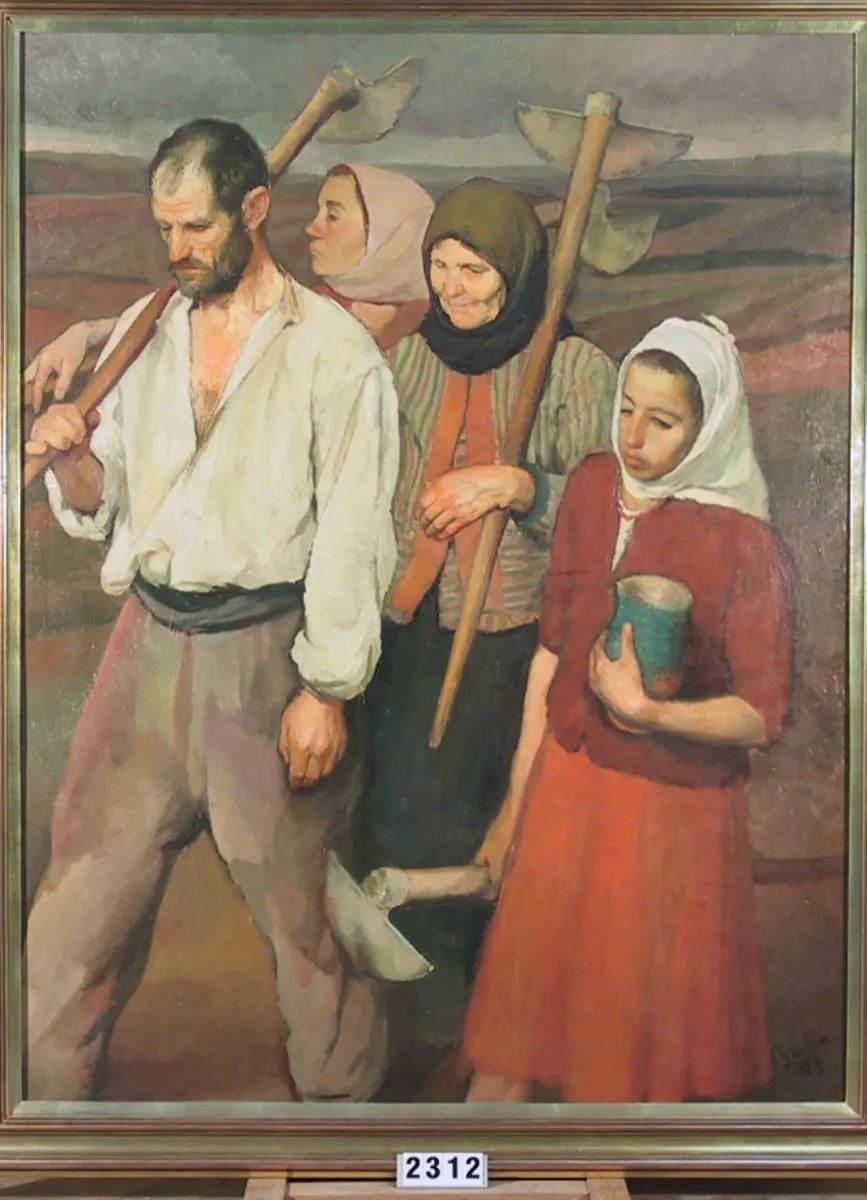
Întoarcerea de la muncă is an unspecified painting by Corneliu Baba. It is held in the collection of the Brukenthal National Museum.
About this work
Overview
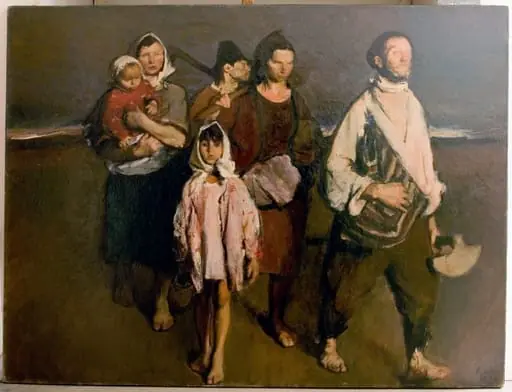
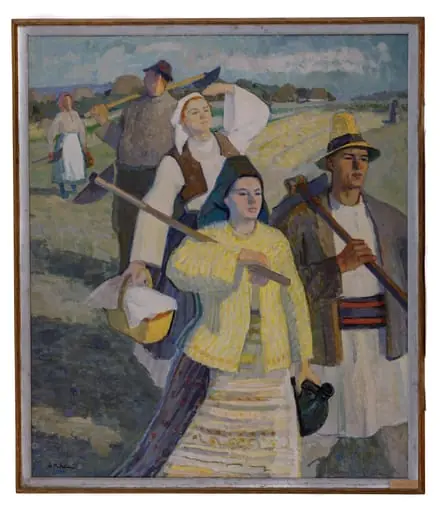
A man in a white shirt and dark trousers leads, carrying a long staff, while three women follow, each bearing agricultural implements on their shoulders.
The work titled "Întoarcerea de la muncă" depicts a small group of four figures moving together across an open landscape. A man in a white shirt and dark trousers leads, carrying a long staff, while three women follow, each bearing agricultural implements on their shoulders. One woman, dressed in red, holds a small cup. The scene is set against a cloudy sky and a field that recedes into the distance.
Subject & Meaning
The composition presents a moment of return from labor, emphasizing communal effort in rural life. The inclusion of farming tools such as shovels and a hoe underscores the agricultural context, while the shared journey suggests solidarity among the workers. The modest attire and simple accessories highlight the everyday reality of the figures.
Technique & Style
The artist employs a pronounced chiaroscuro effect, using strong contrasts of light and shadow to separate the figures from the surrounding landscape. Thick, impasto brushstrokes are evident particularly in the rendering of clothing, giving the fabric a tactile quality. The overall palette is muted, allowing the darker shadows to define form and depth.
Context
Although specific details about the creator and date are not provided, the painting reflects a tradition of genre scenes that document rural labor. Its visual focus on collective work and the use of chiaroscuro align it with 19th‑century realist tendencies that sought to portray ordinary people with dignity and clarity.
Artist & collection
Artist
Corneliu Baba made prints and paintings that feel like quiet stories, often borrowing from older art.