Artwork
Pietá (interpretare după Rembrandt)
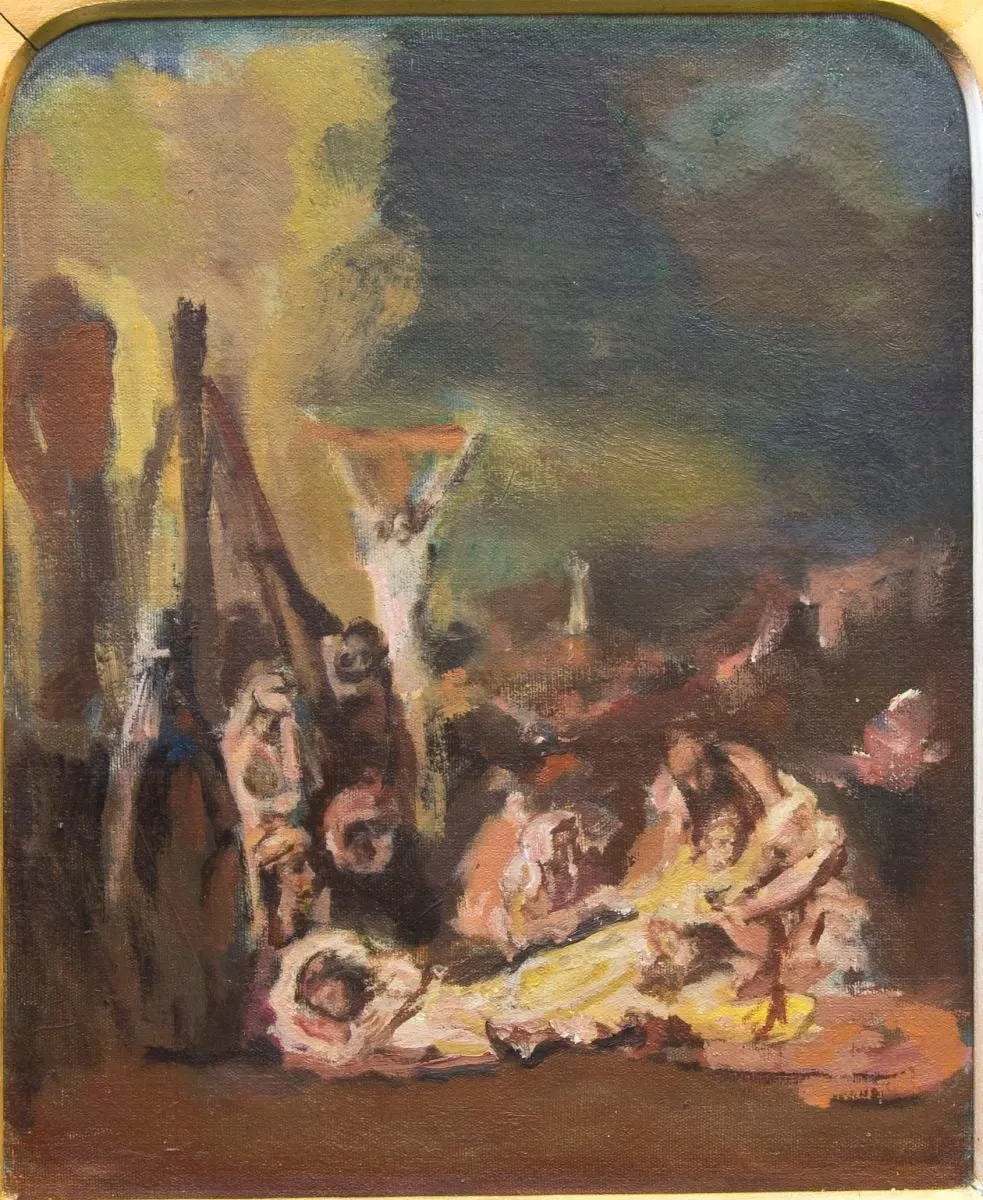
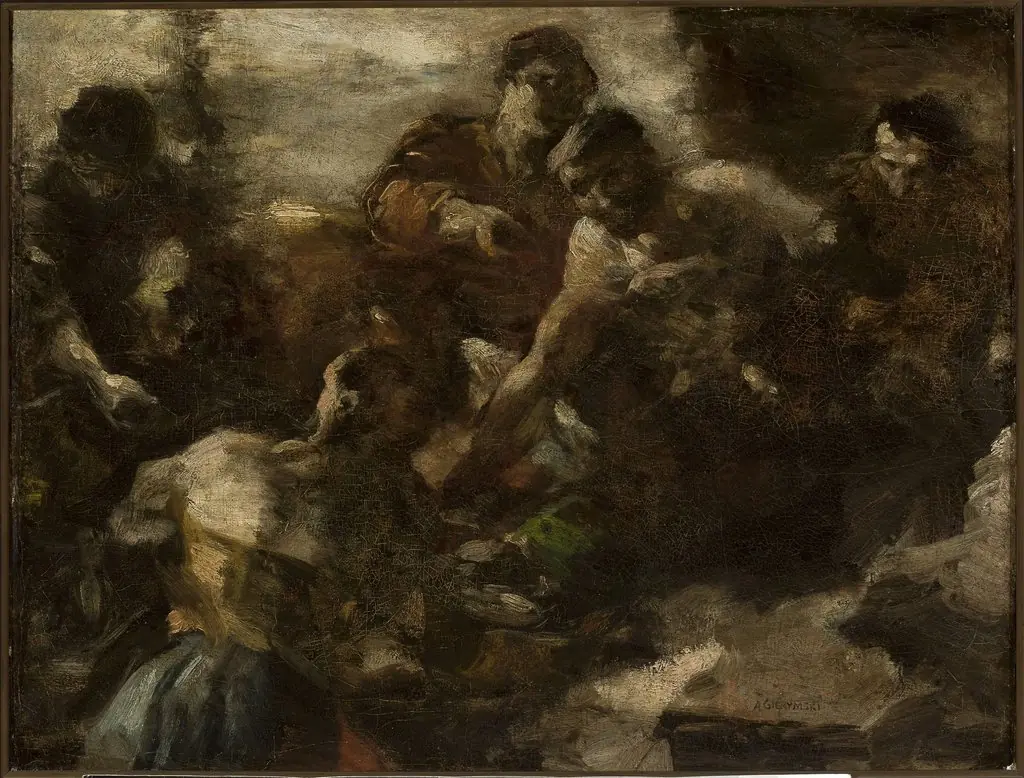
Pietá (interpretare după Rembrandt) is a print by Corneliu Baba. It dates from 1985 and is held in the collection of the National Museum of Art of Romania.
About this work
Overview
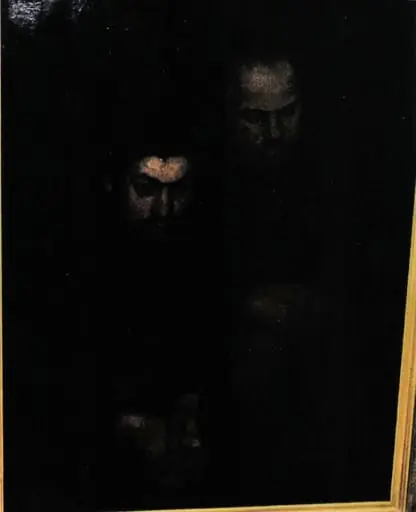
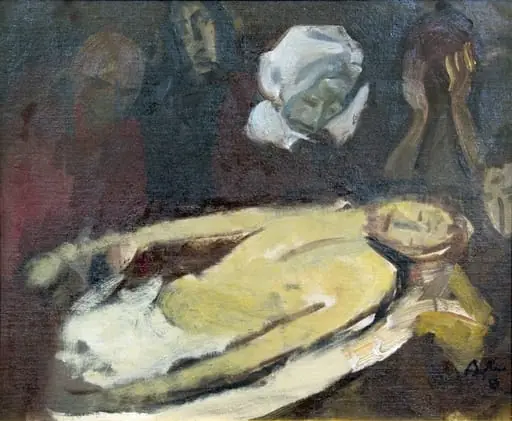
Executed in oil, the work departs from classical harmony, presenting a somber, densely packed group surrounding a lifeless figure on the ground.
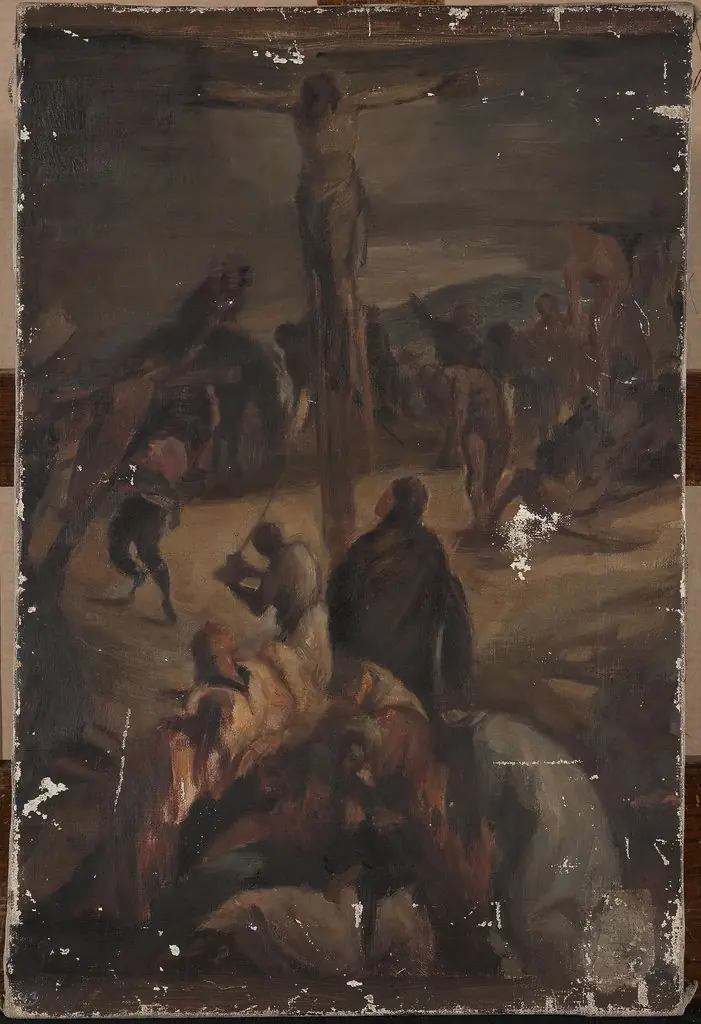
Corneliu Baba’s 1985 painting Pietá (interpretare după Rembrandt) reimagines the traditional Christian theme of Mary mourning Christ through a distinctly modern, emotionally charged lens. Executed in oil, the work departs from classical harmony, presenting a somber, densely packed group surrounding a lifeless figure on the ground. Its muted palette and agitated brushwork convey a sense of raw grief rather than idealized sorrow.
Subject & Meaning
The scene depicts a cluster of figures gathered around a prone body, evoking the Pietà motif without literal fidelity. No clear religious identifiers are present; instead, the focus lies in collective mourning, rendered with psychological intensity. The absence of divine light or celestial reference shifts the emphasis to human vulnerability and communal grief, transforming a sacred subject into a universal meditation on loss.
Technique & Style
Baba employs thick, gestural brushstrokes and a restricted palette of earth tones—ochres, umbers, and grays—to dissolve form into emotional texture. Stark contrasts of light and shadow, drawn from chiaroscuro traditions, isolate the central figure and heighten the scene’s tension. Highlights on a single white garment pierce the gloom, drawing the eye without softening the work’s austere mood.
History & Provenance
Created in 1985 during the final years of Communist Romania, the painting emerged from a period of state-imposed artistic constraints. Baba, known for his unflinching portrayals of human suffering, used this work to navigate censorship through ambiguity. Its reference to Rembrandt allowed coded engagement with Western artistic heritage, subtly resisting ideological homogenization while preserving personal expression.
Context
In late 20th-century Eastern Europe, religious imagery was often suppressed or co-opted by state ideology. Baba’s reinterpretation of the Pietà sidestepped direct confrontation by focusing on emotional resonance over doctrinal accuracy. The work aligns with broader trends among Romanian artists who used historical references to express dissent, embedding personal and political anguish within familiar visual frameworks.
Legacy
The painting stands as a quiet testament to Baba’s commitment to humanist themes under repression. It influenced later Romanian artists seeking to reconcile classical motifs with contemporary trauma. Unlike overtly political works, its power lies in restraint—its unresolved forms and somber tones continue to invite reflection on the endurance of grief beyond institutional control.
Artist & collection
Artist
Corneliu Baba made prints and paintings that feel like quiet stories, often borrowing from older art.