Artwork
Victor Brauner
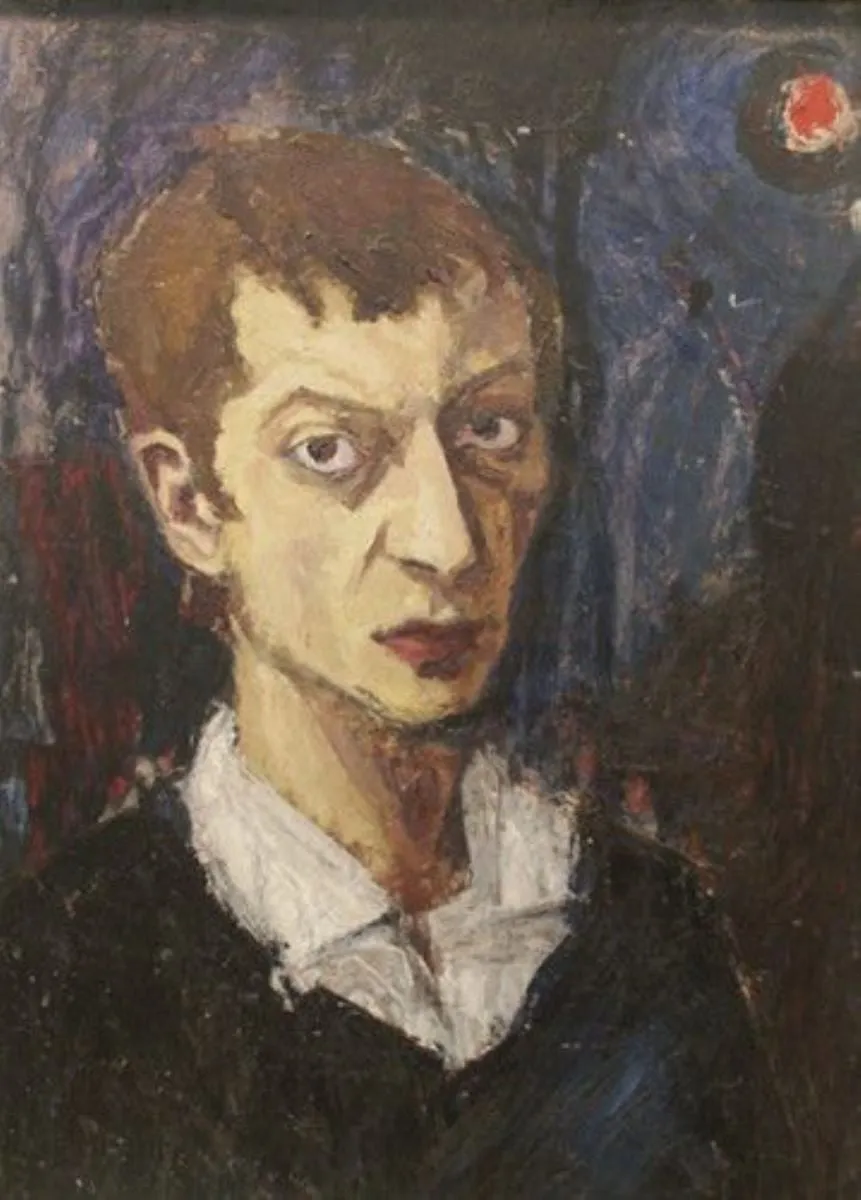
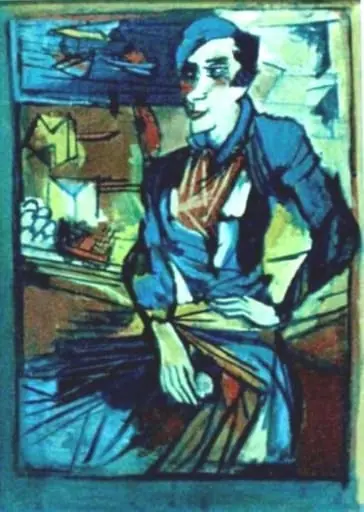
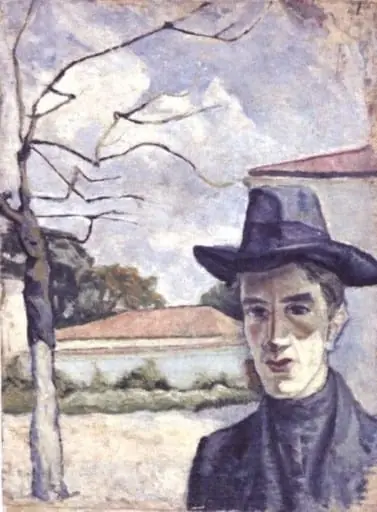
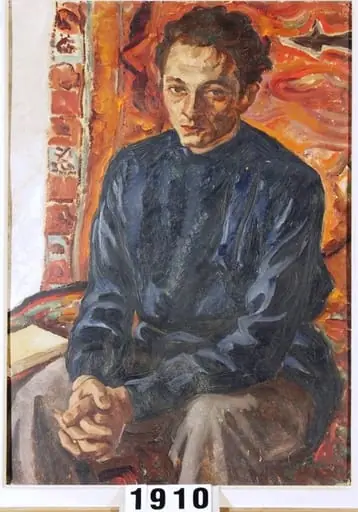
Victor Brauner is an unspecified painting by Marcel Janco. It is held in the collection of the Neamț National Museum Complex.
About this work
Overview
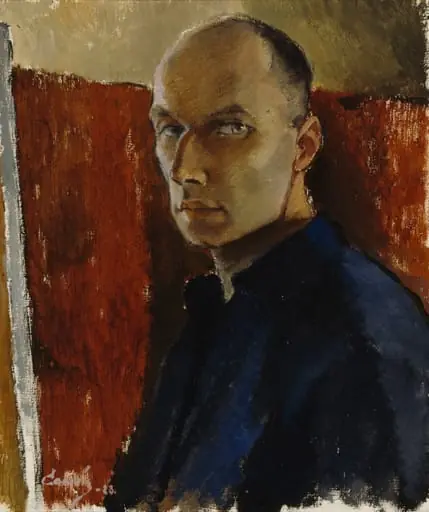
The artist employs deliberate visual contrasts to isolate the subject while dissolving his boundaries into the surrounding space.
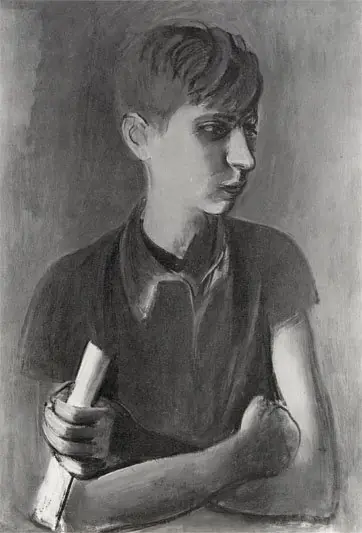
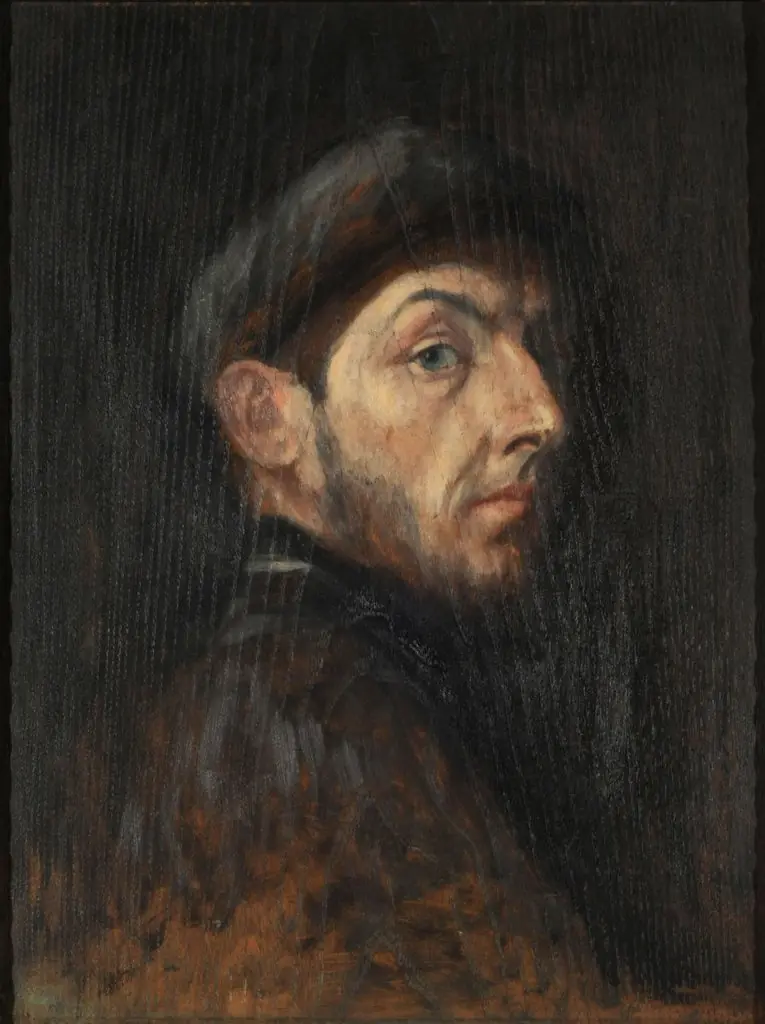
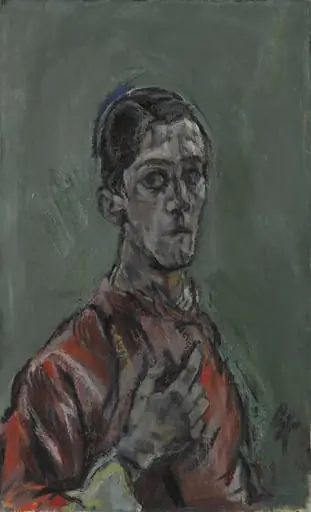
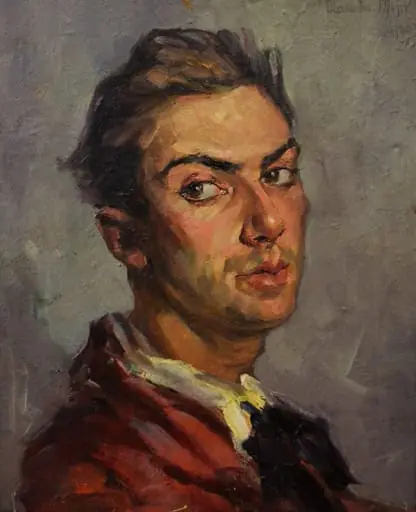
This portrait depicts a man with a composed expression, rendered in a manner that contrasts sharply between the defined facial features and the turbulent background. The figure emerges from a swirling, abstract field of blue, purple, and red, suggesting a psychological or emotional tension between inner stillness and external chaos. The artist employs deliberate visual contrasts to isolate the subject while dissolving his boundaries into the surrounding space.
Subject & Meaning
The subject appears introspective, his neutral gaze and minimal attire suggesting a focus on internal states rather than external identity. The fading edges of his face into the chaotic background imply a dissolution of self or the influence of unseen forces. This may reflect themes of identity fragility, subconscious intrusion, or the instability of perception, common in surrealist explorations of the psyche.
Technique & Style
The face is painted with smooth, even tones, creating a sense of solidity, while the background is built with loose, gestural strokes and thick impasto. The textured, almost scribbled background contrasts with the controlled rendering of the figure, emphasizing a tension between order and disorder. This technique draws attention to the subject while destabilizing his spatial context.
History & Provenance
The work is attributed to Victor Brauner, a Romanian-born surrealist active in Paris during the 1930s and 1940s. His paintings often fused personal symbolism with dreamlike imagery, influenced by Jungian psychology and occult themes. While specific provenance details for this piece are not documented, its style aligns with his broader body of work from this period, which frequently explored the boundaries of identity and perception.
Context
Created during the height of European surrealism, the painting reflects broader artistic interests in the unconscious, psychic automatism, and the fragmentation of the self. Brauner’s approach diverged from purely abstract expression by retaining figurative elements, using them as anchors within psychological landscapes. His work responded to the anxieties of interwar Europe, where identity and reality were increasingly questioned.
Legacy
Brauner’s integration of figurative precision with abstract backgrounds influenced later generations of artists exploring psychological depth through visual contrast. His method of embedding the human form within chaotic environments became a touchstone for surrealist and post-war painters seeking to visualize inner turmoil. Though less widely known than his contemporaries, his contributions remain significant in the evolution of modern symbolic portraiture.
Artist & collection
Artist
Marcel Janco painted still lifes and portraits in the early 20th century, blending bold colors and geometric shapes.