Artwork
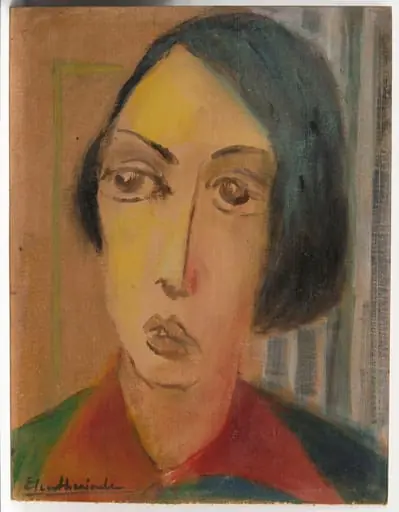
Portret de fată
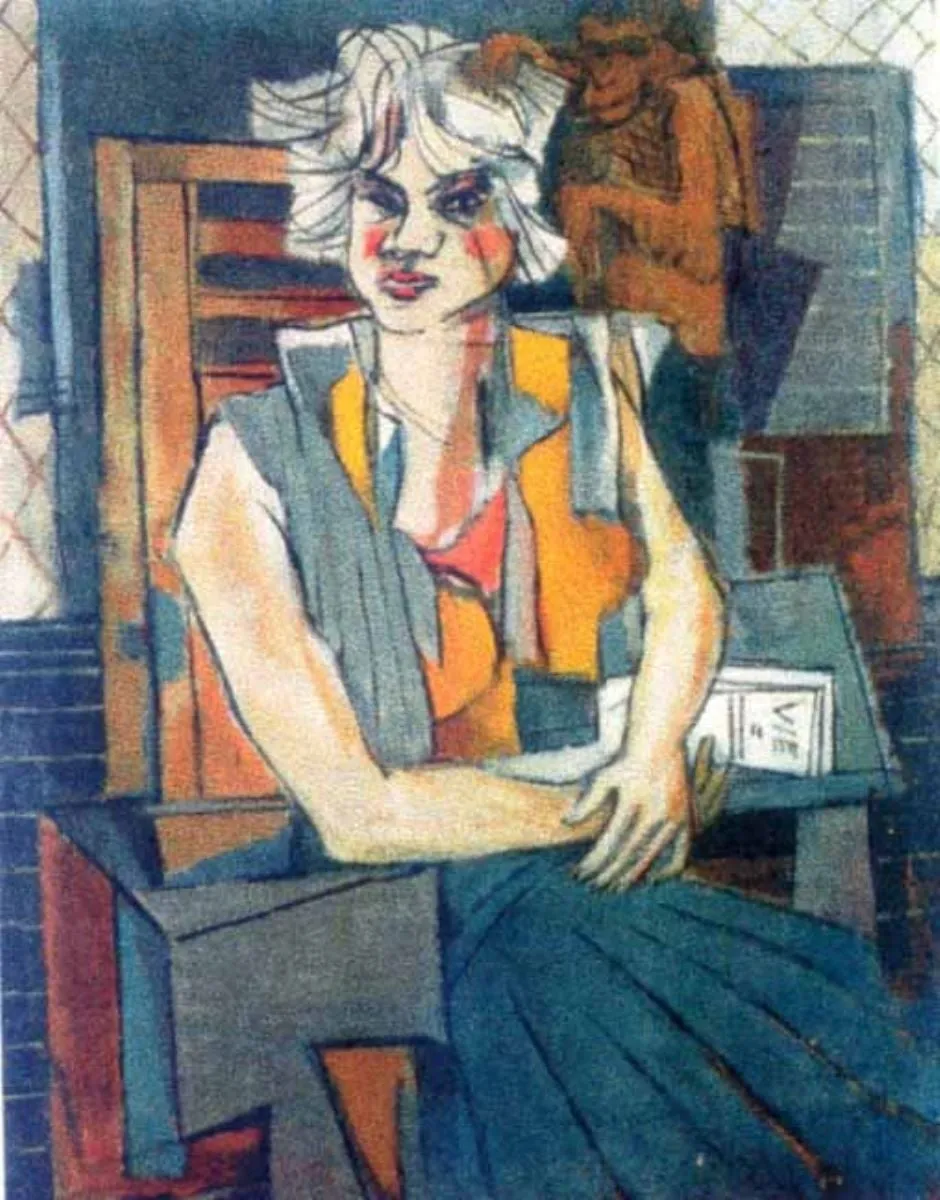
Portret de fată is an unspecified painting by Marcel Janco. It dates from 1930 and is held in the collection of the Art Museum of Constanta.
About this work
Overview
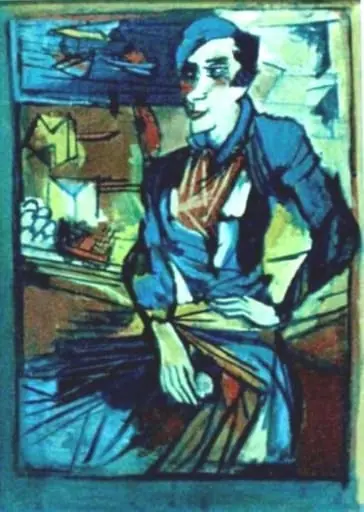
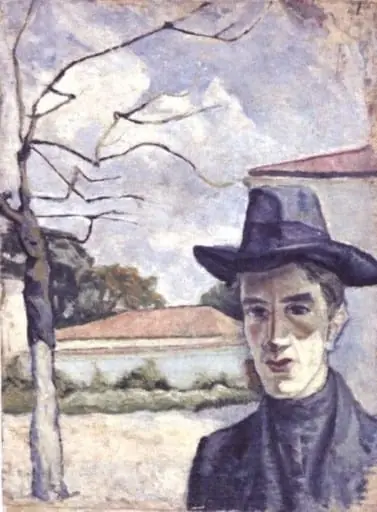
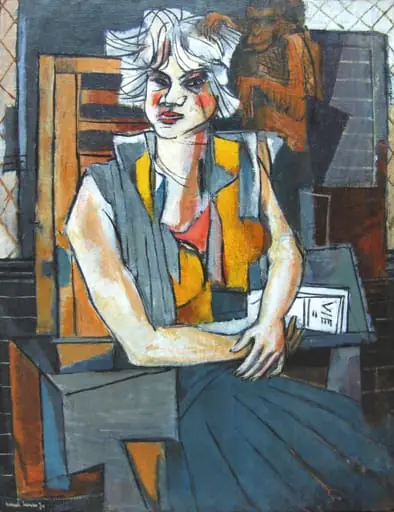
Painted in 1930 by Marcel Janco, Portret de fată is a portrait of a young woman rendered in a modernist idiom. The work resides in the Museum of Ethnography and exemplifies Janco’s engagement with early 20th-century avant-garde aesthetics. Its structured composition and deliberate abstraction reflect the influence of Cubist principles, while maintaining a direct, intimate focus on the subject.
Subject & Meaning
The subject is a young woman seated calmly, her gaze meeting the viewer without expression. Her posture is composed, arms resting along the chair’s armrests, suggesting stillness rather than narrative. The absence of overt emotion or context invites contemplation of identity and presence. The portrait avoids sentimentality, instead presenting the figure as a form to be observed, not interpreted.
Technique & Style
The palette—yellow, gray, blue, orange, and brown—is non-naturalistic, used to structure space rather than mimic reality.
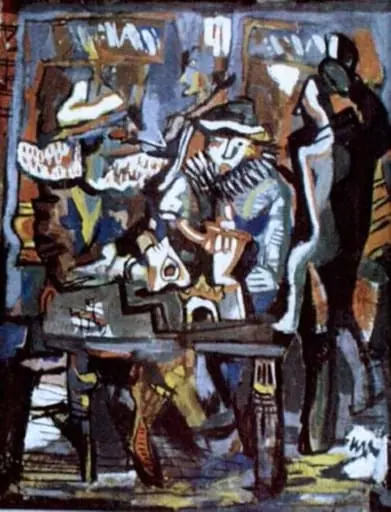
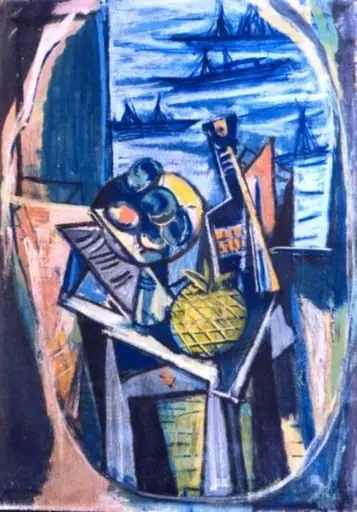
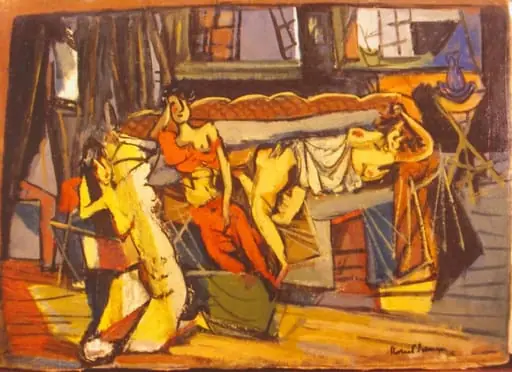
Janco employs angular planes and simplified contours to define the figure and background. Facial features are constructed with sharp lines and flat color fields, echoing Cubist fragmentation. The palette—yellow, gray, blue, orange, and brown—is non-naturalistic, used to structure space rather than mimic reality. The background’s layered hues create subtle depth without perspective, reinforcing the painting’s abstract logic.
History & Provenance
Created during Janco’s active period in Eastern European modernism, the painting entered the Museum of Ethnography’s collection in the decades following its completion. Its preservation there reflects institutional interest in regional avant-garde works. No documented exhibition history or private ownership prior to museum acquisition is widely recorded, suggesting it may have remained in the artist’s circle until donation.
Context
In 1930, Janco was deeply involved with Constructivist and Dadaist circles, though this portrait diverges from overt political or performative themes. The work aligns with broader interwar trends in Central Europe where artists reinterpreted portraiture through geometric abstraction. It reflects a shift from emotional expression toward formal inquiry, common among artists reassessing representation after World War I.
Legacy
Portret de fată stands as a quiet example of Janco’s contribution to Romanian modernism. While less known than his stage designs or theoretical writings, the painting illustrates his ability to merge structural rigor with human presence. It remains a reference point in studies of interwar Eastern European art, valued for its restrained innovation and formal clarity.
Artist & collection
Artist
Marcel Janco painted still lifes and portraits in the early 20th century, blending bold colors and geometric shapes.