Artwork
În curte
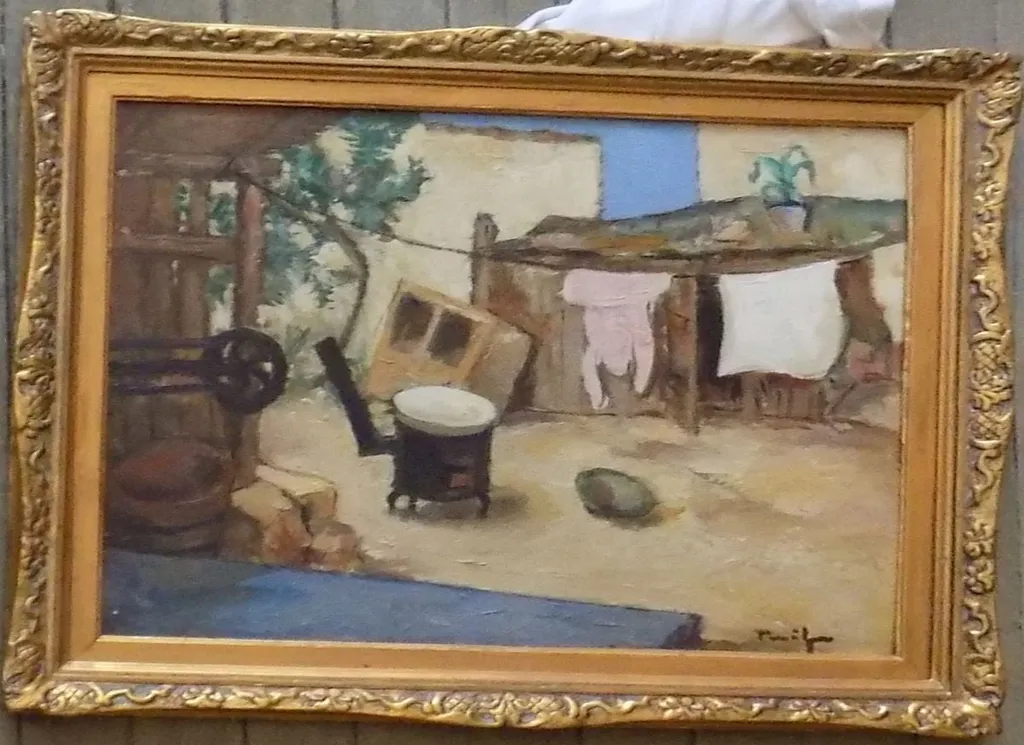
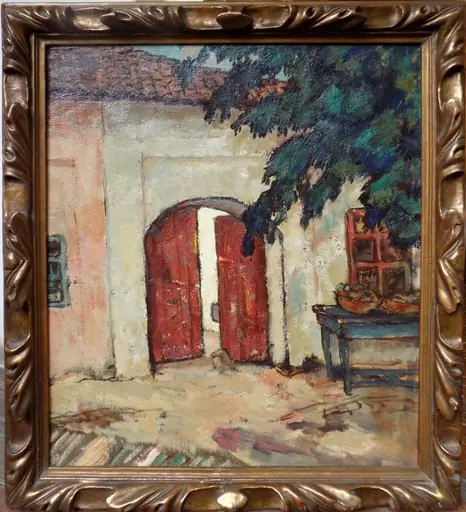
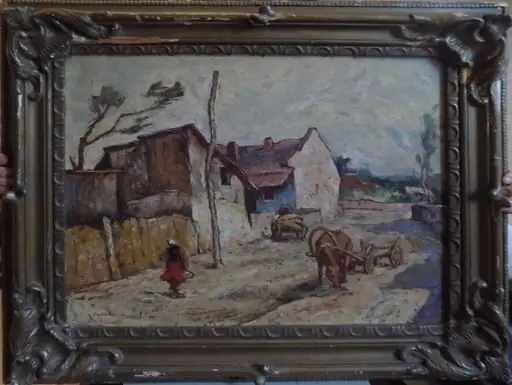
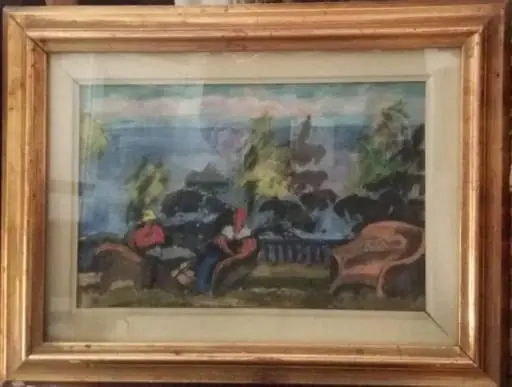
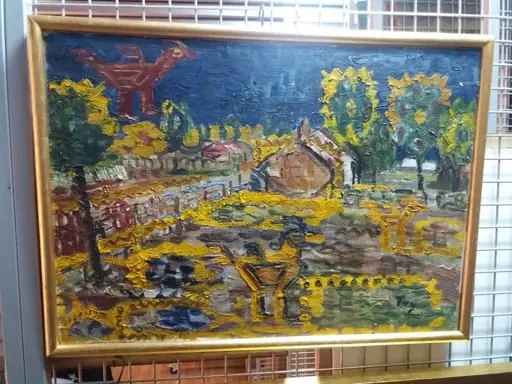
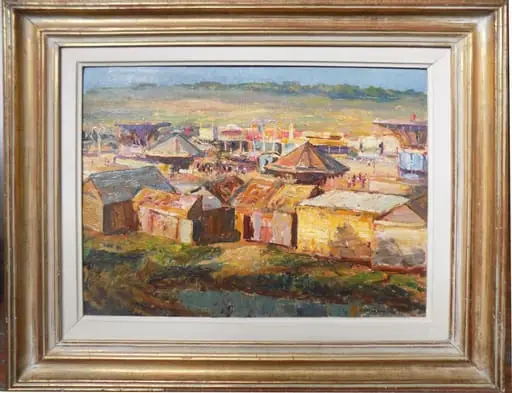
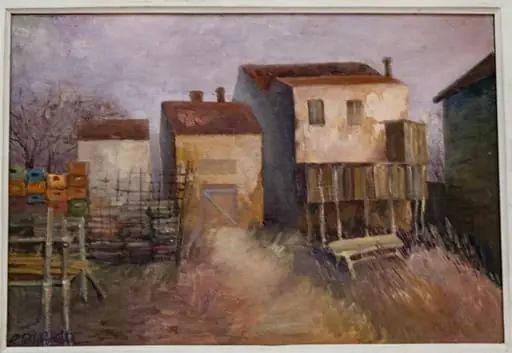
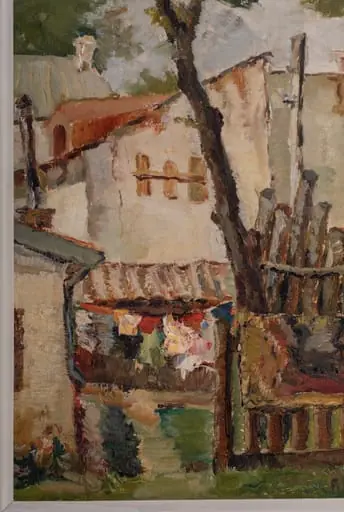
În curte is an unspecified painting by Nicolae Tonitza. It is held in the collection of the Bucharest Municipality Museum. This small-scale painting depicts a modest courtyard scene, rendered with loose, energetic brushwork.
About this work
Overview
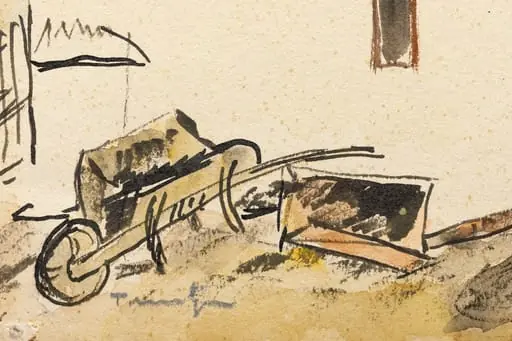
This small-scale painting depicts a modest courtyard scene, rendered with loose, energetic brushwork. The composition centers on utilitarian elements—a wooden shed, hanging laundry, a black bucket, and scattered bricks—set against a dusty ground and a lone tree. The palette is restrained, dominated by earthy browns, cool grays, and muted blues, evoking quiet rural life without embellishment.
Subject & Meaning
The scene captures an ordinary, unadorned domestic space, suggesting the rhythm of daily labor in a rural or lower-income setting. The hanging clothes and humble objects imply routine, quiet endurance. There is no narrative drama, only the stillness of a moment observed—emphasizing dignity in the mundane rather than idealizing the environment.
Technique & Style
The artist employed rapid, visible brushstrokes that convey immediacy rather than polish. Forms are suggested rather than meticulously defined, with texture emerging from layered pigment rather than fine detail. The handling of light and shadow is subtle, relying on tonal shifts to suggest volume and atmosphere, aligning with early 20th-century modernist tendencies toward expressive simplicity.
History & Provenance
Created by Romanian painter Nicolae Tonitza, this work belongs to a series of intimate courtyard studies from the 1920s. It reflects his shift toward rural subjects after earlier urban scenes. The painting remained in private Romanian collections until entering a public institution in the late 20th century, where it is now preserved as part of a broader documentation of interwar Romanian realism.
Context
Tonitza painted this during a period when Romanian artists were redefining national identity through depictions of everyday life, moving away from academic traditions. His focus on humble interiors and outdoor spaces aligned with broader European trends in Post-Impressionism and Expressionism, yet retained a distinctly local sensibility rooted in Moldavian and Wallachian vernacular environments.
Legacy
This work exemplifies Tonitza’s contribution to Romanian modernism by elevating ordinary scenes through emotional honesty and painterly freedom. While not widely exhibited internationally, it remains a touchstone in Romanian art history for its quiet intensity and rejection of romanticized folklore in favor of unvarnished observation.
Artist & collection
Artist
Nicolae Tonitza painted quiet still lifes and village scenes, often showing colorful vegetables on a table or blooming flowers in simple pots.