Artwork
Peisaj citadin
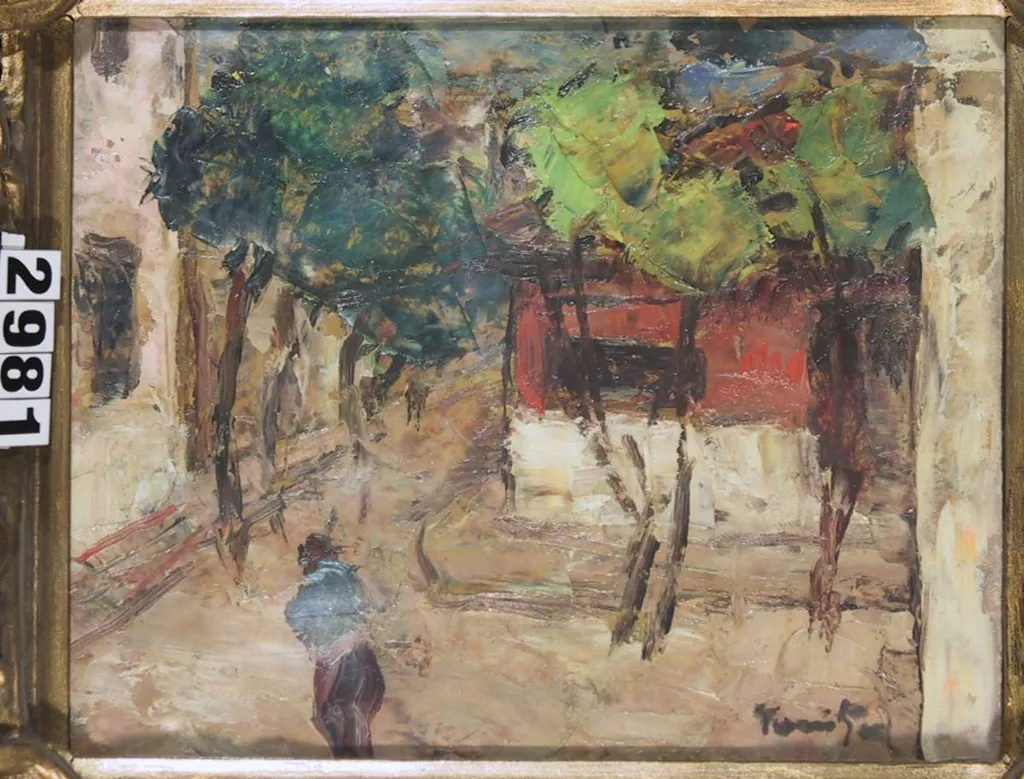
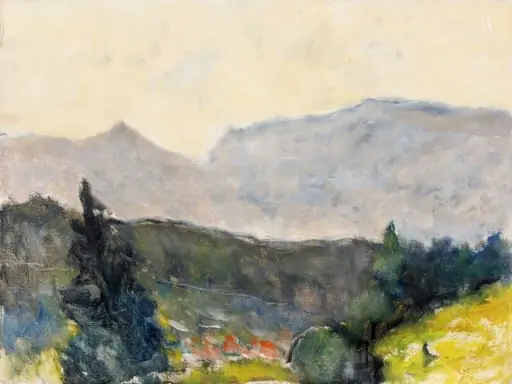
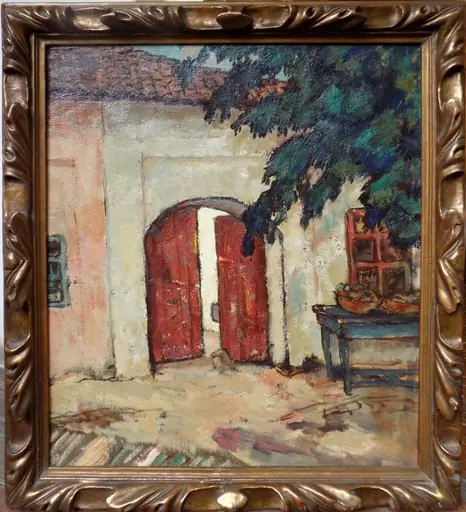
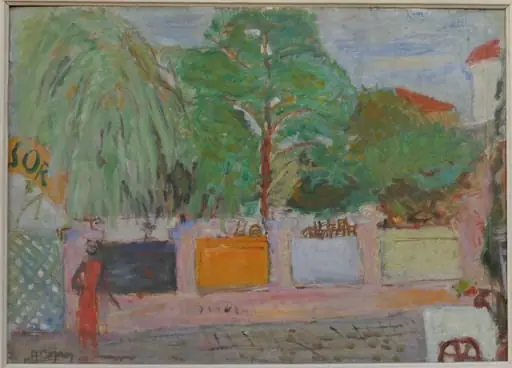
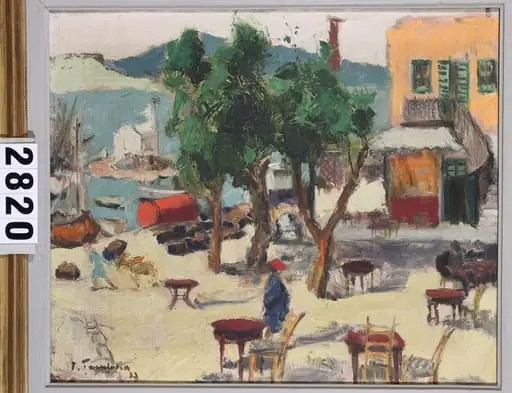
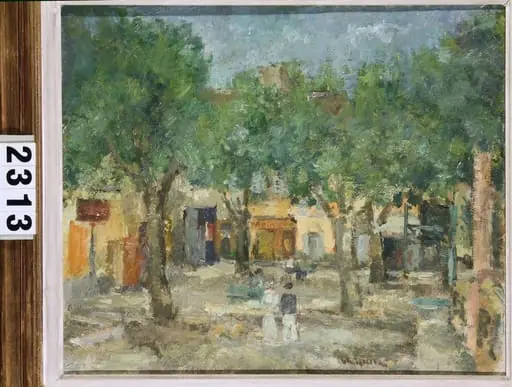
Peisaj citadin is an unspecified painting by Nicolae Tonitza. It is held in the collection of the Brukenthal National Museum. This painting presents a quiet urban scene, centered on a vivid red structure flanked by trees.
About this work
Overview
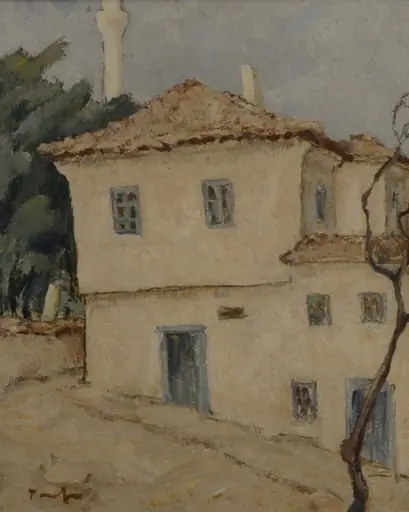
This painting presents a quiet urban scene, centered on a vivid red structure flanked by trees. A solitary figure walks along a street in the foreground, anchoring the composition in human scale. The artist employs layered brushwork and deliberate color contrasts to suggest spatial depth and tactile surfaces, evoking a still, introspective mood without narrative drama.
Subject & Meaning
The subject is an ordinary city street, rendered without bustling activity or architectural grandeur. The red building stands as a quiet anchor, while the lone pedestrian suggests solitude within the urban environment. The absence of overt symbolism invites reflection on everyday stillness, emphasizing atmosphere over event.
Technique & Style
Brushstrokes are textured yet controlled, building form through subtle shifts in hue rather than sharp outlines. Color is used to model space—warm reds recede slightly against cooler greens and grays, enhancing depth. The handling of light and shadow is soft, avoiding dramatic contrasts to sustain a meditative tone.
History & Provenance
The work is attributed to Nicolae Tonitza, a Romanian painter active in the early 20th century. Though specific provenance details are not documented here, it aligns with his known focus on urban and rural Romanian scenes during the interwar period, often capturing quiet moments with emotional restraint.
Context
Created during a time of rapid urbanization in Romania, the painting reflects a shift in artistic interest from idealized landscapes to the subdued rhythms of city life. Tonitza’s approach diverged from grand historical themes, instead valuing the dignity of ordinary spaces and solitary figures within them.
Legacy
Tonitza’s cityscapes, including this work, contributed to a broader Romanian modernist movement that prioritized personal observation over spectacle. His restrained palette and focus on quietude influenced later generations seeking to portray urban life with emotional honesty rather than romanticism.
Artist & collection
Artist
Nicolae Tonitza painted quiet still lifes and village scenes, often showing colorful vegetables on a table or blooming flowers in simple pots.