Artwork
Venețiană (Putana)
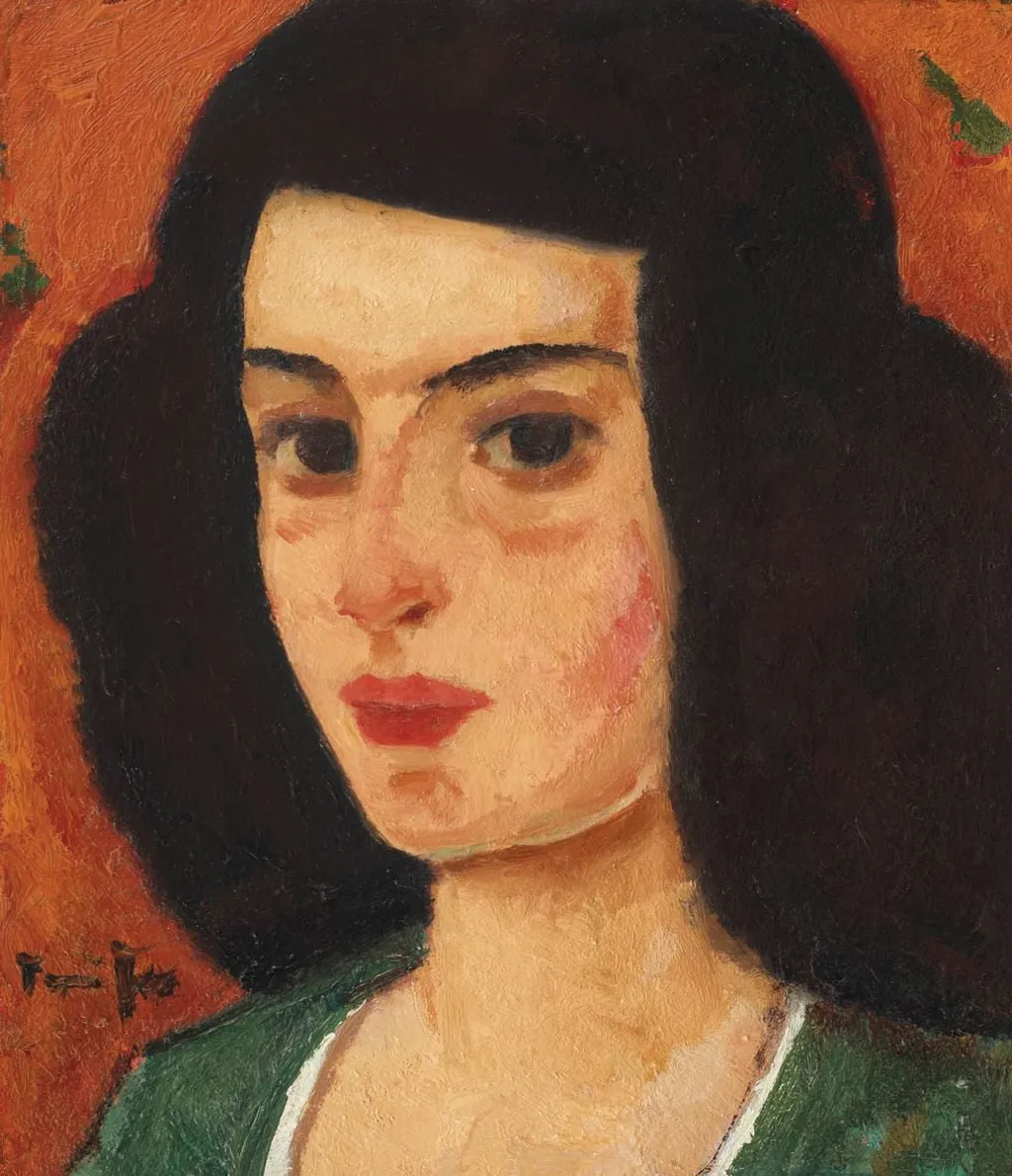
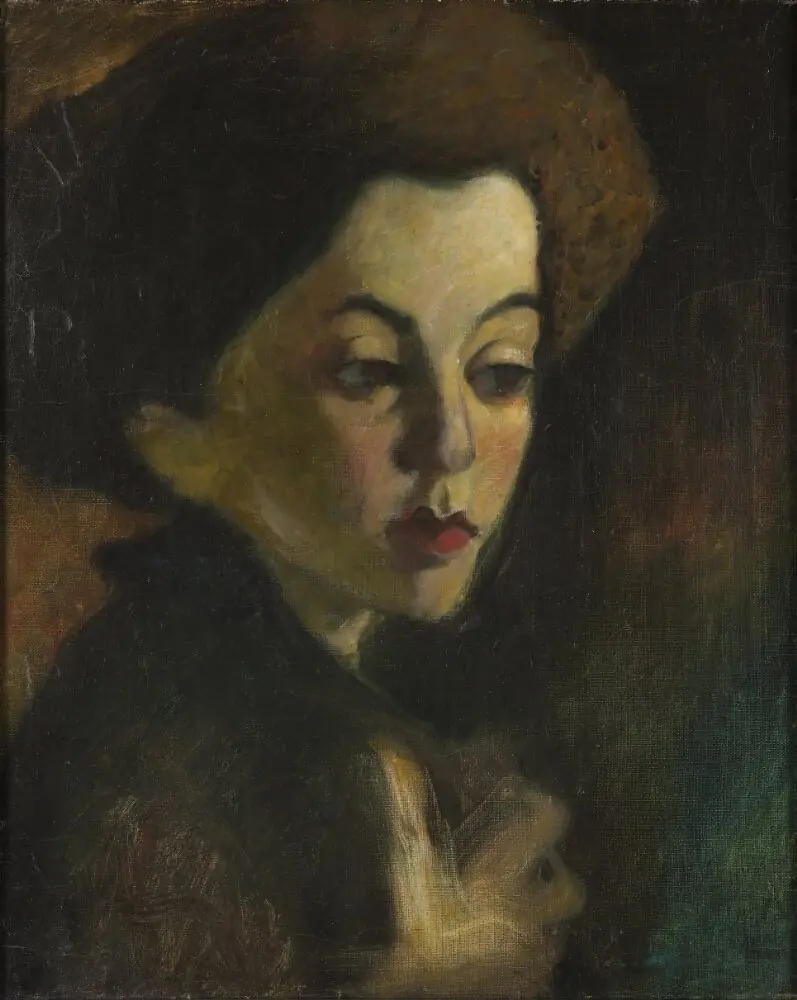
Venețiană (Putana) is an unspecified painting by Nicolae Tonitza. It dates from 1925 and is held in the collection of the Colecție particulară - Mureș.
About this work
Overview
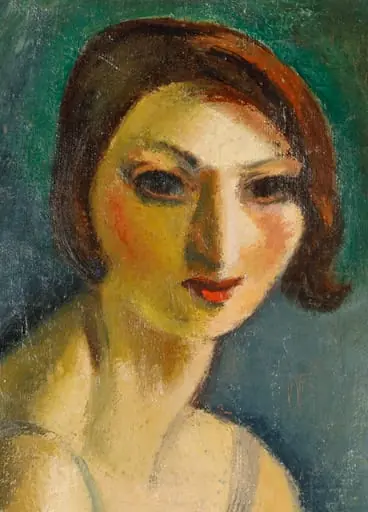
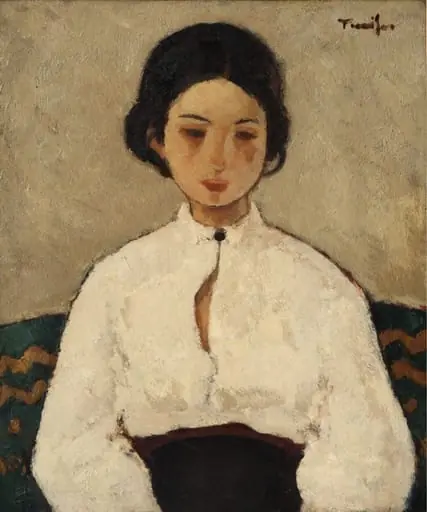
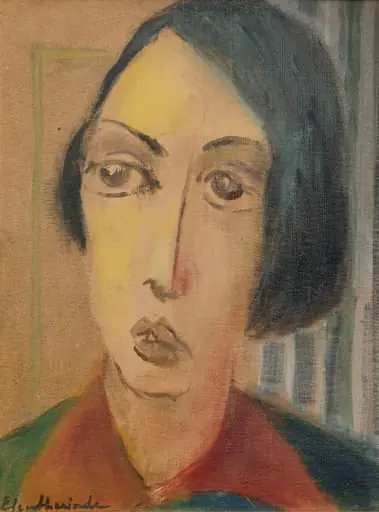
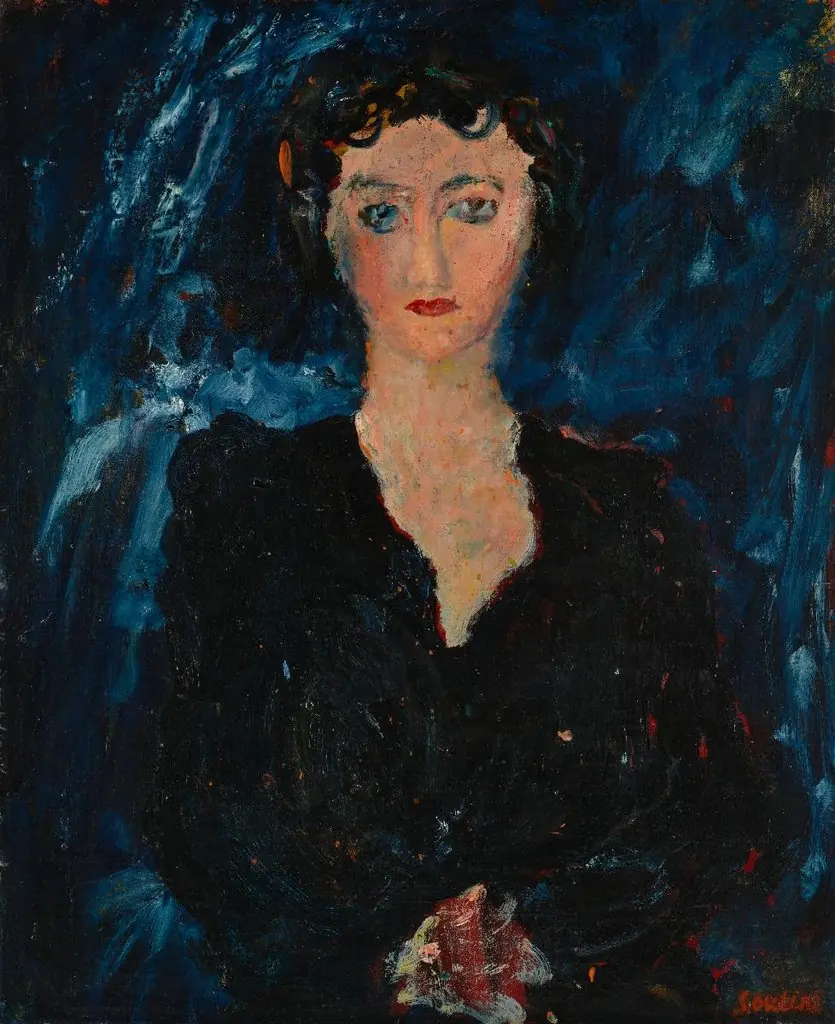
The work presents a close‑up view of a woman whose dark, wavy hair frames a warm‑toned face, highlighted by a faint pink on the cheeks and striking red lips.
Nicolae Tonitza’s painting *Venețiană (Putana)* dates from around 1925 and is part of the collection of the Museum of Ethnography. The work presents a close‑up view of a woman whose dark, wavy hair frames a warm‑toned face, highlighted by a faint pink on the cheeks and striking red lips. She wears a dark‑green blouse with a white collar against a flat orange background punctuated by a small green shape.
Subject & Meaning
The portrait captures a solitary female figure, her expression ambiguous and her attire modest yet vivid. The title’s reference to “Putana” suggests a provocative or morally charged reading, inviting viewers to consider themes of femininity, allure, and perhaps social judgment within the interwar Romanian context.
Technique & Style
Tonitza employs a pronounced impasto technique, building thick, textured brushstrokes especially in the hair and facial planes. This sculptural handling of paint creates a tactile surface that intensifies the contrast between the warm flesh tones and the saturated clothing, while the flat orange field behind the sitter emphasizes the figure’s three‑dimensionality.
History & Provenance
Created circa 1925, the canvas entered the Museum of Ethnography’s holdings at an unspecified date, where it remains on display. Its provenance traces back to Tonitza’s mature period, a time when he explored expressive portraiture alongside his more conventional works.
Context
The early 1920s marked a period of artistic experimentation in Romania, with Tonitza among those integrating modernist gestures such as impasto and bold coloration. *Venețiană (Putana)* reflects this climate, merging a traditional portrait format with a contemporary, textural approach that aligns with broader European trends in post‑World War I painting.
Artist & collection
Artist
Nicolae Tonitza painted quiet still lifes and village scenes, often showing colorful vegetables on a table or blooming flowers in simple pots.