Artwork
Baletistă culcată
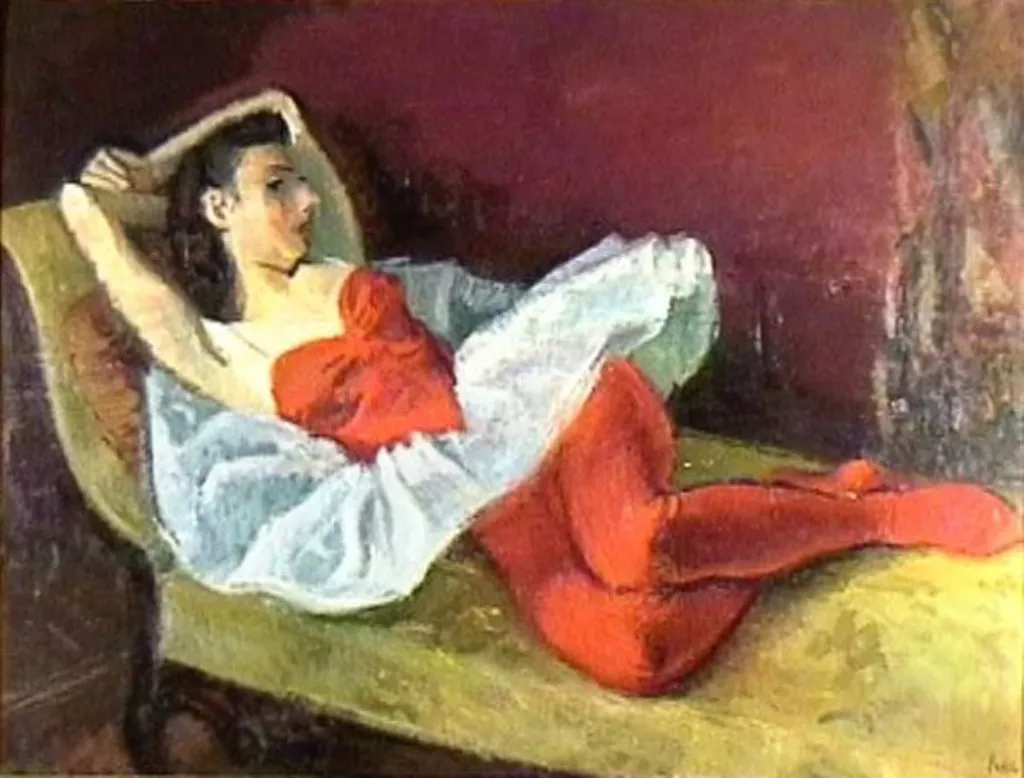
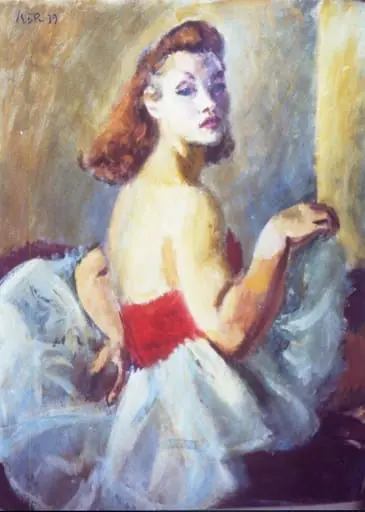
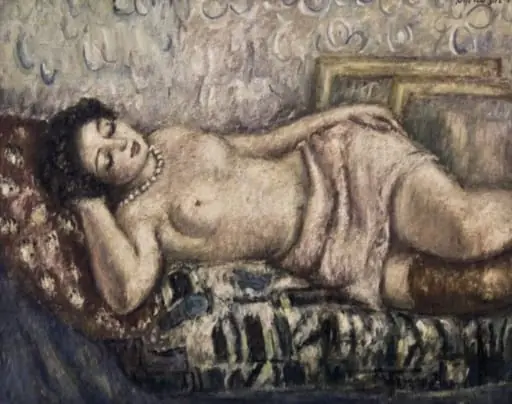
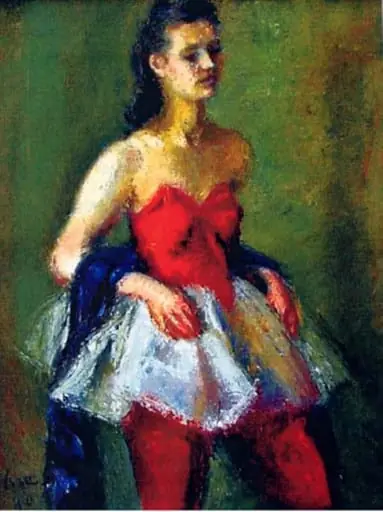
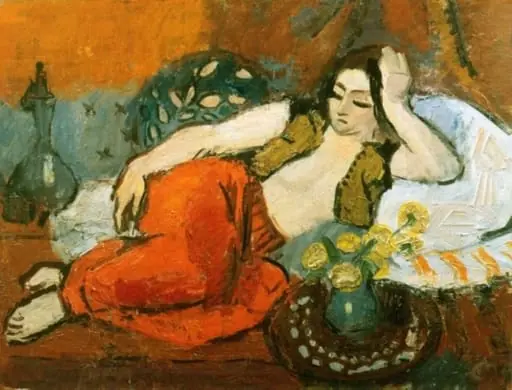
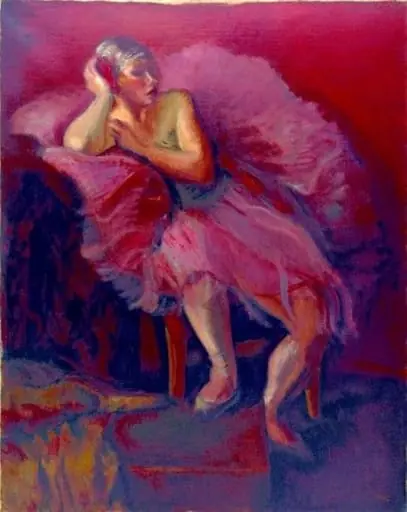
Baletistă culcată is an unspecified painting by Iosif Iser. It is held in the collection of the Moldova National Museum Complex. This image depicts a female dancer reclining on a chaise longue, her posture relaxed and introspective.
About this work
Overview
The composition emphasizes stillness, with soft modeling of skin and fabric suggesting a quiet, private moment rather than a staged performance.
This image depicts a female dancer reclining on a chaise longue, her posture relaxed and introspective. Dressed in a white skirt and red top, she rests her head on her left hand, knees gently bent. The deep red background envelops the figure, enhancing the sense of intimacy. The composition emphasizes stillness, with soft modeling of skin and fabric suggesting a quiet, private moment rather than a staged performance.
Subject & Meaning
The figure is not engaged in motion but in repose, suggesting a pause between performances or a personal interlude. Her casual pose and closed expression convey solitude rather than spectacle. The absence of theatrical elements shifts focus from dance as public art to the human experience behind it—fatigue, reflection, or quiet self-possession in a moment of rest.
Technique & Style
The artist employs muted contrasts to render texture: the white fabric drapes softly against the rich red backdrop, while the skin is rendered with gentle gradations of tone. Brushwork is subdued, avoiding sharp lines, to preserve the tenderness of the scene. Color is used not for drama but to unify space and mood, binding figure and environment in a single, warm atmosphere.
History & Provenance
The work’s origin and creator are not documented in the provided details. Its classification as an image rather than a painted object suggests it may derive from a photograph, illustration, or reproduction. No record of exhibition history or ownership is available, limiting contextual placement within a specific artistic movement or period.
Context
Depictions of dancers in repose emerged in late 19th- and early 20th-century art as interest grew in the private lives of performers. This image aligns with broader trends that moved beyond spectacle to explore vulnerability and routine. The Museum of Ethnography, referenced here, typically collects cultural artifacts, suggesting this image may have been acquired as documentation of daily life in a performing arts community.
Legacy
Though not attributed to a known artist, the image contributes to a visual record of dancers outside the spotlight. Its quiet tone offers a counterpoint to more dynamic portrayals of ballet, preserving an understated aspect of performance culture. Such works, often overlooked, help broaden understanding of artistic labor beyond the stage.
Artist & collection
Artist
Iosif Iser painted everyday life with a focus on people and places. His 1933 work *Paris. Strada Mouffetard* shows a lively street scene in Paris, while *Nud pe fotoliu* depicts a seated nude figure. His brushwork…