Artwork
Balerină odihnindu-se
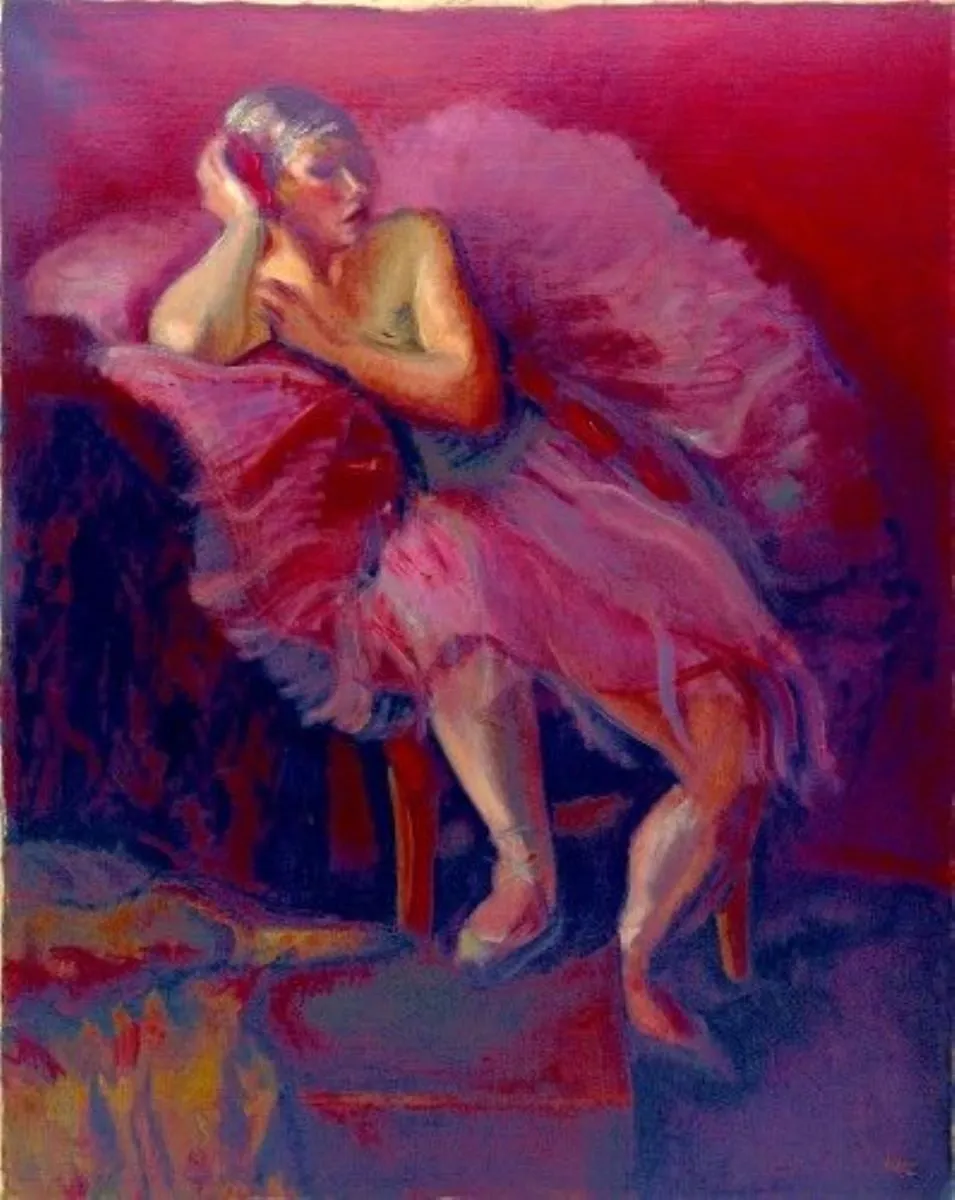
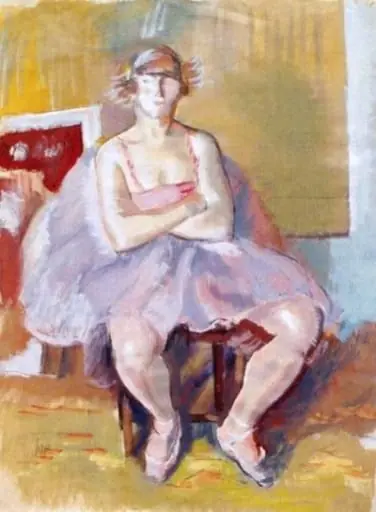
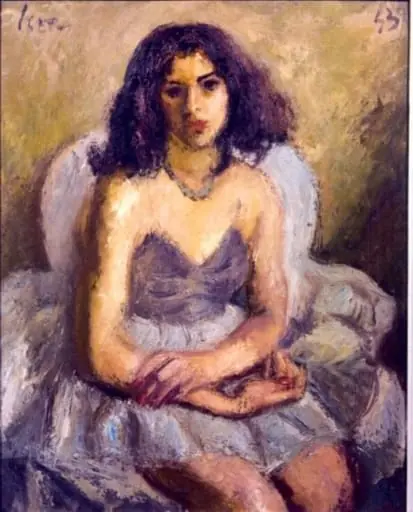
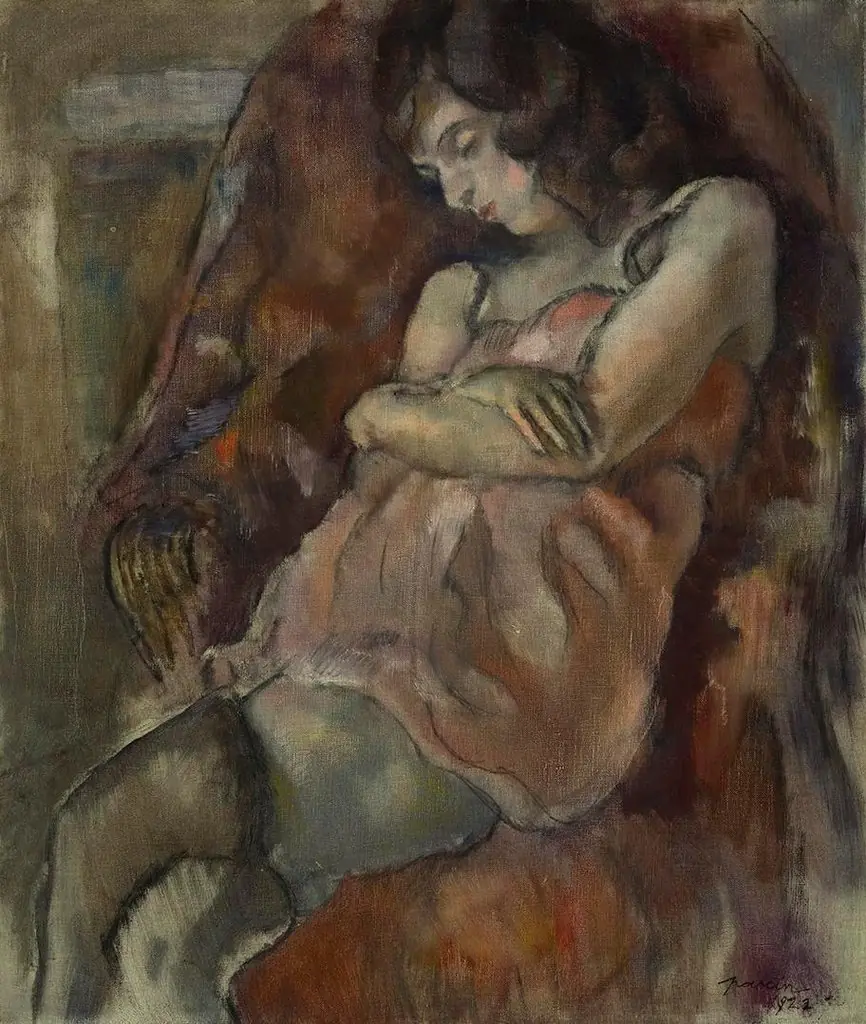
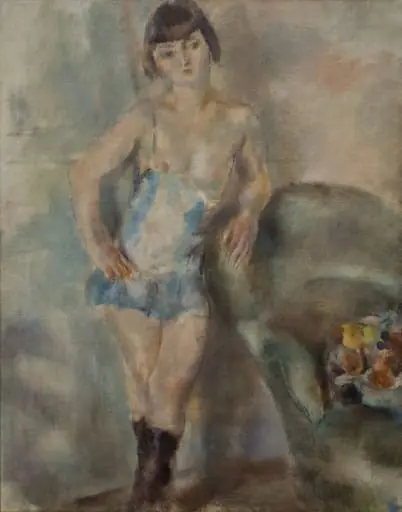
Balerină odihnindu-se is an unspecified painting by Iosif Iser. It is held in the collection of the Colecție particulară - Elveția. The painting portrays a nude ballerina resting on a chair, her posture conveying quiet fatigue after performance.
About this work
Overview
The composition focuses on bodily presence rather than narrative, inviting contemplation of the dancer’s private moment.
The painting portrays a nude ballerina resting on a chair, her posture conveying quiet fatigue after performance. Dressed in a pink tutu, she turns slightly to the right, one hand near her head, the other resting gently on her lap. The deep red background isolates her form, emphasizing stillness amid motion implied by her costume and position. The composition focuses on bodily presence rather than narrative, inviting contemplation of the dancer’s private moment.
Subject & Meaning
The subject is a dancer in repose, stripped of theatricality and presented in intimate vulnerability. Her nudity, paired with the tutu, juxtaposes the idealized stage persona with the physical reality of the performer. The raised hand suggests exhaustion or a moment of self-comfort, transforming the figure from spectacle to person. The scene evokes the unseen labor behind performance, grounding the elegance of ballet in human fragility.
Technique & Style
The artist employs a restrained palette, contrasting the soft pink of the tutu against the saturated red backdrop to heighten visual tension. Light falls subtly across the figure’s form, modeling volume without dramatic chiaroscuro. Brushwork is smooth, favoring clarity of contour over texture, reinforcing the calm stillness of the moment. The lack of detailed environment directs focus entirely to the body’s quiet presence.
History & Provenance
The work’s origins are tied to late 19th-century French artistic circles where dancers were frequent subjects, particularly among painters interested in movement and the body. While specific ownership records are not documented here, its style aligns with academic and impressionist approaches of the period. The painting likely emerged from private commissions or studio studies rather than public exhibition.
Context
During the late 1800s, ballet dancers—especially women—were commonly depicted in art, often as symbols of grace or sensuality. This work diverges from the glamorous portrayals of the stage, instead capturing a moment of solitude. It reflects broader cultural interest in the private lives of performers, as well as evolving attitudes toward the female body in art, moving beyond idealization toward psychological nuance.
Legacy
The painting contributes to a tradition of depicting dancers in unguarded moments, influencing later artists who sought to reveal the humanity behind performance. Its quiet intensity and focus on posture over action set it apart from more theatrical representations. Though not widely reproduced, it remains a quiet reference in studies of the modern nude and the intersection of labor and aesthetics in visual culture.
Artist & collection
Artist
Iosif Iser painted everyday life with a focus on people and places. His 1933 work *Paris. Strada Mouffetard* shows a lively street scene in Paris, while *Nud pe fotoliu* depicts a seated nude figure. His brushwork…