Artwork
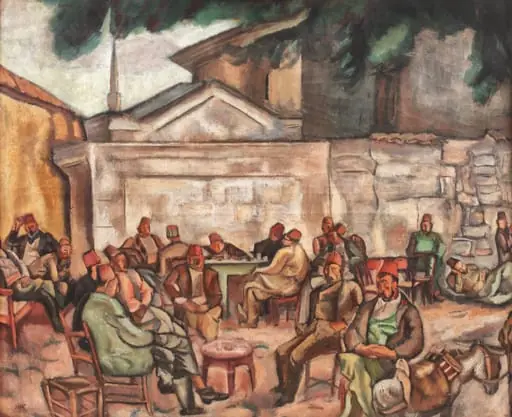
Cafenea la Balcic
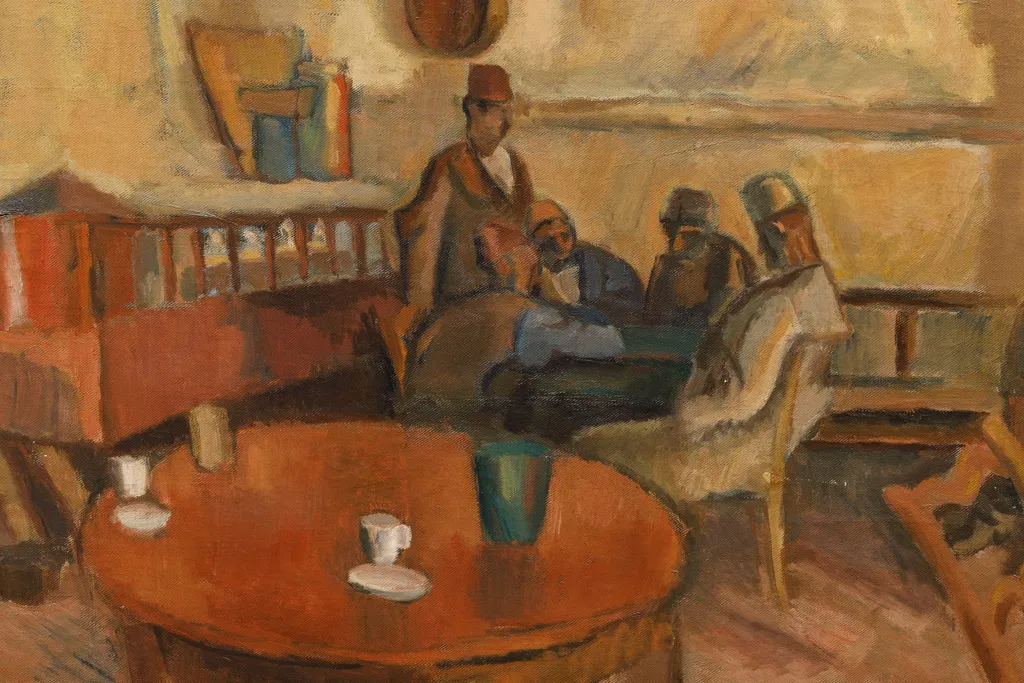
Cafenea la Balcic is an unspecified painting by Iosif Iser. It dates from 1850 and is held in the collection of the National Museum of Art of Romania.
About this work
Overview
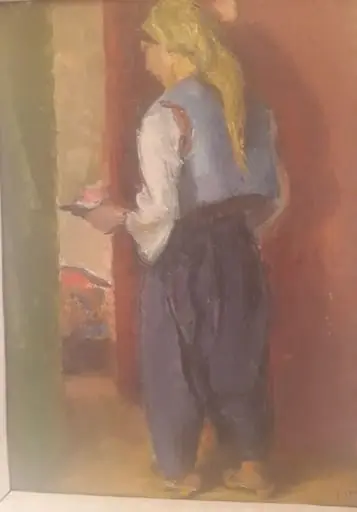
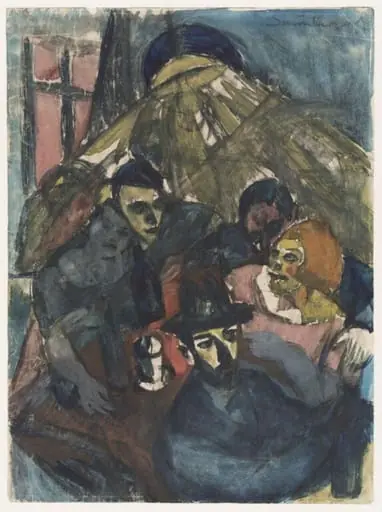
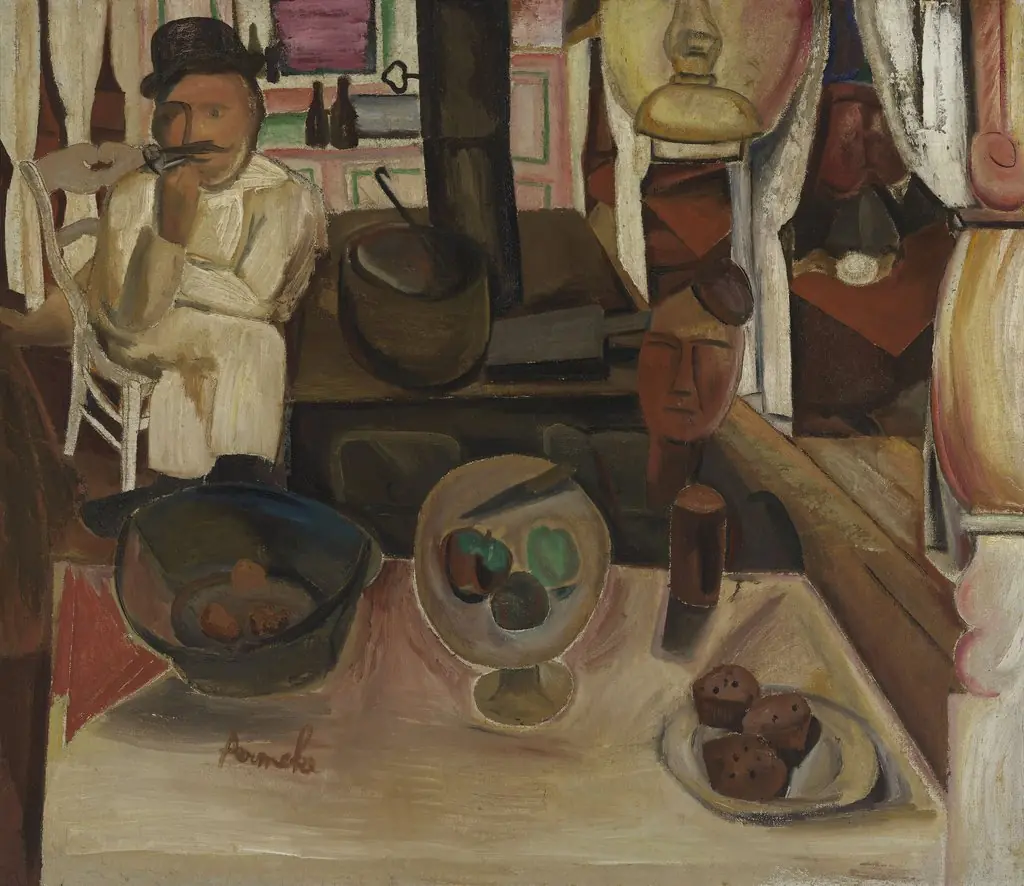
Iosif Iser’s painting *Cafenea la Balcic*, dated around 1850, portrays an intimate interior of a modest café. The composition centers on a round table occupied by three figures, with a simple backdrop of plain walls and a counter lined with shelves. Everyday objects—a green bucket, a coffee cup on a saucer—anchor the scene in a domestic, mid‑19th‑century setting.
Subject & Meaning
The work captures a quiet moment of social interaction, emphasizing the ordinary rhythms of café life. The central figure, a hat‑clad man in a coat, appears engaged with his companions, who recline comfortably in their chairs. The subdued arrangement suggests a focus on communal leisure rather than narrative drama, inviting viewers to contemplate the subtle dynamics of public gathering spaces.
Technique & Style
Iser employs a pronounced impasto technique, applying thick, tactile brushstrokes that give the surface a palpable texture. Warm hues dominate the palette, with rich reds and earthy browns creating a cozy atmosphere. The visible strokes and saturated colors convey both the materiality of paint and the warmth of the café interior, aligning the piece with mid‑century realist tendencies.
History & Provenance
Created circa 1850, *Cafenea la Balcic* reflects Iser’s interest in everyday Romanian scenes during a period of burgeoning national artistic identity. While specific ownership records are limited, the painting has been documented in several catalogues of 19th‑century Romanian art and is held in a public collection that focuses on regional historical works.
Own this work as a print
Artist & collection
Artist
Iosif Iser painted everyday life with a focus on people and places. His 1933 work *Paris. Strada Mouffetard* shows a lively street scene in Paris, while *Nud pe fotoliu* depicts a seated nude figure. His brushwork…