Artwork
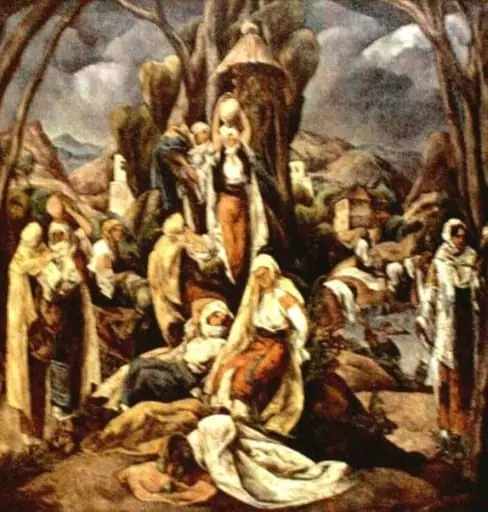
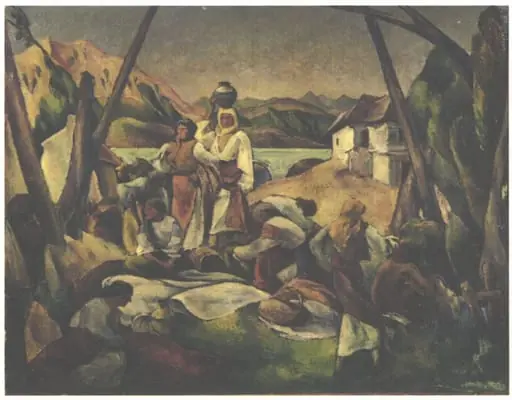
Familie de tătari
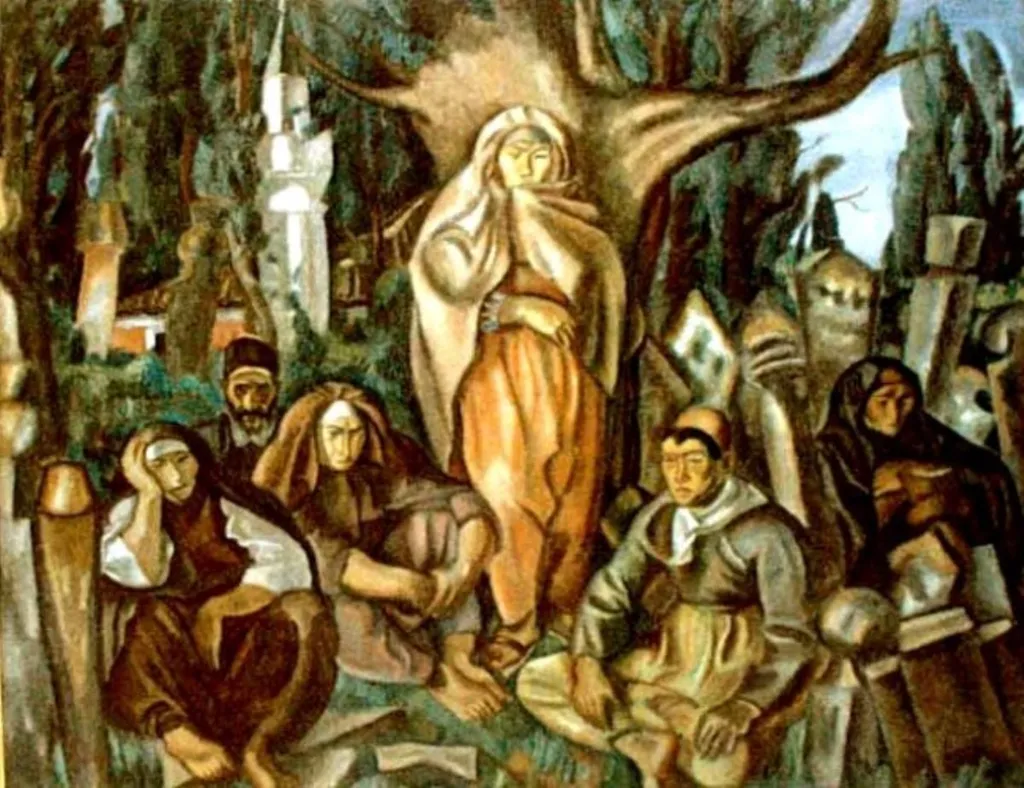
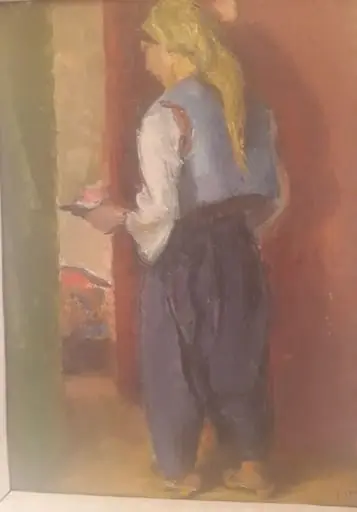
Familie de tătari is an unspecified painting by Iosif Iser. It dates from 1921 and is held in the collection of the National Museum of Art of Romania.
About this work
Overview
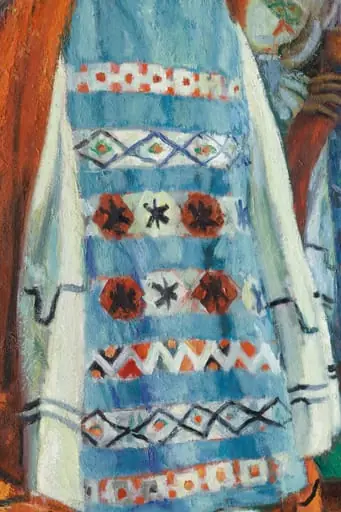
Familie de tătari, painted by Iosif Iser in 1921, presents a small gathering of figures beneath a solitary tree within a dimly lit forest. The composition is dominated by a muted palette and a stark contrast between illuminated and shadowed areas, drawing the viewer’s eye to the central standing figure whose faint glow distinguishes them from the surrounding group.
Subject & Meaning
The work depicts a family or community of individuals dressed in modest, traditional attire, their expressions conveying fatigue or melancholy. The central figure, bathed in a gentle light, appears detached from the others, suggesting a possible symbolic role—perhaps as a focal point of hope, memory, or an inner consciousness amid collective weariness.
Technique & Style
Iser employs chiaroscuro to heighten drama, using deep shadows to envelop the forest and a subtle, almost ethereal illumination to isolate the standing figure. The brushwork remains restrained, emphasizing form over detail, while the interplay of light and dark creates a three‑dimensional sense of space and emotional tension.
History & Provenance
Created shortly after World War I, the painting reflects the artist’s post‑war period in Romania. Although specific ownership records are limited, the piece has been documented in several catalogues of Iser’s oeuvre and is recognized as part of his early 1920s output, marking a phase of introspective, socially aware subject matter.
Artist & collection
Artist
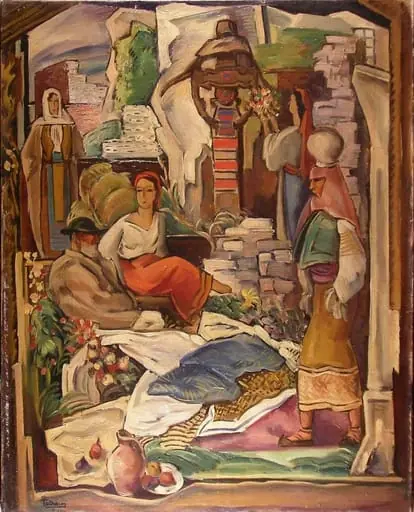
Iosif Iser painted everyday life with a focus on people and places. His 1933 work *Paris. Strada Mouffetard* shows a lively street scene in Paris, while *Nud pe fotoliu* depicts a seated nude figure. His brushwork…