Artwork
Femeie cu jachetă galbenă în fotoliu
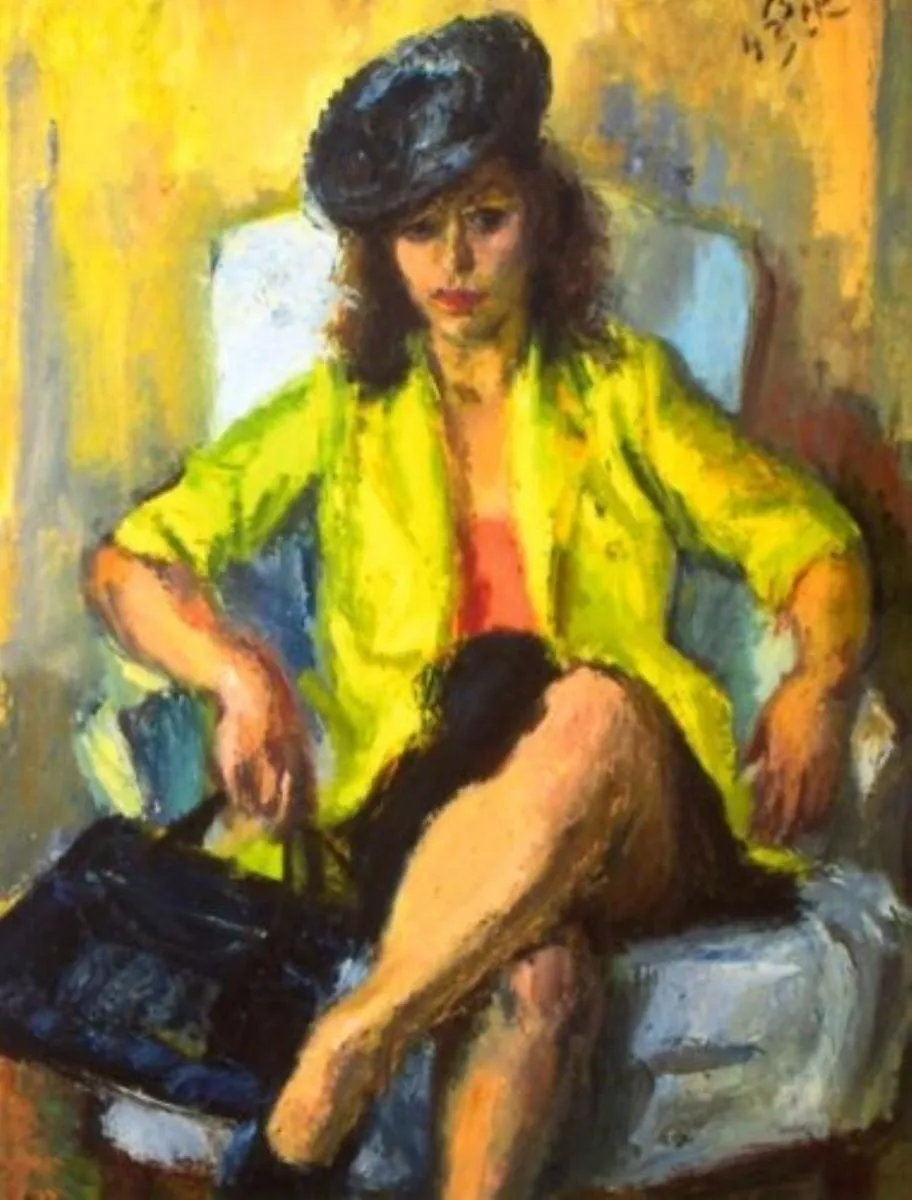
Femeie cu jachetă galbenă în fotoliu is an unspecified painting by Iosif Iser. It dates from 1943 and is held in the collection of the Argeș County Museum.
About this work
Overview
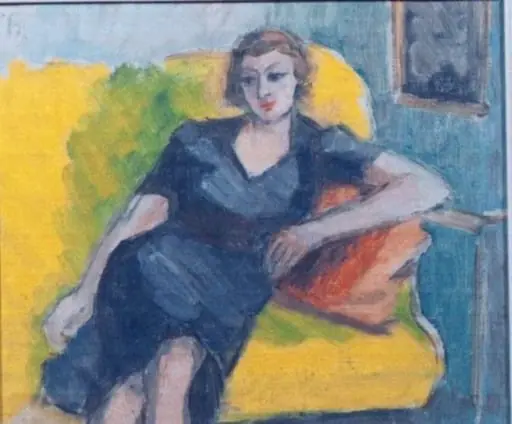
Painted in 1943 by Iosif Iser, this portrait presents a seated woman in a domestic setting. The composition centers on her stillness, framed by a warm yellow background that merges with her jacket, creating a unified tonal field. The work avoids dramatic gesture, instead emphasizing quiet presence through restrained posture and muted spatial depth.
Subject & Meaning
The woman, dressed in a yellow jacket, black hat, red top, and black skirt, sits with legs crossed, conveying a sense of composed ease. Her calm expression and lack of direct gaze invite introspection rather than engagement. The painting does not narrate a specific event but captures a moment of private repose, suggesting an interior life untouched by external demands.
Technique & Style
Iser employs soft transitions between colors, avoiding sharp contours to blur the boundaries between figure and background. The yellow tones of jacket and wall merge subtly, while the red and black garments provide contrast without disruption. Brushwork is deliberate but unobtrusive, favoring atmospheric harmony over detailed rendering, reinforcing the painting’s meditative tone.
History & Provenance
Created during World War II, the painting reflects a period of social tension in Romania, yet its subject remains insulated from political context. Its early provenance is undocumented in public records, and it remained in private hands until entering institutional collections in the late 20th century. No exhibition history is widely recorded prior to the 1980s.
Context
Iser worked within the Romanian interwar modernist tradition, influenced by Post-Impressionism and early Expressionism. Unlike contemporaries who emphasized social realism, he often turned to intimate portraits, focusing on psychological stillness. This work aligns with his broader interest in solitary figures, rendered with emotional restraint amid a rapidly changing cultural landscape.
Legacy
Though not widely reproduced, the painting exemplifies Iser’s quieter approach to modern portraiture. It stands as a testament to his ability to convey emotional nuance through color and posture rather than narrative. Later Romanian artists have cited his use of tonal unity and psychological subtlety as influential in developing a distinct national mode of figurative painting.
Artist & collection
Artist
Iosif Iser painted everyday life with a focus on people and places. His 1933 work *Paris. Strada Mouffetard* shows a lively street scene in Paris, while *Nud pe fotoliu* depicts a seated nude figure. His brushwork…