Artwork
Peisaj la Constantinopol
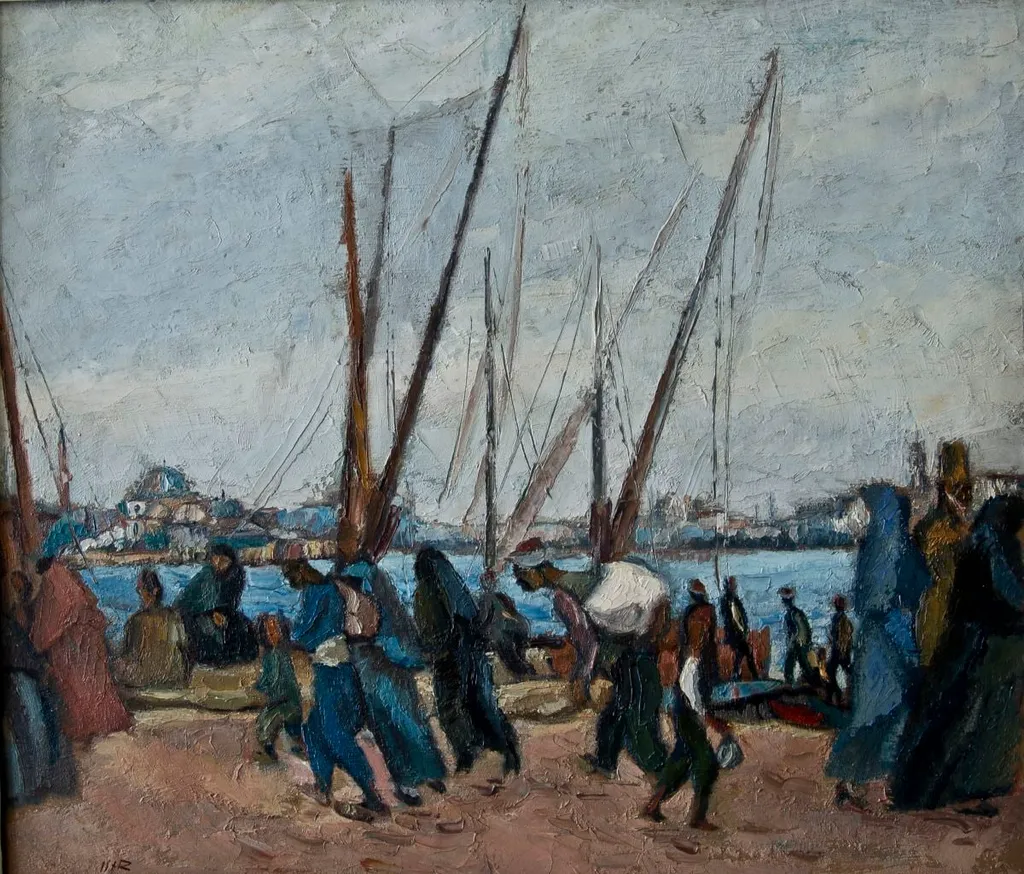
Peisaj la Constantinopol is an unspecified painting by Iosif Iser. It dates from 1919 and is held in the collection of the National Museum of Art of Romania.
About this work
Overview
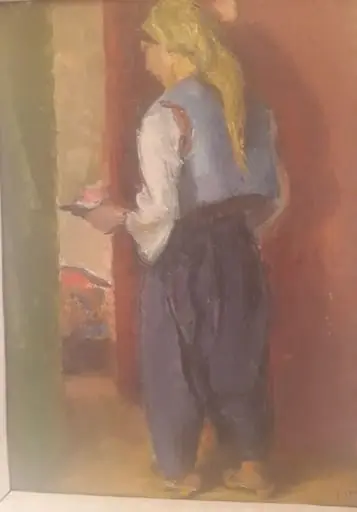
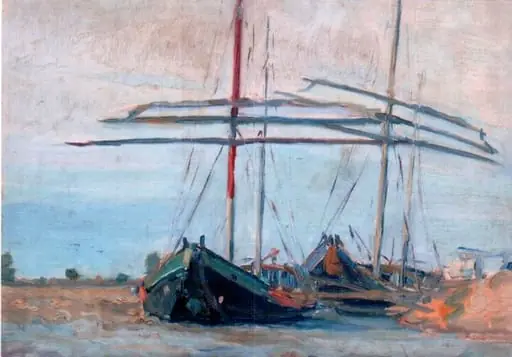
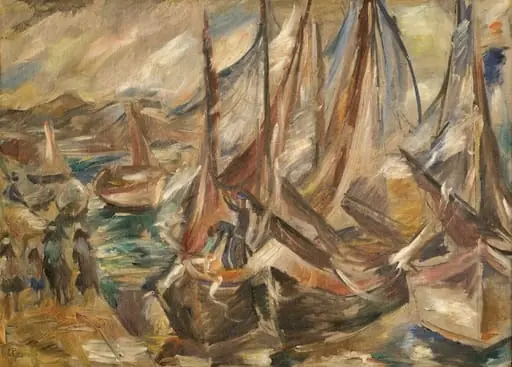
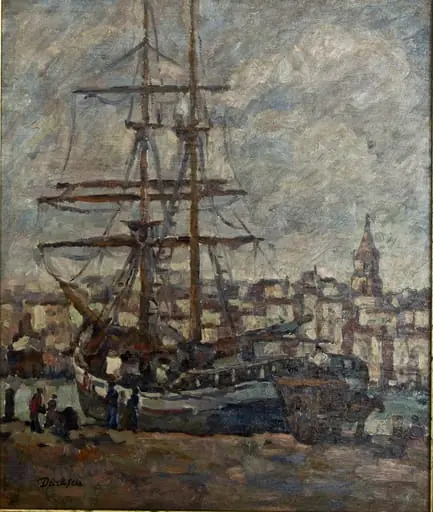
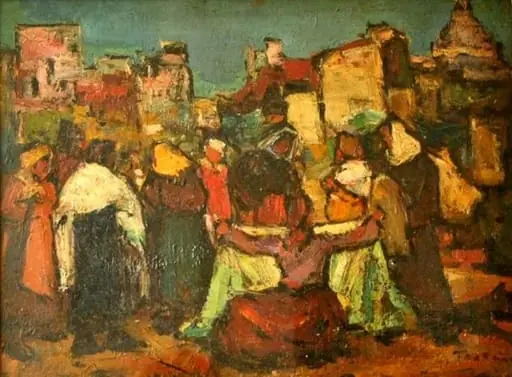
Painted in 1919 by Iosif Iser, this work depicts a quiet yet active waterfront in Constantinople. The composition centers on figures moving along the shore, their forms rendered with energetic brushwork. The scene balances daily life with the stillness of the harbor, using a restrained palette of blues and earth tones to evoke a subdued, atmospheric mood.
Subject & Meaning
The painting captures ordinary people in traditional attire, carrying goods along the waterfront, suggesting a routine of labor and movement. The presence of moored vessels with tall masts implies a port engaged in commerce or transit. There is no overt narrative, but the quiet rhythm of the figures and the calm waters convey a sense of continuity amid post-war uncertainty.
Technique & Style
Iser employs loose, textured brushstrokes to build form and atmosphere, avoiding fine detail in favor of expressive gesture. The thick application of paint, particularly in the water and robes, adds tactile depth. A limited range of blues and browns unifies the scene, while subtle shifts in tone suggest shifting light and the cool haze of a maritime sky.
History & Provenance
Created shortly after the end of World War I and the fall of the Ottoman Empire, the painting reflects Iser’s engagement with Constantinople’s changing urban landscape. It likely stems from his time in the city during a period of transition. The work remains within private collections, with no public institutional record of its early ownership.
Context
Iser, a Romanian artist of Jewish heritage, was part of a generation documenting Eastern European and Ottoman urban life in the early 20th century. His approach aligned with post-impressionist tendencies, emphasizing emotional tone over realism. This painting fits within a broader interest among regional artists in capturing transient, everyday moments amid political upheaval.
Legacy
Though not widely exhibited, Iser’s works, including this one, contribute to the visual record of Constantinople’s final years as a multiethnic metropolis. His focus on ordinary scenes and expressive technique distinguishes him from more formal academic painters of the era. His oeuvre remains a quiet but significant part of early 20th-century Balkan art.
Artist & collection
Artist
Iosif Iser painted everyday life with a focus on people and places. His 1933 work *Paris. Strada Mouffetard* shows a lively street scene in Paris, while *Nud pe fotoliu* depicts a seated nude figure. His brushwork…