Artwork
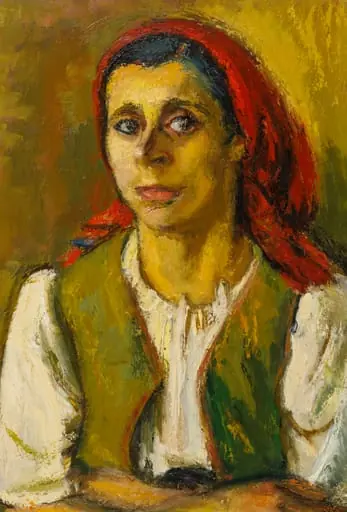
Portret de țărancă - Hilda
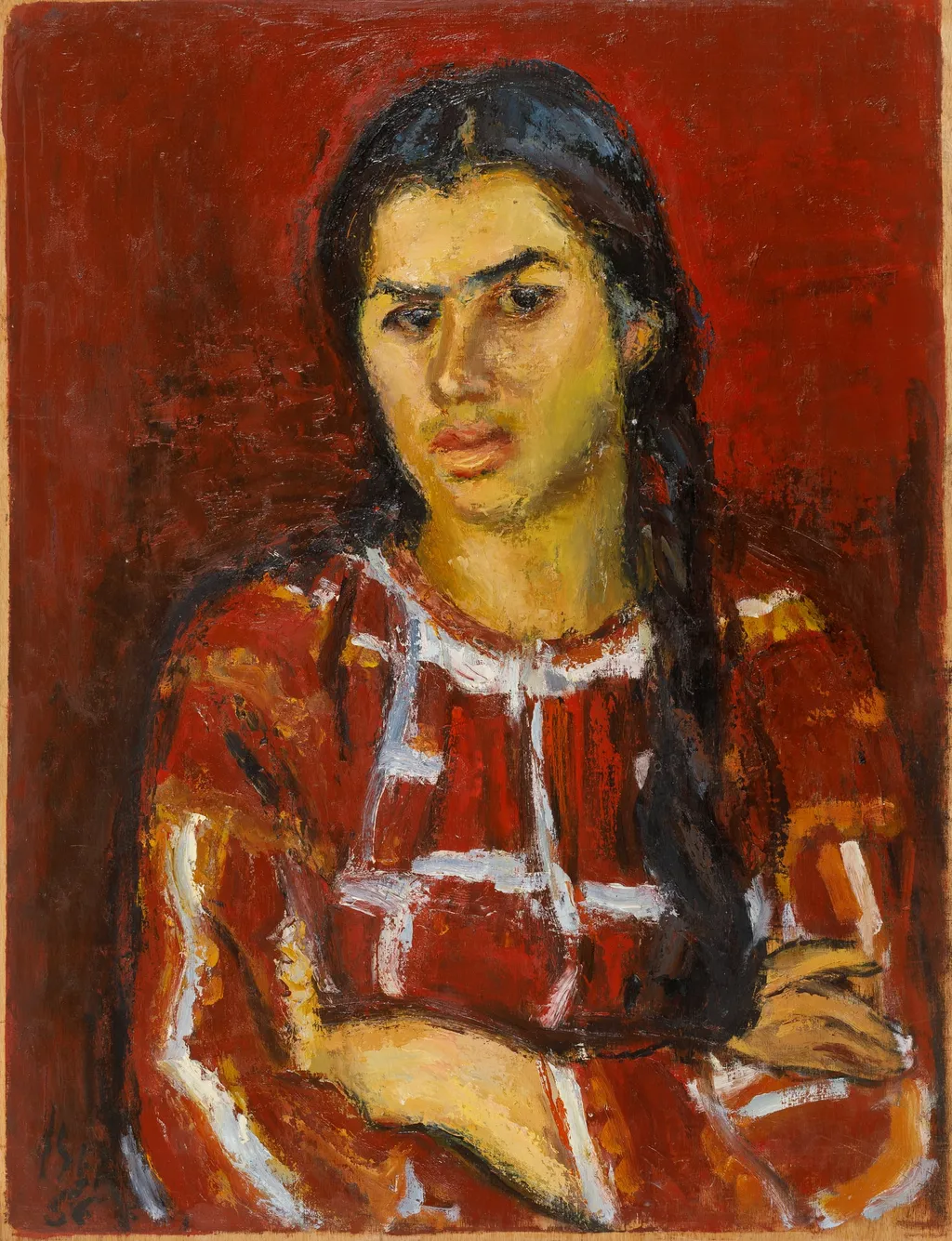
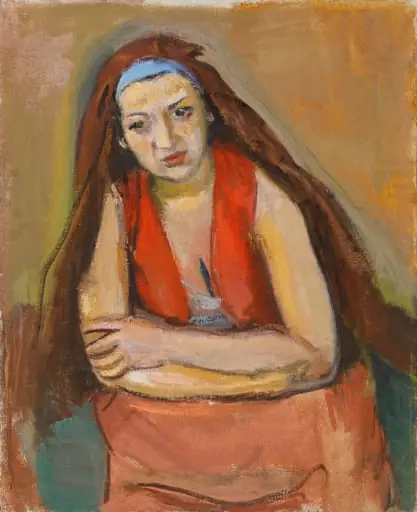
Portret de țărancă - Hilda is an unspecified painting by Iosif Iser. It dates from 1956 and is held in the collection of the National Museum of Art of Romania.
About this work
Overview
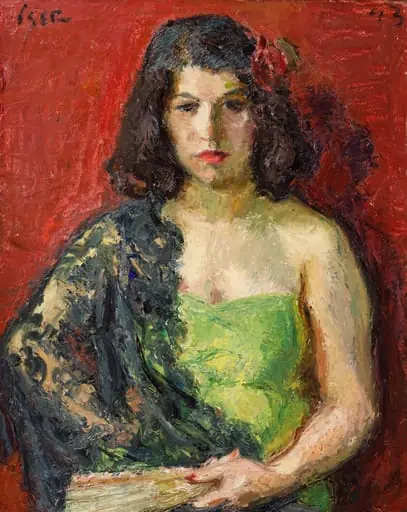
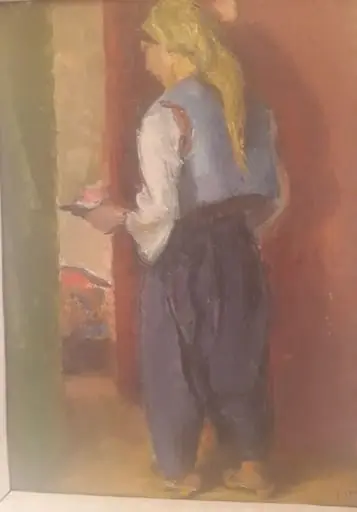
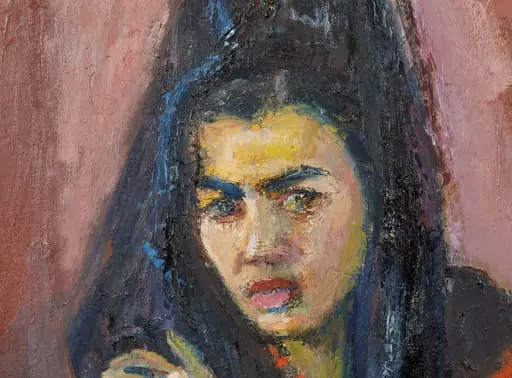
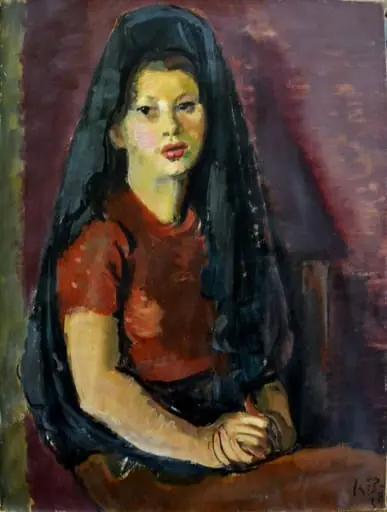
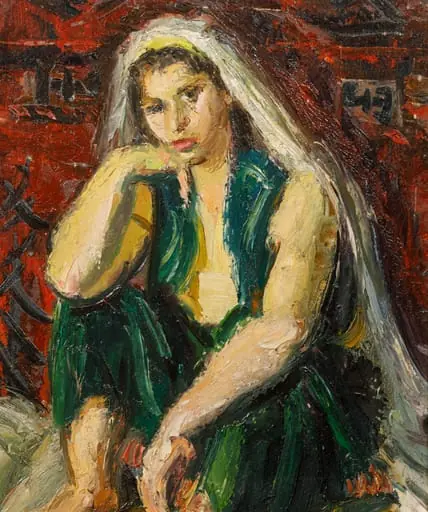
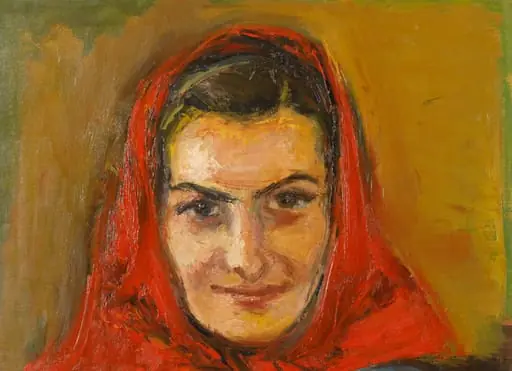
Iosif Iser’s 1956 canvas, *Portret de țărancă – Hilda*, presents a solitary female figure rendered in vivid hues. The composition centers on a dark‑haired woman seated against a uniform red‑orange field, her hands folded in her lap and her gaze directed forward with a solemn demeanor.
Subject & Meaning
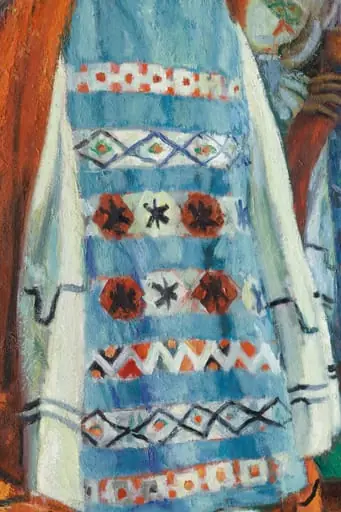
The sitter, identified as Hilda, is depicted in traditional peasant attire—a red dress accented by a white collar and cuffs. The straightforward pose and restrained expression convey a sense of dignity and resilience associated with rural life in mid‑twentieth‑century Romania.
Technique & Style
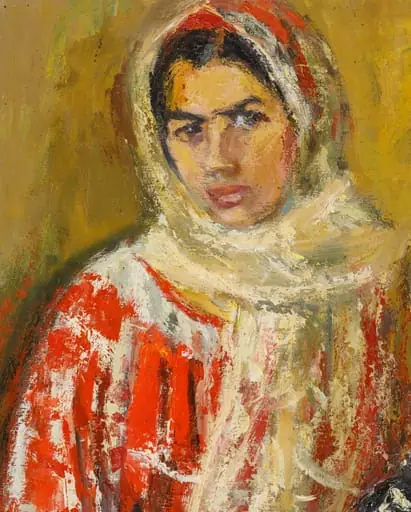
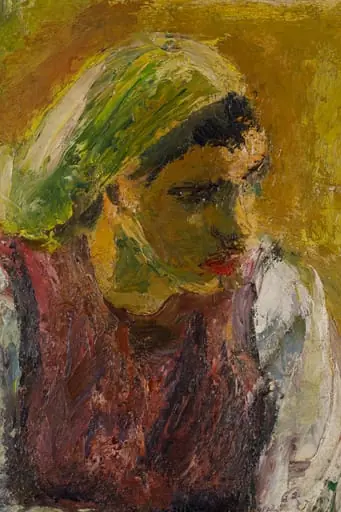
Iser employs a palette of saturated reds and stark whites, applying the paint with a thick, impasto technique that gives the surface a tactile quality. Loose, energetic brushstrokes animate the figure’s features, while careful modulation of light and shadow defines the face and hands.
History & Provenance
Created in 1956, the work belongs to the later period of Iser’s career, when he increasingly explored portraiture of everyday people. The painting has remained in private collections, documented in exhibition catalogs of Romanian modern art from the 1960s onward.
Context
The portrait reflects post‑World War II artistic trends in Eastern Europe, where artists combined realist observation with expressive color. Iser’s focus on a peasant subject aligns with contemporary cultural policies that emphasized the dignity of the working class, while his painterly approach retains a personal, modernist sensibility.
Artist & collection
Artist
Iosif Iser painted everyday life with a focus on people and places. His 1933 work *Paris. Strada Mouffetard* shows a lively street scene in Paris, while *Nud pe fotoliu* depicts a seated nude figure. His brushwork…