Artwork
Fată cu tablă de șah
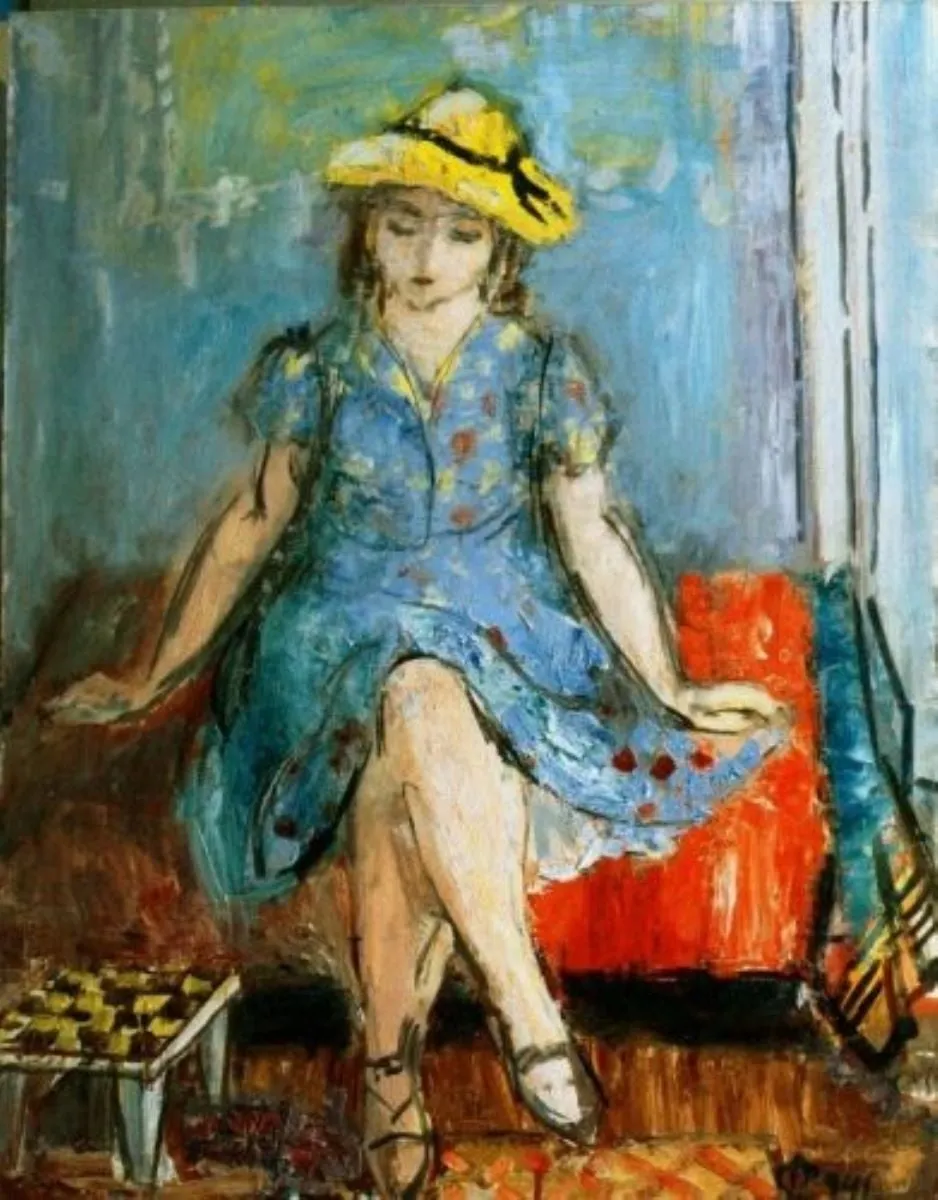
Fată cu tablă de șah is an unspecified painting by Alexandru Ciucurencu. It dates from 1941 and is held in the collection of the National Museum of Art of Romania.
About this work
Overview
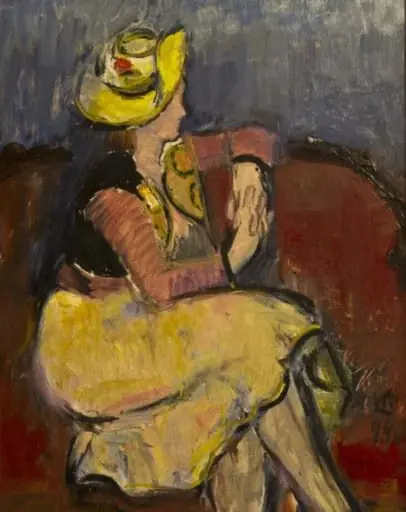
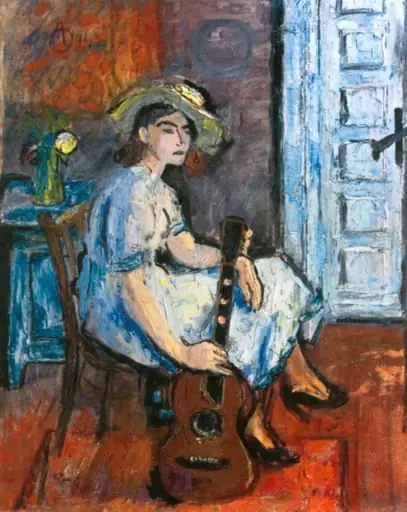
Painted in 1941 by Romanian artist Alexandru Ciucurencu, this portrait depicts a woman seated in a domestic interior. The work is rendered in oil with a pronounced impasto technique, where thick layers of paint create a tactile surface. The composition centers on the figure’s calm posture and the interplay of color and light, suggesting a quiet moment of contemplation.
Subject & Meaning
The woman, dressed in a loose blue dress with red dots and a bright yellow hat, sits with crossed legs, holding an object in her lap. Though the title references a chessboard, the object is not clearly defined, leaving its significance ambiguous. The scene evokes introspection rather than action, emphasizing stillness and personal space over narrative detail.
Technique & Style
Ciucurencu employs impasto to build texture across the canvas, using heavy, visible brushstrokes to define form and light. The thick application of paint gives the fabric, hat, and chair a sculptural quality. The palette—dominated by yellow, blue, and red—contrasts boldly against the muted background, enhancing the figure’s presence through chromatic intensity rather than detail.
History & Provenance
It has remained within Romanian collections since its creation, with no documented public exhibitions until later decades.
Created during a period of political tension in Romania, the painting reflects Ciucurencu’s engagement with modernist trends while remaining rooted in intimate, everyday subjects. It has remained within Romanian collections since its creation, with no documented public exhibitions until later decades. Its survival through wartime upheaval underscores its personal rather than political significance to the artist.
Context
In early 1940s Romania, many artists turned to domestic scenes as a refuge from national instability. Ciucurencu’s focus on a solitary woman in a quiet room aligns with this trend, echoing broader European modernist interests in interiority and psychological presence. The absence of overt symbolism invites viewers to engage with mood over message.
Legacy
Though not widely exhibited internationally, the painting is recognized in Romanian art history as an example of Ciucurencu’s distinctive synthesis of expressionist brushwork and restrained subject matter. It contributes to the understanding of how local artists adapted modernist techniques to convey quiet, personal narratives during a turbulent era.
Artist & collection
Artist
Alexandru Ciucurencu painted scenes from everyday life and the human body in the mid-20th century.