Artwork
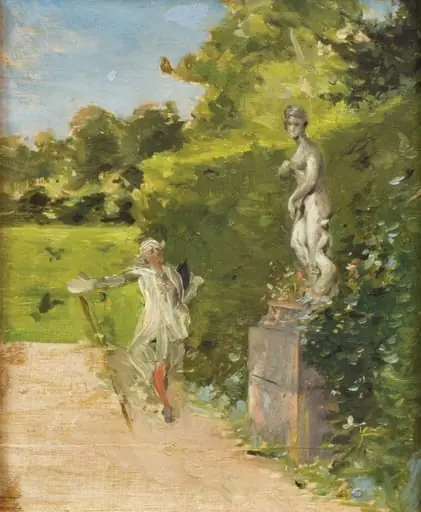
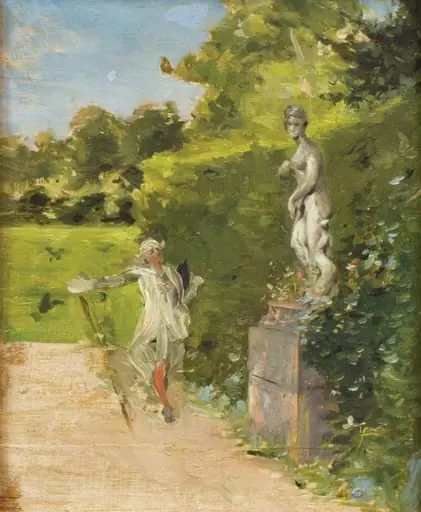
Copilași culegând flori de lângă un vas
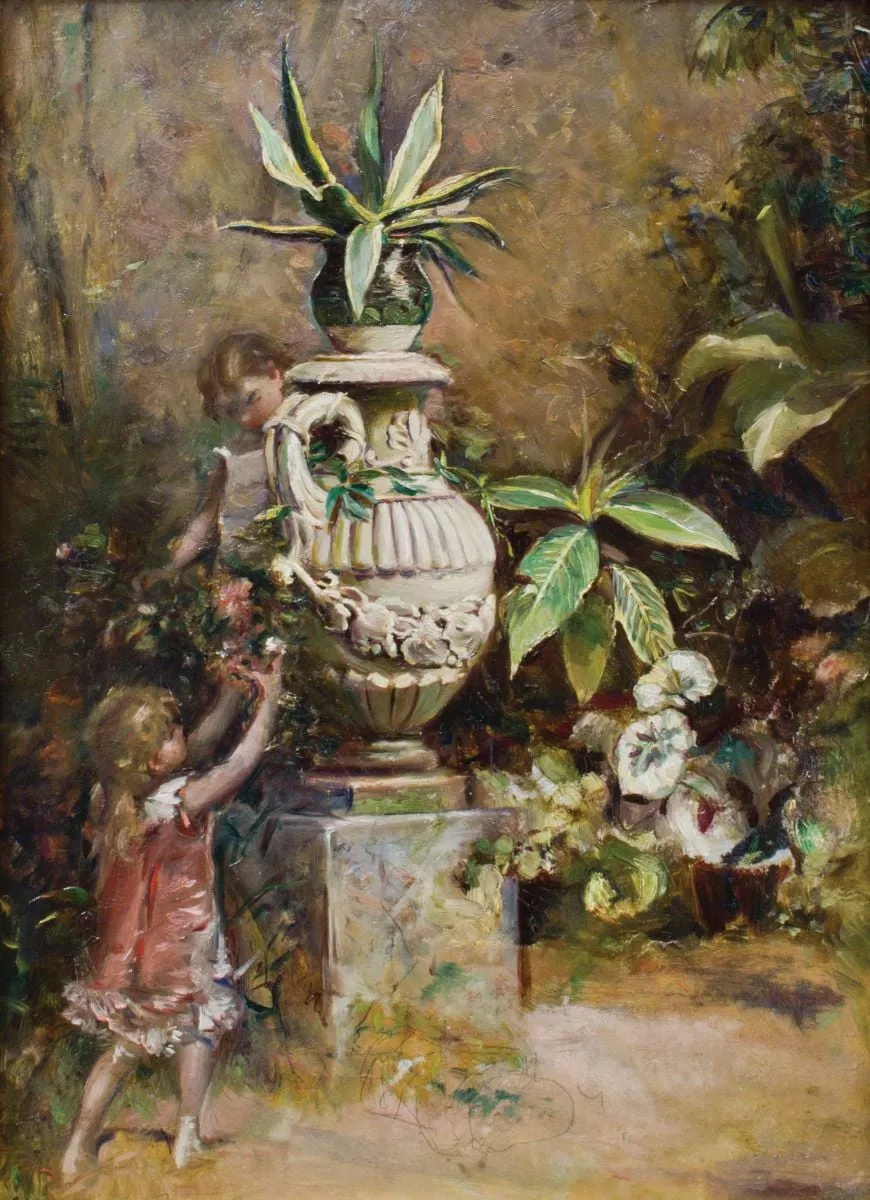
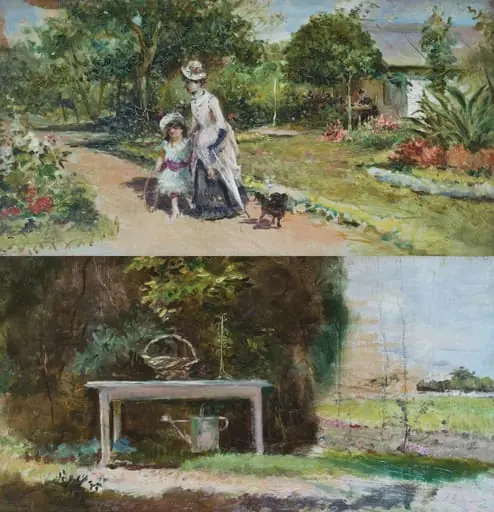
Copilași culegând flori de lângă un vas is an unspecified painting by Theodor Aman. It dates from 1875 and is held in the collection of the Bucharest Municipality Museum.
About this work
Overview
Painted around 1875 by Theodor Aman, this work depicts two children engaged in quiet play near a decorative vase in a garden setting.
Painted around 1875 by Theodor Aman, this work depicts two children engaged in quiet play near a decorative vase in a garden setting. Executed in oil, the painting is part of the collection at the Museum of Ethnography. Aman captures a moment of unstructured childhood activity, framed by natural elements and a sculpted vessel, blending genre scene with subtle still-life elements in a single composition.
Subject & Meaning
The two children, one reaching upward and the other crouching low, embody innocent curiosity and physical engagement with their surroundings. The presence of the ornate vase, likely a cultural artifact, contrasts with their spontaneous actions, suggesting a quiet tension between cultivated beauty and natural spontaneity. The scene avoids narrative drama, instead offering a contemplative glimpse into everyday life.
Technique & Style
Aman employed thick, textured brushwork—impasto—to render the vase and foliage, giving them a tactile, almost sculptural presence. The light falls selectively, illuminating the children’s faces and the vessel while allowing the background to recede into shadow. Loose, energetic strokes define the surrounding plants, contrasting with the precise carving details of the vase, creating a dynamic interplay between realism and expressive brush handling.
History & Provenance
The painting was completed in the mid-1870s and entered the collection of the Museum of Ethnography, where it remains today. Its acquisition reflects an interest in documenting domestic and rural life in 19th-century Romania. Unlike Aman’s more formal portraits or historical scenes, this work was likely intended as a study of atmosphere and everyday gesture, preserved for its cultural resonance rather than its monumental scale.
Context
In the context of Romanian art during the late 19th century, this painting aligns with a broader movement toward genre scenes that emphasized national identity through ordinary moments. While European academic traditions influenced Aman’s training, his focus on intimate, non-idealized figures and naturalistic settings reflects a local sensibility, distinguishing his work from grand historical narratives common elsewhere.
Legacy
Though not among Aman’s most widely exhibited works, this painting contributes to understanding his range beyond official portraiture and historical subjects. Its quiet observation of childhood and material culture has informed later Romanian artists interested in domestic realism. The work endures as a quiet testament to the poetic potential of unremarkable moments rendered with technical care.
Artist & collection
Artist