Artwork
Domnitorul Carol I
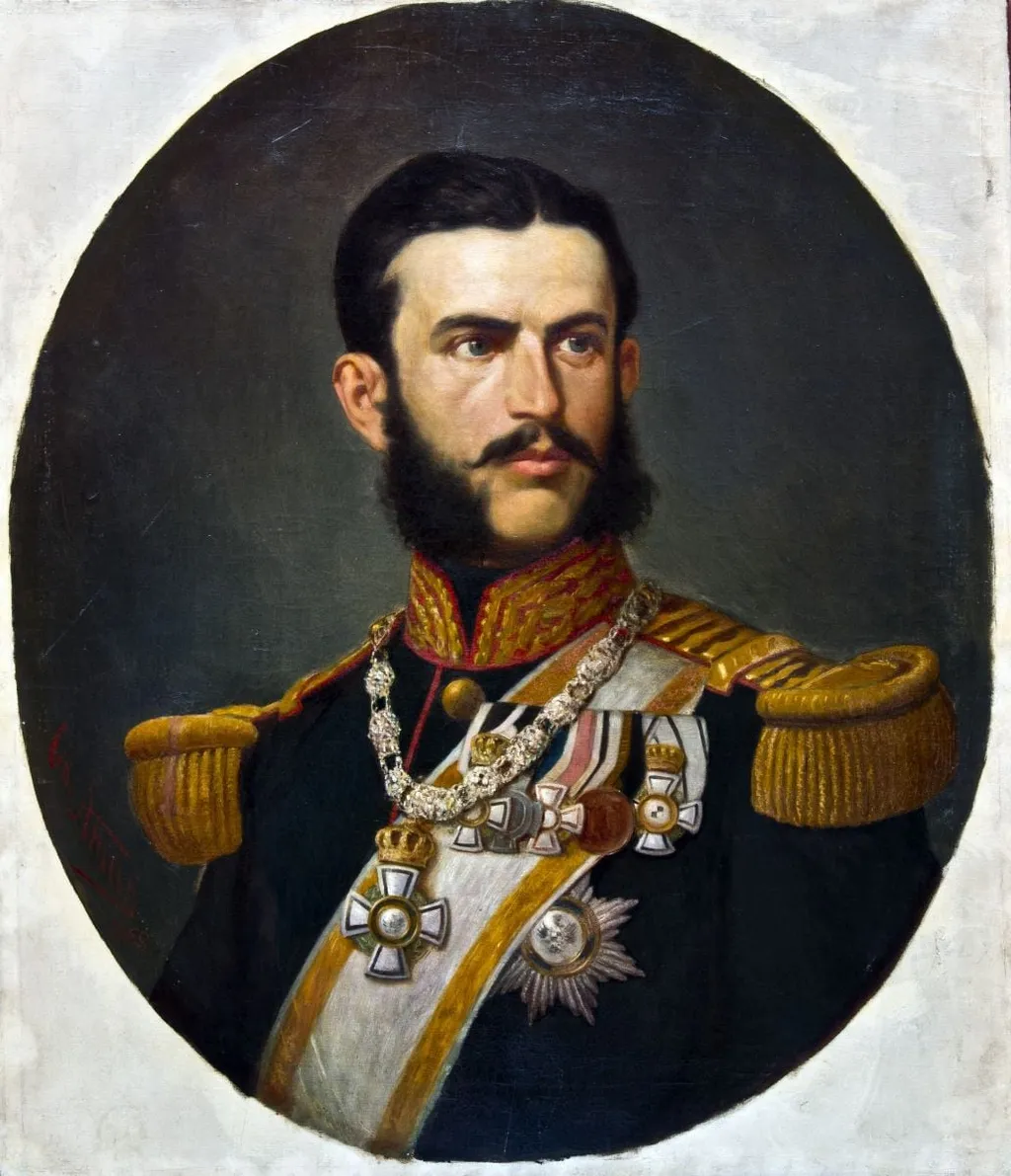
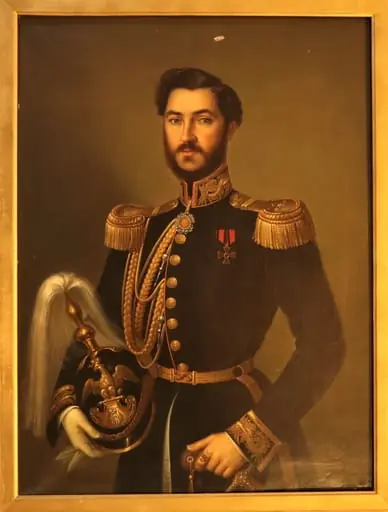
Domnitorul Carol I is an unspecified painting by the Impressionist artist Theodor Aman. It dates from 1868 and is held in the collection of the National Museum of Art of Romania.
About this work
Overview
The image serves as an official representation, intended to convey stability and leadership during a formative period in Romanian statehood.
Painted in 1868 by Theodor Aman, this portrait depicts Carol I, the ruling prince of Romania at the time. Rendered in oil on canvas, the work presents a formal, full-face depiction of the subject, emphasizing dignity and authority through restrained composition and controlled lighting. The image serves as an official representation, intended to convey stability and leadership during a formative period in Romanian statehood.
Subject & Meaning
Carol I, dressed in a military uniform adorned with medals and a sash, is portrayed as both a statesman and a commander. The precise grooming of his mustache and beard, along with his direct, solemn gaze, reinforces an image of discipline and gravitas. The uniform’s insignia and decorations signify his role in unifying and modernizing Romania, positioning him as a symbol of national cohesion and military order in the years before the country’s formal proclamation as a kingdom.
Technique & Style
Aman employs chiaroscuro to model the face with subtle gradations of light and shadow, drawing focus to the subject’s features without theatricality. The brushwork is precise, particularly in rendering the metallic sheen of buttons and the texture of fabric. Background tones are muted, ensuring the figure remains central. The composition is symmetrical and tightly framed, reflecting the conventions of 19th-century official portraiture while avoiding excessive ornamentation.
History & Provenance
Commissioned shortly after Carol I assumed the title of Domnitor, the portrait was likely intended for public display to legitimize his rule. It entered the collection of the National Museum of Art of Romania in Bucharest, where it remains. Its creation coincided with efforts to establish a visual identity for the new Romanian state, aligning the prince’s image with European monarchical traditions.
Context
In 1868, Romania was transitioning from a principality to a kingdom, with Carol I at the center of political and cultural modernization. The portrait reflects broader European trends in state portraiture, where rulers were depicted with military regalia to assert authority. Aman, a key figure in Romanian art, fused Western academic techniques with national themes, helping to define a visual language for the emerging nation.
Legacy
The portrait endures as one of the most recognized images of Carol I, frequently reproduced in textbooks and official publications. It set a standard for subsequent state portraits in Romania, influencing how leaders were visually represented in the decades that followed. Aman’s restrained approach contributed to a tradition of dignified, non-exaggerated imagery in Romanian official art.
Artist & collection
Artist