Artwork
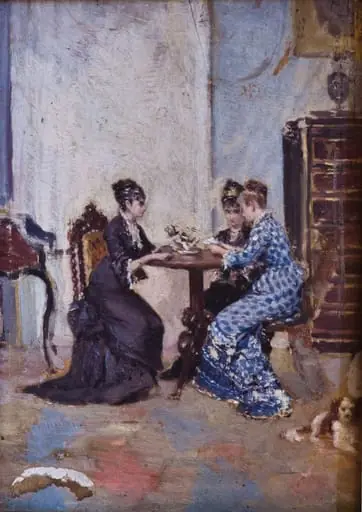
Două femei dau în cărți
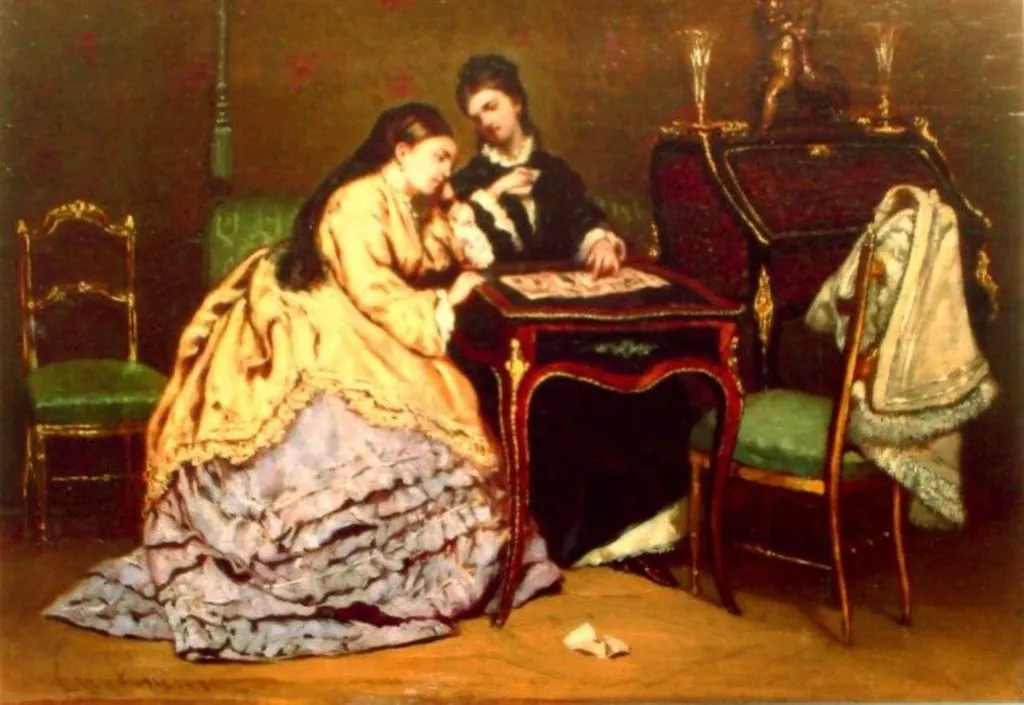
Două femei dau în cărți is an unspecified painting by Theodor Aman. It is held in the collection of the Bucharest Municipality Museum. This painting depicts two women engaged in a quiet, intimate activity at a modest table.
About this work
Overview
The scene is rendered with careful attention to light and shadow, drawing focus to the figures while the surrounding space recedes into darkness.
This painting depicts two women engaged in a quiet, intimate activity at a modest table. The scene is rendered with careful attention to light and shadow, drawing focus to the figures while the surrounding space recedes into darkness. The composition emphasizes stillness and concentration, suggesting a private moment rather than a public display. The use of chiaroscuro enhances the emotional tone, isolating the women in a sphere of calm illumination.
Subject & Meaning
The two women are shown sharing a book or set of cards, their attention fixed on the object between them. Their attire—light and dark fabrics—may suggest contrast in social status or temperament, though no narrative is explicitly stated. The act of reading or playing cards implies domestic ritual, possibly reflecting themes of solitude, companionship, or quiet intellectual engagement within a private interior.
Technique & Style
The artist employs chiaroscuro to model the figures with soft, directional light, creating volume and depth against a shadowed background. The fabric textures of the dresses and cushions are rendered with subtle tonal shifts rather than sharp outlines. The warm glow on the women’s faces contrasts with the cool darkness of the room, directing the viewer’s focus and lending the scene a contemplative, almost theatrical atmosphere.
History & Provenance
The painting’s origin and early ownership are not documented in available records. It has been consistently identified as a work from the late 19th or early 20th century, likely produced in Eastern Europe. Its current location and acquisition history remain unverified in public archives, and no exhibition history is widely recorded.
Context
This image aligns with a broader trend in European art of the period that favored intimate interior scenes, often portraying women in domestic settings. The emphasis on quiet activity and controlled lighting reflects influences from Realism and early Impressionism, though the strong chiaroscuro suggests a continued engagement with older traditions of dramatic lighting seen in Baroque painting.
Legacy
Though not widely exhibited or reproduced, the painting contributes to a lesser-known body of work that explores female interiority through restrained composition and lighting. Its quiet dignity and technical precision offer a counterpoint to more overtly narrative or decorative works of its time, preserving a subtle, understated vision of everyday life.
Artist & collection
Artist
 Elegant Figures in a Salon
 Self-Portrait of the Artist and Her Husband on Their Wedding Trip
 Interior with two women examining cloth
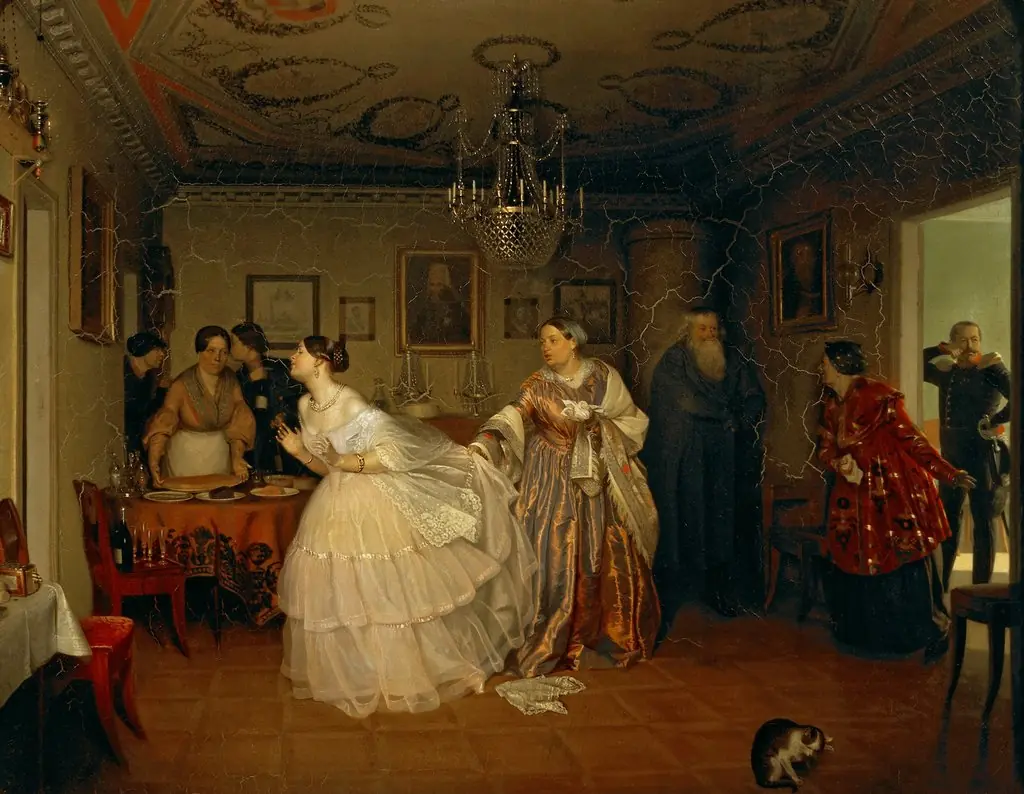 Major's marriage proposal
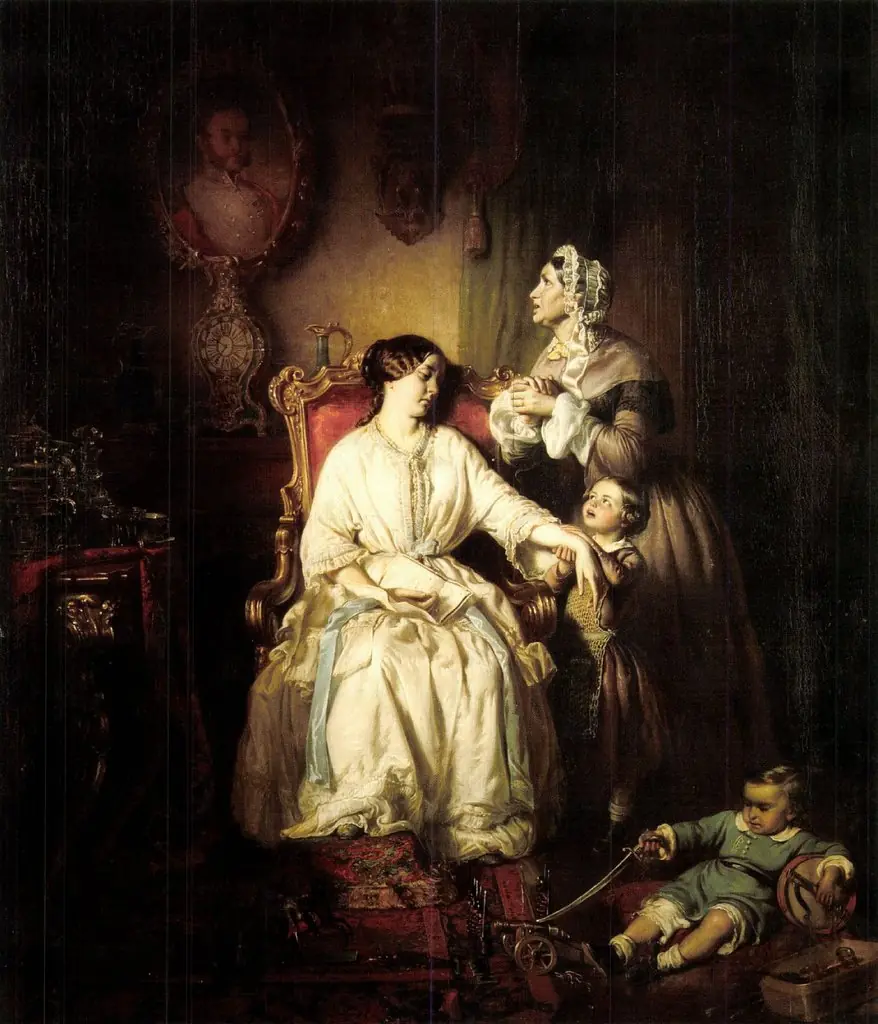 The Letter
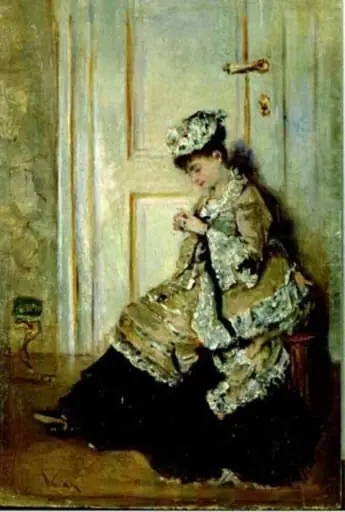 Femeie în interior
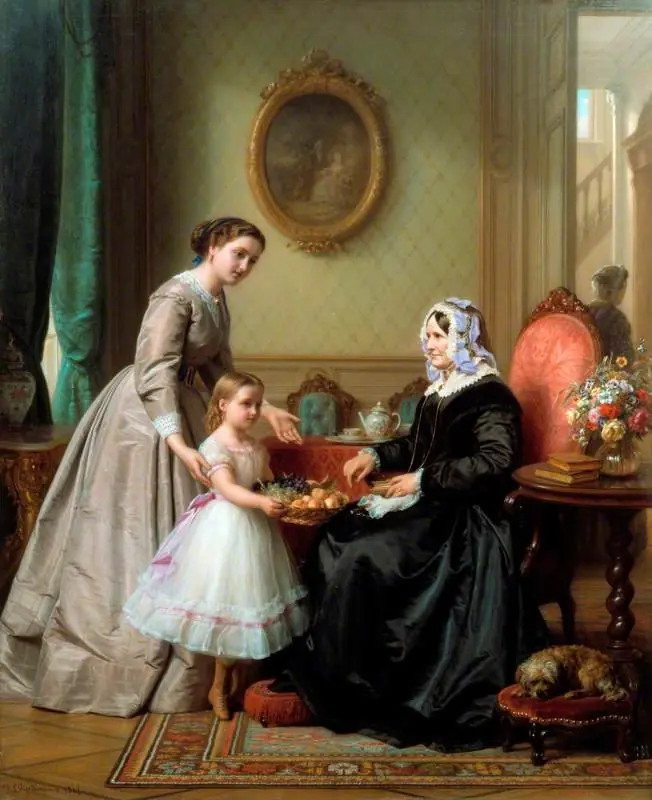 Grandmother's Birthday
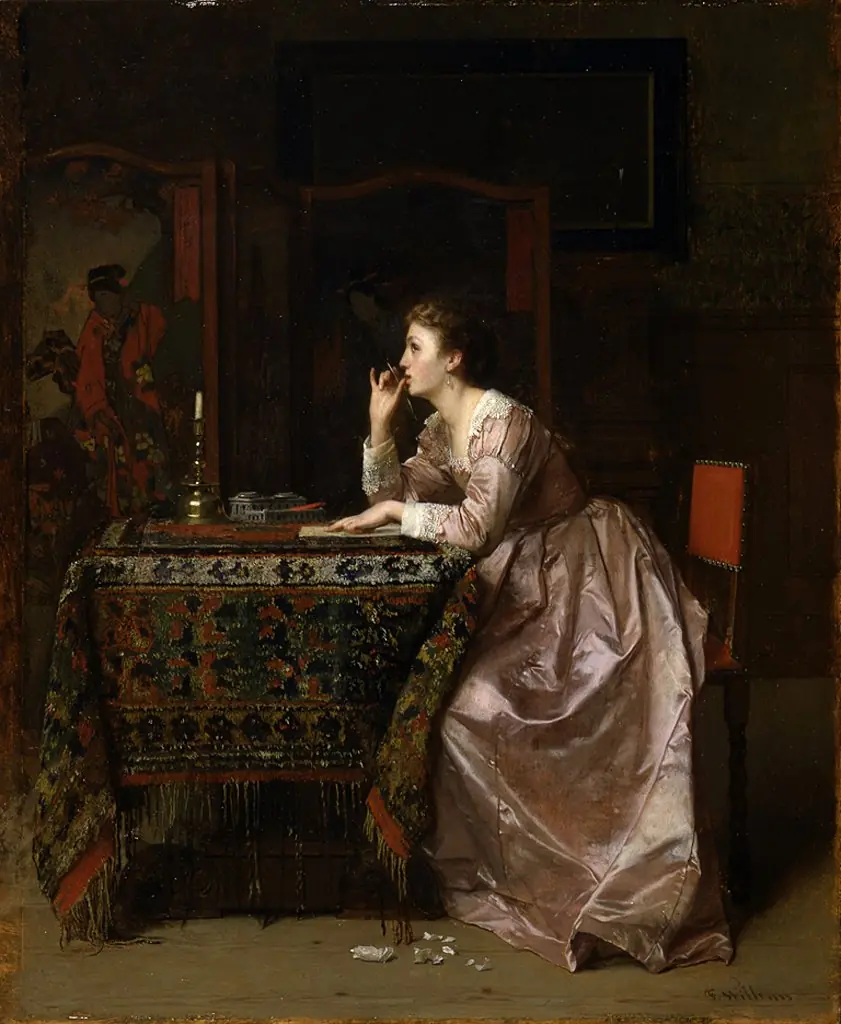 The Important Response
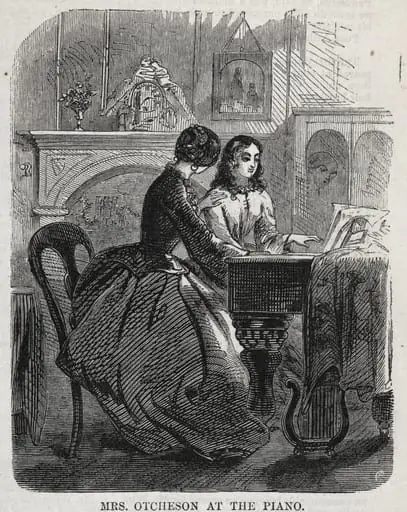 Mrs. Otcheson at the Piano
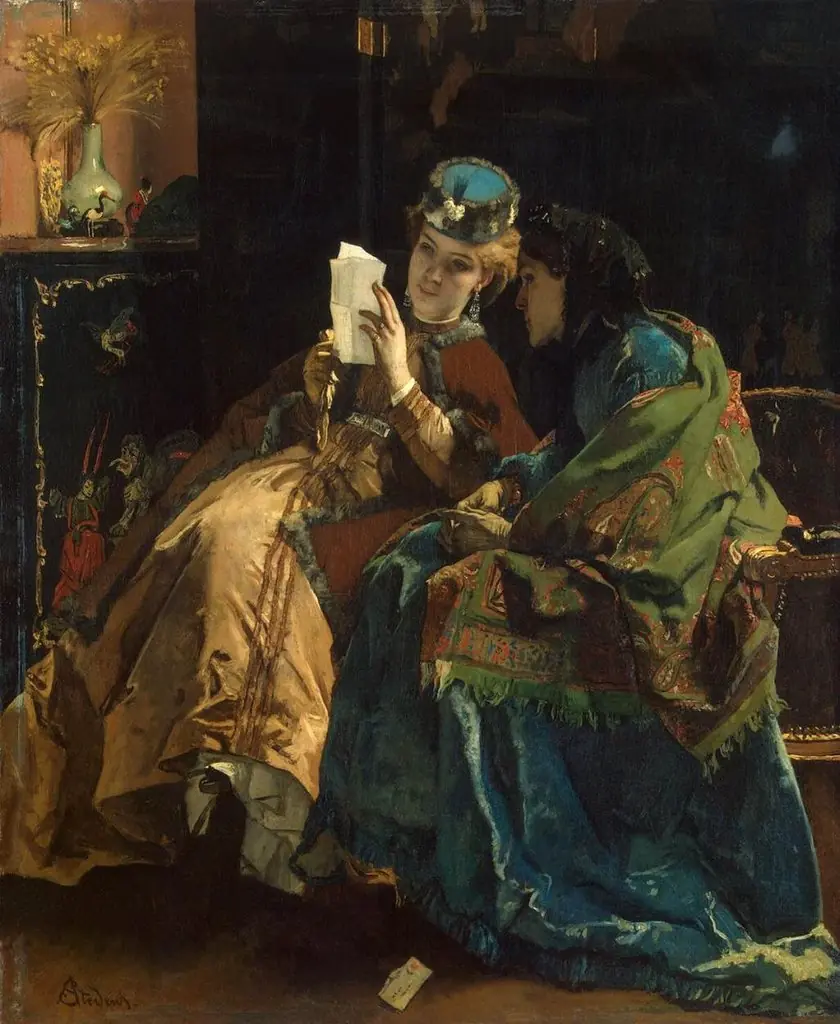 Pleasant Letter
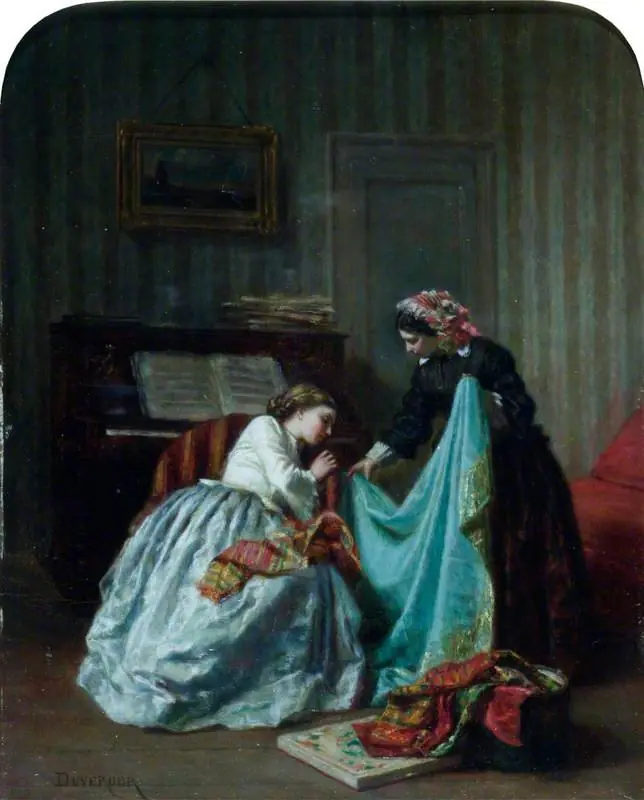 Interior with Two Women Examining Cloth
 Trei femei jucând cărți