Artwork
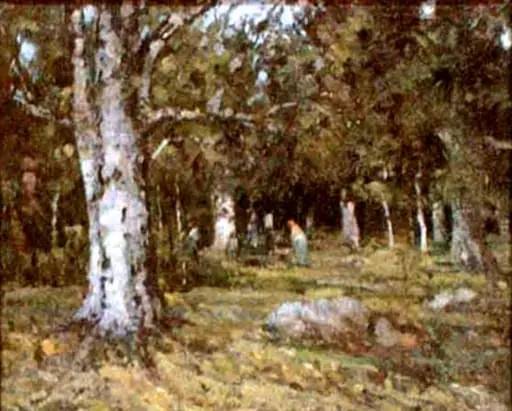
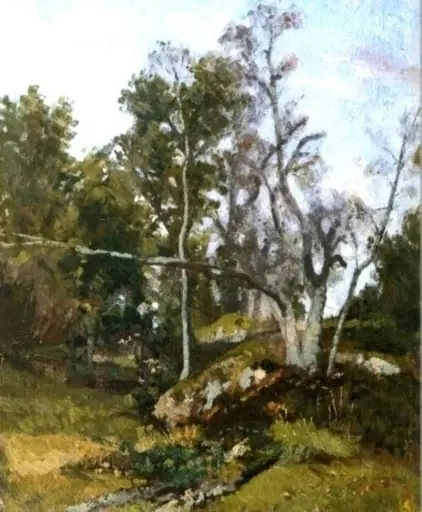
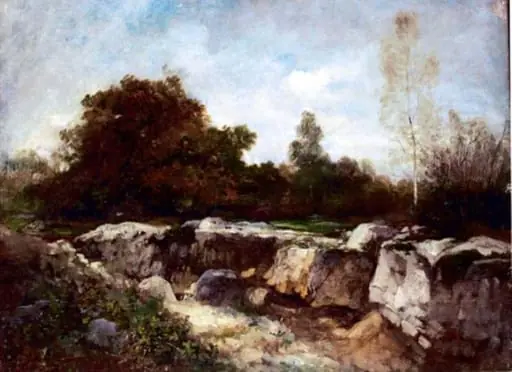
Stânci în pădure
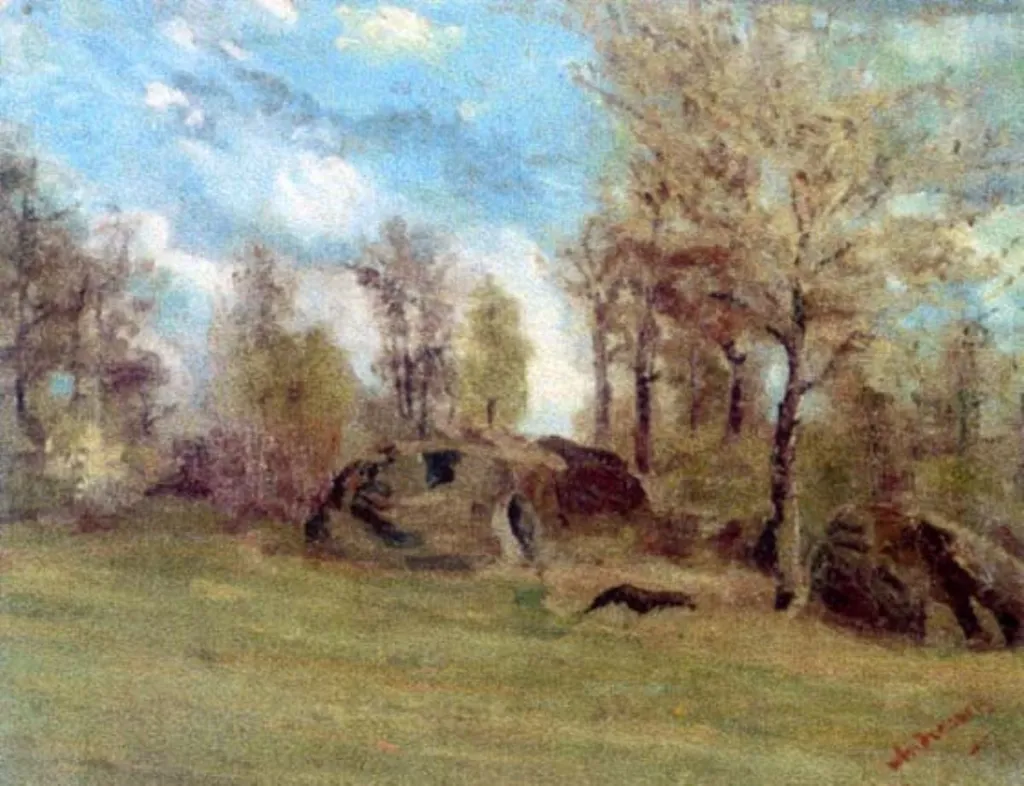
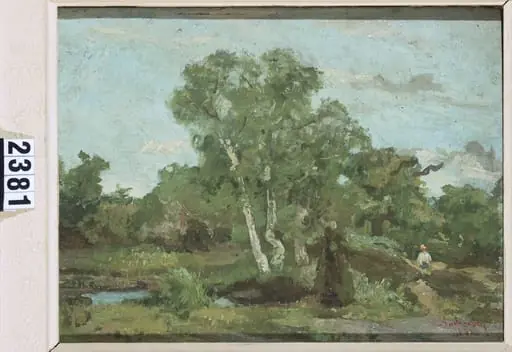
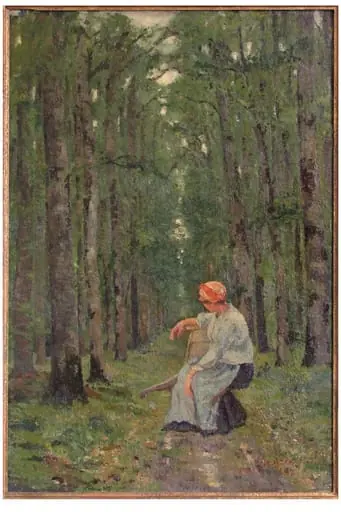
Stânci în pădure is an unspecified painting by Ion Andreescu. It dates from 1850 and is held in the collection of the Art Museum of Constanta.
About this work
Overview
Its composition emphasizes stillness and harmony with nature, reflecting a growing interest in native scenery during the mid-nineteenth century.
Stânci în pădure is a landscape painting attributed to Ion Andreescu, dated around 1850. It presents a quiet woodland scene centered on a grouping of natural rock formations. The work is part of the collection at the Museum of Ethnography, where it is preserved as an early example of Romanian landscape art. Its composition emphasizes stillness and harmony with nature, reflecting a growing interest in native scenery during the mid-nineteenth century.
Subject & Meaning
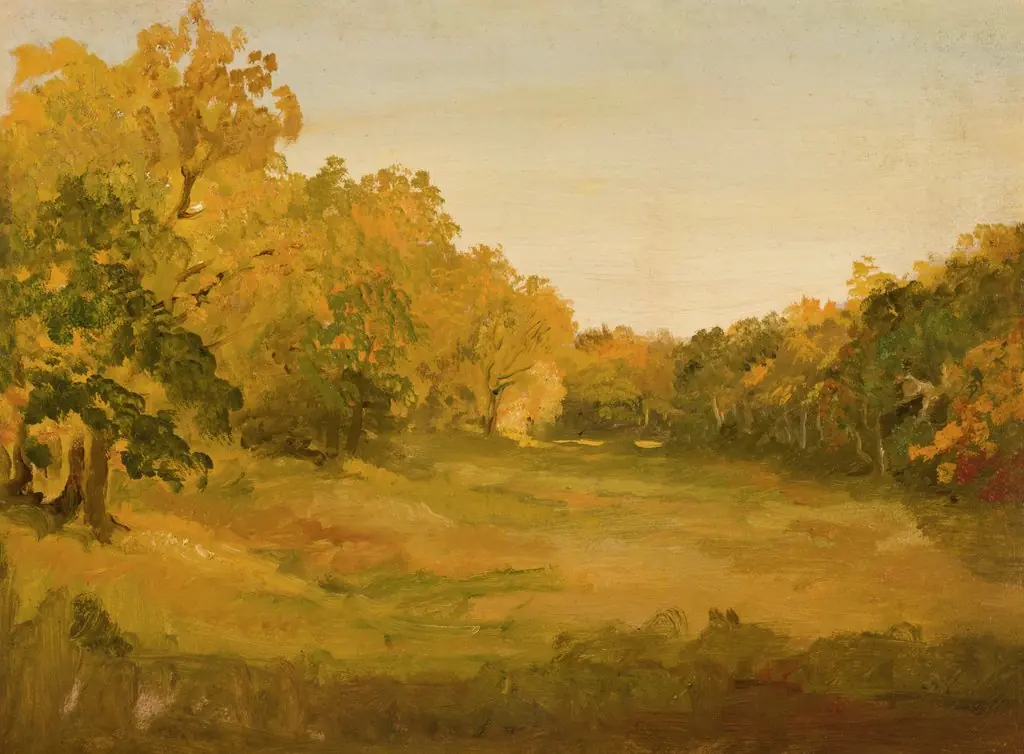
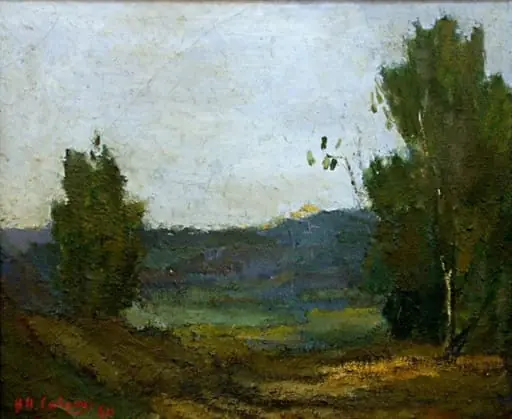
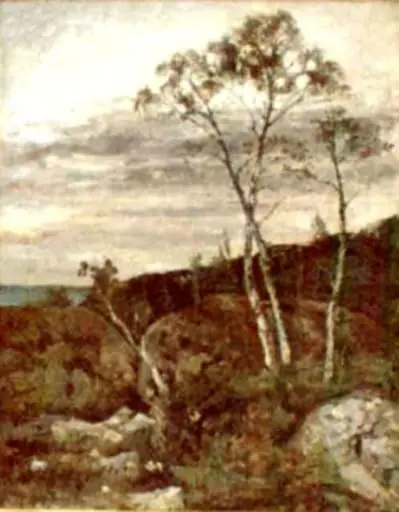
The painting focuses on a cluster of stones nestled among trees, framed by a grassy foreground and a distant canopy. There is no human presence, reinforcing a sense of untouched wilderness. The scene conveys quiet reverence for the natural world, aligning with Romantic-era ideals that valued solitude and the sublime in rural environments. The rocks, though unadorned, become anchors of permanence amid the shifting light and foliage.
Technique & Style
Andreescu employs subtle tonal gradations to suggest depth and volume, particularly in the rendering of the rocks and tree trunks. The sky, rendered in pale blue with soft cloud forms, complements the muted earth tones below. Brushwork is restrained, avoiding dramatic contrasts in favor of atmospheric cohesion. Light is diffused evenly, enhancing the calm mood without relying on strong chiaroscuro effects.
History & Provenance
The painting was likely created during Andreescu’s formative years as an artist, before his later travels to Europe. It entered the Museum of Ethnography’s collection in the early twentieth century, where it was preserved alongside ethnographic materials as a cultural artifact of Romanian rural life. Its attribution to Andreescu is based on stylistic analysis and archival records from the period.
Context
In mid-1800s Romania, landscape painting was emerging as a distinct genre, often tied to national identity and the celebration of unspoiled terrain. Artists like Andreescu turned away from imported European models to depict local forests, hills, and rivers. Stânci în pădure reflects this shift, offering a quiet alternative to grand historical or religious themes dominant in academic art at the time.
Legacy
Though not widely exhibited, the painting remains a significant early example of Romanian landscape art. It influenced later generations who sought to portray the country’s natural features with sincerity rather than idealization. Its presence in the Museum of Ethnography underscores its role not merely as art, but as a document of how Romanians perceived their environment during a period of cultural awakening.
Artist & collection
Artist
Ion Andreescu painted quiet scenes of everyday life and landscapes in the late 1800s.