Artwork
Portret de bătrân
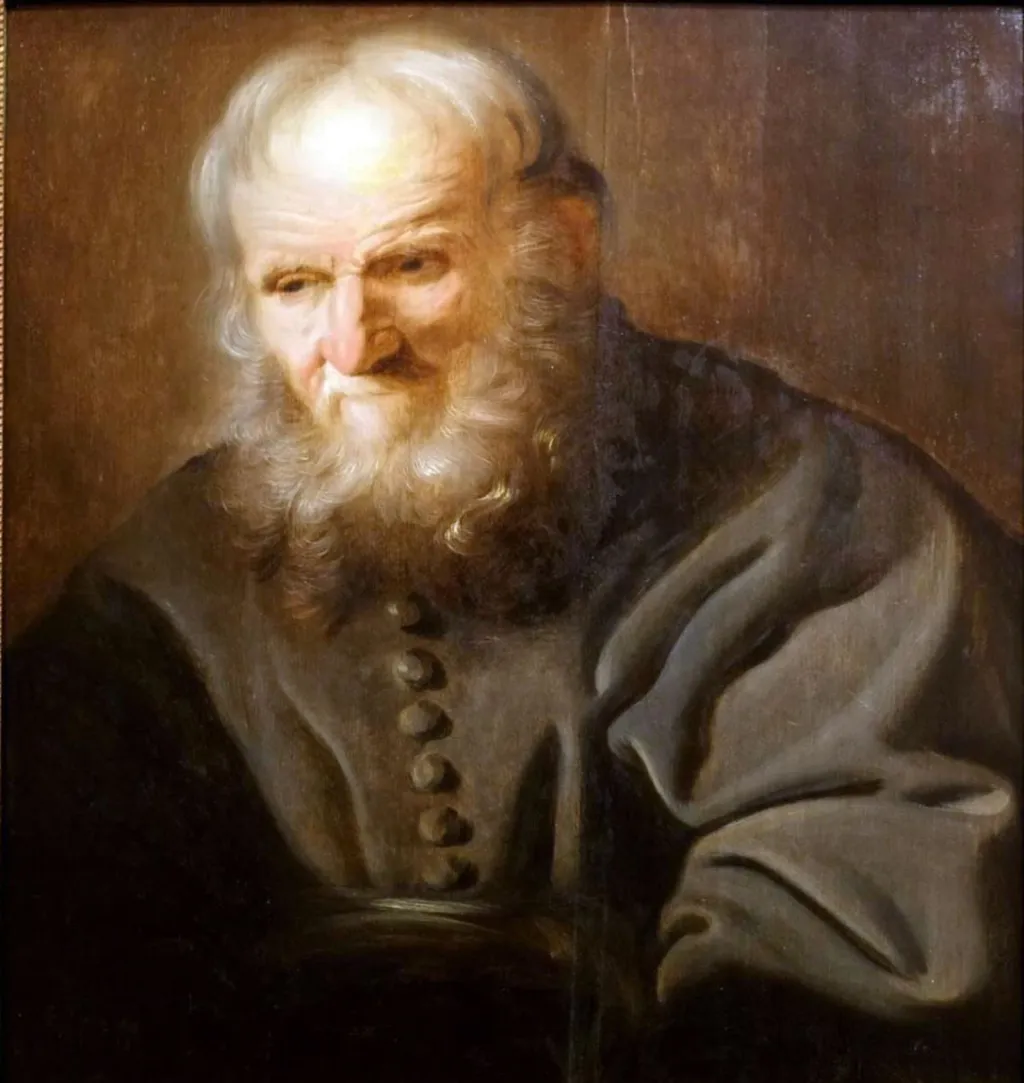
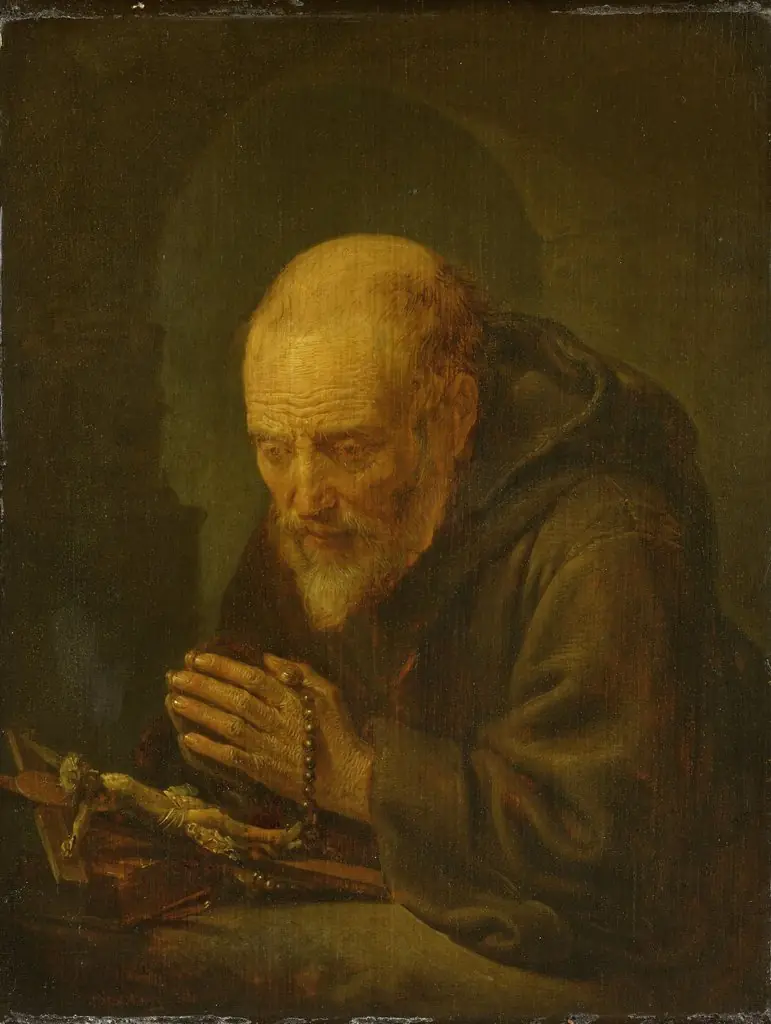
Portret de bătrân is an unspecified painting by Leonaert Bramer. It is held in the collection of the National Museum of Art of Romania. This portrait presents an elderly man in half-length, rendered with quiet intimacy.
About this work
Overview
The warm, muted background isolates the figure, drawing attention to the subtle modeling of his face.
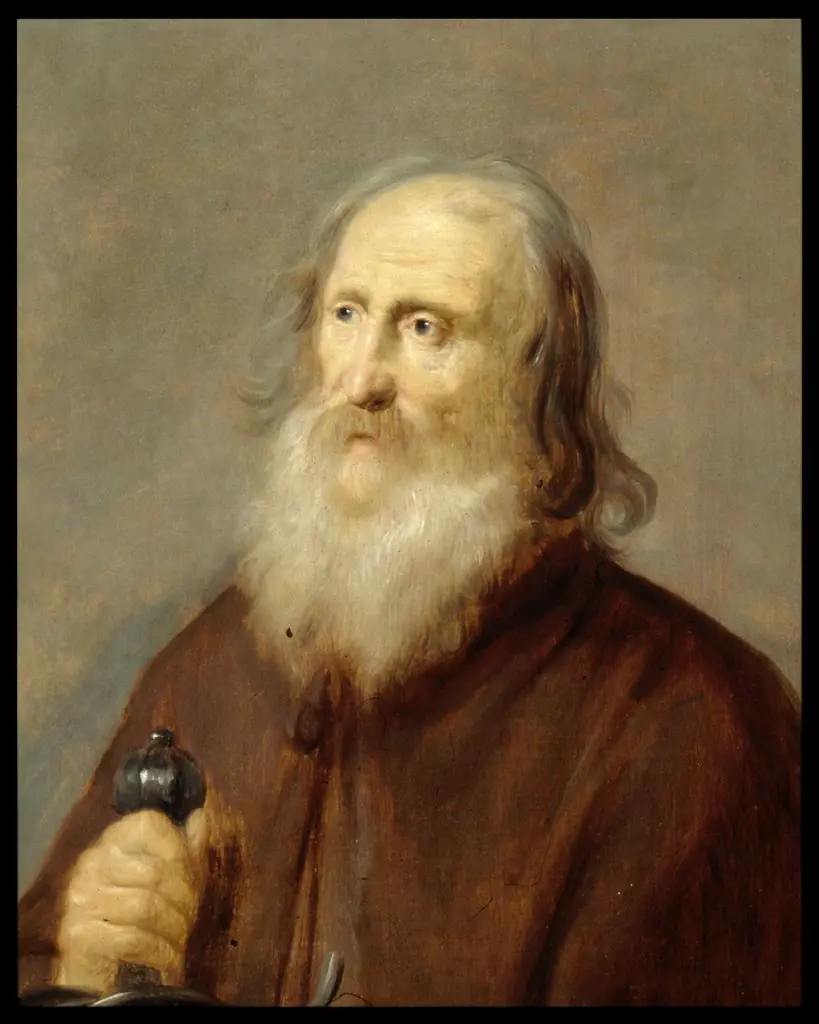
This portrait presents an elderly man in half-length, rendered with quiet intimacy. Dressed in a dark, buttoned robe, he faces slightly to the right, his gaze lowered in introspection. The warm, muted background isolates the figure, drawing attention to the subtle modeling of his face. The work’s restrained palette and tender handling suggest a focus on inner character rather than external display, aligning with Northern European traditions of quiet portraiture.
Subject & Meaning
The subject is an older man, his long white beard and hair marking advanced age. His downward gaze and still posture convey a sense of contemplation, possibly reflecting wisdom, resignation, or spiritual reflection. No attributes or symbols are present to indicate profession or status, emphasizing the universality of aging and inner life. The portrait invites quiet observation, valuing dignity in solitude over social identity.
Technique & Style
The artist employs soft, blended brushwork to model the face, creating a gentle transition between light and shadow that lends volume without harshness. The dark robe is rendered with minimal detail, allowing the texture of skin and the subtlety of expression to dominate. The warm, earthy background lacks detail, enhancing the figure’s presence through tonal harmony rather than decorative elements.
History & Provenance
Though the painting’s exact origin is unrecorded, its style closely resembles the work of Leonaert Bramer, a Dutch artist active in the early 17th century known for intimate, psychologically attuned portraits. The handling of light and the emphasis on emotional nuance suggest a connection to his circle or to regional Dutch traditions that favored quiet, unidealized depictions of individuals.
Context
In early 17th-century Dutch art, portraiture increasingly turned toward individual character rather than social status. This work reflects a broader trend where elders were depicted not as symbols of authority but as subjects of quiet humanity. The absence of wealth indicators and the focus on facial expression align with Protestant cultural values that favored modesty and inner life over outward display.
Legacy
The portrait contributes to a lineage of Northern European works that prioritize psychological depth over grandeur. While not attributed to a major name, its sensitivity places it within a respected tradition of intimate portraiture. Its enduring quietness offers a counterpoint to more ornate contemporaries, preserving a mode of representation that valued stillness and subtlety in human expression.
Artist & collection
Artist
Leonaert Bramer painted quiet, single-figure scenes in the Dutch Golden Age tradition.

 The miser
 St Joachim Reading a Book
 Study of an Old Peasant
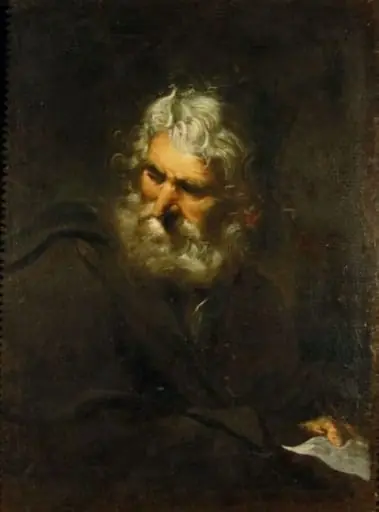 Portret de bărbat cu barba căruntă (filozof)
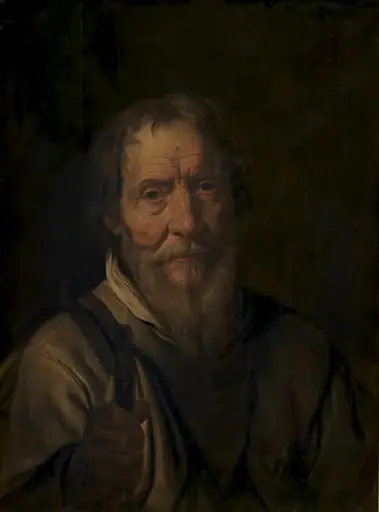 Portrait of an Old Man. Christian Jacobsen Drakenberg (?)
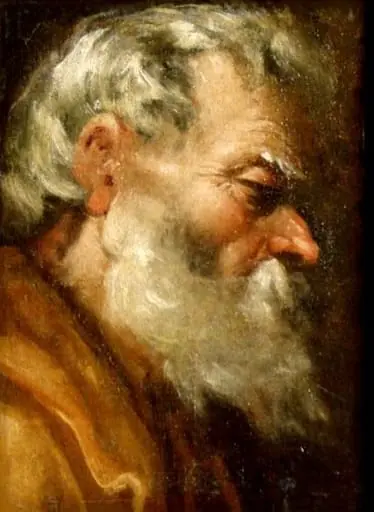 Portretul unui bărbat cu barba căruntă
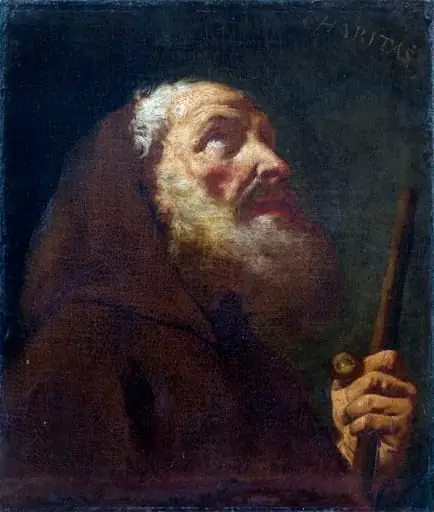 Cap de călugăr (Charitas)
 Studiu de expresie (Sfântul Petru?)
 Head of an Old Man
 Saint Paul
 Charitas
 A Hermit in Prayer