Artwork
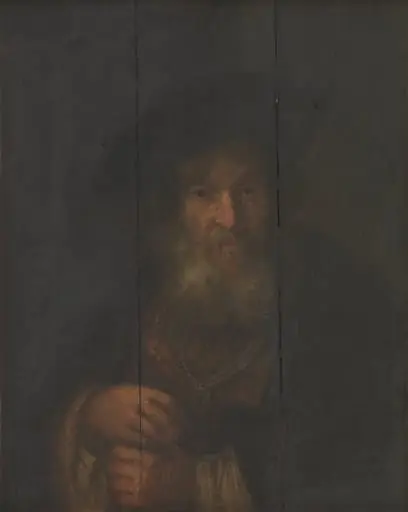
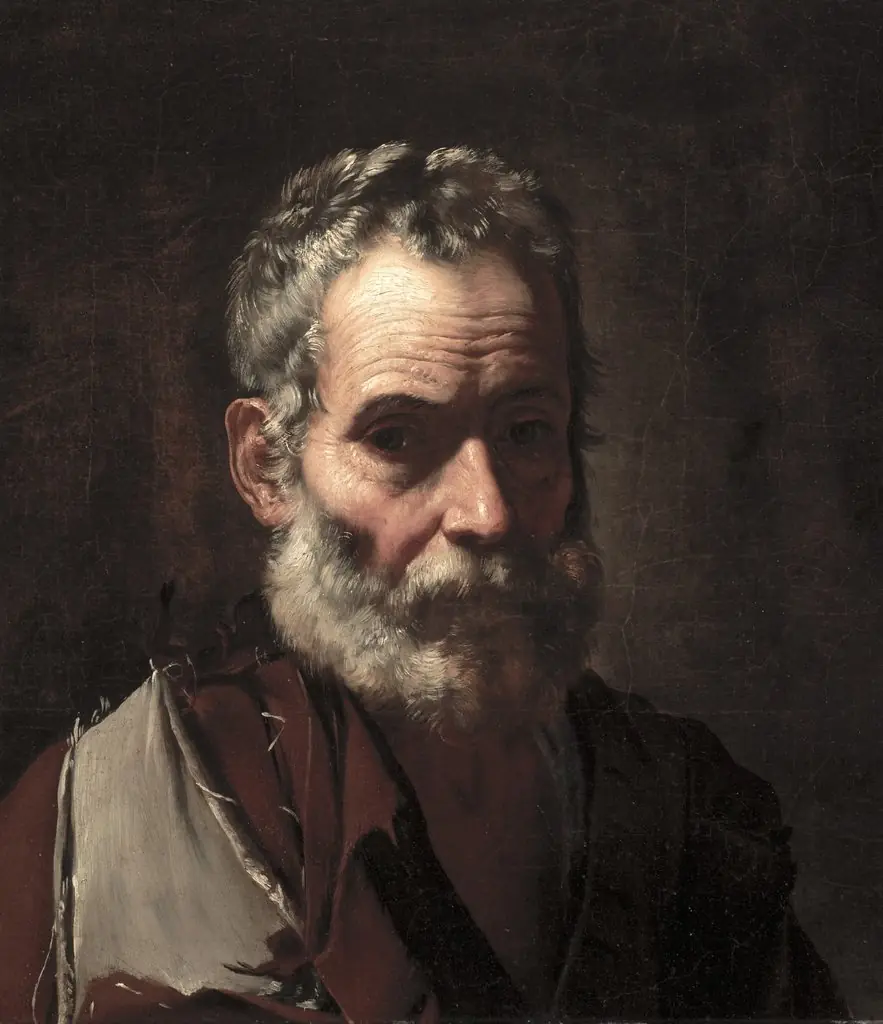
Portrait of an Old Man. Christian Jacobsen Drakenberg (?)
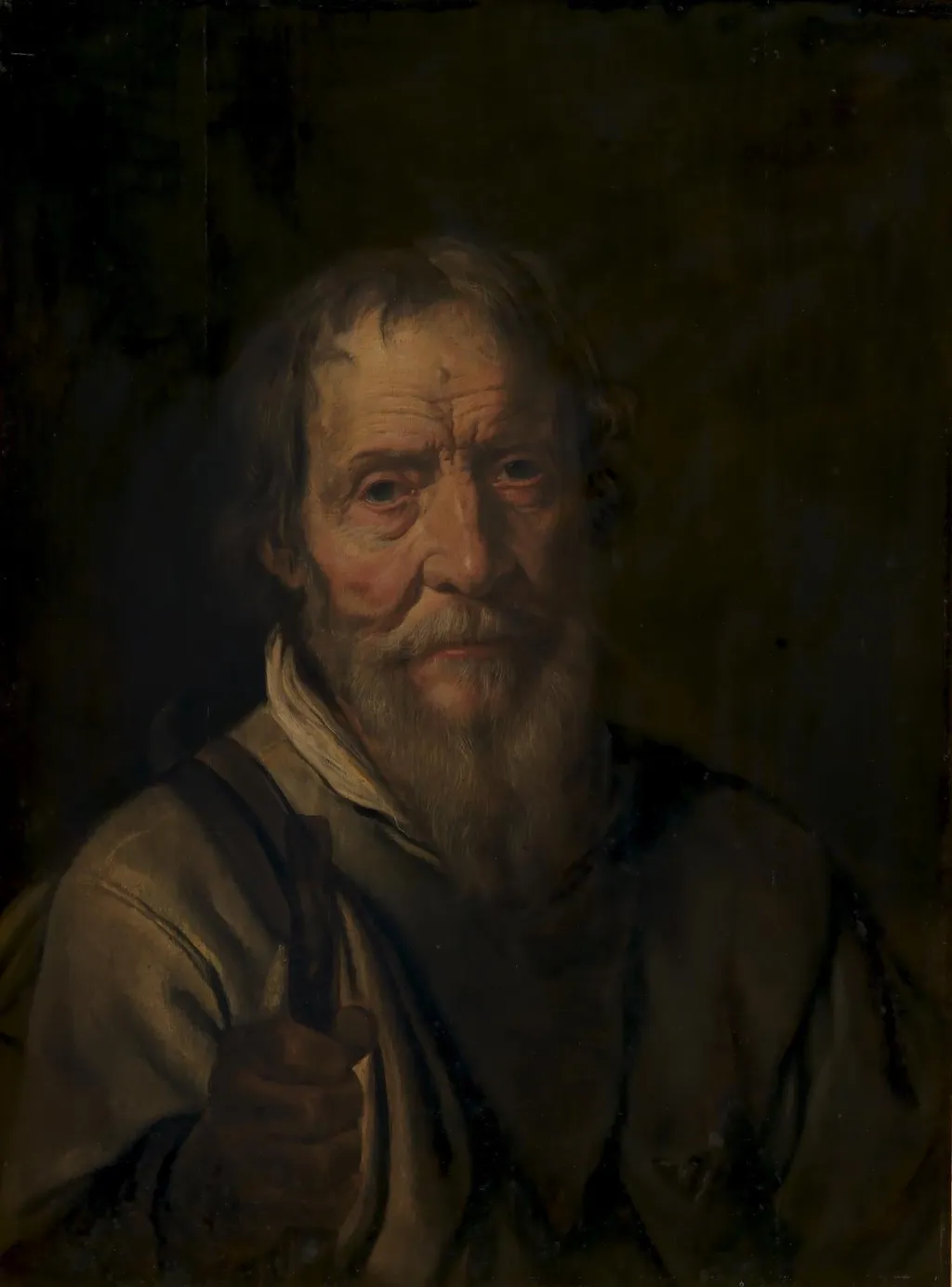
Portrait of an Old Man. Christian Jacobsen Drakenberg (?) is an unspecified painting by Unknown. It dates from 1650 and is held in the collection of the Statens Museum for Kunst. This portrait depicts an elderly man, likely Danish, painted around 1650.
About this work
Overview
The work is attributed tentatively to Christian Jacobsen Drakenberg, though the artist’s identity remains uncertain.
This portrait depicts an elderly man, likely Danish, painted around 1650. The work is attributed tentatively to Christian Jacobsen Drakenberg, though the artist’s identity remains uncertain. It is held in the collection of the Museum of Ethnography. The composition focuses tightly on the subject’s face and upper torso, set against a dark, undefined background that enhances the sense of intimacy and solemnity.
Subject & Meaning
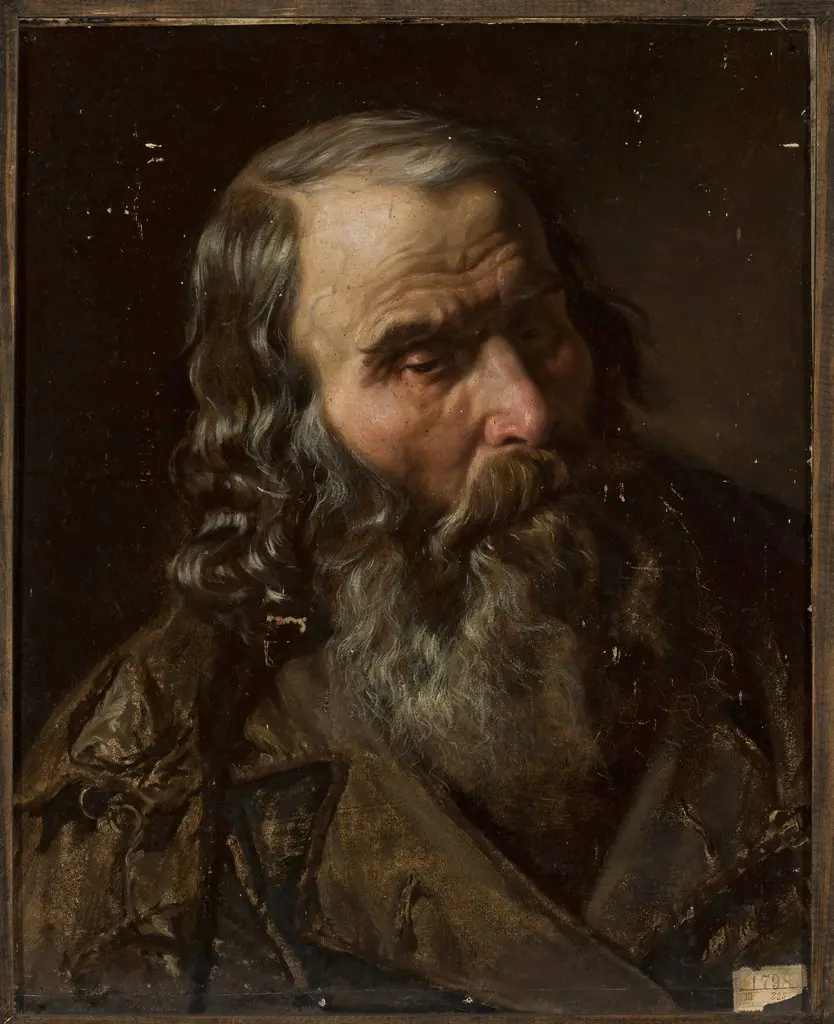
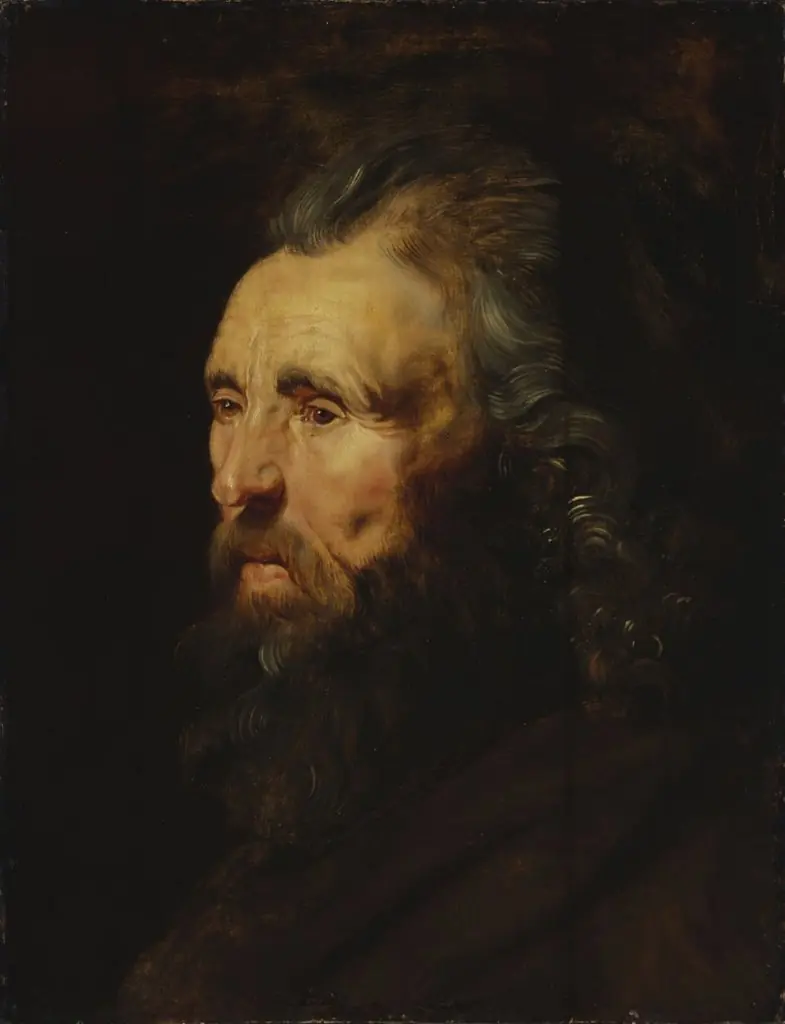
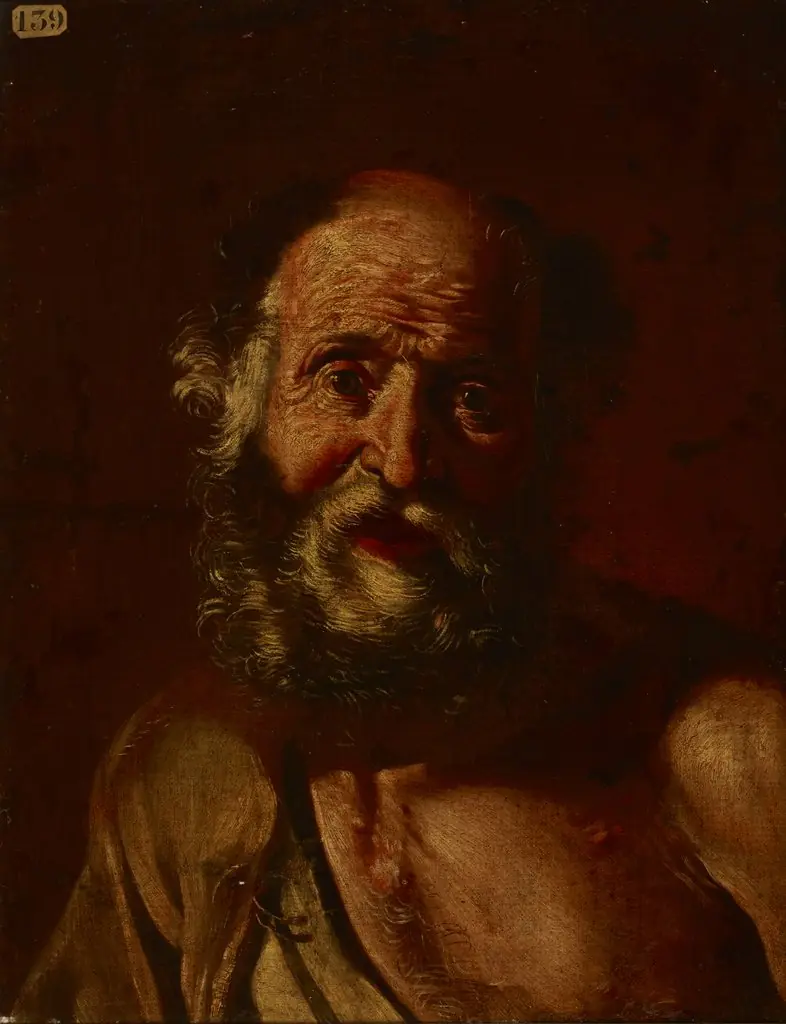
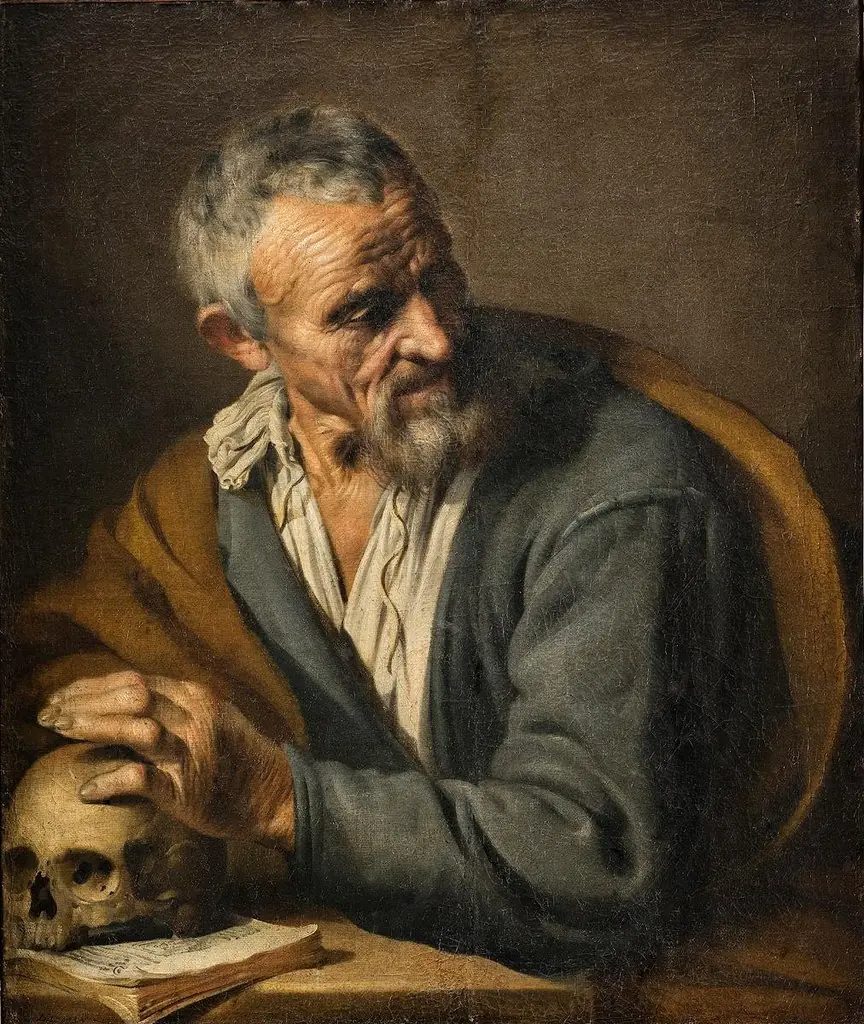
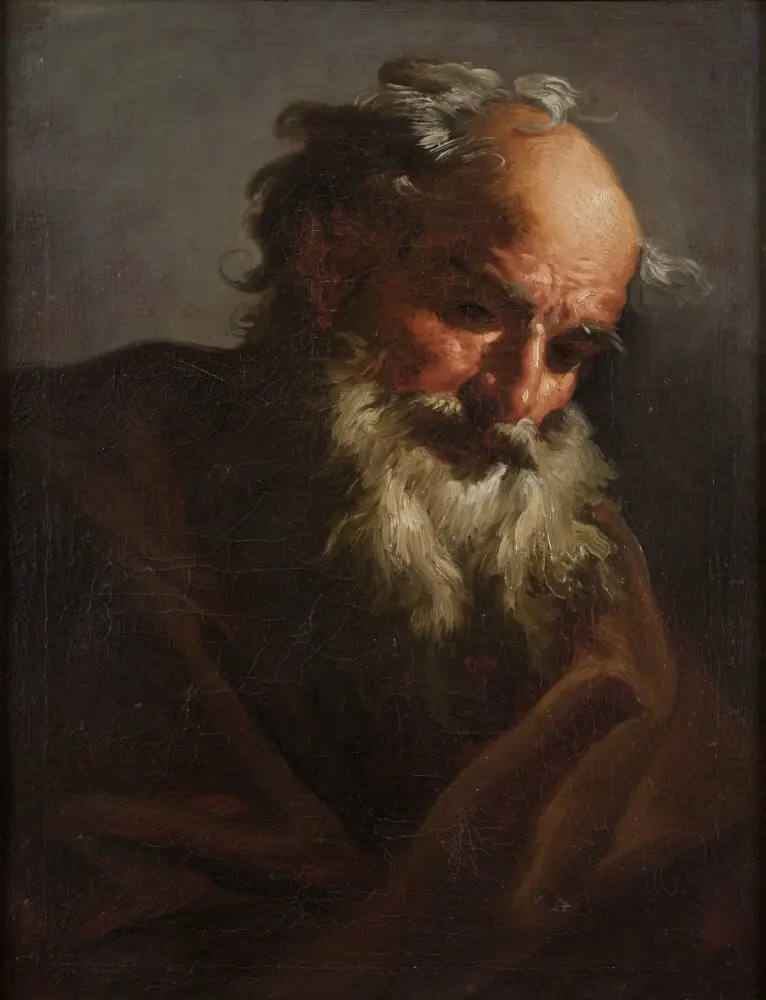
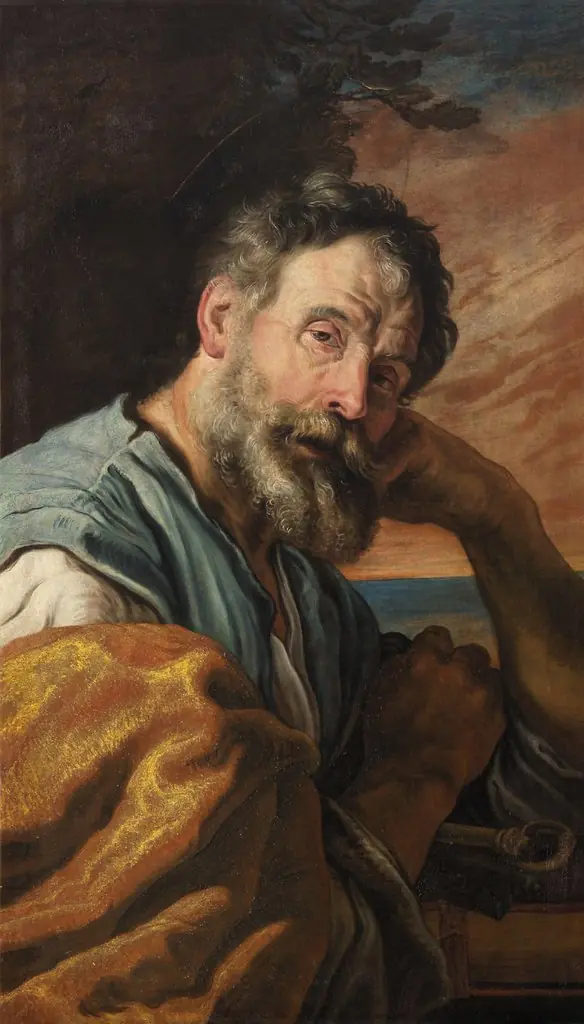
The sitter is an older man with a long white beard, deeply lined skin, and a quiet, unsmiling gaze. His plain brown tunic and crisp white collar suggest modest means, possibly a sailor, merchant, or veteran. The absence of symbols or context invites interpretation grounded in human aging and dignity rather than status or profession. The intensity of his expression conveys resilience, perhaps a life shaped by hardship or endurance.
Technique & Style
The artist employs chiaroscuro to model the face with strong contrasts between light and shadow. A single light source illuminates the right side of the face, casting the left into deep darkness, which accentuates the texture of wrinkles and the contours of bone and skin. The brushwork is restrained, avoiding ornamentation; the focus remains on the psychological presence of the subject through tonal precision rather than detail.
History & Provenance
The painting entered the Museum of Ethnography’s collection in the 19th century, though its earlier ownership is undocumented. Attribution to Drakenberg is speculative, based on stylistic similarities to known works from his circle. No records confirm its commission or original context, leaving its purpose—private devotion, memorial, or study—open to conjecture.
Context
Painted during the mid-17th century, this work reflects a Northern European tradition of unidealized portraiture, where aging and character were valued over idealization. While contemporaries like Rembrandt explored similar themes, this piece lacks the grandeur of aristocratic commissions. Its simplicity aligns with the growing interest in individual humanity, particularly among middle-class and maritime communities in Scandinavia.
Legacy
Though not widely exhibited or studied, the portrait endures as a quiet example of observational realism in Nordic art. Its emotional restraint and technical clarity offer insight into how ordinary lives were rendered with dignity during a period dominated by religious and noble portraiture. It remains a subtle testament to the value placed on individual presence beyond social rank.
Artist & collection

 Domestic Scene
 Giacomo and Cardinal Marco, investing Andrea, Abbot of San Zeno, with his Benefice
 The Nymph of Fontainebleau
 Portrait of a Woman
 Madonna and Child with Saints in the Enclosed Garden
 Venus and Minerva
 Family Group of Four on Sofa
 Wall painting from Room H of the Villa of P. Fannius Synistor at Boscoreale