Artwork
Vedere din Roma Veche (Roma cu columnele templului lui Jupiter)
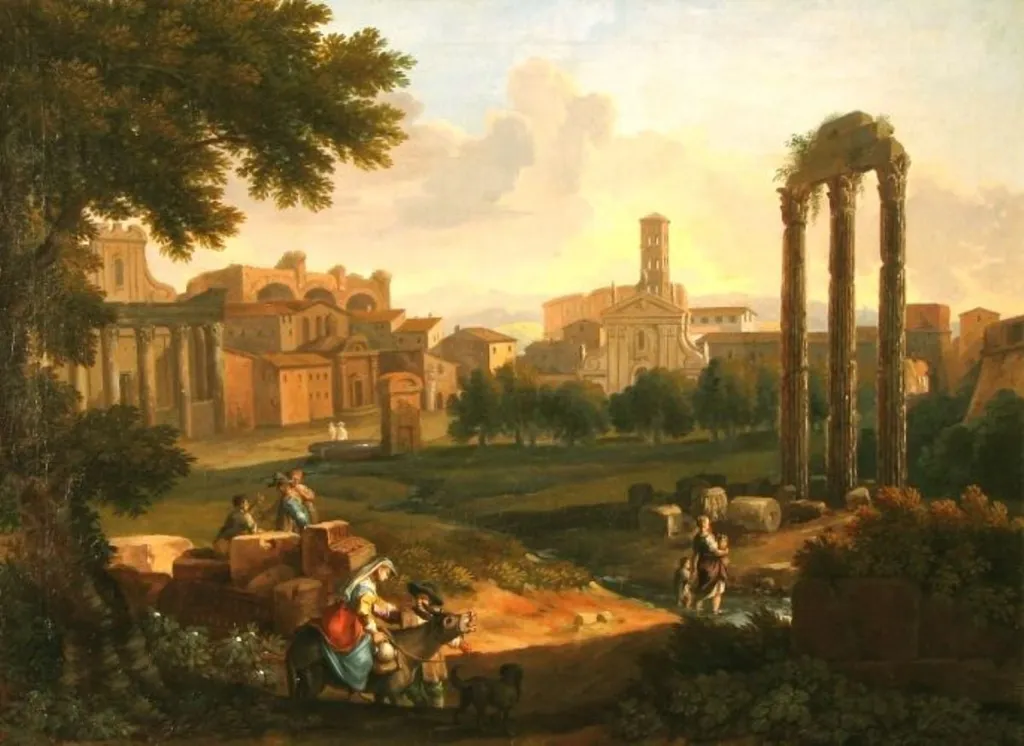
Vedere din Roma Veche (Roma cu columnele templului lui Jupiter) is an unspecified painting by the Baroque artist Paolo Anesi. It is held in the collection of the Brukenthal National Museum. This work depicts a reconstructed view of ancient Rome, blending ruins of imperial architecture with contemporary 18th-century life.
About this work
Overview
The scene is populated with figures engaged in daily tasks—transporting goods, conversing—grounding the historical setting in observable human activity.
This work depicts a reconstructed view of ancient Rome, blending ruins of imperial architecture with contemporary 18th-century life. The scene is populated with figures engaged in daily tasks—transporting goods, conversing—grounding the historical setting in observable human activity. Architectural fragments, particularly temple columns, anchor the composition in antiquity while contrasting with newer structures in the background.
Subject & Meaning
The painting presents Rome not as a lost civilization, but as a layered city where past and present coexist. The presence of active citizens amid crumbling temples suggests continuity rather than decay. It reflects an Enlightenment-era fascination with antiquity as a living influence, not merely a relic, inviting viewers to consider how history shapes everyday life.
Technique & Style
The artist employs careful modulation of light and shadow to define spatial depth and texture. Surfaces of stone, fabric, and skin are rendered with distinct tactile qualities, enhancing realism. Color is used selectively to draw attention to key elements—columns, figures, and architectural outlines—while maintaining atmospheric cohesion across the scene.
History & Provenance
The painting is attributed to Paolo Anesi, an 18th-century Italian artist known for topographical views of Rome. His works often combined archaeological accuracy with genre elements, catering to Grand Tour travelers seeking tangible connections to classical antiquity. This piece likely originated as part of a series documenting Rome’s evolving urban landscape.
Context
Created during a period of renewed interest in Roman archaeology, the painting responds to excavations and scholarly studies of ancient sites. It aligns with contemporary efforts to visualize historical spaces authentically, while also accommodating popular demand for picturesque scenes. The inclusion of modern figures underscores a cultural moment when antiquity was being reinterpreted through lived experience.
Legacy
Anesi’s approach influenced later vedute painters who sought to document Rome’s architectural heritage with observational precision. His integration of daily life into historical settings helped shift the genre from pure topography toward narrative landscape, paving the way for more human-centered depictions of ancient cities in 19th-century art.
Artist & collection
Artist
Paolo Anesi painted sweeping views of Rome in the 1700s, stacking its domes, columns, and ruins into one grand postcard.

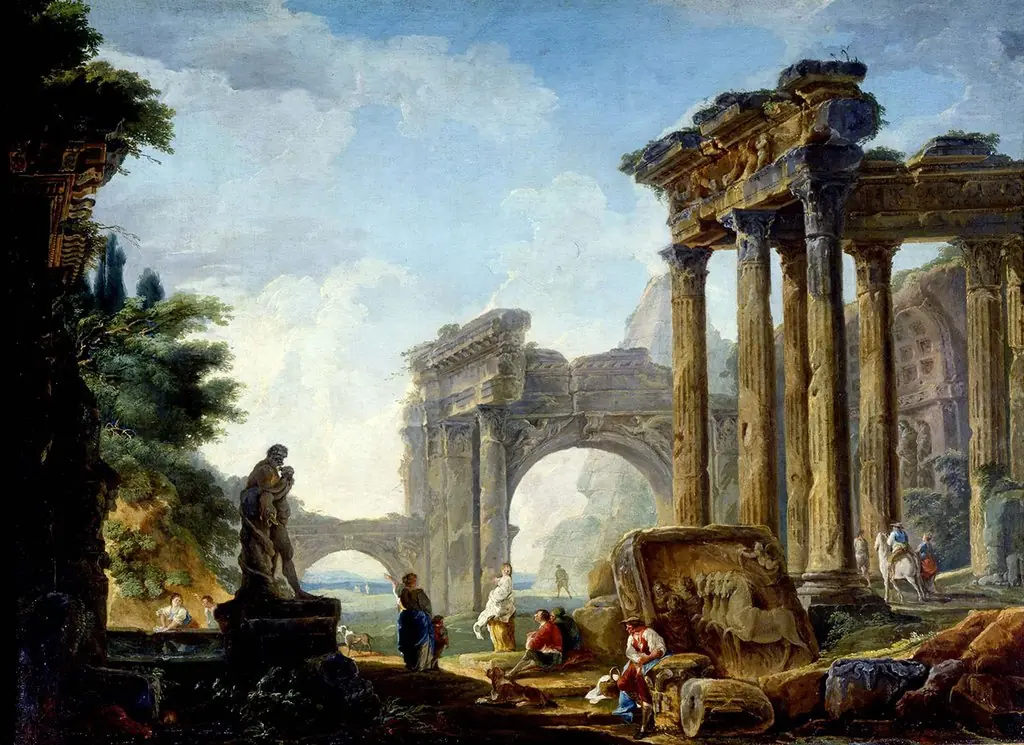 Paysage avec ruines romaines
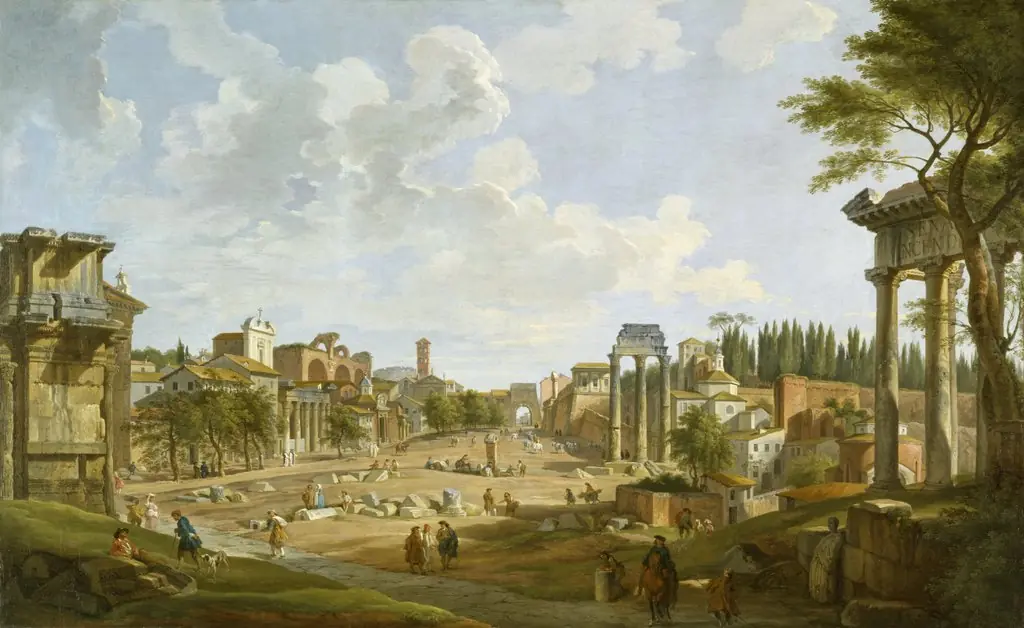 View of the Roman Forum
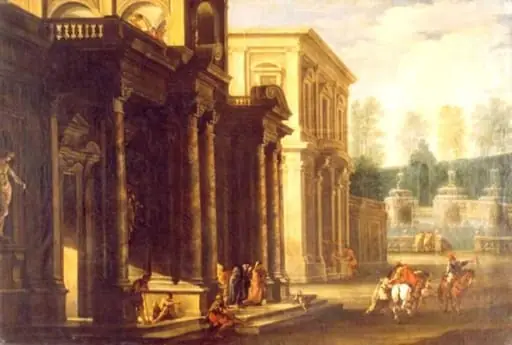 În fața palatului (Plecarea lui Tobias)
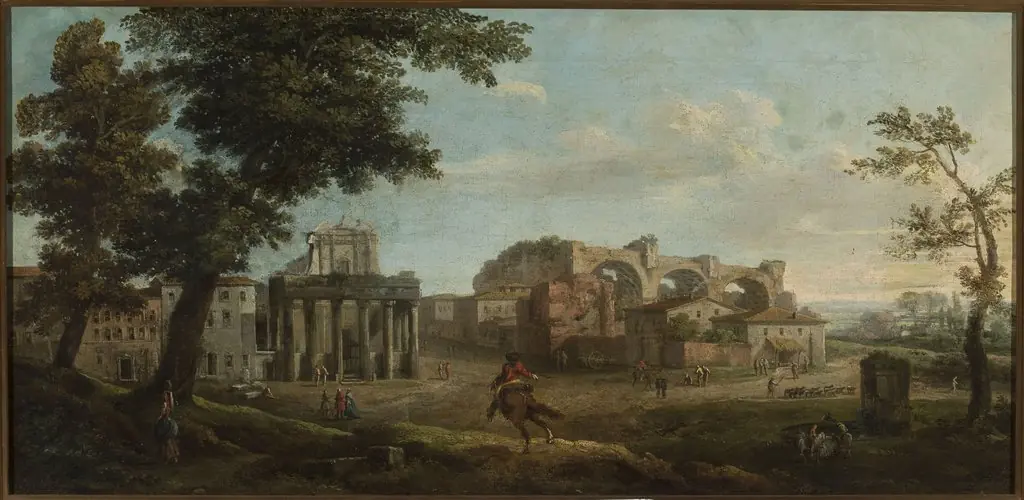 View of Rome
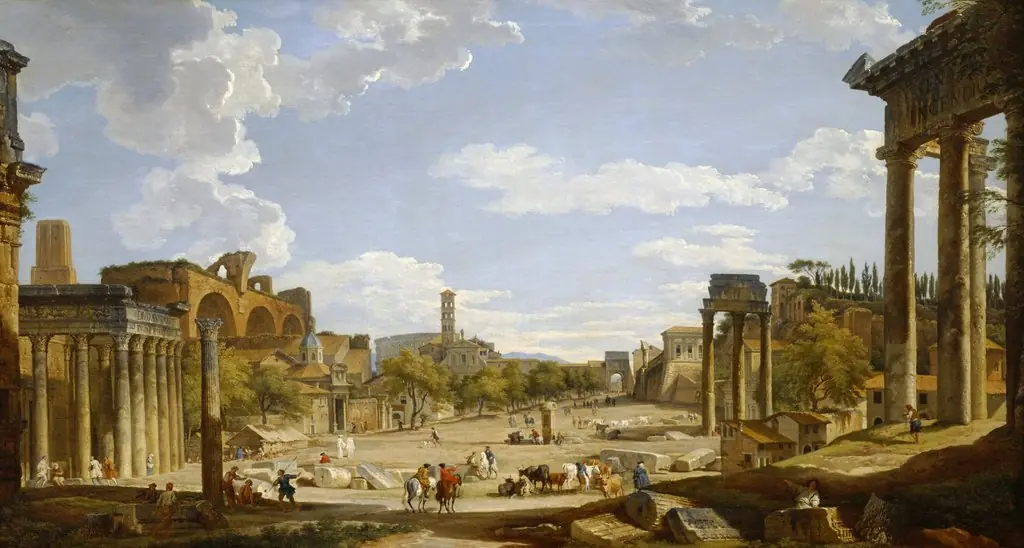 View of the Roman Forum
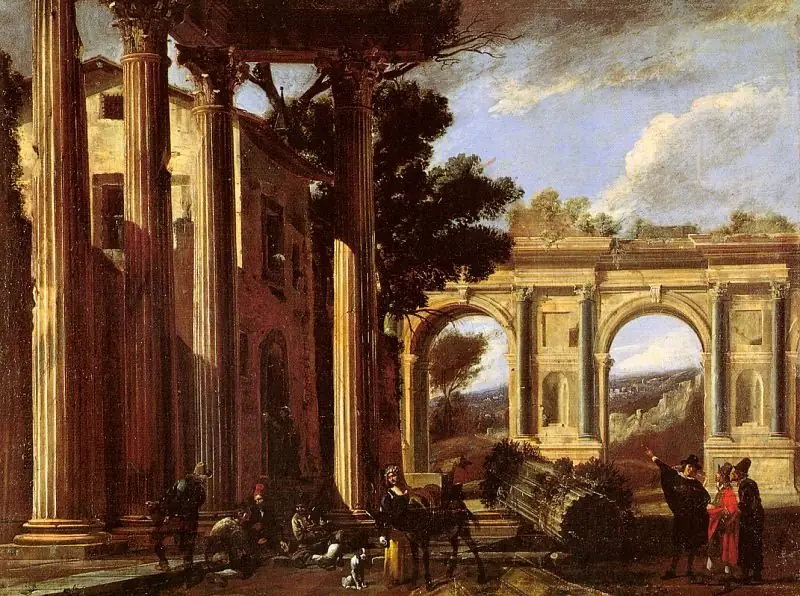 Architectural View
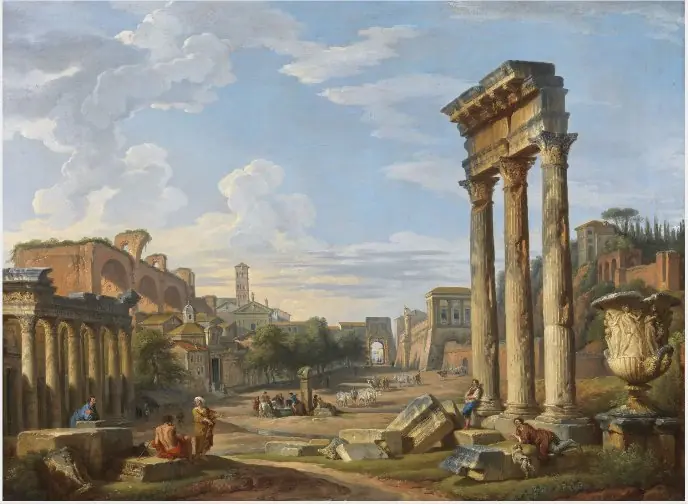 The Roman Forum
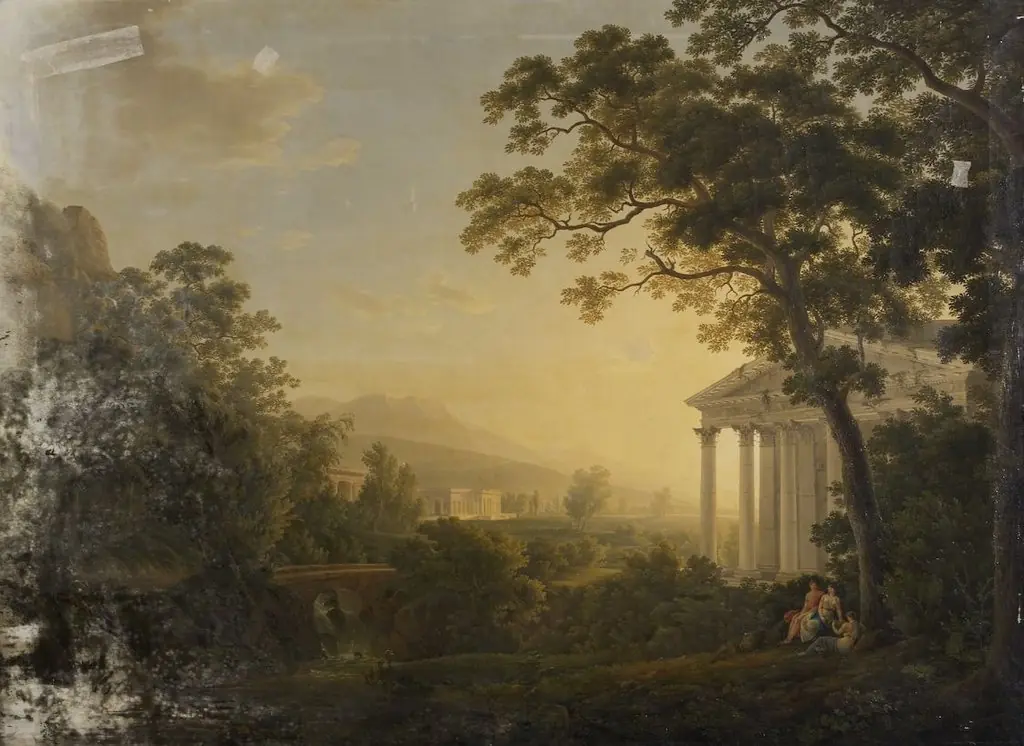 Ideal Landscape with Temple Buildings
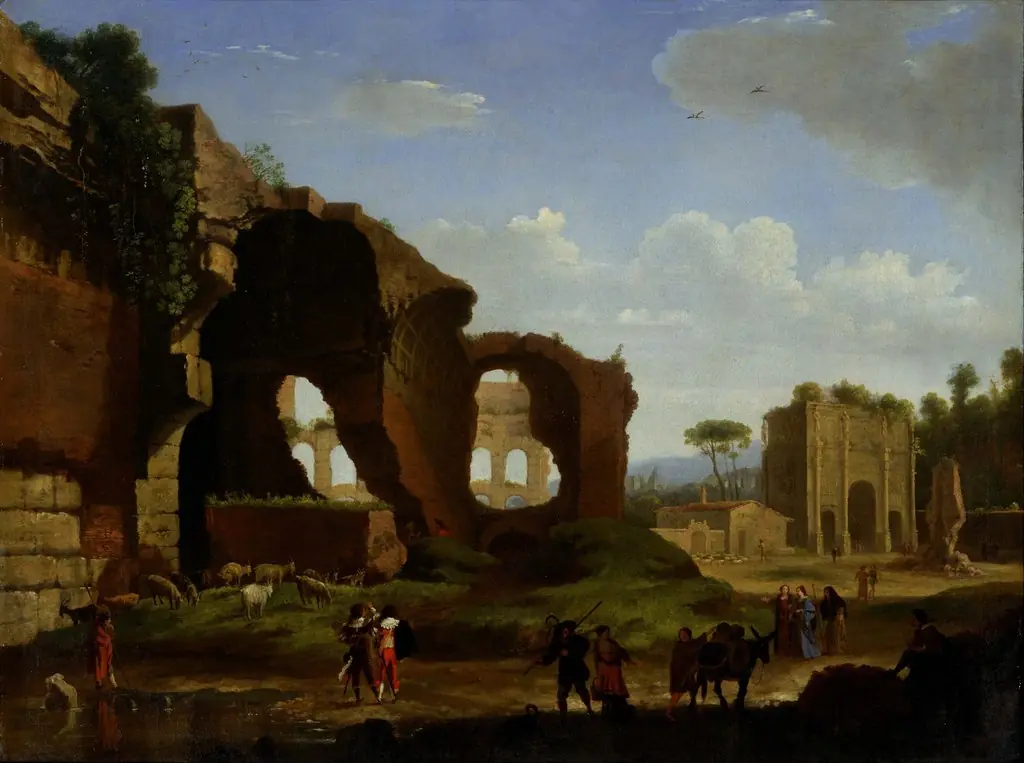 A Roman View of the Ruins of the Temple of Venus and Rome with the Colosseum and the Arch of Constantine
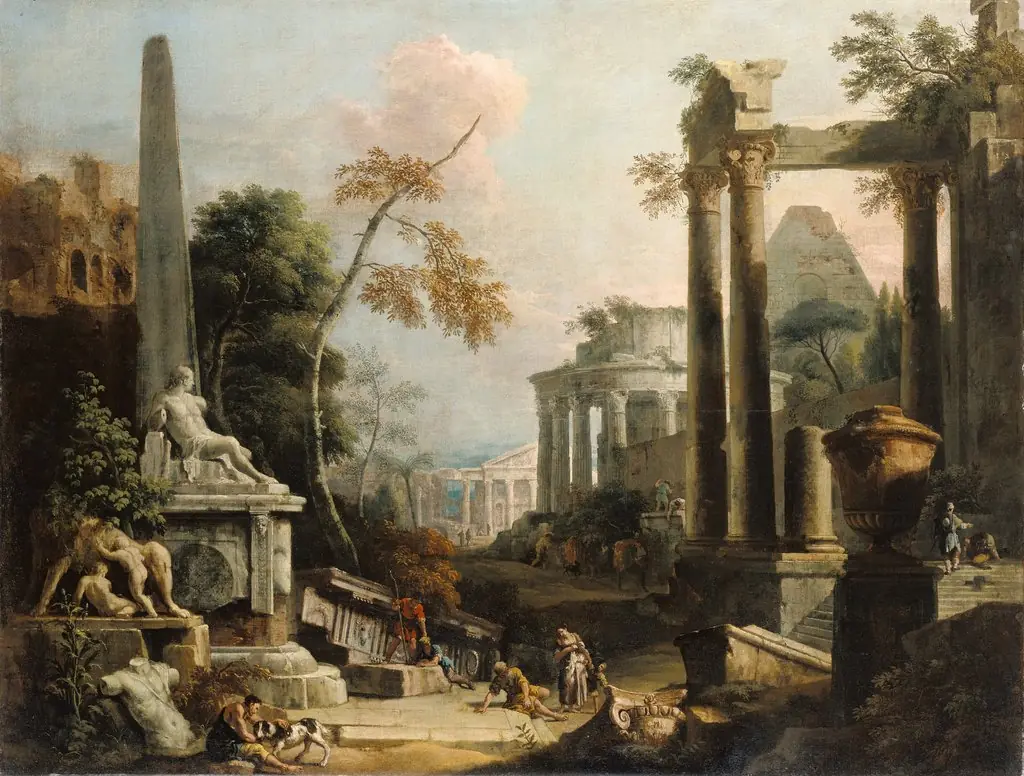 Landscape with Classical Ruins and Figures