Artwork
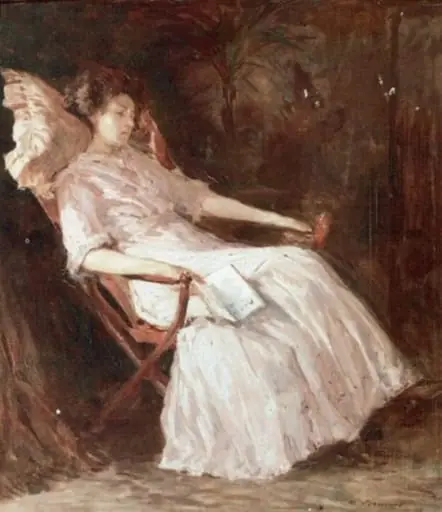
Femeia dormind (Lectură - Paul et Virginie)
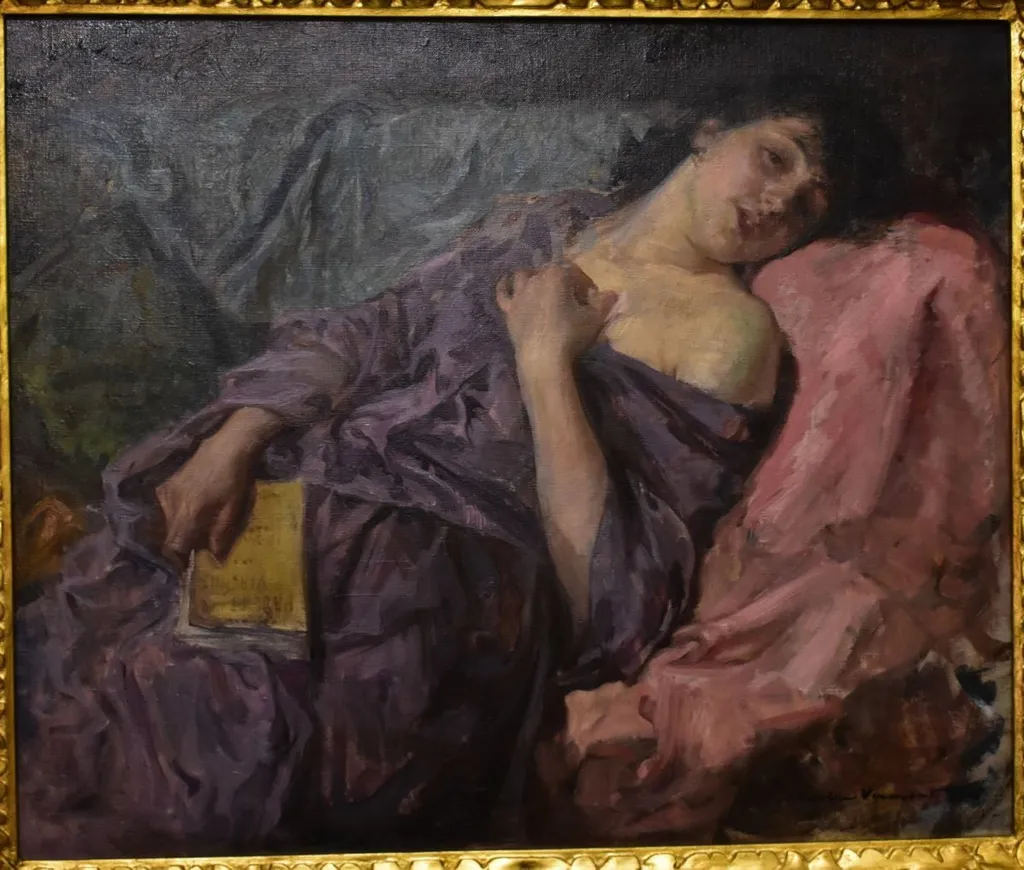
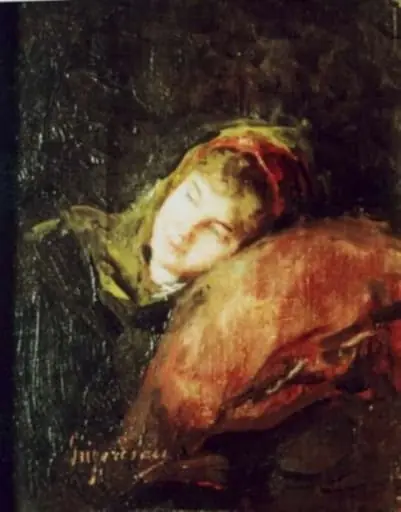
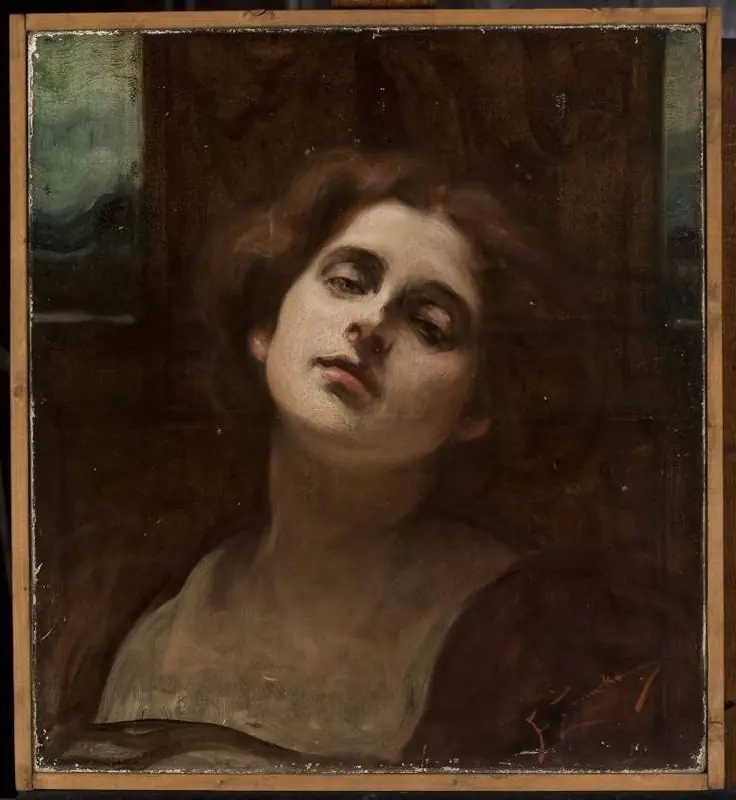
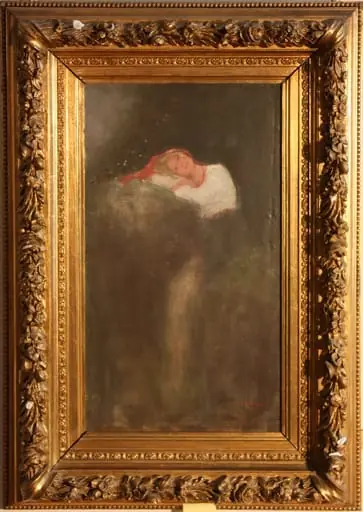
Femeia dormind (Lectură - Paul et Virginie) is an unspecified painting by Nicolae Vermont. It dates from 1915 and is held in the collection of the Bucharest Municipality Museum.
About this work
Overview
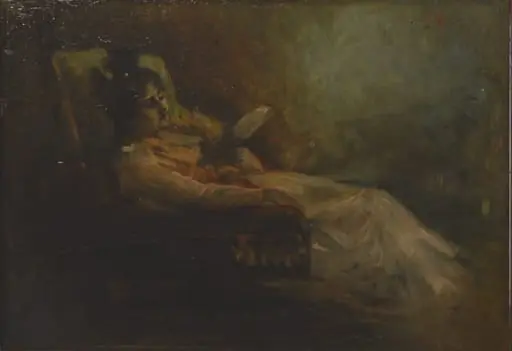
Painted in 1915 by Nicolae Vermont, Femeia dormind (Lectură - Paul et Virginie) is a quiet interior scene depicting a woman at rest.
Painted in 1915 by Nicolae Vermont, Femeia dormind (Lectură - Paul et Virginie) is a quiet interior scene depicting a woman at rest. The work is part of the collection at the Museum of Ethnography. Its subdued palette and intimate composition reflect a moment of stillness, emphasizing contemplation over narrative action. The title references a literary scene, suggesting the woman’s slumber is intertwined with the story she has been reading.
Subject & Meaning
The woman, dressed in a purple robe, lies on a couch with eyes closed, holding a yellow book. Her posture suggests either sleep or deep absorption, blurring the line between rest and reverie. The book, likely Paul et Virginie, implies an emotional or moral resonance from the text, subtly connecting her inner world to the novel’s themes of innocence and tranquility. The scene invites quiet empathy rather than dramatic interpretation.
Technique & Style
Vermont employs chiaroscuro to model the figure against a dark background, enhancing the three-dimensionality of the form. Soft transitions between light and shadow draw attention to the woman’s face and the book in her hand. The robe’s purple hue contrasts gently with the warm tones of the pillow and text, while the overall brushwork remains restrained, favoring atmosphere over detail. The composition is tightly focused, eliminating distractions to sustain the mood of stillness.
History & Provenance
The painting was completed in 1915 during a period when Vermont was exploring intimate domestic scenes. It entered the collection of the Museum of Ethnography in Romania, where it remains today. Unlike many of his contemporaries who focused on rural life or national identity, Vermont turned inward, capturing private moments that reflected broader cultural interests in literature and introspection during the early 20th century.
Context
In early 20th-century Romania, literary themes frequently informed visual art, especially among artists influenced by European symbolism and realism. Vermont’s choice to depict a woman absorbed in Paul et Virginie—a popular 18th-century French novel—aligns with a broader intellectual current that valued emotional sensitivity and moral reflection. The painting reflects a shift from public narratives to private, interiorized experiences.
Legacy
Femeia dormind stands as a quiet example of Romanian interwar painting that prioritizes psychological nuance over spectacle. While not widely exhibited outside Romania, it continues to be studied for its sensitive handling of light, mood, and literary reference. The work contributes to a lesser-known strand of Romanian art that values stillness and introspection, offering a counterpoint to more overtly nationalistic or monumental themes of the era.
Artist & collection
Artist
If you like scenes of daily life painted with a quiet eye, try Nicolae Vermont’s work.